REVIEW · CAIRNS
Cairns: Great Barrier Reef 30-Minute Helicopter Flight
Book on GetYourGuide →Operated by Nautilus Aviation Pty Ltd · Bookable on GetYourGuide
Reef views from the sky are pure wow. I love the straightforward 30-minute flight time that still feels long enough for real reef spotting, and I love the big-photo moments of Green Island and nearby reef landmarks from above. The main catch: window seats aren’t guaranteed, so your angles may depend on where you land in the cabin.
What makes this flight work so well is the mix of scenery and wildlife scanning, with a live guide pointing out what you’re seeing as you go. You also keep it simple on logistics: you meet at Pier Heliport, and there’s no hotel pickup from Port Douglas. If you’re prone to motion sickness or you hate tight time windows, you’ll want to plan extra carefully around check-in.
In This Review
- Quick hits from the air
- Why a 30-minute reef flight feels like more than it sounds
- The route: what you’ll see over Green Island and the reef
- Green Island: the recognizable starting point
- Arlington Reef: where patterns and coral gardens show up
- Vlasoff and the wider reef seascape
- Upolu Sand Cay: the sand-and-shallows contrast
- Wildlife spotting from above: what to scan for, and when
- What the cabin and small-group setup is really like
- Meeting point and timing: Pier Heliport and the check-in window
- Photos from the sky: how to get good shots without stress
- Price and value: is $322 worth a 30-minute flight?
- Who should book this helicopter flight?
- Should you book the Great Barrier Reef 30-Minute Helicopter Flight?
- FAQ
- How long is the helicopter flight?
- Where is the meeting point?
- Is hotel pickup included from Port Douglas?
- What do I need to bring?
- Are selfie sticks allowed?
- Is this a private tour?
- What is the cancellation policy?
Quick hits from the air
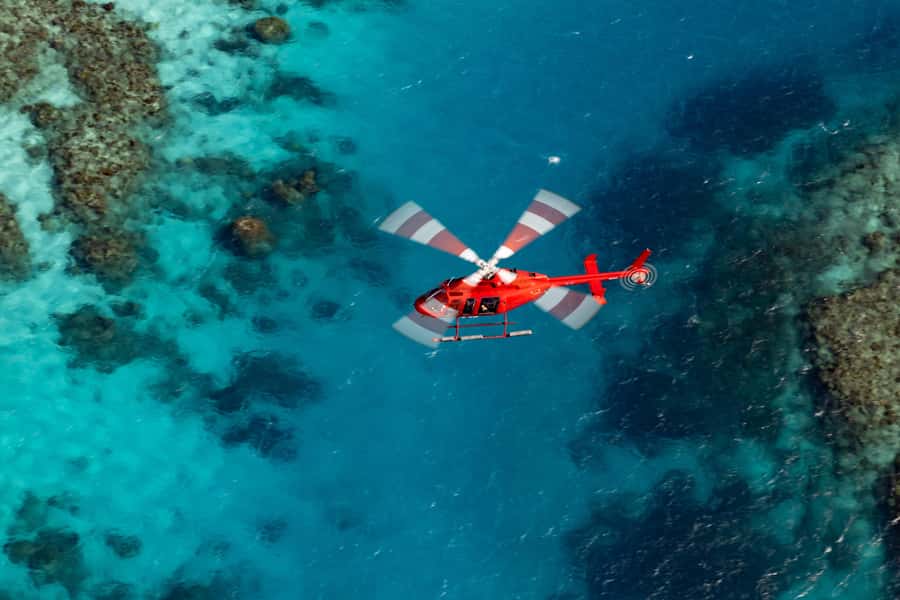
- 30 minutes in the helicopter gives you a fast, high-impact view of the reef system
- You’ll fly over Green Island, Arlington Reef, Vlasoff, and Upolu Sand Cay
- You can spot marine animals from above, including sea turtles, sharks, manta rays, dolphins, and dugong
- During Jul to Sep, humpback whales may appear on migration in these waters
- Small group format with a limit of 6 participants means less crowding at the terminal
Why a 30-minute reef flight feels like more than it sounds
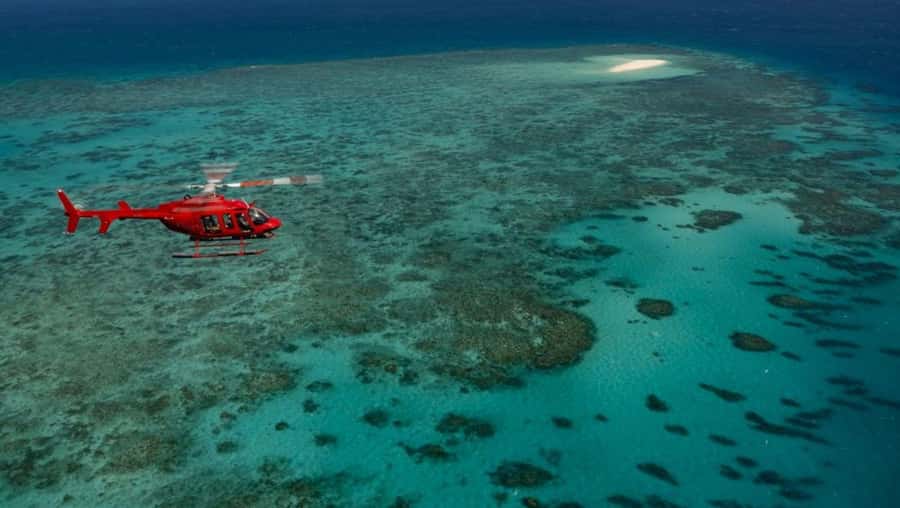
The Great Barrier Reef is so huge that it’s hard to grasp from ground level. A helicopter changes the scale instantly. In half an hour, you trade “where is everything” for “oh, I get it” because you can see the reef texture, reef colors, and coastline relationships all at once.
You’re also not stuck waiting around. The experience is built around a short, focused window in the air, which matters because reef trips can balloon in time once you add transfers and time on the water. Here, the time is concentrated where the view is strongest.
You can also read our reviews of more tours and experiences in Cairns.
The route: what you’ll see over Green Island and the reef
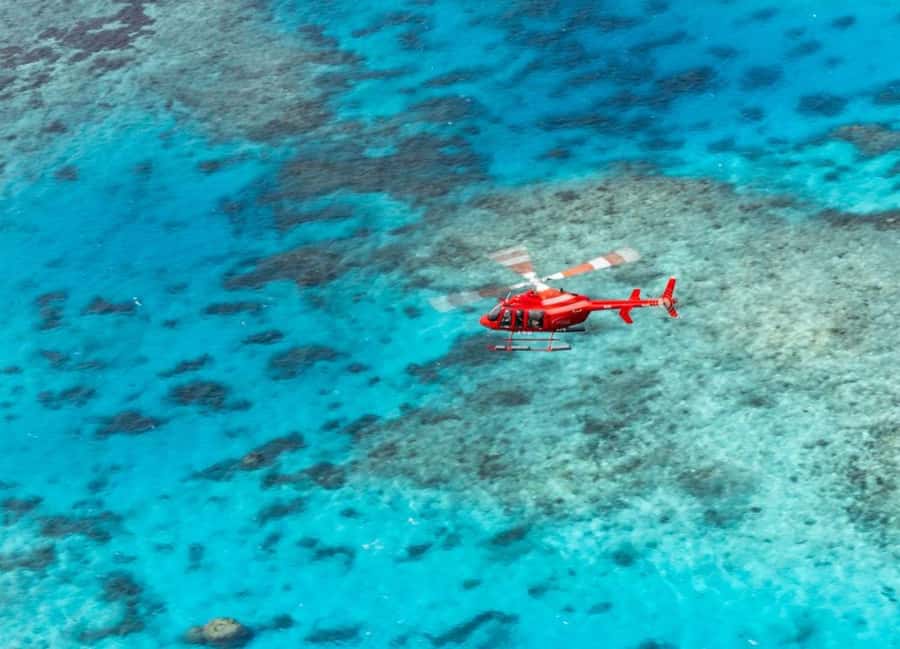
This flight is scenic, but it’s not random. The highlights are specific reef and island landmarks, which gives your brain something to latch onto as you watch the colors shift.
Green Island: the recognizable starting point
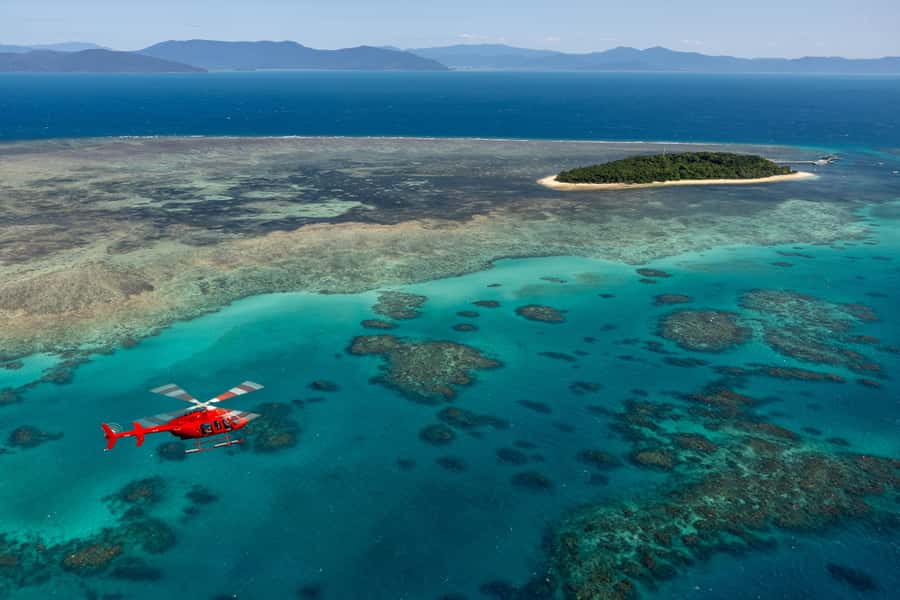
Green Island is one of the most eye-catching spots from above because it reads clearly on the water: land shape, shoreline edges, and the way shallow water changes color. From the air, you’re not just seeing an island—you’re seeing how the reef transitions toward it. It’s the kind of sight that helps you understand what you’ll later notice underwater on other reef activities.
Arlington Reef: where patterns and coral gardens show up
Arlington Reef is where the reef structure tends to look most “mapped.” Even if you don’t know every coral name, you’ll likely notice how reef areas form brighter patches and darker channels. That’s useful because underwater, coral can look scattered; from above, you get the layout and the sense of continuity.
Vlasoff and the wider reef seascape
Vlasoff sits within the flight’s reef sweep, and it’s a reminder that this is not just one reef spot. You’ll be looking at a broader system—more like a living quilt than a single landmark. That wide-angle understanding is why the helicopter feels so different from trips that focus on one fixed viewing area.
Upolu Sand Cay: the sand-and-shallows contrast
Upolu Sand Cay adds contrast because sand features behave differently than coral. From the air, you can often pick out how sand and shallow water create softer, lighter zones compared with the sharper reef tones. It’s a great visual break in the flight—especially if you’re photographing and want variety beyond coral patterns alone.
Wildlife spotting from above: what to scan for, and when
One of the best parts of this flight is the chance to spot animals in their natural habitat without the long search. From high above, the guide helps you look in the right places and gives you a running commentary on what might be moving.
Here are the species that have been reported during inflight sightings:
- Sea turtles
- Sharks
- Manta rays
- Dolphins
- Dugong
- Humpback whales, in Jul–Sep, during migration
That humpback-wales window is a big deal. If you’re traveling in that season, your odds of seeing something truly special go up. Even if you don’t spot whales, the reef mammals and rays are exactly the sort of animals that can show up in breaks of time while the helicopter passes overhead.
Practical tip: don’t fixate on one “perfect” spot for too long. The flight moves, and the guide’s pointers can help you avoid tunnel vision. Scan broadly, then focus when the guide flags an area.
What the cabin and small-group setup is really like
This isn’t a private charter. It’s a shared experience with a small group limited to 6 participants. That usually means less chaos at the check-in stage and more room to hear the guide’s explanations over the rotor noise, compared with larger aircraft.
The trade-off is that seating choices aren’t fully under your control. Window seats aren’t guaranteed, so if you’re the kind of person who plans your camera setup around a particular spot, keep expectations flexible. Your best move is to show up on time and let the crew handle the seating plan.
Also, think ahead about what you’ll carry. You need to advise your passenger weight and any carry-on luggage/bag at booking, because there’s a maximum single-seat weight of 130 kg (including carry-on). If someone exceeds 130 kg, an additional seat at 50% of the ticket price is required and paid to the local partner on the day of travel.
Meeting point and timing: Pier Heliport and the check-in window
You’ll meet at Pier Heliport. There’s no hotel pickup and drop-off from Port Douglas, so plan your own ride there and don’t count on last-minute help.
Check-in matters a lot. You’re advised to check in 45 minutes before departure, and check-in closes 30 minutes before takeoff. If you miss that cut-off, you can miss the flight and forfeit what you paid. In other words, build in a buffer for parking, finding the heliport, and getting through the boarding process without stress.
A small but important “don’t forget” detail: bring sunglasses, a camera, and sunscreen. Rotor-wash conditions and bright water reflect glare fast, and sunscreen helps because you’re exposed outside before and after the flight.
Photos from the sky: how to get good shots without stress
This is one of those experiences where photos aren’t just souvenirs—they’re how you’ll remember reef shapes later when the colors start to blur in your memory.
Start with what you already know: bring your camera, and plan on using it quickly. The helicopter flight is only 30 minutes, and the best moments can last seconds. Keep your settings simple and your finger ready.
Also note what you can’t bring: selfie sticks aren’t allowed. That’s worth remembering because it affects what you can physically hold or extend during boarding and potentially inside the cabin. If you’re coming with a phone mount or extension, adjust plans early.
If you’re thinking about where to aim, use the landmarks as your compass:
- Green Island for clear land-and-water contrast
- Arlington Reef for coral pattern structure
- Vlasoff for the broader reef spread
- Upolu Sand Cay for sand-shallow-water differentiation
Even if your photos aren’t “perfect,” you’ll capture the key story: reef system scale, color variation, and the way islands and reefs interlock.
Price and value: is $322 worth a 30-minute flight?
$322 per person sounds steep at first glance, because it’s not a day-long outing. The real question is value per minute—and per what-you-can-only-see-from-air factor.
Here’s why it can feel worth it:
- The flight gives you a high-level, system-wide view that water-based trips can’t always replicate in a single pass.
- The scenery is active while you’re in the air: you’re not sitting still for the whole experience.
- You’re getting a guide’s help to identify what you’re seeing, not just watching from the window.
What might make you pause:
- It’s pricey for a short duration, especially if you’re already planning to do underwater reef activities.
- Window seating isn’t guaranteed, so some of that visual value depends on where you sit.
My practical advice: treat this as the one reef activity that’s designed to change how you understand the reef. If you’re doing a reef cruise or boat viewing too, the helicopter can act like your “map in the sky,” making everything you see later feel more connected.
Who should book this helicopter flight?
This is a great fit if you:
- Want the fastest way to grasp the reef’s scale
- Love photography and want recognizable reef landmarks in one ride
- Are in the right season for possible humpback whale sightings (Jul–Sep)
- Prefer a small group with a live guide explaining what’s overhead
You might want to skip or think twice if you:
- Are counting every dollar and prefer longer on-water experiences
- Strongly need guaranteed window seating for accessibility or photography
- Are uncomfortable with a time-sensitive check-in window (because check-in closes 30 minutes before departure)
Should you book the Great Barrier Reef 30-Minute Helicopter Flight?
If you want a high-impact reef experience without spending the entire day traveling and waiting, I think it’s an easy yes. The combination of specific reef landmarks, a real chance at wildlife sightings, and the short, tightly focused schedule is exactly what makes this style of trip memorable.
Book it if you’re the type who learns best by seeing the whole picture. You’ll come away with a mental map of the reef—green islands, reef patterns, and sand-shallow contrast—that will make other reef activities feel more meaningful.
One last tip before you decide: plan your day so you’re not rushing to Pier Heliport. If you show up calm and ready, the flight becomes what it’s meant to be: a clean, scenic sprint over one of the planet’s most famous marine systems.
FAQ
How long is the helicopter flight?
The flight duration is 30 minutes.
Where is the meeting point?
The meeting point is Pier Heliport.
Is hotel pickup included from Port Douglas?
No. Hotel pickup and drop-off from Port Douglas is not included.
What do I need to bring?
Bring sunglasses, a camera, and sunscreen.
Are selfie sticks allowed?
No, selfie sticks are not allowed.
Is this a private tour?
No. It’s a shared experience with a small group limited to 6 participants.
What is the cancellation policy?
You can cancel up to 2 days in advance for a full refund.