REVIEW · KAHULUI
Kahului: Doors-off West Maui and Molokai Helicopter Tour
Book on GetYourGuide →Operated by Air Maui Helicopters · Bookable on GetYourGuide
Flying without doors on Maui turns the sky into a front-row seat, not a quick thrill. I love the doors-off feeling you get up close to the mountains, and I love that the pilot gives live narration and music as you go. You’re also set up for the experience with a lanyard for your phone, plus a windbreaker jacket and goggles. The main consideration is the rules: no hats, no bags, and only your cell phone is allowed on board for pictures, so plan for that before you show up.
If you’re the type who gets more out of visuals than guided lectures, this tour fits your style. The flipside: the safety setup is strict, including weight requirements that may trigger an extra comfort seat for a safer doors-off flight.
In This Review
- Key Highlights at a Glance
- Doors-Off Maui in the Air: What You Actually Feel and See
- Kahului Heliport Start: Your Time Window and What to Plan
- West Maui Mountains Segment: Rainforest, Coastline, and Close Calls
- Crossing the Channel to Molokai: Where the Trip Turns Serious
- Molokai North Shore: Tall Sea Cliffs and Waterfalls From Above
- Small Group of 6: Why It Changes the Whole Experience
- Price and Value at $402: What You’re Actually Paying For
- Safety and Weight Rules: Read This Before You Book
- What to Bring (and What to Leave Behind)
- Should You Book This Doors-Off West Maui and Molokai Flight?
- FAQ
- What is the meeting point for the Kahului Heliport tour?
- What should I bring for the doors-off flight?
- Are cameras allowed on board?
- How big is the group?
- How long is the flight?
- What are the weight requirements for doors-off flying?
Key Highlights at a Glance
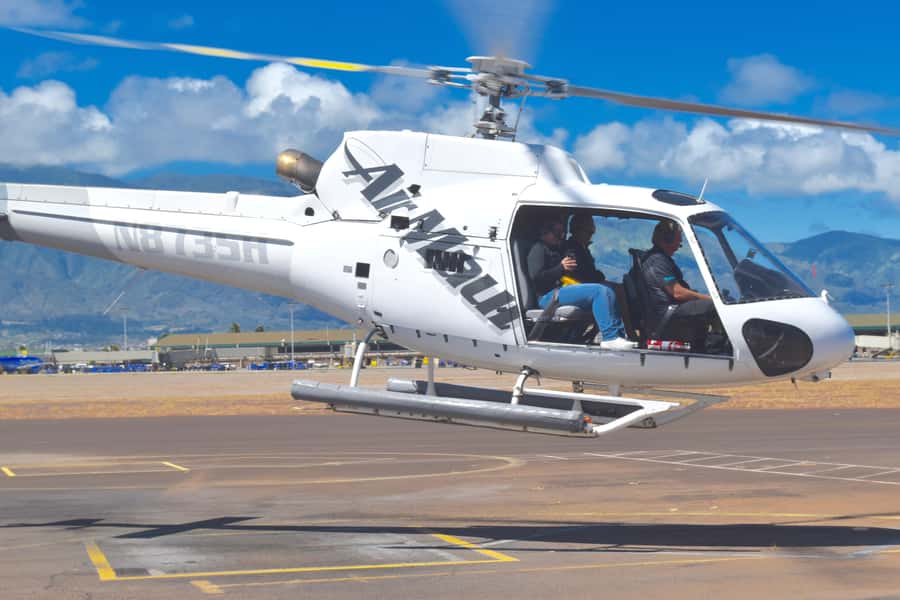
- Doors-off access for that real wind-in-your-hair feeling
- Pilot narration and music during both flight segments
- West Maui rainforest + coastline views as you cross the channel
- Molokai north shore cliffs and waterfalls from very close above
- Small group max 6, so it stays personal and calm
- Only a cell phone allowed for photos on board
Doors-Off Maui in the Air: What You Actually Feel and See
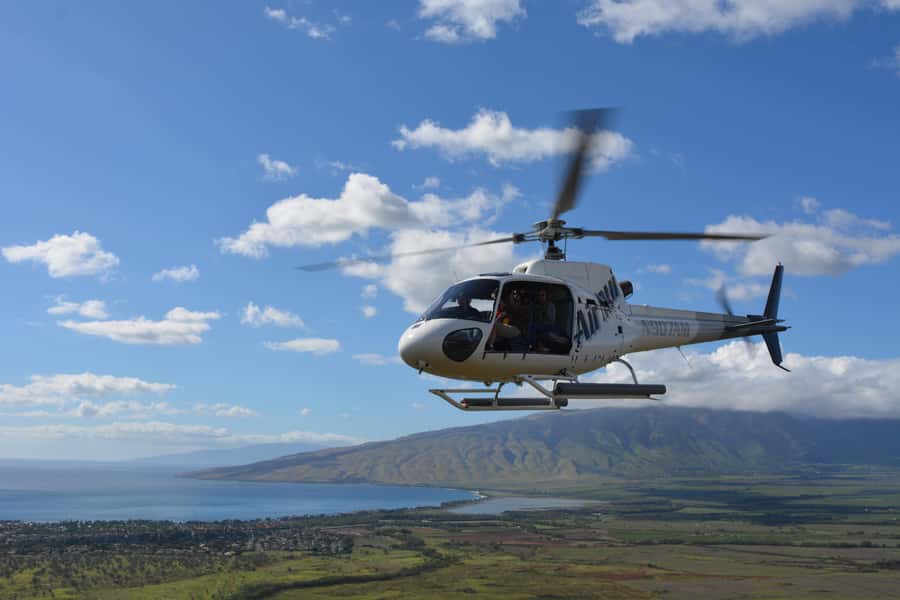
This is a helicopter tour built around one big idea: you don’t ride inside a sealed bubble. You fly doors-off, so the air hits you. That’s fun, but it also means you’re not trying to do classic, window-style sightseeing photos. Instead, you’re capturing moments the way you experience them: fast, bright, and close.
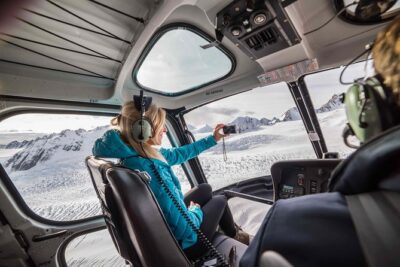
Air Maui provides a lanyard for your cell phone, plus a windbreaker jacket and goggles. That matters more than it sounds. In Hawaii, conditions can change quickly, and wind can be stronger than you expect at altitude or along coastlines. The jacket helps you stay comfortable while still feeling that open-air thrill, and the goggles protect your eyes when you’re staring out into the wind for long stretches.
One more practical detail: you can bring a closed-toe shoe, but you cannot bring loose items like hats or bags. The tour is clear that only your cell phone is allowed on board for picture taking. So if you’re hoping to pull out another camera or keep extra gear in your hands, you’ll be forced to leave it behind. This is one of those tours where being prepared makes the experience better than being excited.
You’ll also hear the pilot. The live narration and music are part of the ride itself, not an optional add-on. If you want a story that matches the view you’re seeing, this tour leans that way. In at least one confirmed experience, the pilot Drew was described as calm and full of good information, which is exactly what you want when you’re flying exposed and taking in big terrain fast.
You can also read our reviews of more tours and experiences in Kahului.
Kahului Heliport Start: Your Time Window and What to Plan

The action begins at the Kahului Heliport. Your meeting point is there, and you’ll start from 1 Keolani Pl. You’ll check in on site, and then the tour returns to the same base at Kahului Heliport.
A useful thing to know is that your booking might show a broader time window (like late morning), and then a specific departure slot gets confirmed within that range. That’s worth respecting. Arrive with enough buffer that you’re not watching the clock and rushing to secure your seat. In a doors-off helicopter, you want your head clear, not stressed.
Also remember that transportation to and from the heliport is not included. That means you’re responsible for getting yourself there. If you’re staying on Maui, build in travel time plus parking time, then add a little extra. This is not the kind of activity where you want a last-minute detour.
Finally, this is a small group experience, capped at 6 participants. That makes the start feel more organized and less chaotic than big-vehicle tours. It’s still a helicopter operation, so expect firm instructions from the crew. Follow them closely, especially around what you can hold or wear.
West Maui Mountains Segment: Rainforest, Coastline, and Close Calls
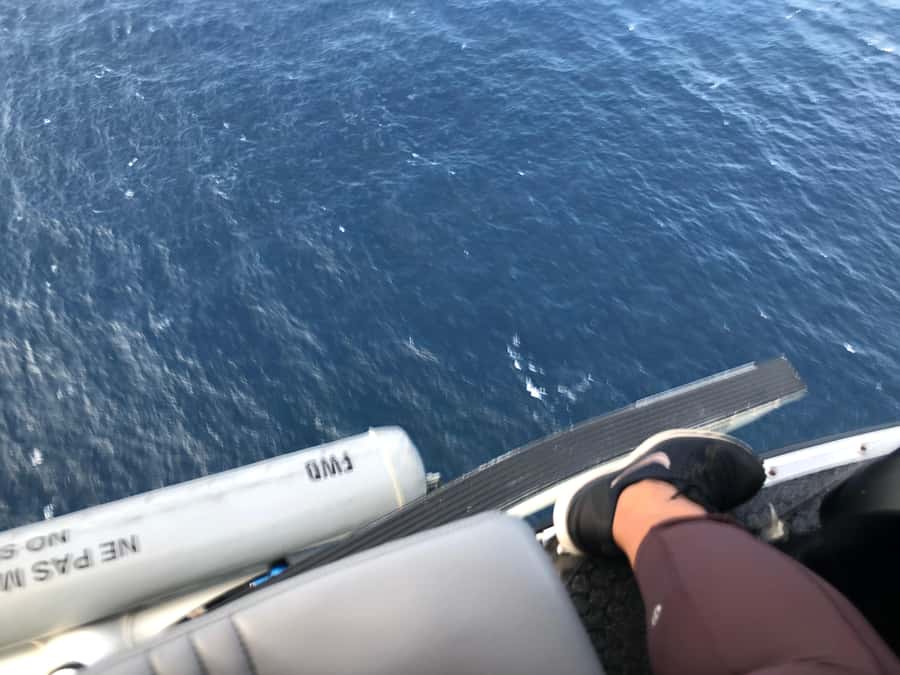
The first flight segment focuses on West Maui. You’ll lift off from Kahului, then fly over the West Maui Mountains. This is where the experience becomes visually dramatic fast. From above, the rainforest and the coastline don’t look like distant scenery. They look like a pattern—green texture dropping into dark rock and bright surf.
You also get that doors-off effect right away. That’s when you learn how different it feels to look down while wind is pushing against your face. If you’re curious about what makes a doors-off tour worth the money, this is one of the places you’ll understand it. The air turns your senses on. The mountains feel taller because you’re not boxed in by glass.
Then the route crosses the Pailolo channel to reach Molokai. That crossing matters because it’s the transition between two very different feels. West Maui looks lush and complex, while the channel and open ocean can feel wider and more exposed. You go from details you can recognize to broad views that are hard to fully describe from the ground.
One nice part of the pilot’s live narration here is context. Even without getting technical, the pilot can help you connect what you’re seeing to names, features, and the logic of the terrain. With live guidance plus music in the background, you’re not sitting in silence hoping the view does all the work.
Crossing the Channel to Molokai: Where the Trip Turns Serious
The Pailolo channel crossing is the moment when the tour stops feeling like a quick scenic add-on and starts feeling like a real journey. You’re moving between islands, and the ocean and coastline become a visual divider. That’s why the route is structured this way: it builds your attention in stages.
From above, the channel gives you depth. You can see water color changes, shoreline shapes, and the way land forms jump from one island to the next. It also sets up the next segment so your brain can compare. West Maui and Molokai aren’t just two destinations. They read like two different worlds.
Because you’re flying doors-off, you’ll likely feel the wind strongest during these open-air stretches. If you’ve ever tried to photograph in windy conditions, you know the struggle: your hands shake, your hair covers your eyes, and the shot you wanted becomes the shot you managed. The good news is that the tour gives you goggles and a jacket to stabilize the experience. Your job is simpler: look, react, and be ready to grab your phone when the moment lines up.
And remember the photo rule. Only your cell phone is allowed on board for picture taking. That means you’ll want to keep your phone secured and ready using the provided lanyard.
Molokai North Shore: Tall Sea Cliffs and Waterfalls From Above
Molokai is the showstopper in this itinerary. The tour heads to Molokai to see some of the world’s tallest sea cliffs, plus numerous waterfalls and untouched rainforest. This is where the view turns into something you can’t easily replicate on a normal boat trip or from a road.
The north shore cliffs are the main reason. From the air, you get height and angle at the same time. On the ground, cliffs can feel intimidating but also distant. In the helicopter, you can see how waterfalls drop into steep terrain and how the coastline curves around the island’s edge.
This is also where the doors-off format shines hardest. Being without doors doesn’t just make it thrilling; it removes visual barriers. Your vantage point feels direct. You’re not peering through reflections or window frames. You’re seeing the cliff lines and waterfall streaks with your whole field of view.
If you’re excited about close-up sensation, this is the segment that tends to deliver it. In one experience, the flying was described as getting you very near the gigantic mountains and the waterfalls, which matches what doors-off flying tends to do: you feel the air proximity even when you’re still safely strapped in.
The pilot narration continues during the Molokai segment, so you’re not just staring. You’re learning as the scenery slides past.
Small Group of 6: Why It Changes the Whole Experience
This tour limits group size to 6 participants. That small number has real effects.
First, it keeps the cabin flow calm. Helicopter cabins and safety briefings work better with fewer bodies and fewer distractions. Second, it typically means less waiting around during check-in and boarding. You’re not stuck in a crowd.
Third, it helps you feel like you’re sharing the sky with a small number of people instead of competing for views. With doors-off flying, everyone’s head turns constantly. In bigger groups, it can feel chaotic. Here, it’s more controlled.
That controlled feel pairs well with the pilot’s calm approach. When people are describing the tour as exciting but also well-managed, what they’re usually reacting to is this combo: small group + clear instructions + a pilot who keeps the ride steady while still giving you the angles.
Price and Value at $402: What You’re Actually Paying For
At $402 per person for a doors-off helicopter tour, this isn’t a budget activity. The value isn’t in a long checklist of stops. It’s in the access to views you simply can’t get any other way.
You’re paying for:
- Doors-off flying, which is the core reason the scenery feels close
- Two island segments on the route: West Maui first, Molokai next
- Live pilot narration and music, so you get more meaning, not only movement
- A small group experience limited to 6 participants
You’re also paying for time in the air. The itinerary describes flight segments of about 45 minutes over West Maui and another 45 minutes over Molokai. Even if you compare this to shorter scenic flights, the added time is part of why this tour can feel complete: you’re not just skimming above the highlights.
What’s not included affects value too. A media package (USB live video and/or photo from your flight) is not included. If you’re the kind of person who wants an edited keepsake, you’ll need to rely on your own cell phone photos from on-board.
Also, transportation to and from the heliport is not included. That doesn’t change the tour’s quality, but it can affect your total cost once you add parking, rideshare, or rental car time.
Who is this price best for? People who:
- care more about unique aerial perspective than hitting many ground stops
- want a shorter, high-impact experience instead of a day-long itinerary
- are ready to follow rules like the no-camera limit and what you can bring
Safety and Weight Rules: Read This Before You Book
This is a doors-off helicopter. Safety isn’t optional here, and the weight restrictions reflect that.
The rules are detailed:
- If a single passenger weighs 230 lbs or more, an additional seat purchase is required.
- For two passengers combined, if the total is 400 lbs or more, an additional seat is required.
- For groups of 3 or more, the average weight of the group must be under 190 lbs or an additional seat is required.
- If any passenger is over 250 lbs, a comfort seat is required regardless of combined weight.
The key point for you: provide accurate body weight at checkout. The tour is explicit that this affects safety and comfort for doors-off flights.
Also, because wind is part of the experience, wear closed-toe shoes and be ready for a windy ride. The provided goggles and windbreaker help, but your clothing still matters.
One more rule to keep in mind: no loose items like hats and bags. Doors-off means anything not secured can become a distraction or safety issue.
What to Bring (and What to Leave Behind)
To keep your ride smooth, pack light and follow the rules.
Bring:
- closed-toe shoes
- your cell phone (since it’s the only permitted device for pictures on board)
Air Maui provides:
- a lanyard for your cell phone
- a windbreaker jacket
- goggles
Leave behind:
- hats
- cameras
- bags
- anything you can’t stow securely under the tour’s rules
If you want a simple mindset: treat this like an open-air experience first, and a photo activity second. You’ll still get chances to shoot from the air, but you’ll do it in a constrained way.
Should You Book This Doors-Off West Maui and Molokai Flight?
Book it if you want one of Maui’s most direct ways to see the island’s dramatic vertical features: West Maui’s mountain-and-coast layout, then Molokai’s north shore sea cliffs and waterfalls from real height and angle. The pilot’s live narration and music make it feel structured, not random, and the small group setup helps the whole thing stay calm.
Don’t book it if you’re hoping for a flexible, gear-heavy sightseeing session. The rules are strict: only a cell phone can be used for pictures, and hats/cameras/bags aren’t allowed. Also, if weight or comfort-seat rules apply to you, plan for that at booking so you’re not surprised later.
If you’re deciding between a helicopter tour and a ground-based day, this is the one that leans into aerial access. For the right kind of traveler, it’s not just thrilling. It’s also efficient. Two island segments, one compact experience, and views you’ll remember long after the wind fades.
FAQ
What is the meeting point for the Kahului Heliport tour?
You meet at the Kahului Heliport.
What should I bring for the doors-off flight?
You should wear closed-toe shoes. The operator provides a windbreaker jacket and goggles, and a lanyard for your cell phone.
Are cameras allowed on board?
No cameras are allowed. Only your cell phone is allowed on board for picture taking.
How big is the group?
The tour is limited to 6 participants.
How long is the flight?
The schedule lists about 45 minutes over West Maui Mountains and about 45 minutes over Molokai.
What are the weight requirements for doors-off flying?
There are comfort seat rules based on individual weight and group weight at booking. A comfort seat (additional seat) is required for certain thresholds such as one passenger weighing 230 lbs or more, two passengers combined weighing 400 lbs or more, or groups of 3+ with an average of 190 lbs or more. Any passenger over 250 lbs requires a comfort seat. Accurate weight is required at checkout.