REVIEW · KATA TJUTA
Lake Amadeus, Uluru & Kata Tjuta Helicopter Tour
Book on GetYourGuide →Operated by Professional Helicopter Services · Bookable on GetYourGuide
Uluru and Kata Tjuta look different from the sky. This 90-minute helicopter tour ties together Lake Amadeus, Uluru, and Kata Tjuta in one flight, with a pilot giving live, English narration so you know what you’re actually seeing. I especially like that you get a real shot at spotting wild camels across the salt flats and desert plains, and that you can time it for sunrise or sunset when the colors shift fast. One thing to consider: it’s not for everyone—there are limits around weight, mobility, and being able to use steps and platforms to get in and out.
You’ll start with pickup from select hotels at Voyages Ayers Rock Resort (not Emu Walk Apartments), then step into the helicopter for a tight, focused loop over three of the Northern Territory’s signature desert sights. I like the format because it’s built for people who want maximum wow without spending a full day on the road. The possible drawback is simple: this is a short flight, so you’re trading comfort-time on the ground for time in the air.
In This Review
- Key Points You’ll Care About
- The Big Three You’ll See: Lake Amadeus, Uluru, and Kata Tjuta From Above
- The Helicopter Timing Game: Sunrise, Sunset, or Day
- Getting In and Out Smoothly: Pickup Points and What You Need
- What the Flight Feels Like: 90 Minutes That Stay Focused
- Lake Amadeus: Salt Flats, Desert Edges, and Camel-Spotting
- Uluru Up Close-Enough-For-Reality: Scale, Shape, and Silence in the Air
- Kata Tjuta: Dune-Like Formation Viewed as Three-Dimensional
- Wild Camels in the Desert: How to Look Without Getting Frustrated
- Value for $495: What You’re Really Paying For
- Who This Tour Fits Best (and Who Should Skip It)
- The Small Details That Make a Difference
- Should You Book This Lake Amadeus, Uluru & Kata Tjuta Helicopter Tour?
- FAQ
- FAQ
- What landmarks will I see on this helicopter tour?
- How long is the tour?
- Where does pickup happen?
- What time options are available?
- Is there a guide included, and what language is it?
- What should I bring?
- Are there weight and mobility requirements?
- What if the tour doesn’t meet the minimum number of passengers?
- What’s the cancellation policy?
Key Points You’ll Care About
- Lake Amadeus + salt flats views: You’ll fly over where the salt lake meets sand, which makes the desert texture pop from above.
- Uluru and Kata Tjuta from a pilot’s point of view: You get scale and shape cues that are hard to match from street level.
- Wild camels spotting chances: Keep an eye out on desert plains and salt flats while you fly.
- Pick your lighting: sunrise, sunset, or daytime: Timing matters a lot in this landscape, and you get the choice.
- Live English guide plus audio: You’re not just looking—you’re getting explanations.
- Short duration, strong value for aerial access: 90 minutes is enough to see the big three without turning into a long day.
The Big Three You’ll See: Lake Amadeus, Uluru, and Kata Tjuta From Above
If you’ve ever seen Uluru and Kata Tjuta from the ground, you already know they’re striking. From the air, the experience becomes about scale. Uluru doesn’t just sit in the desert—it dominates the view because you can see the surrounding sand country, the distances, and how the rock rises out of everything else. Kata Tjuta reads like a cluster of dunes and ridges when you’re in the helicopter, and the shapes feel more three-dimensional than they do on a walking viewpoint.
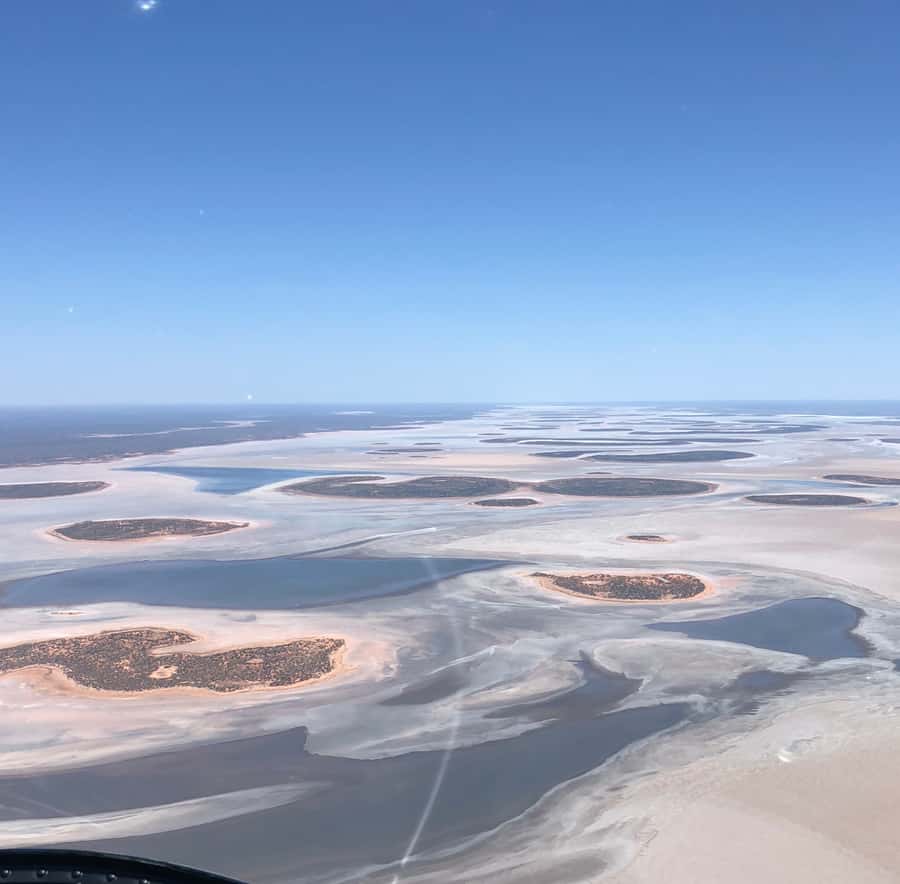
Then there’s Lake Amadeus. This stop is the desert’s “texture” moment. You’ll fly over Lake Amadeus and the area where the salt lake meets the sand, and that boundary line is exactly the kind of thing you want aerial access for. Salt flats can look flat on maps, but from above you can usually tell where the land changes—where the lake edges meet sand and where the desert stretches away.
The tour is built so you don’t just get one landmark. You get the desert’s contrast: salt lake textures, Uluru’s iconic presence, and Kata Tjuta’s dune-like rock forms.
The Helicopter Timing Game: Sunrise, Sunset, or Day
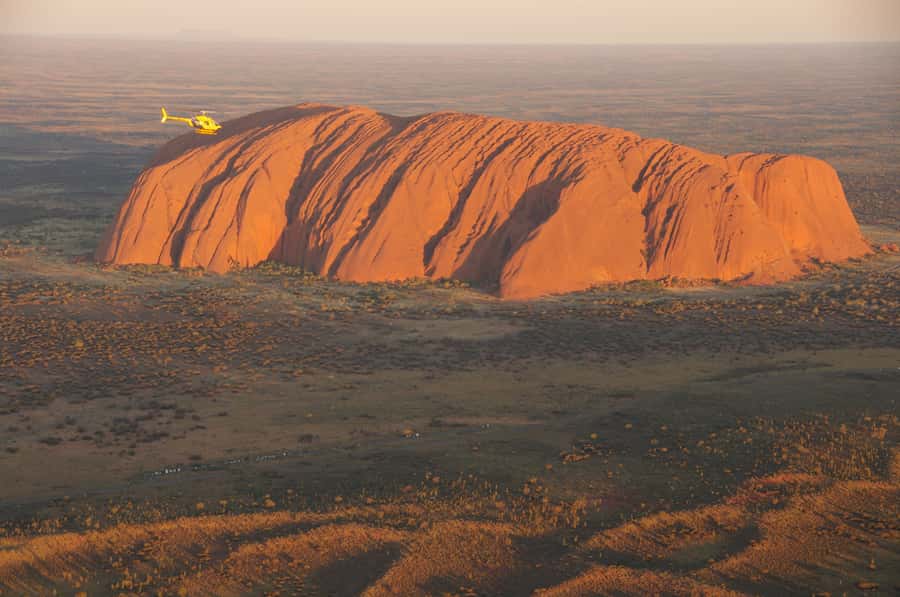
You can choose to run the tour at sunrise, sunset, or during the day. That choice affects what you’ll notice most.
- At sunrise, the desert light tends to feel cooler and the contrasts can look crisp as the sun rises over the horizon.
- At sunset, the desert can glow, and the rock surfaces often show stronger highlights and shadows.
- During the day, you’re more likely to spot details clearly—useful if your goal is straightforward viewing and camel-spotting.
My practical advice: pick the time that matches your tolerance for early mornings or late evenings. This is a 90-minute flight, so you’re not “waiting around” for hours. But sunrise and sunset still mean the pickup timing may affect your schedule, so plan your day around it.
Getting In and Out Smoothly: Pickup Points and What You Need
You’ll be picked up from select accommodations at Voyages Ayers Rock Resort. The listed pickup spots are:
- Sails in the Desert Hotel (meet outside the reception lobby)
- Outback Hotel & Resort (meet outside the reception lobby)
- Desert Gardens Hotel (meet outside the reception lobby)
- Ayers Rock Resort Campground (meet at the bus stop on the ring road)
You’ll want to be waiting at your pickup point at least 5 minutes early. That’s not about fussing—it’s about respecting helicopter schedules, and making sure you’re at the door ready to go.
On the vehicle side, you’ll board the helicopter after pickup and then return after the flight. The experience is designed to be simple from a logistics standpoint, as long as you’re at the correct pickup point on time.
One important movement note: you need to be able to use steps and platforms to enter and exit the helicopter. If that’s a concern for you, take it seriously before booking.
What the Flight Feels Like: 90 Minutes That Stay Focused
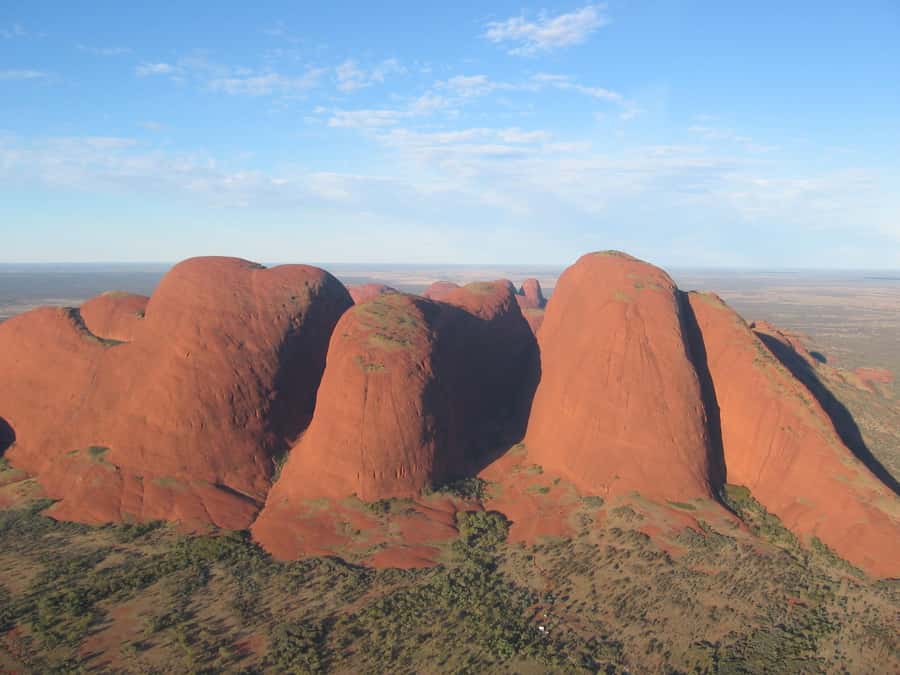
Ninety minutes sounds like a lot until you’re in the air—and then you realize it’s exactly the sweet spot for seeing multiple major sights without dragging. This tour keeps the story moving: first Lake Amadeus, then Uluru and Kata Tjuta, all with narration from the pilot and English audio support.
Because the flight is relatively short, you shouldn’t expect long stops or extended time on the ground. The value here is aerial viewing and guided interpretation, not lingering at a single viewpoint.
If you’re the type who likes clear structure—see it, learn it, move on—this format fits. If you prefer long, slow sightseeing with lots of walking, you might feel it’s too tight.
Lake Amadeus: Salt Flats, Desert Edges, and Camel-Spotting
The flight begins with Lake Amadeus. This is where the tour flexes its “from-the-air” advantage. The big thing to watch for is how the salt lake meets sand. From above, that meeting zone reads visually as a shift in texture and color, and it gives you a strong sense of how water, salt, and desert coexist in one place.
This is also one of the better segments for spotting wild camels. The tour description calls out camels roaming the desert plains and salt flats, and that’s exactly what you should do once you’re up there: scan calmly and look for movement against pale salt surfaces and darker sand patches.
Practical tip: bring closed-toe shoes (required), and keep your attention forward and slightly downward. Helicopter motion and changing angles can make it easy to miss brief movement, so a steady scan works better than frantic searching.
Uluru Up Close-Enough-For-Reality: Scale, Shape, and Silence in the Air
Next comes Uluru. When you approach from the air, Uluru’s presence becomes less about a single photo angle and more about the way it anchors the whole desert view. You can often see subtle changes in how the rock sits among the sand and how the surrounding terrain frames it.
This segment is where a good pilot narration helps the most. The tour includes English live tour guiding (and English audio), so you’re not left guessing what you’re seeing. On at least one flight experience, the pilot also added a friendly personal touch—joking about being a St Kilda AFL supporter—so the tone can be both informative and easygoing.
If you’re traveling with friends or family, this is a moment to agree on a simple goal: watch for how the rock’s edges change as the helicopter angle shifts. That’s where the “wow” turns into understanding.
Kata Tjuta: Dune-Like Formation Viewed as Three-Dimensional
Kata Tjuta is often described as dramatic from the ground, but from the air it becomes something else: a cluster of massive domes and ridges that look almost engineered by time and wind. You’ll be able to see how the formations relate to each other, which helps you grasp why the area feels so powerful and ancient in its scale.
The helicopter perspective also makes it easier to understand the terrain around Kata Tjuta. Instead of only seeing what’s directly in front of you on foot, you’ll see the wider desert shapes that surround it.
This isn’t a “hands-on” experience—it’s an aerial interpretation. So your job is simple: stay alert, listen, and look for the bigger picture.
Wild Camels in the Desert: How to Look Without Getting Frustrated
Camels in the outback can be easy to miss if you only look when you feel like it. The best strategy is steady scanning during the desert segments—especially around salt flats and desert plains.
The tour sets you up for this by explicitly promising chances to see wild camels in their natural environment. That doesn’t mean you’ll definitely spot them every single flight (wild animals do what wild animals do), but the chances are built into the route and timing of the flight.
How to maximize your odds:
- Look for small movement first, then zoom your attention outward to track direction.
- Compare darker camel shapes against pale salt backgrounds.
- Don’t fixate on one spot for too long. The desert keeps changing as the helicopter moves.
Value for $495: What You’re Really Paying For
At $495 per person for a 90-minute helicopter tour, you’re not buying a cheap thrill. You’re paying for access and perspective that most visitors never get: an aerial sweep that ties together Uluru, Kata Tjuta, and Lake Amadeus in one guided flight.
Here’s how I think about the value:
- If you want to see all three big sights in one day without jumping between multiple tours, a helicopter format can be the most efficient option.
- If you care about learning what you’re looking at, the English live narration and English audio add meaning to the visuals.
- If you time it for sunrise or sunset, you’re also paying for better light—because you’re in the air when conditions are most visually rewarding.
If your budget is tight, you might get plenty of views from the ground. But if you want the “scale and texture” view that only the air can deliver, the price starts to make sense.
Who This Tour Fits Best (and Who Should Skip It)
This experience makes the most sense if you:
- Want a guided aerial tour of Uluru, Kata Tjuta, and Lake Amadeus in a short time
- Enjoy scenic flight time and want explanations in English
- Are comfortable scanning for wildlife from a moving aircraft
- Can handle early or late departures depending on whether you pick sunrise or sunset
It’s not suitable if you:
- Have mobility impairments (entering and exiting involves steps and platforms)
- Weigh over 275 lbs (125 kg)
- Have low level of fitness
- Prefer fully ground-based sightseeing with lots of walking flexibility
The Small Details That Make a Difference
A few practical points can save you stress on the day:
- Wear closed-toe shoes. It’s required, and it’s the easiest way to stay comfortable around aircraft boarding areas.
- Plan to be at pickup points early—5 minutes early is the rule.
- Expect the tour to be aviation-simple: you’ll be transferred, briefed, fly, and then return. No complicated day-long schedule.
Also, note the operational reality: a minimum of three passengers is required. If fewer than that book, your booking might be paired with other bookings to meet the minimum.
Should You Book This Lake Amadeus, Uluru & Kata Tjuta Helicopter Tour?
I’d book it if you want the desert at its most readable—salt flats, monolith scale, and dune-like formations—guided from the air in a 90-minute window. The biggest selling points are the aerial access to Lake Amadeus + Uluru + Kata Tjuta together, plus the English narration that helps you understand what you’re seeing. The camels are a real bonus if you enjoy wildlife spotting.
I would not book if helicopter entry is a problem for you, if weight or mobility limits apply, or if you’d rather spend the day on foot instead of flying. And if you’re hoping for extended time at each spot, keep expectations tight: this is about the flight, not long ground visits.
FAQ
FAQ
What landmarks will I see on this helicopter tour?
You’ll fly over Lake Amadeus, Uluru, and Kata Tjuta during the 90-minute experience.
How long is the tour?
The tour lasts 90 minutes.
Where does pickup happen?
Pickup is available from select accommodations within Voyages Ayers Rock Resort, including Sails in the Desert Hotel, Outback Hotel & Resort, Desert Gardens Hotel, and Ayers Rock Resort Campground. Emu Walk Apartments aren’t included.
What time options are available?
You can choose to run the tour at sunrise, sunset, or during the day (check availability for starting times).
Is there a guide included, and what language is it?
Yes. There is a live tour guide in English, and an English audio guide is also included.
What should I bring?
You should bring closed-toe shoes.
Are there weight and mobility requirements?
Yes. The tour isn’t suitable for people with mobility impairments, and it has a weight limit of 275 lbs (125 kg). You also need to be able to use steps and platforms to enter and exit the helicopter.
What if the tour doesn’t meet the minimum number of passengers?
A minimum of three passengers is required for the tour to take place. If bookings don’t meet the minimum, yours might be paired with other bookings.
What’s the cancellation policy?
You can cancel up to 24 hours in advance for a full refund.