REVIEW · TASMAN GLACIER
Mount Cook: 3-Hour Tasman Glacier Helicopter Ride and Hike
Book on GetYourGuide →Operated by Mt Cook Glacier Guiding · Bookable on GetYourGuide
Few hikes start with a helicopter. This 3-hour heli-hike from Mount Cook pairs two short flights with real time on the Tasman Glacier and big-sky views of Aoraki/Mount Cook.
What I like most is the way the day feels balanced: you get a proper glacier walk with the right traction and gear, then you get a scenic fly-by that shows the mountain and surrounding icefields from a perspective most people never see. A small-group setup (up to 11 people) also helps your guide manage pace, safety, and photo stops—often with hands-on help from folks like Hunter, Anna, Rich, and Tori.
The main drawback is simple: it’s weather dependent, so you’re at the mercy of visibility and conditions, and the hike portion isn’t suitable for limited mobility.
In This Review
- Key things you’ll notice right away
- Why this heli-hike feels more like an ice expedition than a tour
- Timing that matters: how the 3-hour flow actually works
- 1) Start at Mount Cook Airport (and get set up properly)
- 2) Short helicopter hop to the remote glacier drop-off
- 3) The glacier block: hiking, ice formations, and photo moments
- 4) Second helicopter flight back with scenic fly-by
- 5) A short break, then back to the terminal
- The ice walk: what you’re really stepping into
- Aoraki/Mount Cook from the sky: the scenic value you can’t mimic
- Price and value: is $537 per person actually worth it?
- What to bring so you stay warm and comfortable
- Who this heli-hike suits best (and who should skip it)
- Should you book the Mt Cook Glacier 3-hour heli-hike?
- FAQ
- How long is the tour?
- What time slots are available?
- How much time do I spend on the Tasman Glacier?
- What gear is included?
- What about food and drinks?
- Where do I meet for the tour?
- Is the tour suitable for children or limited mobility?
Key things you’ll notice right away
- Two helicopter rides (about 15 minutes each) that actually change what you can see
- Up to 2 hours on the ice, with guided step-cutting and a pre-made walking route
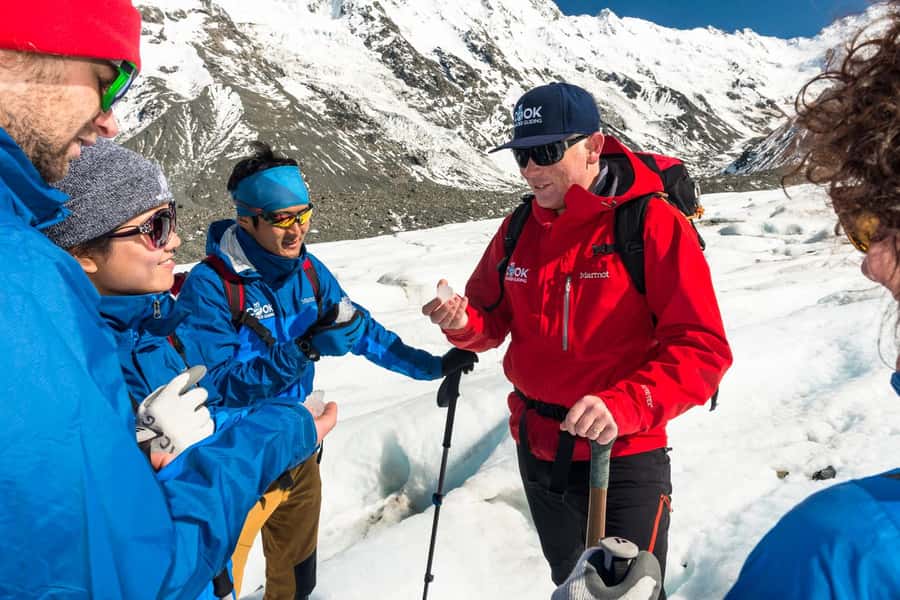
- Full traction kit included: crampons, boots, wool socks, poles, plus a waterproof jacket
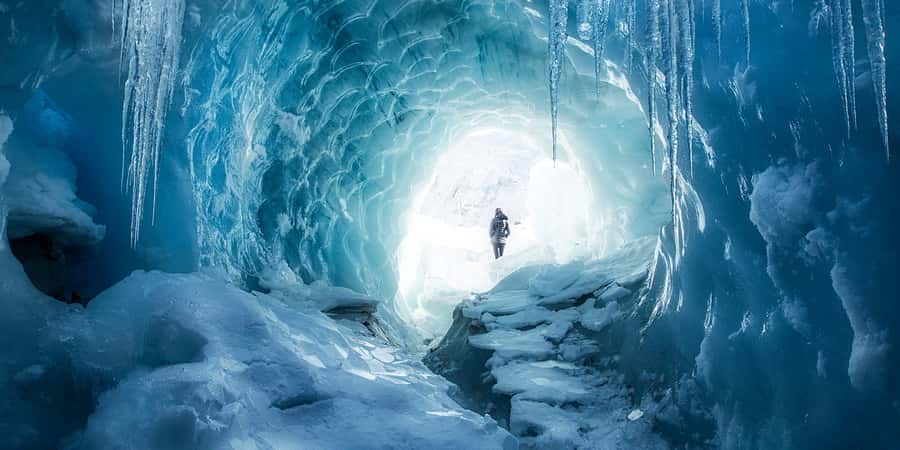
- Big glacier features are part of the plan: ice caves, tunnels, and moulins can show up depending on conditions
- Small group pace (limited to 11) helps everyone stay together and get a view
- Safety-first guiding, with guides like Jimmy, Kirsten, Bia, and Paul noted for careful instruction
Why this heli-hike feels more like an ice expedition than a tour
Mount Cook is already a magnet for dramatic scenery. The special twist here is that you don’t just look at the glacier—you land on it and walk it. The helicopter legs do more than add excitement; they set the day up so you can see Aoraki/Mount Cook from above, then step onto the Tasman Glacier for up-close texture, color, and movement.
The glacier walk is the heart of the experience. You’ll follow your guide as they move you through the ice formations and set you up with crampons and boots so you’re not improvising. From the reviews, the best moments often sound like small, specific scenes: squeezing through ice features, spotting moulins (those vertical holes in the ice), and stopping to look at blue ice and cave-like spaces when conditions allow.
And the mountain view is the payoff. Even if you’ve seen Aoraki/Mount Cook from the road, the helicopter angle makes the scale hit differently—icefields as geometry, ridgelines as a map, weather as a moving backdrop.
Timing that matters: how the 3-hour flow actually works
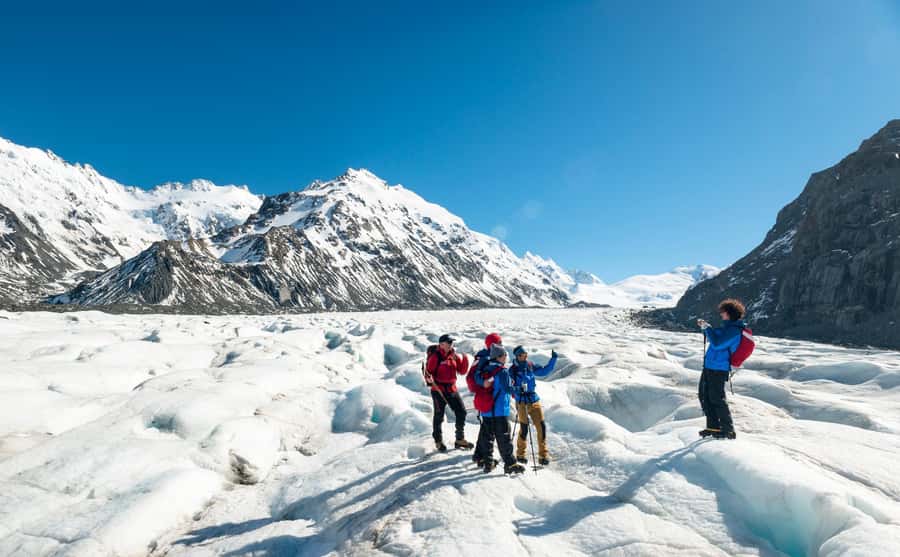
You pick one of two departures: 8:45 AM or 10:45 AM. The whole tour is about 3 hours, built around two flight segments and one block of time on the glacier.
Here’s the rhythm, in human terms:
1) Start at Mount Cook Airport (and get set up properly)
You meet inside the terminal at Mount Cook Airport at the Mt Cook Glacier Guiding desk. Plan to arrive with time to check in calmly. The group then starts with a safety briefing (around 45 minutes).
This briefing isn’t wasted time. On glaciers, one wrong step can turn into a real problem fast. Your guide will cover how to move with crampons, what to listen for, and how to stay spaced. The reviews repeatedly mention that guides kept things clear and safety-conscious—so you’ll want to treat the instructions like part of the tour, not background noise.
2) Short helicopter hop to the remote glacier drop-off
Next comes the first helicopter flight (about 15 minutes). This isn’t a long ride you can ignore. It’s enough time to scan the terrain and then land somewhere that would be hard to access on foot.
From the window, you’ll get your first sense of why this glacier is such a big deal: the scale, the flow, and how the mountain and ice interact. Pilots also seem to play an active role in the experience, often pointing out landmarks during the flight.
3) The glacier block: hiking, ice formations, and photo moments
This is where you spend your time: up to 2 hours on the Tasman Glacier. During this stretch, you’ll do a guided walk on a pre-made route, following your guide over the ice and into formations that can include tunnels, caves, and other dramatic features.
A detail that makes a difference: you’re not just “walking on ice.” Your guide is actively managing movement, and there’s mention of the guide cutting steps in the glacier as needed. That helps people who are new to traction feel steadier, and it keeps the group moving as a team.
You’ll likely spend time on photo stops too. Multiple guide names came up in the reviews as strong on group photos and taking extra care for solos—so if you’re the person who usually gets left out of vacation pictures, this is a good bet.
4) Second helicopter flight back with scenic fly-by
Then you do the second helicopter flight (about 15 minutes) back toward Mount Cook. This return leg gives you another changing perspective—often over the glacier and up around Aoraki/Mount Cook again.
From the feedback, the “both ways” view is where many people felt the day really earned its price. It’s the difference between seeing a photo of the mountains and having your eyes do the math in the air.
5) A short break, then back to the terminal
There’s a 10-minute break back at Mount Cook before you wrap up at the airport. It’s not long, so treat this as a quick reset rather than lunch time.
The ice walk: what you’re really stepping into
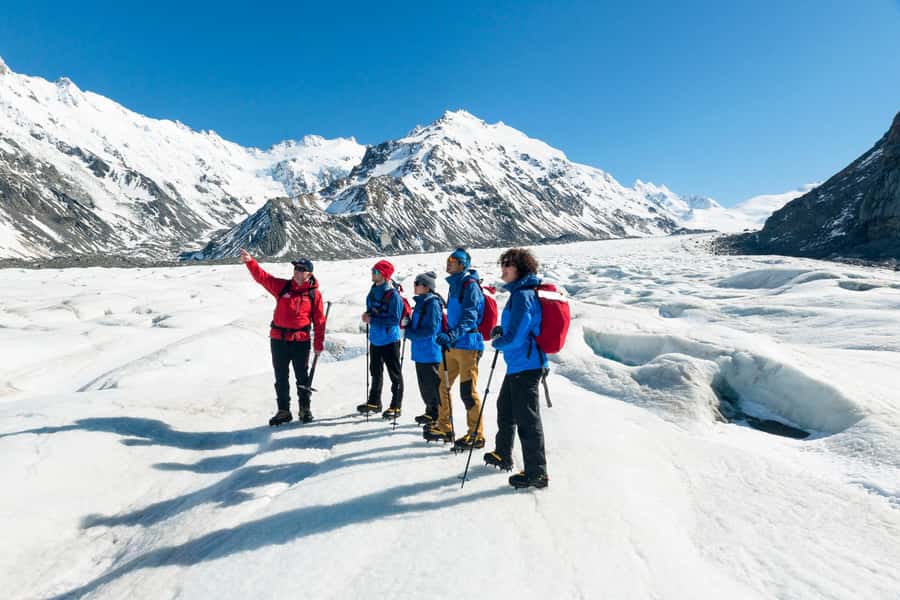
“Walking on a glacier” can sound intimidating. The real story is that you’re walking a guided, managed route with traction gear and a leader who’s watching your footing constantly.
You’ll be wearing:
- Leather boots
- Woolen socks
- Crampons
- Walking pole
- Waterproof jacket
That gear matters because glaciers don’t forgive thin layers or slippery shoes. With everything provided, you’re not stuck guessing what to bring. You’re just focusing on moving carefully.
What you might see on the ice
Because glaciers change constantly—and because weather affects what’s reachable—the exact features aren’t guaranteed. But the most praised highlights in the experience include:
- Ice caves / ice tunnels (some groups went through multiple cave-like areas)
- Blue ice areas that look almost unreal
- Moulins, including walking close to or through these vertical ice holes
- Ice formations and standing “walls” that make the glacier feel like a sculpture, not just a sheet of ice
A nice reality check from the reviews: you might hear the ice as the glacier settles and shifts. That sound adds a reminder that this is an active environment, not frozen scenery.
One practical note: follow the safety instructions even if you feel confident. In at least one case, a slower or rule-bending group affected whether everyone got a full cave/walk experience. It’s not the guide’s fault—just how group timing works on a route where conditions and movement matter.
Aoraki/Mount Cook from the sky: the scenic value you can’t mimic
Most people in the Mount Cook area get one big view, maybe from a lookout. This tour adds a second layer: the helicopter lets you see Aoraki/Mount Cook and the surrounding icefields as a system.
Even the flights being only 15 minutes each is a smart design choice. It’s long enough for a true scenic read, short enough to keep the day focused on the ice walk.
From the reviews, pilots were often called out for competence and for pointing out interesting landmarks during the flight. That’s helpful because you might not know what you’re seeing at first glance—getting context while you’re in the air can turn a beautiful moment into a memorable one you understand.
Price and value: is $537 per person actually worth it?
At $537 per person, this is not a casual activity. The honest question is: what are you buying besides “fun”?
You’re paying for three main things:
1) Access
You’re landing on a remote part of the Tasman Glacier and walking on terrain that takes specialized setup to do safely.
2) Time on ice, not just views
Up to 2 hours on the glacier is a meaningful chunk. Many premium scenic experiences give you a quick glimpse and move on. Here, the bulk of the day is spent where the real transformation happens—on the ice itself.
3) Helicopter access without turning the day into a flight marathon
Two flights of about 15 minutes each keep the experience efficient: you get multiple “from-above” perspectives while still spending the afternoon on-foot.
Also, the included gear reduces extra costs and guesswork. You’re provided boots, crampons, socks, poles, and a waterproof jacket—so you’re not piecing together rentals and layers at the last second.
So is it worth it? If you want a glacier walk plus real scenic flying, yes. If you only care about one of those, you may want to compare options that focus purely on views.
What to bring so you stay warm and comfortable
The tour includes important gear, but you still control your comfort with clothing and weather prep.
Bring:
- Warm clothing (think layers)
- Sunglasses
- Hat
If you run cold easily, treat the glacier like a winter day with wind-chill. Even when the sky looks cooperative, conditions on ice can feel sharper than you expect.
And while food and drinks aren’t included, there’s a short break at Mount Cook after the glacier portion. If you want to eat, plan around that—don’t expect a meal during the tour.
Who this heli-hike suits best (and who should skip it)
This experience is best for people who want:
- A hands-on glacier walk
- A helicopter scenic viewpoint of Aoraki/Mount Cook
- A day with tight structure, safety guidance, and time to take photos
Who might enjoy it most
- Active travelers who can stand and walk for the duration of the glacier route
- Photo-focused visitors (the guides in the feedback often helped with group pictures and solo shots)
- People traveling in a small group who like a coordinated itinerary rather than a free-for-all
Who should skip
- Children under 9
- People with mobility impairments or limited mobility
- Anyone who hates the idea of weather-controlled plans
Should you book the Mt Cook Glacier 3-hour heli-hike?
If you’re on the South Island and you want one “how did they get me there?” day, book this. The combination is the point: two helicopter rides, then real time walking on the Tasman Glacier with proper traction gear. It’s the kind of experience that changes how the landscape looks in your memory.
But don’t book it on a day you absolutely can’t afford to lose. Since the tour is weather dependent, you’re trusting the conditions and the schedule. If you’re flexible and you’re physically able to do the hike portion safely, this is a strong, high-value choice for Mount Cook.
If you want my practical bottom line: choose the time slot that best matches your other plans, pack for cold, and go in ready to follow instructions—then you’ll likely leave with a story that’s way bigger than a single photo.
FAQ
How long is the tour?
The tour duration is about 3 hours.
What time slots are available?
You can choose between an 8:45 AM start time or a 10:45 AM start time.
How much time do I spend on the Tasman Glacier?
You spend up to 2 hours on the ice, weather permitting.
What gear is included?
The tour includes leather boots, woolen socks, crampons, walking pole, and a waterproof jacket.
What about food and drinks?
Food and drinks are not included.
Where do I meet for the tour?
Meet inside the terminal of Mount Cook Airport at the Mt Cook Glacier Guiding desk.
Is the tour suitable for children or limited mobility?
It is not suitable for children under 9. It is also not recommended for people with limited mobility or people with mobility impairments.