REVIEW · PORT DOUGLAS
Port Douglas: Great Barrier Reef 30-Minute Helicopter Flight
Book on GetYourGuide →Operated by Nautilus Aviation Pty Ltd · Bookable on GetYourGuide
A Great Barrier Reef flight feels different than any boat trip. From Port Douglas you skim above 4-Mile Beach and the reef’s bright shallows, then you get real-time spotting help from the pilot through a headset. Two things I like a lot here: the short, 30-minute format that packs in big views, and the in-air commentary that helps you notice wildlife and reef patterns quickly. One watch-out: window seats aren’t guaranteed, so you may want to prioritize where you sit at boarding.
With a small group (limited to 6) and air-conditioned helicopters, the experience stays relaxed. You’ll meet at either the Sheraton Mirage lobby or the helipad across the highway, then you’ll be airborne fast enough that the whole thing doesn’t turn into a half-day project. Bring a daypack and binoculars, and plan your body to be ready at check-in time.
In This Review
- Key Highlights Worth Booking For
- Port Douglas Great Barrier Reef Flight: Why This 30 Minutes Works
- Flying Over 4-Mile Beach: The First Views Set the Tone
- Low Isles From the Air: Two Islands, a Lighthouse, and Fringing Reef
- Batt Reef Wildlife Scanning: What to Look For and When
- Helmets, Headsets, and Air-Conditioned Comfort: Small Things That Improve the Flight
- Logistics That Matter: Meeting Point, Check-In Time, and Window Seat Reality
- Price and Value: Is $322 for 30 Minutes Worth It?
- What to Bring (and What You Can’t Bring) for a Smooth Flight
- Who This Helicopter Reef Flight Suits Best
- Should You Book This Port Douglas Reef Helicopter Flight?
- FAQ
- How long is the Great Barrier Reef helicopter flight?
- What is the price per person?
- Is hotel pickup and drop-off included in Port Douglas?
- Where do I meet for the flight?
- Are window seats guaranteed?
- What should I bring on the tour?
- What items are not allowed during the flight?
- What size is the group?
- What is the passenger weight limit?
Key Highlights Worth Booking For
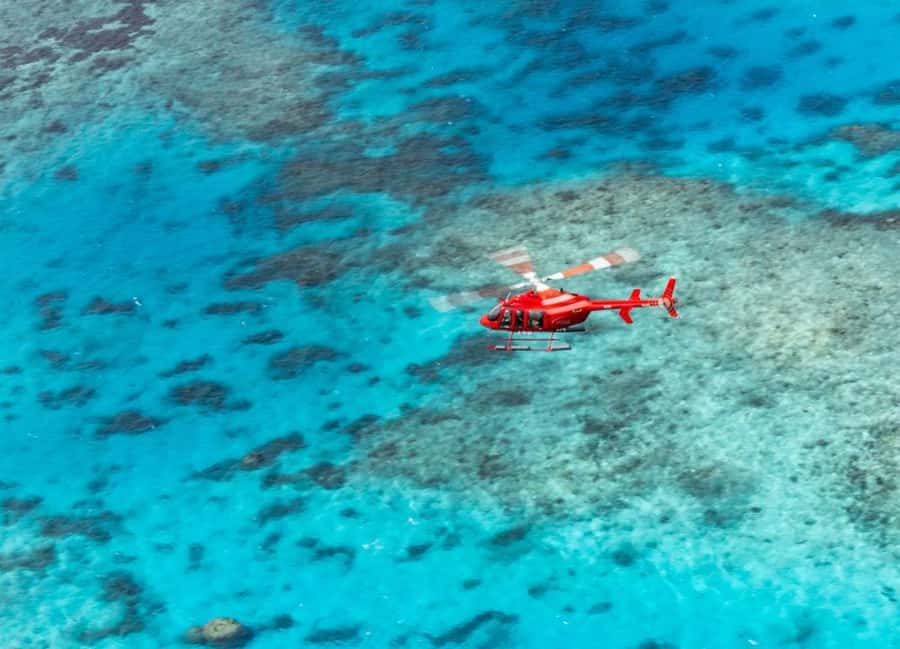
- 30 minutes in the air that turn the reef into something you can actually see
- Low Isles and the lighthouse area as a clear, iconic landmark from above
- Batt Reef scanning for marine life with help from the pilot
- Voice-activated headsets so you can hear commentary without shouting
- Small group size up to 6 for a more personal feeling flight
Port Douglas Great Barrier Reef Flight: Why This 30 Minutes Works
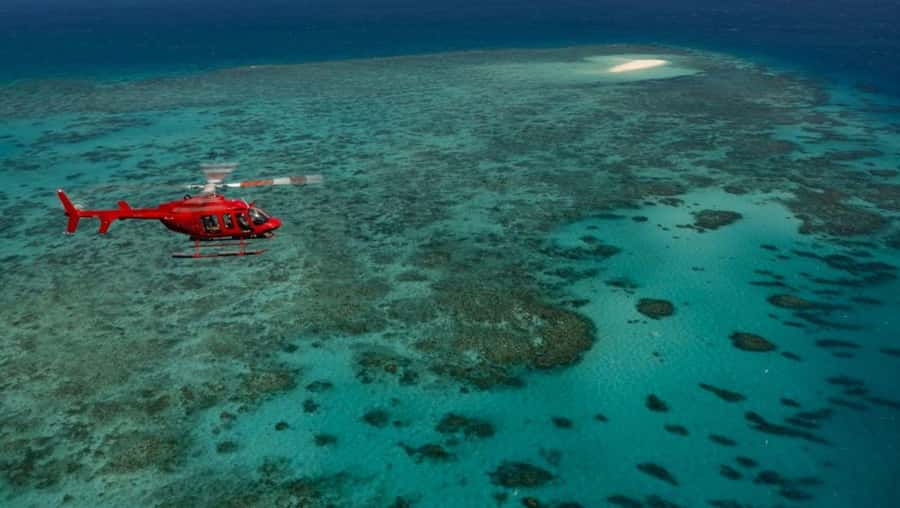
This is one of those rare tours where the time limit is the selling point. Thirty minutes sounds short until you realize what’s happening: you’re not trying to cover a long route by road or ferry. You’re getting a concentrated aerial look at the Great Barrier Reef region—fast access to wide views, shallow-water color, and reef structures that are hard to spot from the surface.
From up high, the reef isn’t just “blue ocean.” You see clear differences in water depth and coral gardens, with strong blue-green color bands that help you understand what you’re looking at. And because the pilot is also scanning for wildlife, you’re not just watching scenery—you’re hunting for sea turtles, sharks, manta rays, dolphins, and dugong, with extra odds in season for humpback whales (Jul–Sep).
The other big value is the human factor. In flights like this, your outcome depends a lot on the crew’s ability to find what’s worth looking at. Reviews include pilots such as Brooke, Brie, and Matt, and they’re praised for being friendly, responsive to questions, and willing to adjust the flight path to help passengers get a better view of what’s spotted. That flexibility turns a nice flight into a memorable one.
You can also read our reviews of more tours and experiences in Port Douglas.
Flying Over 4-Mile Beach: The First Views Set the Tone
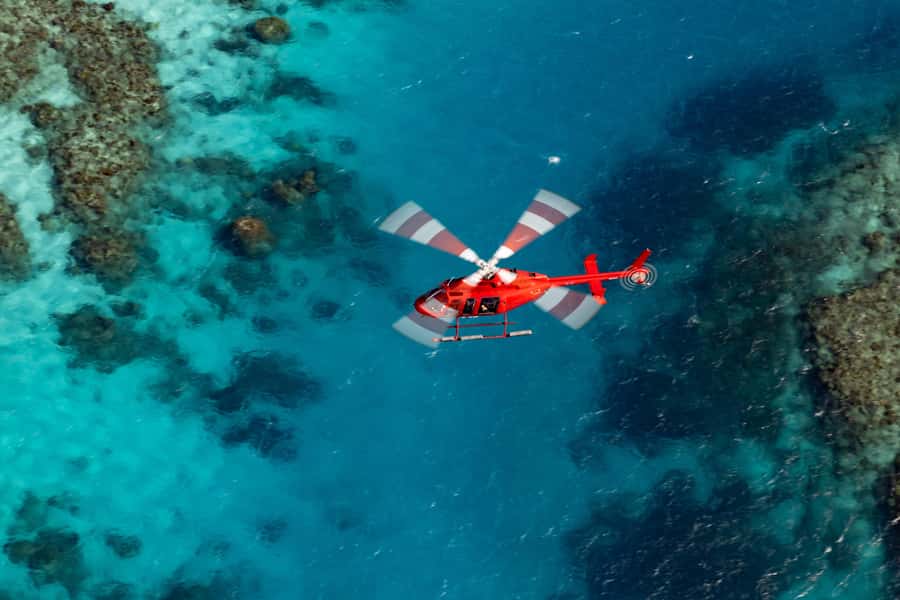
Your flight starts with a classic Port Douglas framing: you’ll depart over Port Douglas and the famous 4-Mile Beach. From the air, the beach becomes more than scenery. You can use it as a “scale reference” for the coastline—shoreline shape, surf patterns, and the way the land meets the reef waters.
It’s also a visual warm-up. You’re still learning what to watch: where the water shifts color, where shallow coral zones show up, and how ocean color changes with reef depth. If you’ve never seen the reef from above, this early stretch gives you the quickest education of the whole trip.
And don’t underestimate the simple “look for patterns” approach. In the first minutes, your brain starts connecting the greenish areas with reef structure. That makes later sections—especially Low Isles and Batt Reef—much easier to enjoy instead of feeling like you’re just staring at water.
Low Isles From the Air: Two Islands, a Lighthouse, and Fringing Reef
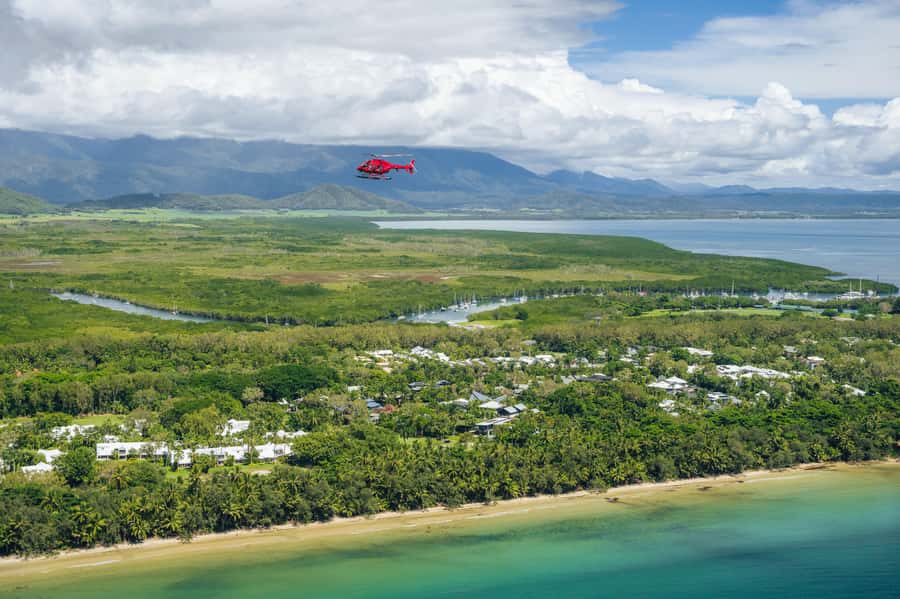
Next comes one of the most photogenic parts of the route: Low Isles. This area consists of two coral cay islands and a significant fringing reef. From above, you get a clear, island-to-reef visual that feels instantly understandable. It’s not abstract. It looks like a real ecosystem with edges you can trace.
Low Isles also includes a notable landmark: a lighthouse dating to around 1878. From the air, that lighthouse is a strong point on the map in your mind. Even if you don’t care about old structures, it helps you orient yourself during the flight and makes it easier to spot the surrounding reef edges and sand or shallow-water zones.
The fringing reef detail matters too. From the air, fringing reefs often show up as lighter bands around the cays, making it easier to see coral zones compared to deeper open water. You’re basically getting a bird’s-eye lesson in why the reef is so productive: you can see the boundaries where light and habitat line up.
If you’re traveling with friends, or you’re the person who loves good photos, Low Isles is where you’ll likely feel the most “reward per minute.” It’s the kind of view that looks different from every angle because the coastline and reef structure create strong geometry.
Batt Reef Wildlife Scanning: What to Look For and When
Once you’re out over Batt Reef, the flight shifts from “pretty views” to “spotting.” Here’s the key: from the air, the larger marine animals are typically the easiest to find. That doesn’t mean you’ll see everything every time, but the route is built around improving your odds.
Your pilot will guide the search using what they can see and what they know about where animals tend to show up. The experience description specifically includes chances to spot:
- Sea turtles
- Sharks
- Manta rays
- Dolphins
- Dugong
- Humpback whales during Jul–Sep
Even if you’re not a marine life expert, you can help your own odds by using the right mindset. Instead of staring at random patches of ocean, scan for movement and contrasts—shapes cutting the water surface, darker shadows, or patterns where animals might surface. If you have binoculars, this is where they can actually earn their space in your bag.
One small but important detail from reviews: pilots were praised for being willing to fly around or adjust the approach when something is spotted so passengers get a good look. That kind of “okay, watch this now” moment is where the experience earns its star rating. It’s also why small group size matters. Fewer people means your pilot can spend more attention managing the spotting and views for everyone onboard.
Helmets, Headsets, and Air-Conditioned Comfort: Small Things That Improve the Flight
Let’s talk practical comfort, because helicopter flights can feel intense if you’re not prepared. Here, you get modern air-conditioned helicopters and a setup designed for communication: headsets with voice activated microphones. That means you can actually hear the pilot’s commentary clearly without shouting, even when noise and wind are part of the picture.
The in-flight commentary is also part of the value. Reviews mention pilots like Brooke and Brie providing clear information about the reef and marine life, and being happy to answer questions. That matters because it turns the trip into a guided experience rather than a silent, expensive ride.
Also, the ground crew experience is part of the tone. One review mentions staff being welcoming and snapping photos before boarding. Another review calls out organization and friendly staff during the briefing and check-in flow. These aren’t “tour luxury” items, but they reduce stress, and stress reduction counts for a lot when you’re trying to catch a flight.
For photographers, note the obvious reality: you’ll be in motion and the helicopter will move. So plan for short bursts of shooting, and don’t assume every shot will be perfect. If you care most about viewing the reef, let the camera be your sidekick, not your full-time job.
Logistics That Matter: Meeting Point, Check-In Time, and Window Seat Reality
This trip doesn’t include hotel pickup and drop-off from Port Douglas. You’ll need to handle getting yourself to the meeting spot. The options are either the Sheraton Mirage lobby or the helipad across the highway. If you’re staying nearby, it’s easy. If you’re staying elsewhere, give yourself extra time so you’re not rushing.
Here’s the timing detail that can make or break your day: check-in is recommended 45 minutes before departure, and it closes 30 minutes before. Missing that window means you can forfeit the fare. I’m a big fan of showing up early for flights anyway, but for this one, early is more than a good habit—it’s protection.
One more honest point: window seats are not guaranteed. That’s why I suggest you show up calm and ready when boarding happens, and do your best to get the best available seat when you’re actually there. If you’re bringing binoculars for spotting, a window seat can make them more useful because you’re minimizing glare and turbulence angles.
Finally, this is a shared basis flight. There’s a small group (limited to 6), but it’s not a private charter. That generally keeps the vibe friendly and personal, but it also means the aircraft and flight plan are set around shared logistics.
Price and Value: Is $322 for 30 Minutes Worth It?
At $322 per person for a 30-minute flight, this isn’t a budget add-on. The value has to come from what you can only get by air.
Here’s what you’re paying for:
- A fast aerial view of reef color and structure that’s hard to recreate on land
- A guided spotting approach that targets larger marine animals
- Access to specific iconic areas like Low Isles and the route over 4-Mile Beach
- A crew-and-equipment setup designed for clear communication (headsets with voice activated microphones)
If your dream is simply to see the reef, you might feel the cost is too high. If your goal is to understand the reef from above and maximize wildlife-spotting odds during the limited time you have in Port Douglas, the price can feel reasonable.
Also, think about alternatives. Reef experiences often take longer, and weather and timing can become bigger issues. This one is short and structured: you know what you’re buying—30 minutes of high-level reef visuals plus a guided search.
What to Bring (and What You Can’t Bring) for a Smooth Flight
To make the flight comfortable and more enjoyable:
- Wear sunglasses
- Bring a daypack
- Pack binoculars if you have them
Binoculars are especially helpful when you’re scanning for animals around Batt Reef. Even if you don’t spot everything, watching the pilot’s pointers plus your own search is part of the fun.
On the rules side, there are a few clear no-go items:
- No drones
- No selfie sticks
- No smoking
- No food or drinks
- No alcohol and drugs
You’ll also want to skip anything that complicates cabin space, like non-folding strollers. If you’re planning to bring personal gear, keep it simple.
And yes, your body matters too. Passenger weights must be advised at booking, with a maximum single-seat weight of 130 kg including carry-on luggage/bags. If you exceed 130 kg, the data states you’ll need an additional seat at 50% of the ticket price, paid to the local partner on the day of travel.
Who This Helicopter Reef Flight Suits Best
I’d put this tour in the sweet spot for people who:
- Want a high-impact Great Barrier Reef experience without losing half a day
- Enjoy wildlife spotting and like being guided to look in the right places
- Prefer a small group setting (up to 6 participants)
- Appreciate clear, real-world explanations from the pilot rather than vague sightseeing
It’s also a great choice if you’re in Port Douglas and you’re curious about what the reef looks like when you can’t see it from the beach. Seeing color patterns and reef edges from above changes how you understand the whole Great Barrier Reef system.
On the other hand, you might skip it if you’re hoping for a long duration, a relaxed boat-leaning rhythm, or guaranteed window-seat perfection. This is a short flight with shared logistics, so you’ll get the most enjoyment if you mentally commit to the bird’s-eye viewpoint as the main event.
Should You Book This Port Douglas Reef Helicopter Flight?
Book it if you want maximum reef visuals and a guided wildlife search in a tight time window. The combination of 30 minutes, clear routes over 4-Mile Beach, Low Isles, and out over Batt Reef, plus crew support through headsets and in-air commentary, makes the experience feel focused instead of rushed.
I’d hesitate only if window-seat certainty is a deal-breaker for you, or if the cost feels hard to justify for a short ride. If you’re flexible, prepared, and excited to scan the water from above, this is one of the more memorable ways to see the Great Barrier Reef while you’re based in Port Douglas.
FAQ
How long is the Great Barrier Reef helicopter flight?
It lasts 30 minutes.
What is the price per person?
The price is $322 per person.
Is hotel pickup and drop-off included in Port Douglas?
No. Hotel pickup and drop-off are not included.
Where do I meet for the flight?
You’ll meet either at the Sheraton Mirage lobby or at the helipad across the highway.
Are window seats guaranteed?
No, window seats are not guaranteed.
What should I bring on the tour?
Bring sunglasses, a daypack, and binoculars.
What items are not allowed during the flight?
Drones and selfie sticks are not allowed. Smoking is not allowed, and food and drinks are also not allowed.
What size is the group?
It’s a small group limited to 6 participants.
What is the passenger weight limit?
The maximum single-seat weight is 130 kg, including carry-on luggage/bags. If you exceed 130 kg, you must purchase an additional seat at 50% of the ticket price (paid to the local partner on the day of travel).