REVIEW · BIG ISLAND OF HAWAII
Big Island Spectacular Helicopter Tour
Book on Viator →Operated by Blue Hawaiian Helicopters - Waikoloa · Bookable on Viator
Two hours, and the whole Big Island tilts. From Waikoloa, this flight gives you wide viewing windows and a real 2-way headset connection with your pilot, so you’re not just staring down at clouds. I love how the route strings together ranch country, two major volcano areas, and the waterfall regions around Hilo into one tight plan.
The second win for me is the setup on board: Bose noise-cancelling headsets and a pilot who guides from the cockpit with clear commentary. The main thing to watch is cost creep: the in-flight video and photo USB package is not included, and at this price tag you’ll want to think ahead about whether you’ll buy it after.
In This Review
- Key Things That Make This Helicopter Tour Worth Your Time
- Why Helicopters Beat Racing Around Big Island Roads
- Blue Hawaiian at Waikoloa: The Preflight Moment That Sets the Tone
- The Kohala Start: Ranch Country and Big Valley Views
- West Coast Memories Tied to King Kamehameha
- Mauna Loa and December 2022 Lava: Seeing a Giant’s Scale
- Kilauea Up Close: A Volcano That’s Been at It Since 1983
- Hawaii Volcanoes National Park: From Sea Level to Over 13,000 Feet
- Hilo and the Northeast Wet Side: Rainfall, Valleys, and Waterfalls
- Akaka Falls From Above: That 442-Foot Drop
- On-Board Comfort, Seats, and the Photo/Video Add-On Reality
- Price Check: Is $790.90 Worth It?
- Who Should Book This Helicopter Tour From Waikoloa
- Should You Book the Big Island Spectacular Helicopter Tour?
- FAQ
- How long is the Big Island Spectacular Helicopter Tour?
- Where does the tour start?
- What time should I arrive to check in?
- Do I get to talk to the pilot during the flight?
- Are headsets included?
- Is video or photo included?
- Is there a weight limit?
- What happens if the weather cancels the flight?
- Can I cancel and get a refund?
Key Things That Make This Helicopter Tour Worth Your Time
- Bose electronic noise-cancelling headsets help you hear the guide clearly
- 2-way microphones let you talk back to the pilot in flight
- Route coverage is built for “overview time”: Kohala, Mauna Loa, Kilauea, Hilo, and Akaka Falls
- Small aircraft cap (max 6) keeps the experience feeling personal
- Your seat affects your views since seating is assigned by weight and size
- Dark clothing matters to reduce glare in photos, plus strict limits on hats and selfie sticks
Why Helicopters Beat Racing Around Big Island Roads
Big Island is big. Distances can eat your day fast, and “squeezing in” volcanic viewpoints often turns into long drives, slow parking, and rushed stops. This tour is designed to flip that equation: you trade road time for air time and get a fast sense of how the island fits together.
What makes it work is the balance. You’re not stuck on just one theme like volcanoes only, or waterfalls only. Instead, the flight connects ranch country, coastal towns, volcano terrain, and the wetter northeast side where the waterfalls fall hard.
It also helps that the total time is short, about two hours. That means you can do it even if your schedule is already packed with hikes, beach time, or a Volcanoes National Park visit.
You can also read our reviews of more tours and experiences in Big Island of Hawaii.
Blue Hawaiian at Waikoloa: The Preflight Moment That Sets the Tone
This starts at Blue Hawaiian Helicopters in Waikoloa Village, on Waikoloa Road. The experience uses a mobile ticket, and you’ll check in one hour before departure. That hour is there for weight check, a safety briefing, and escorting you to your aircraft so the flight can leave on time.
The aircraft rules are part of the deal. You’ll want dark colored clothing to reduce glare in photos. Hats, bags, large cameras, and extending selfie sticks aren’t allowed, which keeps things safer and helps you get clean sightlines out the windows.
One practical heads-up: they also note that no scuba diving should happen within 24 hours of departure. If you’ve been underwater recently, you’ll want to plan your schedule around this.
Finally, your on-board comfort isn’t an afterthought. You wear Bose Aviation-grade, electronic noise-cancelling headsets, and you’ll have communication through 2-way microphones with your pilot. That matters because Hawaii’s “sounds” don’t come through like you might expect in a vehicle.
The Kohala Start: Ranch Country and Big Valley Views
Right away, the flight heads toward the Kohala area. This is cowboy country, known for rolling pastures and ranching, and it’s the kind of place that reads differently from the ground. Up above, you can actually see how the valleys carve the island and how the coast ties into the interior.
Even if you’ve seen photos of Hawaii’s valleys, aerial views change your brain’s map. From the air, you’ll notice patterns in land use, the shape of ridgelines, and how water and vegetation vary with elevation. It’s the start of the “oh wow” factor that keeps people smiling through the rest of the flight.
A small note on views: because seating is assigned based on weight and size, your sightlines will vary. If you want the best window angles over certain valleys, be aware that your seat position can affect what you get to see most clearly.
West Coast Memories Tied to King Kamehameha
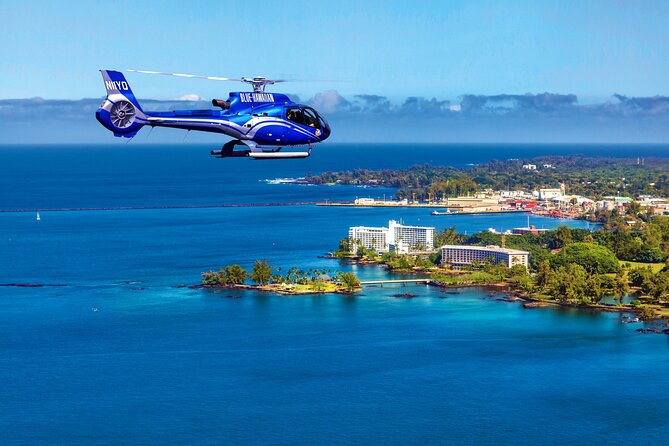
Next, you’ll swing toward the island’s west coast and a town connected to King Kamehameha, where he spent his final years. This is one of those stops that feels like history, but experienced from the sky, it becomes something else too.
You start to understand coastlines as geography, not just scenery. From above, you can see where towns sit relative to cliffs, where the land drops into the ocean, and how exposure to the weather varies across the island’s sides.
The practical benefit is that this part of the flight gives you orientation. After this, the volcano sections make more sense because you know which side you’re on and how the island’s shape drives the weather and terrain.
Mauna Loa and December 2022 Lava: Seeing a Giant’s Scale
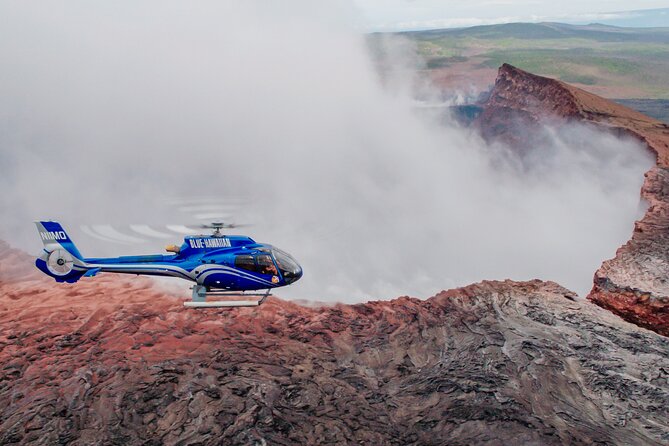
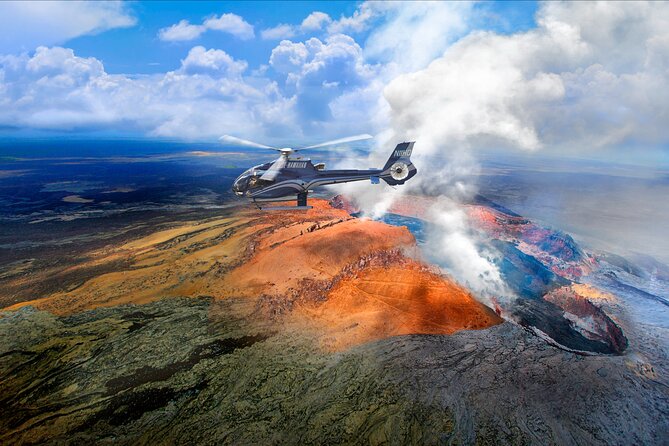
One of the big airborne highlights is the view of Mauna Loa, one of the five volcanoes that form the Island of Hawaii and described as one of the largest on earth. The tour route is set up to show you latest flows most recently erupting in December 2022.
This is where a helicopter earns its cost. From ground level, volcano terrain is often distant or partially blocked by terrain folds. From the air, you get context: you can see lava fields as surfaces that stretch and connect, not just single viewpoints.
You’ll also see the island’s texture shift. Volcanic areas don’t look like a single color or single “type” of rock. From above, you can spot differences in brightness, flow patterns, and how vegetation has started to reclaim new ground.

Kilauea Up Close: A Volcano That’s Been at It Since 1983
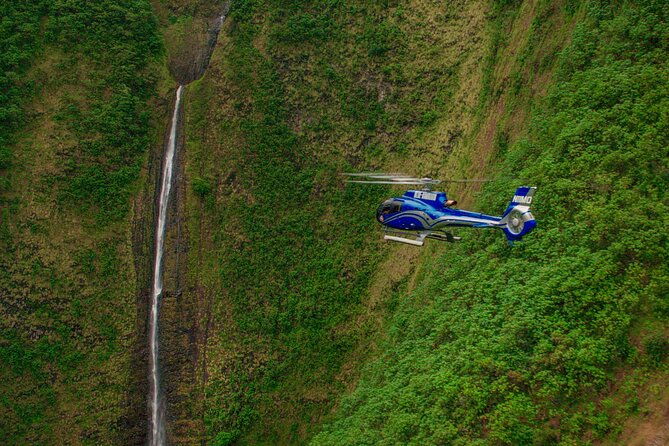
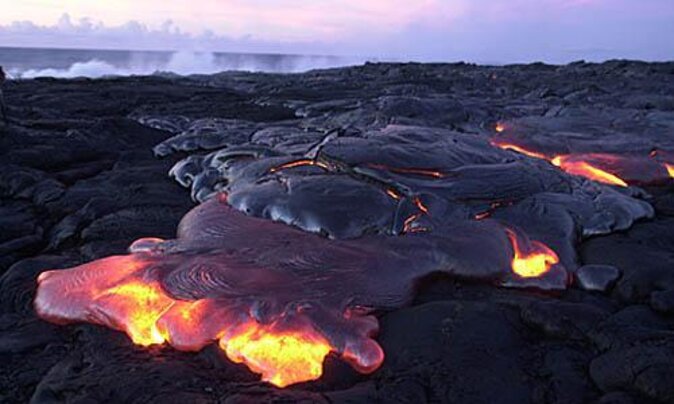
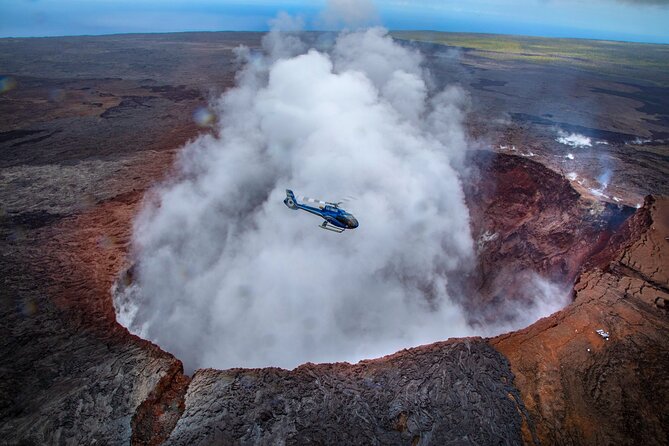
Then comes Kilauea, an active shield volcano along the southeastern shore. It’s described as continuously erupting since 1983, and it’s one of the reasons this tour exists in the first place.
A lot of helicopter tours sell big views. This one also tries to give you interpretation—what you’re looking at and why it matters. The best moments are when your pilot is using the 2-way headset so you’re not guessing. You’ll hear what’s being seen in real time, not just a scripted speech.
Recent experiences have included flights when volcanic activity was visibly underway. People have reported seeing Kilauea erupting and still smoking shortly after activity, which shows why timing can be a big part of the payoff. Even when conditions are less dramatic, the scale and presence of the active volcanic landscape is hard to match any other way.
Hawaii Volcanoes National Park: From Sea Level to Over 13,000 Feet
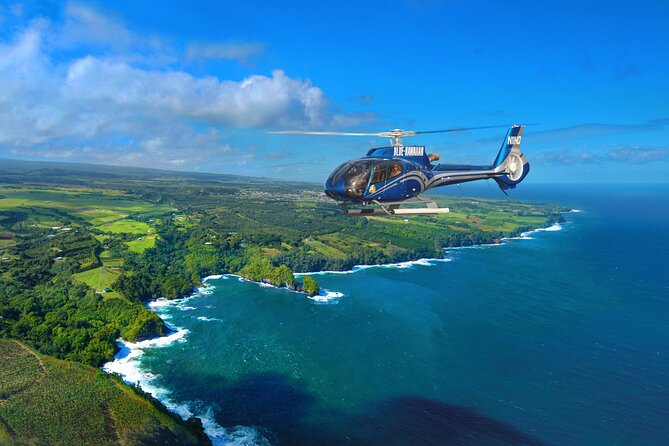
After the active volcano areas, you’ll cover Hawaii Volcanoes National Park. The flight route is planned to show the park’s vertical range, climbing from sea level to more than 13,000 feet, and includes mention of six climate zones along the way. That vertical sweep is exactly why the Big Island feels so varied compared to other Hawaiian islands.
From above, the park becomes a color map. You’ll see how the land changes fast with elevation, and how fog, weather, and vegetation patterns can shift even within a short geographic span. You’re not hiking these lines; you’re watching them happen.
You’ll also hear context about the long story of eruptions in the region. This includes the flight over an area tied to rift-zone activity that lasted from 1983 to 2018, described as the longest-lived rift-zone eruption of the last two centuries. It gives you a longer timeline than most quick stops can.
Hilo and the Northeast Wet Side: Rainfall, Valleys, and Waterfalls
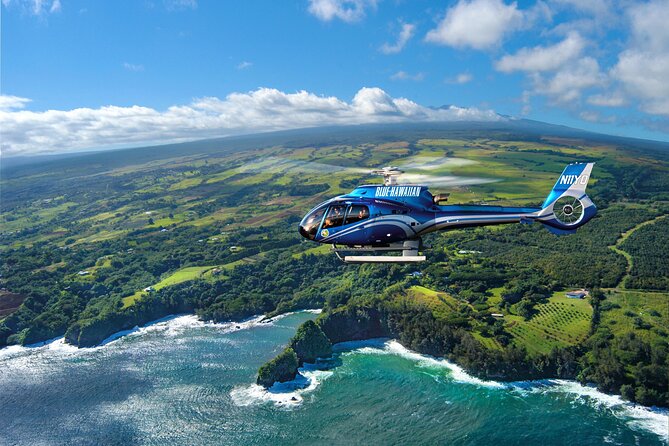
Then you pivot to the northeast side and the Hilo region. The flight highlights this as fertile rainforest country with dramatic waterfalls, and the numbers help you understand why it looks the way it does: the area is described as receiving nearly 84 inches of rainfall each year.
From the air, rainforests don’t look like a flat green wall. They show texture—patches of different density, breaks in the canopy, and the way water drains into valleys. This is also where you may spot whales in the ocean. People have specifically mentioned seeing a humpback whale with her calf during their flight, which reminds you this region isn’t just vegetation and cliffs.
The overall feel is a contrast to the drier, ranchy interior parts of the island. If you’re the type who likes variety, this segment is what ties it together.
Akaka Falls From Above: That 442-Foot Drop
One of the final major scenic moments is the view of Akaka Falls, described as dropping 442 feet. Helicopters are great for waterfall viewing because you can see the fall in context: where it starts, how the valley funnels it, and how far down it goes before the forest takes over.
You’ll also get a sense of why this area is so famous. From the ground, waterfalls often become a single point. From the sky, it becomes a whole system: cliff, plunge, mist, and surrounding vegetation.
This is one of the areas where your seat matters. If you’re positioned to see the valley opening clearly, you’ll likely get a cleaner view of both the top of the falls and the plunge line. If your seat angles you away, you can still enjoy it, but it won’t feel quite as tall.
On-Board Comfort, Seats, and the Photo/Video Add-On Reality
Let’s talk practicals inside the helicopter. The headsets are a real benefit. They’re meant to cut down engine noise so you can actually hear your pilot’s guidance and any safety instructions without cranking your attention to maximum.
Music shows up too. Some flights have been described as using a soundtrack that fits the mood—songs like Magic Carpet Ride and even Jimmy Buffett Volcano, plus theme music like Jurassic Park. That kind of touch doesn’t change the scenery, but it does change the feel. It makes the flight feel like a guided adventure rather than a rigid routine.
Now, the big money detail: in-flight video and photo packages are available after the flight for purchase but not included. At a price like this, I treat that as a decision point before you board. If you know you’ll want the footage, budget for it now (a credit card is recommended for the purchase at the heliport).
Also, because hats and large items are restricted, it helps to travel light. You’re going to be focused on the windows, not on fiddling with gear.
Seat assignment is based on weight and size, and there’s a 240 lb total weight per passenger limit noted for safe balancing. If you’re over 240 lb, an adjacent empty seat is required, and the second seat is described as half off the regular tour price. That rule is rare across many activities, so it’s good you know it upfront. It also means availability can feel tighter than you’d expect.
Price Check: Is $790.90 Worth It?
At $790.90 per person, this is not a casual splurge. You’re paying for three things: time compression, access, and interpretation.
Time compression is huge. In two hours, you can see ranch valleys, west coast coastline, two major volcano zones, and waterfall country in a way you simply can’t recreate by driving. If you’re trying to get a Big Island overview without spending your whole trip in a rental car, this price starts making more sense.
Access is the second reason. Helicopters give you views of volcanic terrain, cliff lines, and valleys from angles that ground viewpoints can’t match. Especially for active volcanic areas, the aerial perspective changes what you can actually observe.
Interpretation is the third reason. The pilot guide is also noted as state-certified tour guide, and people also praise how pilots like Greg, Shane, Kai, and James handle the flight—friendly, interactive, and quick to point out what you’re seeing. That matters because it turns the trip from sightseeing into learning your way around the island.
The main drawback for value is simple: if you’ve already driven most of the island, you might feel like you’re seeing familiar shapes again from above. One person even said they’d driven a large chunk already, and the flight felt like a repeat since there aren’t advertised stops where you land and tour a site.
So my advice is to book based on what you want—not just what you’ve already done. If you’re short on time and want an aerial overview, it can feel like money well spent. If you have plenty of time to drive and hike, you might decide a cheaper mix of viewpoints is enough.
Who Should Book This Helicopter Tour From Waikoloa
This one fits best if you want an island-wide snapshot in a short window and you like volcano-and-waterfall scenery. It’s also a strong option if you want guided context without adding another long day of driving or hiking.
It tends to suit couples celebrating something special, people with limited time, and anyone who wants a first-time Big Island experience that covers a lot of terrain quickly. The max group size of 6 also helps keep the tour feeling personal and smooth.
On the other hand, if you hate spending money on add-ons, don’t plan to buy the optional photo/video package. The base tour doesn’t include that deliverable. If you’re highly price-sensitive or already did most of the island by car, you may want to compare this against a full-day ground itinerary.
Should You Book the Big Island Spectacular Helicopter Tour?
Book it if:
- You want the fast Big Island overview without adding another full day of driving.
- Volcanoes (including Kilauea activity and Mauna Loa scale) are at the top of your list.
- You value a guided pilot experience with 2-way headset communication.
Skip it or reconsider if:
- You’re already doing extensive driving and you want to spend your budget on ground activities instead.
- You’re hoping for lots of on-the-ground stops. This is mostly an aerial route, so plan around what you can see from the windows.
- You don’t want to deal with possible extra spending for the post-flight photo/video package.
If you want one “wow” day that compresses a huge slice of the island into a tight, guided flight, this tour is a strong match.
FAQ
How long is the Big Island Spectacular Helicopter Tour?
It runs about 2 hours (approx.).
Where does the tour start?
It starts at Blue Hawaiian Helicopters, 68-690 Waikoloa Rd, Waikoloa Village, HI 96738, and ends back at the same meeting point.
What time should I arrive to check in?
Check in is 1 hour prior to your tour time. Late arrivals may not be accepted and are non-refundable.
Do I get to talk to the pilot during the flight?
Yes. The tour includes microphones for 2-way communication with your pilot.
Are headsets included?
Yes. You’ll use Bose Aviation-grade, electronic noise-cancelling headsets.
Is video or photo included?
No. USB in-flight video and photo packages are available after the flight for purchase.
Is there a weight limit?
Yes. Total weight per passenger is 240 lbs. If someone weighs over 240 lbs, an adjacent empty seat is required for safe balancing, and the second seat charge is half off the regular tour price.
What happens if the weather cancels the flight?
If the tour is canceled due to poor weather, you’ll be offered a different date or a full refund.
Can I cancel and get a refund?
Yes. You can cancel up to 24 hours in advance for a full refund. Canceling less than 24 hours before start time is not refunded.