REVIEW · MOUNT EVEREST
From Kathmandu: Everest Base Camp Landing Helicopter Tour
Book on GetYourGuide →Operated by Welcome Nepal Treks P.Ltd · Bookable on GetYourGuide
Helicopters over Everest feel unreal fast. This quick-hop tour turns the Everest region into a sightseeing circuit, with big air views, a Kalapatthar flyover, and breakfast at the Everest View Hotel. I really like the time advantage—you get dramatic high-mountain views without trekking for days—and I like that you’re served a meal at one of the most famous high-altitude spots. The main drawback is also the nature of the experience: it’s tightly scheduled, so you won’t get the slow, lingering feel of a full trek.
You’ll start early (about 6 AM pickup), then stack a couple of helicopter rides with short landings and lots of photo windows. The reward is simple: seeing Everest and the surrounding Khumbu region from angles most people never manage.
In This Review
- Key highlights at a glance
- Kathmandu to Everest Base Camp by helicopter: is it worth it?
- A note on the views you’re chasing
- The helicopter schedule: how your morning actually flows
- Pickup and airport transfer: the part people underestimate
- Lukla Airport landing: a quick “gateway” moment
- Flyovers over the Khumbu: villages and monasteries from above
- Kala Patthar (Kalapatthar) and the “high viewpoint” feel
- Hotel Everest View: the breakfast stop that sells the day
- Optional breakfast confusion: know what’s included
- The Everest flyover package: what you’ll likely spot
- Return flights: getting back to Kathmandu without the long descent
- What’s included (and what you may still pay for)
- Group size, seating, and your photo strategy
- Weather can change the plan: how to stay flexible
- Who this tour is best for
- Should you book this Everest Base Camp helicopter tour?
- FAQ
- How long is the helicopter tour from Kathmandu?
- Where do you get picked up in Kathmandu?
- Do you land at any locations during the trip?
- Is breakfast included?
- What is the view highlight at Kalapatthar?
- What additional fees might I need to pay?
- Are the helicopter flights shared with other passengers?
- Is there any information about weather disruptions?
Key highlights at a glance
- Window-seat emphasis for the flights, so you’re set up for photos and close-up mountain views
- Flyover of major Khumbu landmarks, including Namche Bazar, Pheriche, Tengboche Monastery, and Gorakshep
- Kalapatthar views from high altitude, plus a noted viewpoint position relative to Everest Base Camp
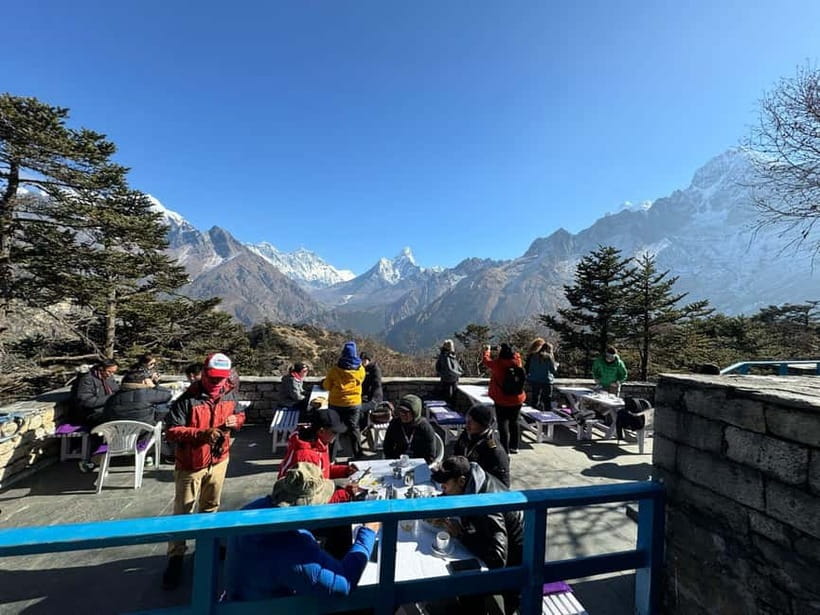
- Breakfast at the world highest Everest View Hotel at 3,880 meters, with an open terrace
- Short landings that break up the experience: Lukla for 10–15 minutes and landing at the Everest View Hotel for about an hour
Kathmandu to Everest Base Camp by helicopter: is it worth it?
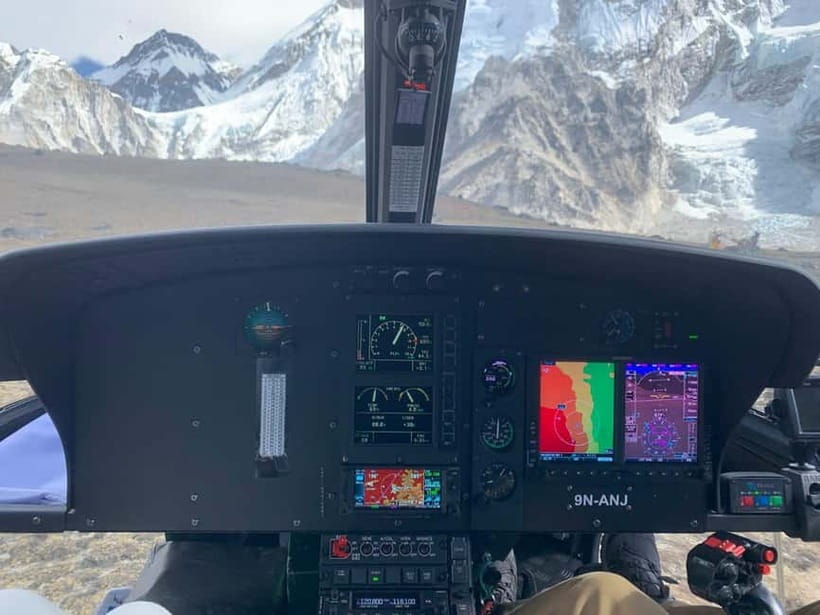
If you’ve ever looked at photos of Everest Base Camp and thought, I can’t do that trek, this is the compromise that still feels like the real thing. You’re not walking the Khumbu trail. You’re flying the route—fast, high, and visual—so you can see Mount Everest and the glacier country around it without spending a week (or more) getting there.
The value here is not just the view—it’s the compression. The tour is built for a 3–5 hour window (with timing depending on the day). That means you can fit Everest into a shorter Nepal trip, or you can add this as a once-off day experience if your schedule is packed.
Price is steep at $1,637 per person, so I’d treat this like an experience you buy for a specific reason: getting those airborne Everest views and a famous breakfast stop. If you want hours of hiking, homestays, and village time, you’ll feel the lack of pacing. If you want Everest from above and the chance to see the Khumbu region from multiple angles, the format makes sense.
You can also read our reviews of more tours and experiences in Mount Everest.
A note on the views you’re chasing
This route is designed around two kinds of mountain viewing:
- Aerial panoramas over glaciers, valleys, and settlements.
- High-altitude viewpoint energy linked to Kalapatthar (not just Base Camp from afar).
You’re also guided to fly over key places in the Khumbu area, so even when you’re not landing, you’re still “in” the geography.
The helicopter schedule: how your morning actually flows
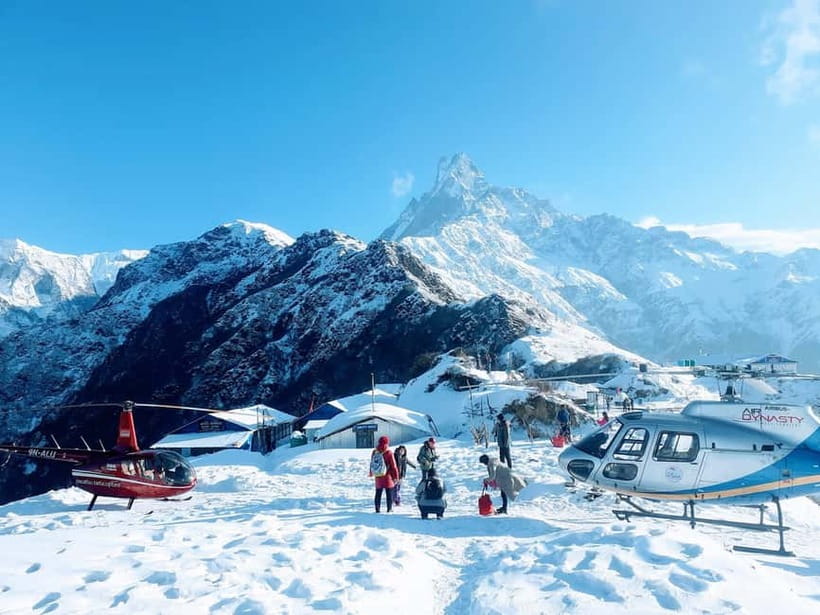
This tour is built around an early start. Pickup is typically around 6 AM from hotels in Kathmandu, Lalitpur, and Bhaktapur (Patan), then you transfer to the domestic airport.
From there, expect a sequence like this:
- A ~50-minute commercial helicopter flight to Lukla Airport, shared with up to 5 other passengers.
- A short landing at Lukla for about 10–15 minutes.
- A second ~30-minute helicopter ride toward Kala Patthar (Kalapatthar).
- Additional flight time over the Everest region and Khumbu settlements, plus a dedicated segment toward Hotel Everest View.
- A return flight back toward Lukla and onward to Kathmandu (with the final airport transfer back to your hotel).
Even with the helicopter speed, the day is planned to fit multiple visual zones. That’s why it works for a short trip: you’re always moving toward the next “wow” angle.
Pickup and airport transfer: the part people underestimate
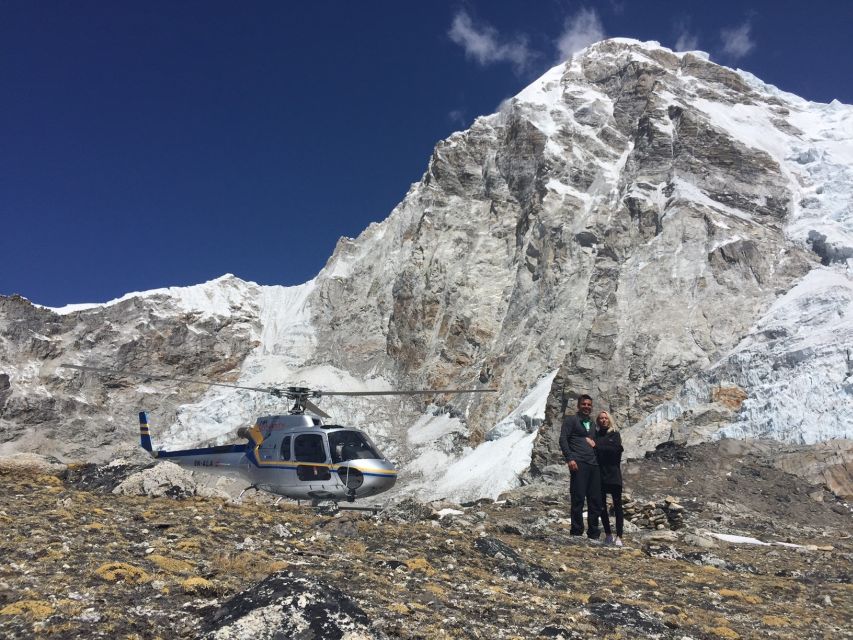
You might think the main event is the helicopter, but the morning logistics set your mood. Pickup is offered from hotels in the Kathmandu Valley options listed above. You’ll then transfer to the airport and get ready for a very specific kind of day—one where weather and timing matter.
Practical advice: wear warm layers and shoes you don’t mind using on airport surfaces. You’ll want to be comfortable before you’re in the cold air at altitude. Also, remember the tour is not suitable for wheelchair users, and large luggage isn’t allowed.
If you’re used to long trekking days, you might assume you can relax beforehand. Here, that’s the trap. With an early start, it’s smart to eat lightly and keep your morning low-stress.
Lukla Airport landing: a quick “gateway” moment
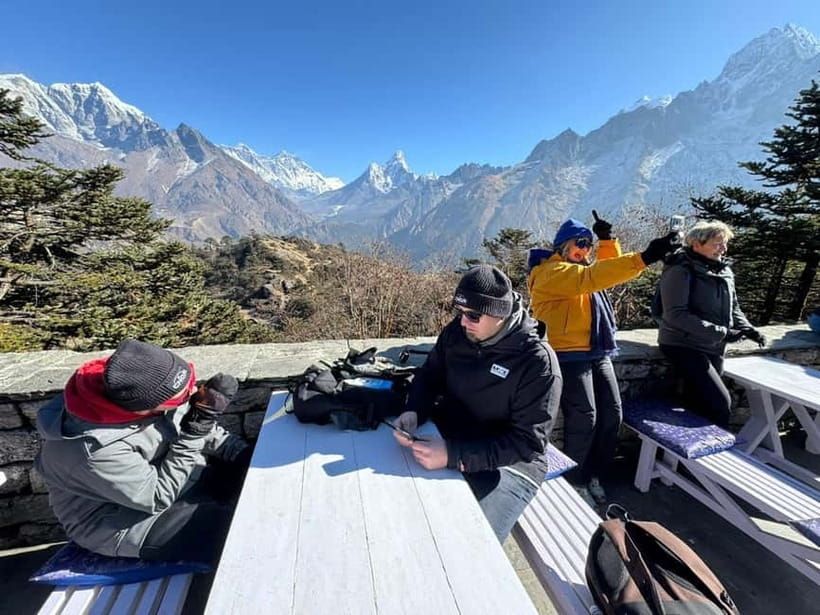
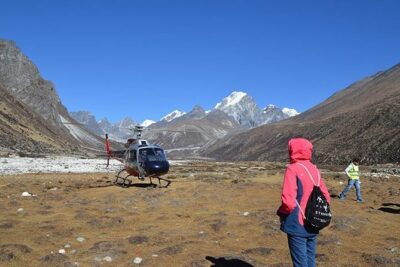
The first helicopter segment ends at Lukla Airport, and that landing is short—10 to 15 minutes. That brief stop matters because it breaks the flight and gives you a sense of place. Lukla is the gateway that trekkers use; seeing it from the air and stepping onto the ground (even briefly) makes the Everest region feel less abstract.
This is also your first real check on timing and comfort. The altitude and the wind chill are part of the experience, and your best strategy is to keep your clothing ready and your hands free for photos.
Since the first flight is commercial/shared (up to five other passengers), don’t expect private-cabin personalization. Instead, focus on what you can control: your position, your camera settings, and staying warm.
Flyovers over the Khumbu: villages and monasteries from above
One of the most satisfying parts of this tour is the way the route is built for recognition. You don’t just see mountains. You see the human geography of the Khumbu region from above—settlements and landmarks that help the view “make sense.”
You’re scheduled to fly over places including:
- Namche Bazar
- Pheriche
- Tengboche Monastery
- Gorakshep
What you’ll notice from the air is how the valleys and ridges shape the lives below. It’s not just scenic. It’s legible. You can often tell where the trail corridors run, where settlements cling to safer slopes, and where the glacier terrain takes over.
If you’re traveling with someone who wants something beyond peak photos, this flyover section is a good bridge. It turns Everest from a distant icon into a region with communities and landmarks.
Kala Patthar (Kalapatthar) and the “high viewpoint” feel
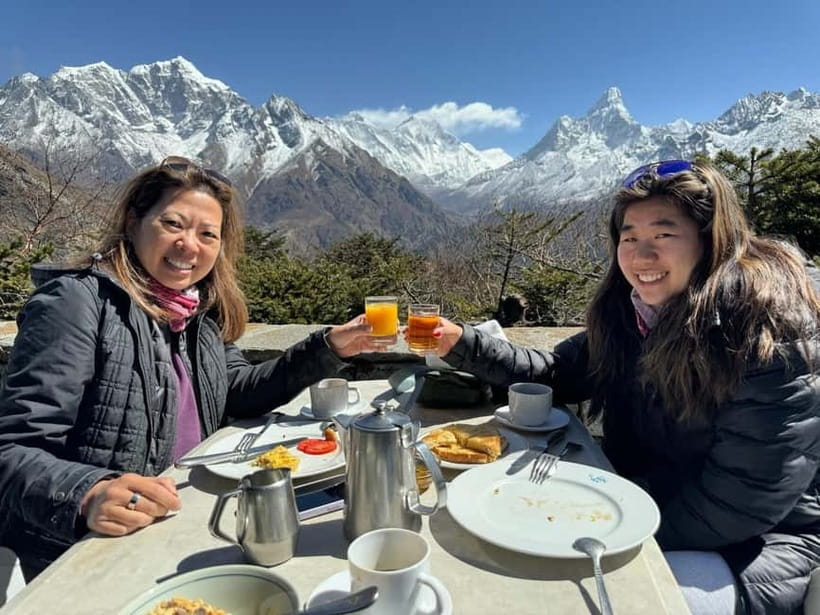
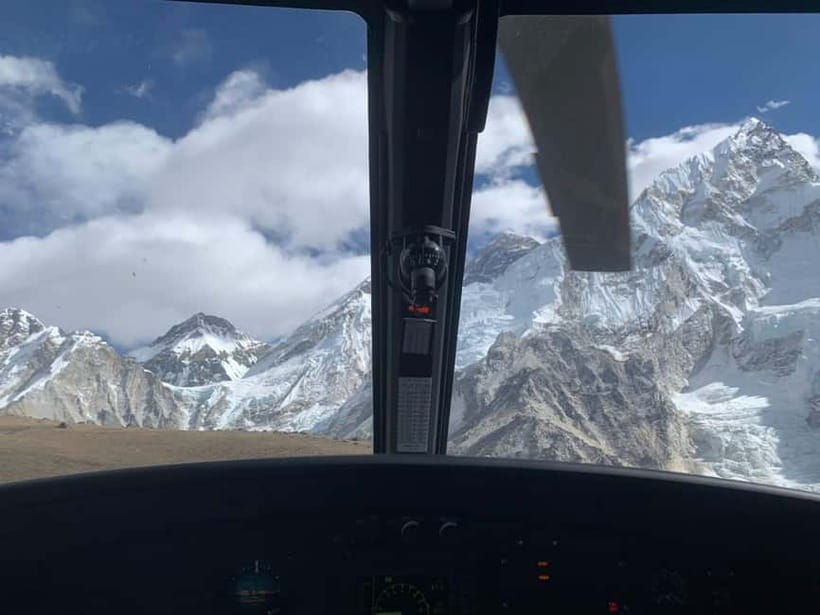
The tour includes time aimed at Kala Patthar/Kalapatthar, described as a famous viewpoint. The standout claim here is the altitude context: you get best views from around 6,000 meters by flying over, and Kalapatthar is noted as about 200 meters above Everest Base Camp.
Two important takeaways for your expectations:
- You’re not told you’ll hike up there in this format. You’re getting the viewpoint experience through flight and photo time.
- You’ll likely have the best chance at crisp sightlines when skies are clear—so bring patience if the weather causes adjustments.
When everything lines up, Kalapatthar’s area is where Everest stops being a symbol and starts looking close. You’ll be able to take photographs and absorb the scale of the peaks.
Hotel Everest View: the breakfast stop that sells the day
This is the part I’d personally underline if you’re deciding whether the price is justified.
You’ll be flown to Hotel Everest View at 3,880 meters, and you’ll get roughly 1 hour there (described as about an hour). The plan includes landing for about an hour, then time to enjoy breakfast on an open terrace.
It’s called the world highest Everest View Hotel in the tour highlights, and even if you don’t get hung up on the label, the practical value is huge: you get a proper pause. You warm up, eat something, and take in the Everest views from a place that was built for that exact moment.
The tour also mentions a guided tour and free time at the hotel, plus an included breakfast break in the described schedule. If you’ve been staring at glaciers from a window seat, this is where the experience turns human-scale: cups, plates, and actual time to look without rushing to the next flight segment.
Optional breakfast confusion: know what’s included
The details list a breakfast at the Everest View Hotel (and mention refreshments), but it also lists an optional breakfast priced separately. My advice: confirm what’s covered for your departure date. If breakfast is included in your package, you’ll save money. If it’s offered as an optional add-on, you’ll want to decide based on what time you’ll eat during your day.
The Everest flyover package: what you’ll likely spot
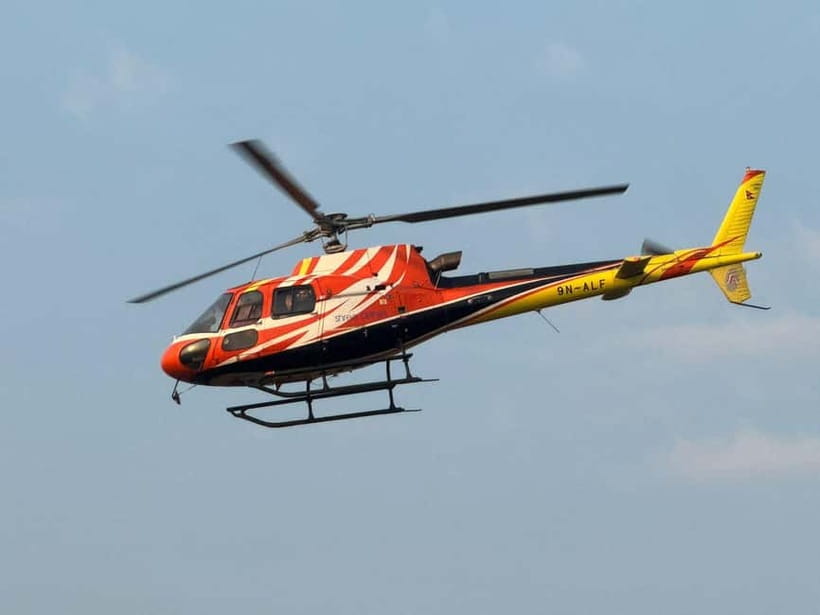
The inclusions mention an Everest fly over that includes Everest Base Camp, Kalapatthar, Chola Pass, and Gokyo. That’s a lot of geography to fit into a few hours, and it’s exactly why this tour can feel magical: you’re not forced to choose one target.
If you’ve ever tried to learn the region from maps, this is where aerial context helps. You see the relationships between ridges, passes, and glacier zones instead of just isolated peaks. Chola Pass and Gokyo also broaden the “Everest only” mindset—this isn’t just one mountain. It’s a complex high-altitude system.
Return flights: getting back to Kathmandu without the long descent
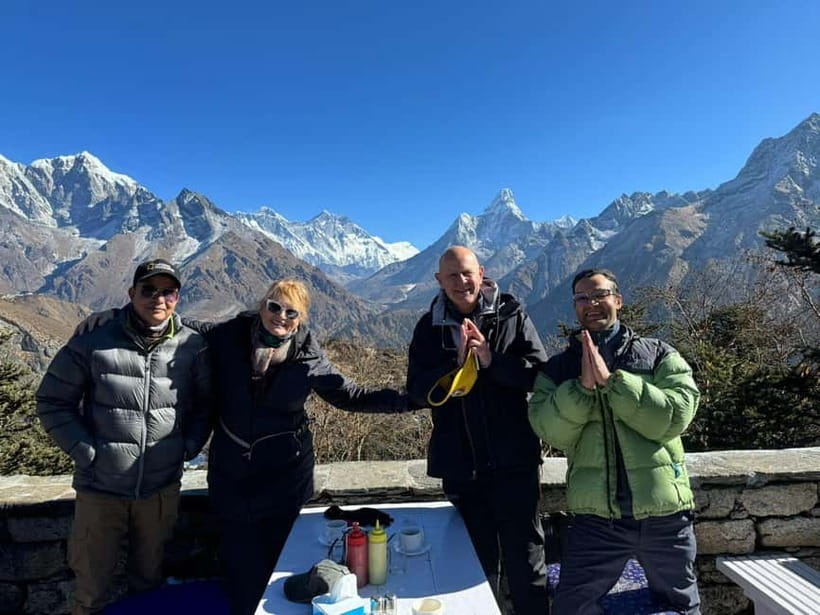
After the Everest View Hotel stop, the return plan described is another helicopter segment—from the Hotel Everest View / Syangboche area—back toward Lukla, and then onward to Kathmandu.
The total flow is designed so you still end the day the same way you started: with transfer back to your hotel after arriving at the Kathmandu airport.
This is a key difference versus trekking. You’re not negotiating altitude fatigue over days. You’re also not dealing with a multi-stage “downhill recovery” routine. The tradeoff is time on the ground is limited, but the payoff is you keep your vacation intact.
What’s included (and what you may still pay for)
For value-minded travelers, here’s how the inclusions stack up:
Included:
- Round-trip transfer between your hotel and the Kathmandu domestic airport
- Helicopter flights around Everest
- Landing at Lukla for about 10–15 minutes
- Everest-focused flyover coverage including Everest Base Camp, Kalapatthar, Chola Pass, and Gokyo
- Landing at Everest View Hotel for about 1 hour
- Oxygen cylinder available in the helicopter for emergency
- Life insurance during helicopter flight (provided by the aviation provider)
- Audio guide in English and an English host/greeter
Not included:
- National park/airport fees listed as 6,000 NPR per person or $50 in cash
- Optional breakfast listed at $30 per person (or 4,200 NPR)
Price reality check: with a base rate of $1,637, the added cash fee is an important detail, especially if you don’t carry Nepalese rupees. This doesn’t change the overall value math, but it prevents surprises.
Group size, seating, and your photo strategy
You’ll ride in a shared commercial helicopter for the first segment to Lukla, with up to 5 other passengers. The highlight also states the plan is for window seat viewing, which is crucial. Helicopters can seat people in a way that makes one side of the cabin better for photos depending on route direction.
So here’s the practical approach:
- Dress for cold.
- Bring a camera strap you can manage one-handed.
- Keep your lens clean before you lift it out for shots.
- Assume you might have one “best side” view, then enjoy the rest as panorama.
Also, smoking isn’t allowed, and luggage or large bags aren’t allowed, so pack small and keep essentials accessible.
Weather can change the plan: how to stay flexible
This is one tour where you should plan like a local: expect weather to call the shots. The activity is explicitly subject to weather conditions. If flying isn’t suitable, the tour may be rescheduled to the next day, or you can request a refund. In those situations, airport transfer costs may be deducted.
That affects how I’d plan your Kathmandu itinerary. If Everest day is your only slot, you’re taking a risk. If you can build a little buffer—one extra morning or day—it reduces stress and improves your odds.
Who this tour is best for
This helicopter day tour is a strong match if you:
- want Everest views quickly (3–5 hours total duration)
- don’t want to commit to a trekking itinerary
- love the idea of a high-altitude breakfast stop at a famous viewing lodge
- prefer big views and photo time over long time on foot
It’s a weaker fit if you:
- need wheelchair access (the tour is listed as not suitable)
- want a slow travel pace, multi-day cultural immersion, or extended time walking around
- hate tight schedules and early mornings
Should you book this Everest Base Camp helicopter tour?
I’d book it if your priority is simple: get Everest and the Khumbu region from the air, include a famous high-altitude breakfast, and do it without turning your whole trip into a trek. The value case is strongest when you treat the price as paying for speed, altitude access, and the chance to see multiple iconic places (Everest Base Camp area, Kalapatthar, Chola Pass, Gokyo) in one shot.
I wouldn’t book it if your idea of travel is slow pacing on foot. This is not that. It’s a concentrated, weather-dependent experience where your reward comes fast—and where timing matters.
If you can travel with a bit of flexibility for weather and you’re set on the idea of window-seat views plus a terrace breakfast at 3,880 meters, this tour has a very clear appeal.
FAQ
How long is the helicopter tour from Kathmandu?
The duration is listed as 3–5 hours. Starting times vary, so check availability for the exact schedule on your travel dates.
Where do you get picked up in Kathmandu?
Pickup options include Kathmandu, Lalitpur, and Bhaktapur (Patan). The tour also notes you can be picked up from any hotel within those areas.
Do you land at any locations during the trip?
Yes. The plan includes a landing at Lukla Airport for about 10–15 minutes, and a landing at Hotel Everest View for about an hour.
Is breakfast included?
Breakfast at the Everest View Hotel is described as part of the schedule. There is also an optional breakfast listed as not included, so you should confirm what your package covers for your departure.
What is the view highlight at Kalapatthar?
The tour highlights describe best views from around 6,000 meters at Kalapatthar, with Kalapatthar noted as about 200 meters above Everest Base Camp, with sightseeing and photo time.
What additional fees might I need to pay?
National park/airport fees are listed as 6,000 NPR per person or 50 USD in cash. These are not included in the base price.
Are the helicopter flights shared with other passengers?
The details state the commercial helicopter flight to Lukla is shared with up to 5 other passengers.
Is there any information about weather disruptions?
The activity is subject to weather conditions. If flying conditions aren’t suitable, it may be rescheduled for the next day, or you may request a refund, with airport transfer costs potentially deducted.