REVIEW · LIHUE
From Lihue: Kauai Sightseeing Helicopter Flight
Book on GetYourGuide →Operated by Safari Helicopters · Bookable on GetYourGuide
Kauai from above feels unreal. This 90-minute flight from Lihue turns the island’s best-known scenery into something you can actually see all at once, and I love the glass-door views that make every seat feel like the best seat.
You also get a small group cap (up to 6 people) and real in-the-air sightseeing, not just a quick hop over the highlights. A fair heads-up: this is pricey, and it comes with strict safety rules, including weight limits and extra-seat requirements for some passengers.
In This Review
- Key things to know before you go
- Flying Kauai by helicopter: what makes it worth considering
- The first segment: from Lihue area to Jurassic Park Falls
- Olokele Canyon landing: the part most people won’t forget
- Waimea Canyon: seeing why people call it the Grand Canyon of the Pacific
- Na Pali Coast: rugged red cliffs and the sea you can’t ignore
- Helicopter comfort and the glass-door difference
- Guide narration, landing logistics, and what to expect on the ground
- Price and value: what $369 really buys you
- Who this tour suits best (and who should skip it)
- Practical tips: what to bring and what to avoid
- Staff experience and the personal touches that come through
- Should you book the Kauai Sightseeing Helicopter Flight from Lihue?
- FAQ
- Where do I meet for the Lihue Kauai Sightseeing Helicopter Flight?
- How long is the helicopter flight?
- How much does it cost?
- What’s included, and what’s not?
- Are there weight limits or seating rules?
- Who should not book this tour?
Key things to know before you go
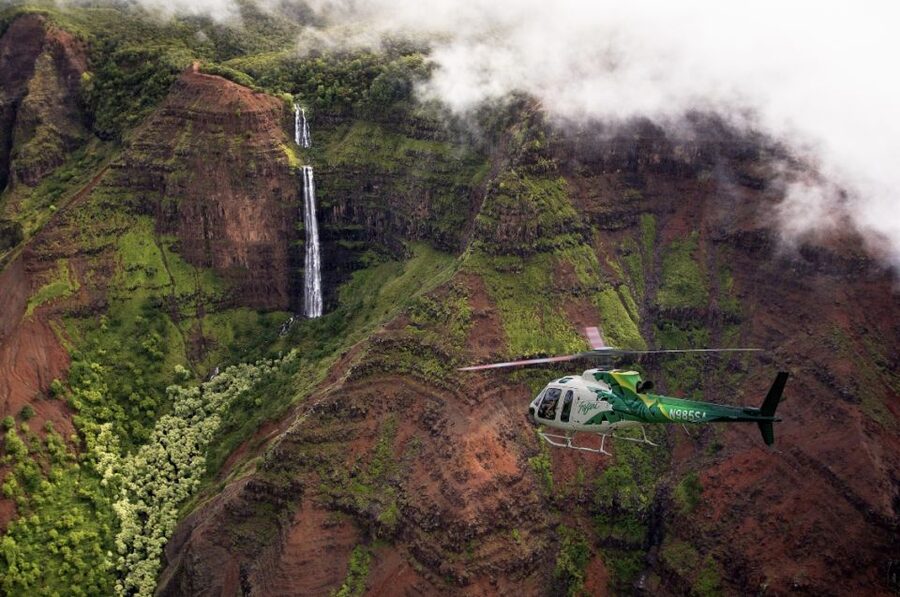
- Jurassic Park Falls from the air: a rare, privately owned waterfall area reached only by helicopter.
- Olokele Canyon landing: you don’t just look at it, you land and get a chance to walk around.
- Rare and endangered plant life: Olokele Canyon is protected habitat, not a generic viewpoint.
- Waimea Canyon color contrast: you’ll see the crimson-and-emerald cliff pattern that looks different from the ground.
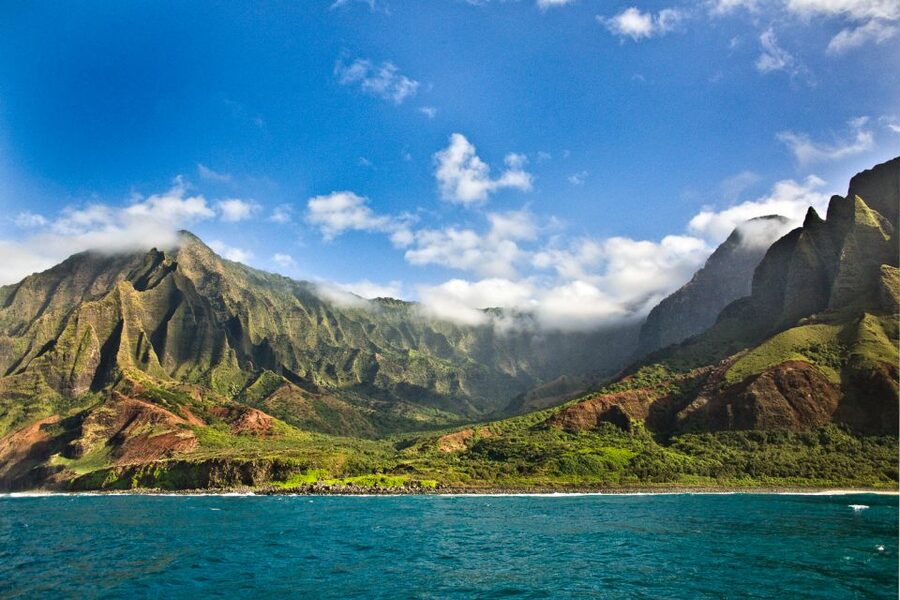
- Na Pali Coast scale: rugged red cliffs dropping to choppy sea makes the coastline feel enormous.
- Small group comfort: limited to 6 participants, with a modern helicopter and a pilot who provides the ride’s narration.
Flying Kauai by helicopter: what makes it worth considering
Helicopter sightseeing works on Kauai for one big reason: the island’s best scenery is often far from roads. From the air, you get the connections between places—waterfalls to valleys, ridgelines to sea—without wasting time on winding drives.
This flight is built around classic Kauai landmarks, including Manawaiopuna Falls (also known as Jurassic Park Falls), Waimea Canyon, and the Na Pali Coast. The route also includes a stop at Olokele Canyon, where the tour goes beyond “look only” sightseeing.
You can also read our reviews of more tours and experiences in Lihue.
The first segment: from Lihue area to Jurassic Park Falls
The tour starts at Safari Helicopters, meeting at 3225 Akahi St. Once you’re airborne, you settle into the main benefit of helicopter tours: fast access to views that would take you hours to piece together by car.
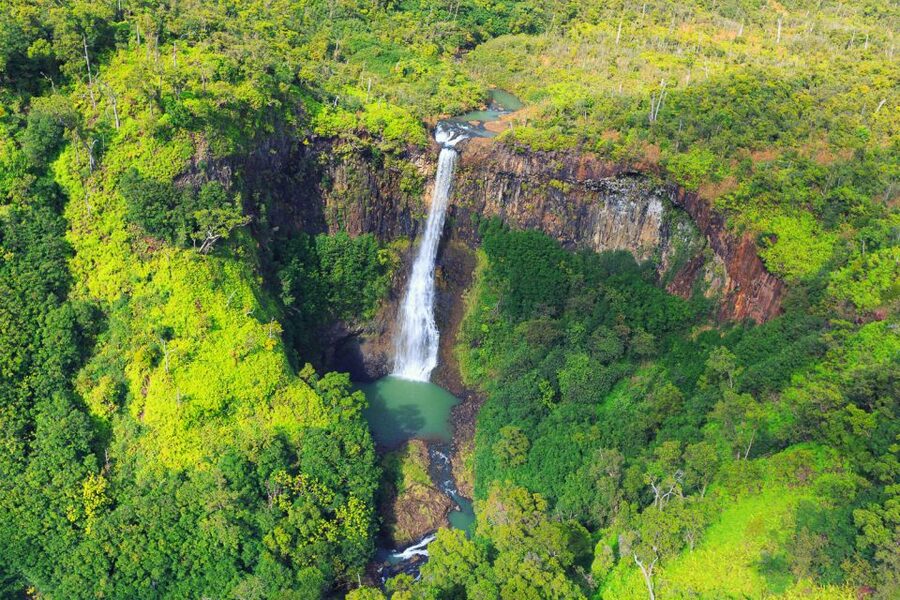
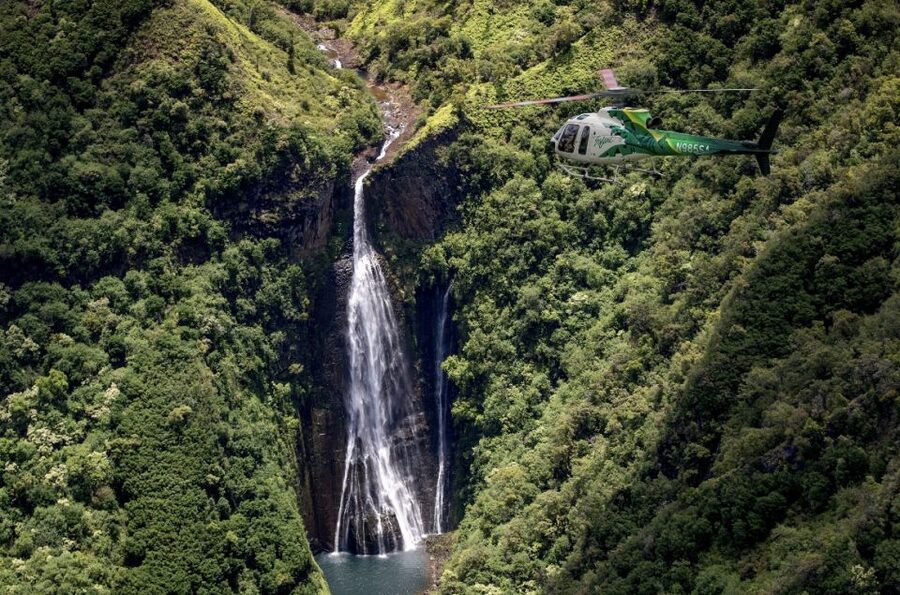
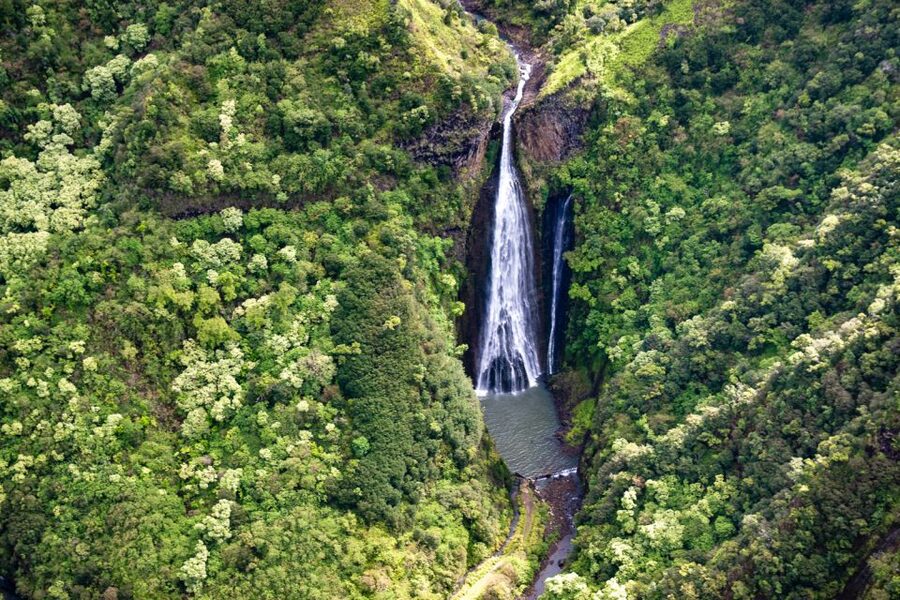
The first big draw is Manawaiopuna Falls. You’re looking down at the waterfall from above, and you’ll appreciate why it became famous after appearing in the 1993 Steven Spielberg film. This area is privately owned and not reachable the normal way, which is exactly why it’s so satisfying to see it from the sky. Even if you’re not a movie buff, it’s the kind of waterfall setting—steep, dramatic, tucked into jungle—that’s hard to fully understand from ground-level photos.
Olokele Canyon landing: the part most people won’t forget
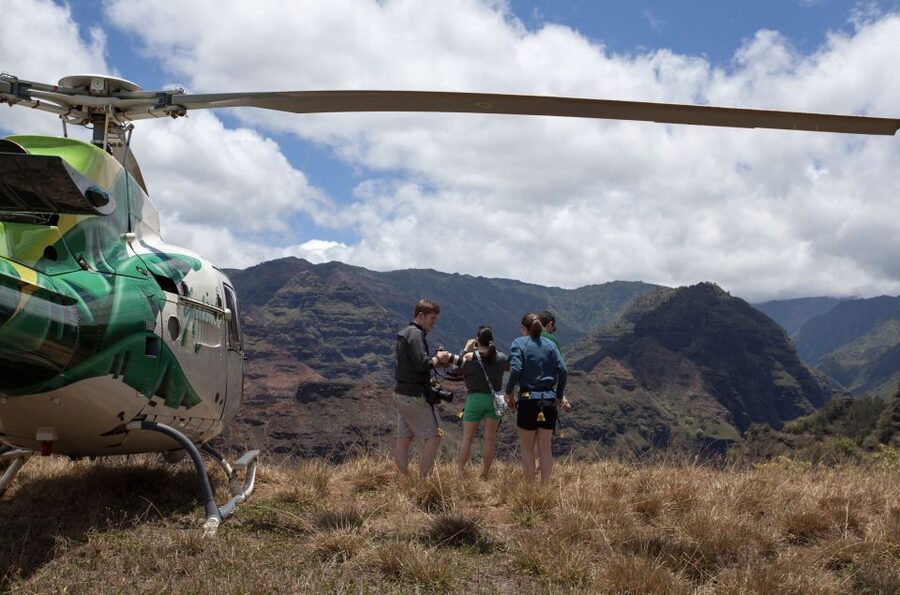
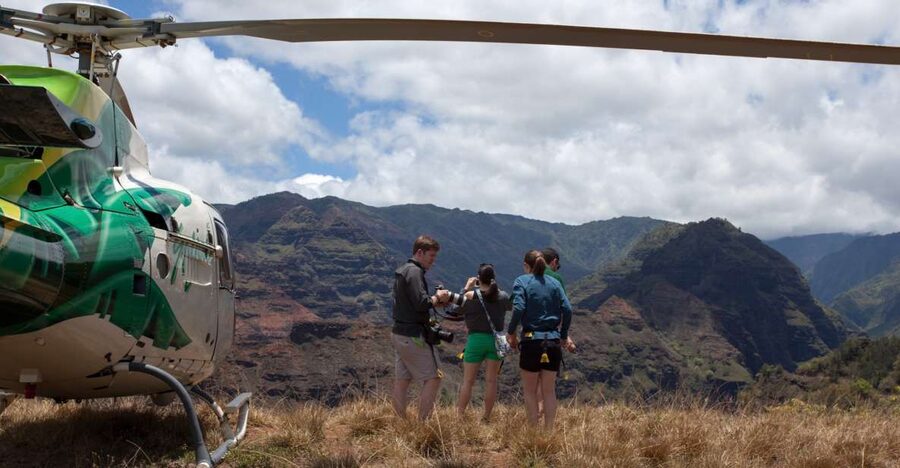
Olokele Canyon is where this tour earns serious “once-in-a-lifetime” energy. You’re not just circling a viewpoint; the flight includes a landing, followed by a chance to walk around a bit.
This matters for two reasons. First, Olokele is home to rare and endangered plant life, so it’s not the same as stopping at a parking lot overlook. Second, the landing makes the scenery feel more real—you can pick out textures and scale that don’t land in your brain when you only see it from above.
From the helicopter, canyon views are already dramatic. After you land, you get a different relationship with the place: the air feels different at ground level, and you get time to notice details you’d miss if you were only looking through the doors.
Waimea Canyon: seeing why people call it the Grand Canyon of the Pacific
Next comes Waimea Canyon, a highlight if you like geological color. From the air, the canyon’s crimson-and-emerald look becomes obvious. On the ground, you can read the landscape, but from the helicopter you can understand how the cliff bands and curves line up over distance.
The value here is pattern recognition. You start to see how Kauai’s landscapes layer—jungle to cliffs, then down to the valleys—rather than treating each stop as an isolated postcard. A short tour can still feel “full” if it gives you perspective, and Waimea is built for that.
Na Pali Coast: rugged red cliffs and the sea you can’t ignore
Then you head toward the Na Pali Coast, one of Hawaii’s most famous stretches of coastline. The helicopter viewpoint turns the cliffs into something almost overwhelming. You’re looking at rugged rock rising sheer above the sparkling sea, with coastline curves and drop-offs you can’t really appreciate from most land-based angles.
Na Pali is also a good reminder of why helicopter travel helps here. A lot of the coastline isn’t accessible by car, so the helicopter becomes the practical solution to see the coastline as a whole. You’ll come away with a better sense of where the cliffs break, how long the coastline runs, and why it’s often described as dramatic in every season.
Helicopter comfort and the glass-door difference
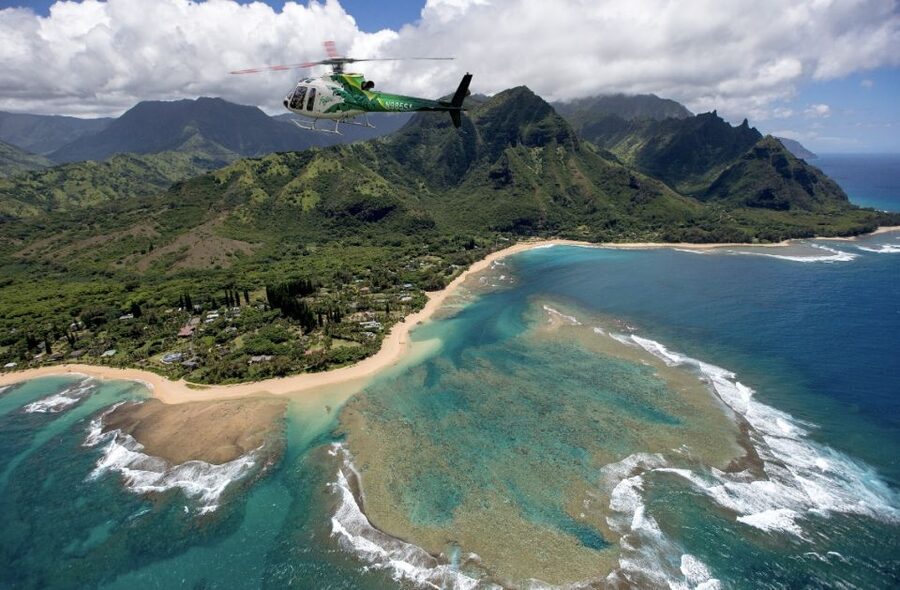
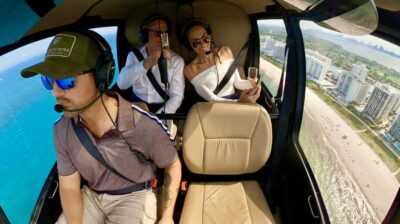
This is a modern helicopter ride, and the comfort is part of the experience. Many passengers specifically praise the glass doors—even top-to-bottom—because it makes the views feel open, not cramped. That’s a big deal in a helicopter, where small differences in seating can otherwise make one side feel like the “worst” spot.
The flight is 90 minutes, which is long enough to feel like you actually got the island’s main geometry, but short enough that you’re not stuck in “same scenery” mode. The tour also caps the group size at 6 participants, which tends to keep things calm and focused.
Pilots in this operation get repeated praise for both flying smooth and speaking clearly about what you’re seeing. Names that show up in passenger notes include Dali, Steve, Micah, Sam, and Max. If you like stories tied to place—where something is, why it looks that way, and what makes it special—you’ll likely enjoy that this isn’t silent sightseeing.
Guide narration, landing logistics, and what to expect on the ground
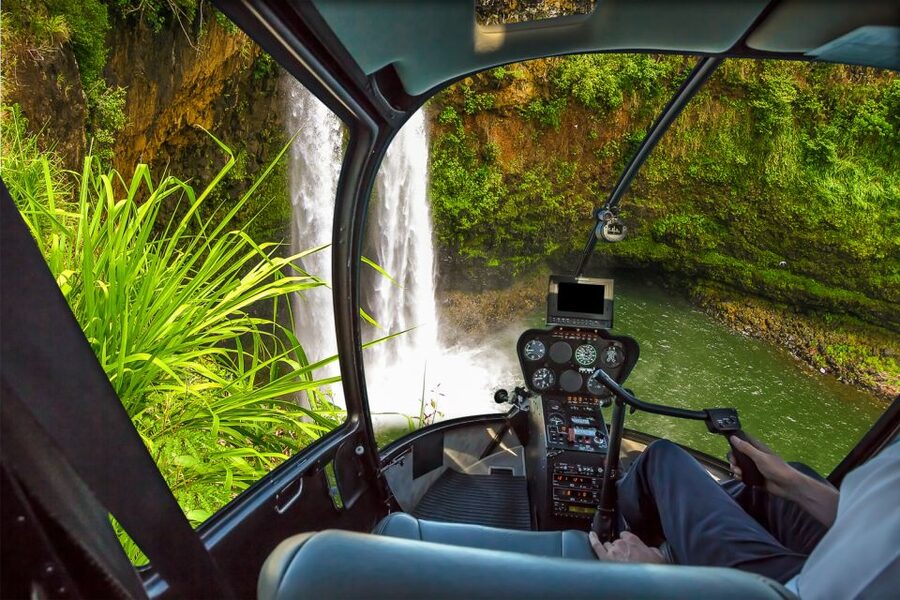
You’ll have a live tour guide in English. In practical terms, that means you’re not stuck guessing what you’re looking at. The narration tends to help you identify landmarks quickly and connect them to the island’s history and geography.
One detail that stands out from customer notes is the helicopter landing experience in Olokele Canyon. People call out the landing itself as a highlight and mention that it includes time to walk around a bit. That creates a nice rhythm: flying for the big picture, landing for the “place details,” then flying again to tie it all together.
Price and value: what $369 really buys you
Yes, this costs $369 per person, and it’s not a budget activity. But it’s also one of the more direct ways to buy time and access on Kauai.
Here’s the value equation I think you should use:
- You’re paying for access: Manawaiopuna Falls and Olokele Canyon are not car-access stops.
- You’re paying for time compression: a single 90-minute flight links multiple regions—canyons, waterfalls, coastline—without a full day of driving.
- You’re paying for experience layering: you see the Na Pali Coast, then get an Olokele landing where you can actually be on the ground for a moment.
In other words, you’re not paying just for altitude. You’re paying for the specific combination of views plus an exclusive landing. That’s why people who splurge on this often describe it as a bucket-list move.
If you’re the type who hates paying for “pretty but brief,” you might find this still justifies the cost because the route is structured around distinct environments. If you’re mainly chasing one photo, there are cheaper options—but they won’t recreate the full island story from above.
Who this tour suits best (and who should skip it)
This experience is best for adults and older teens who handle heights and open air. It’s rated with many “safety and comfort” limits for good reason.
It’s not suitable for:
- Children under 2
- People with claustrophobia
- People afraid of heights
- People with vertigo
- People with a cold
- People prone to seasickness
- People over 250 lbs (113 kg)
- People with motion sickness
Also note the seat posture rule: passengers unable to sit upright won’t be permitted. If you’re traveling with a health condition, I’d treat this as a “check carefully” tour, not a casual upgrade.
Practical tips: what to bring and what to avoid
Keep it simple at check-in and on arrival. You’ll need:
- Passport or ID card
- Credit card
What you can’t bring:
- Hats
- Selfie sticks
- Bags
That list is shorter than you might expect, but it can cause delays if you pack “just in case” extras. Aim to travel light so you’re not rushing to stow something at the counter.
Weight rules are important here because they affect whether you can fit in a standard seat:
- If an individual guest weighs 250 pounds or more, they’ll need to purchase an additional seat.
- If two guests each do not exceed 250 individually, but their combined weight is 420 pounds or more, they’ll still need an additional seat.
These aren’t just details. They directly affect price, booking, and who can fit.
Staff experience and the personal touches that come through
A helicopter tour can feel like a transaction, or it can feel like a guided experience. What you’ll notice with this operator is that the people matter.
Passenger notes repeatedly highlight pilots who are both smooth and communicative, and some mentions go beyond the flight itself. A couple of people mention meeting the owner, Keith Robinson. One reason that kind of detail sticks is that it signals consistent care, not just “show up, fly, leave.”
There are also mentions of an on-board playlist (through headphones) during the flight, which turns the ride into more of a mood than a strict lecture. If you like a mix of scenic storytelling plus atmosphere, that small extra can add to the magic.
Should you book the Kauai Sightseeing Helicopter Flight from Lihue?
Book it if you:
- Want the big-picture island view that roads can’t provide
- Care about seeing Manawaiopuna Falls and the Na Pali Coast in one trip
- Like tours that include a landing, not just sightseeing from the air
- Think a 90-minute splurge is worth it when the access is exclusive
Consider skipping or choosing a different option if you:
- Have any concern about heights, motion sickness, vertigo, or claustrophobia
- Can’t follow the upright seating requirement
- Need a fully budget-friendly outing
My practical take: if you’re coming to Kauai with limited time and you want your highlights to feel complete, this flight is one of the most logical ways to spend your day. It costs money, but it’s spending it on access and perspective—the two things that make helicopter tours feel different from everything else on the island.
FAQ
Where do I meet for the Lihue Kauai Sightseeing Helicopter Flight?
Meet at Safari Helicopters at 3225 Akahi St.
How long is the helicopter flight?
The tour duration is 90 minutes.
How much does it cost?
The price is $369 per person.
What’s included, and what’s not?
Included is the helicopter tour and pilot. Food and drinks are not included.
Are there weight limits or seating rules?
Yes. If you weigh 250 pounds or more, you must purchase an additional seat. If two guests together weigh 420 pounds or more (while each is under 250 individually), they must also purchase an additional seat. Passengers who cannot sit upright will not be permitted.
Who should not book this tour?
It’s not suitable for children under 2, people with claustrophobia, those afraid of heights, people with vertigo, people with a cold, people prone to seasickness, and people with motion sickness. It’s also not suitable for people over 250 lbs (113 kg).