REVIEW · LAS VEGAS
Las Vegas: Grand Canyon Heli Tour and Valley of Fire Landing
Book on GetYourGuide →Operated by 5 Star Grand Canyon Helicopter Tours · Bookable on GetYourGuide
One helicopter, two desert icons. This Grand Canyon + Valley of Fire tour works because you get big-air views plus a real landing for photos. I especially love the way sunset light turns the rocks gold, and I like the 30-minute Valley of Fire photo stop where the colors look almost unreal. One drawback to plan for: the cabin is small, so it can feel tight for six people who want room to move.
Your day starts with VIP check-in at an exclusive heliport about 15 minutes from the Strip. After a 30-minute safety briefing, you fly with pilot narration over landmarks like Hoover Dam, Lake Mead, and Fortification Hill before the Grand Canyon does its full-on wow. You should also know it is not designed for wheelchairs, and if you are over 250 lbs you may need to buy an extra seat for comfort and safe operation.
What you’re really buying is time above the best-known scenery in the Southwest, plus a champagne toast and Las Vegas at twilight on the way back. At $599 per person, it is pricey, but it includes the full flight block, pickup, and the added extras that make it feel like more than a quick joy-ride.
In This Review
- Key highlights worth getting excited about
- VIP pickup and check-in: the tour’s secret advantage
- Safety briefing and small-group reality in a 6-seat helicopter
- Grand Canyon flight: why the photos look different from the ground
- Hoover Dam, Lake Mead, and Fortification Hill: context you can actually see
- Valley of Fire landing: the most satisfying 30 minutes you’ll spend all day
- Return flight over Las Vegas at twilight: the payoff for the long day
- Price and value: what your $599 actually buys
- Who this helicopter tour is best for
- Practical tips to make your flight smoother (and your photos better)
- Should you book the Las Vegas Grand Canyon heli tour with Valley of Fire landing?
Key highlights worth getting excited about
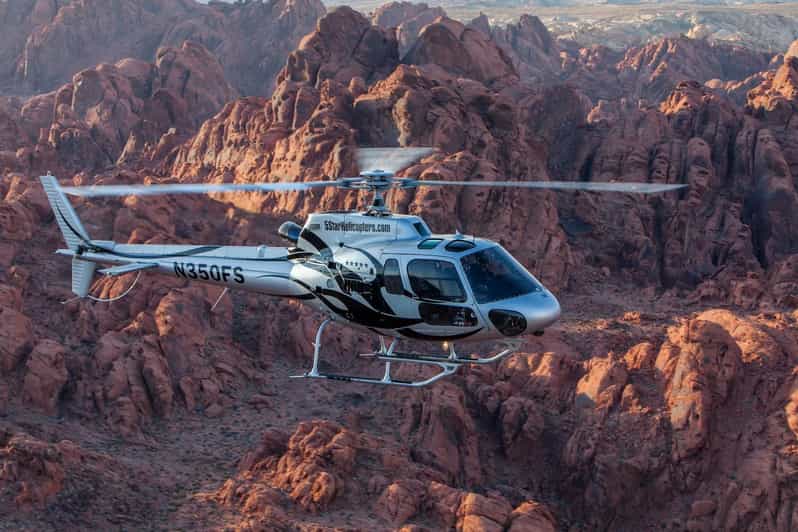
- Gold-hour photo lighting as the sun fades over canyon rock and desert formations
- 30-minute landing at Valley of Fire from a secluded overlook, with time to shoot and enjoy a toast
- Pilot narration over major landmarks including Hoover Dam, Lake Mead, and Fortification Hill
- Las Vegas skyline return at twilight with views of Stratosphere Tower, Caesars Palace, Bellagio, and Raiders Stadium
- Small-group format (up to 6) that prioritizes shared time in the air
- Practical comfort limits: no wheelchair access, and weight over 250 lbs may require an extra seat
VIP pickup and check-in: the tour’s secret advantage
Getting to the airfield can be the painful part of Las Vegas excursions. Here, the setup is built to reduce friction. You get picked up at many Strip-area hotels, and the meeting point is a heliport roughly 15 minutes from the Strip, which means less time stuck in traffic and more time staring out at the desert below.
Check-in is also more controlled than the typical “find the van” chaos. You arrive at the terminal about 30 minutes before departure to handle boarding, then you go through a 30-minute safety briefing. That briefing matters because it sets expectations for how the helicopter cabin feels once you’re up there—close quarters, sound, and how to manage your camera hands without fighting the space.
If you want a smoother start, this is one of the best parts of the experience. You’ll also get water and soda, and it keeps the vibe calm while you’re waiting.
You can also read our reviews of more tours and experiences in Las Vegas.
Safety briefing and small-group reality in a 6-seat helicopter
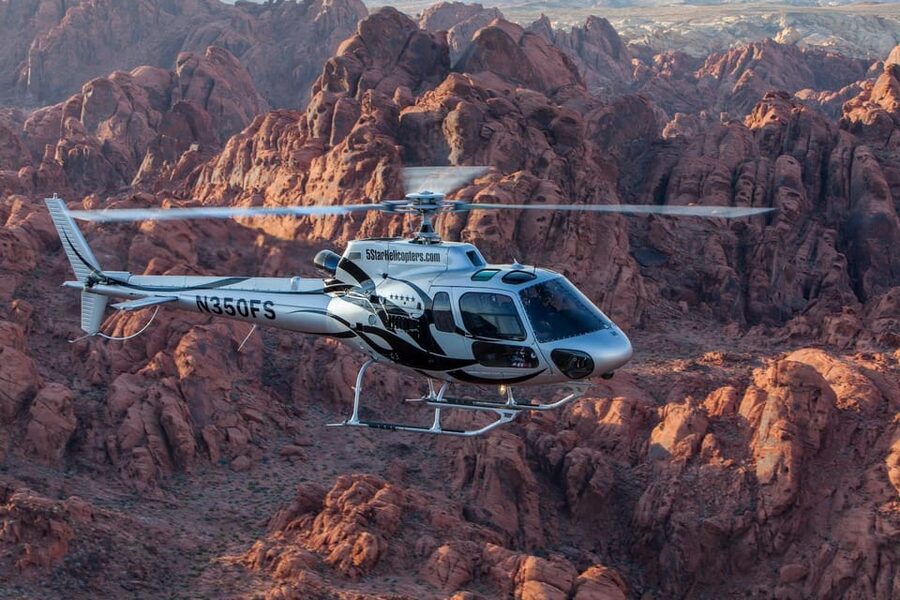
Small group is a selling point for a reason, but it comes with tradeoffs. The tour is limited to 6 participants, so you should feel like part of a tighter unit instead of a bus-load. That also means the pilot can keep narration focused and answer questions in a more personal way.
At the same time, the cabin is still a helicopter cabin. One review called out how “crammed” it can feel, and that lines up with the reality of flying in a compact aircraft. So if you like personal space, this is your heads-up.
Two practical notes that affect comfort:
- You’ll want comfortable shoes because you may be walking a bit during check-in and boarding.
- The tour is not suitable for wheelchair users, and if you’re over 250 lbs / 113 kg, you must purchase an additional seat to stay within safe operating comfort rules.
Grand Canyon flight: why the photos look different from the ground
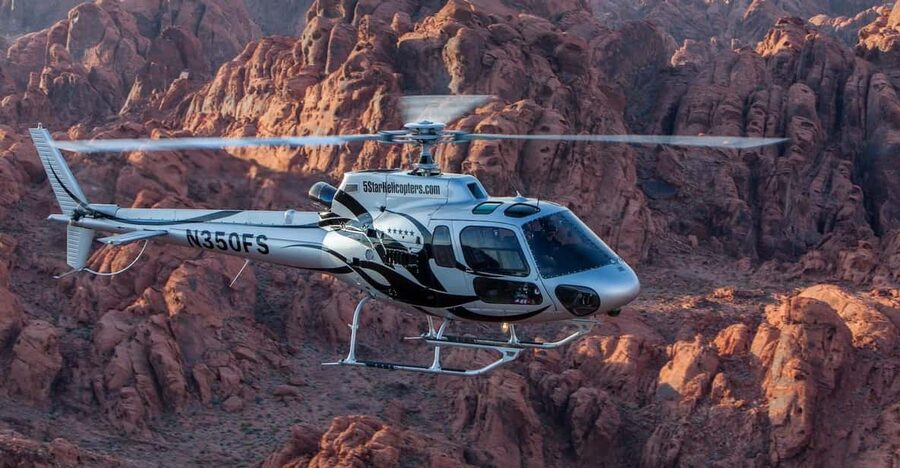
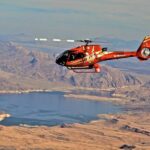
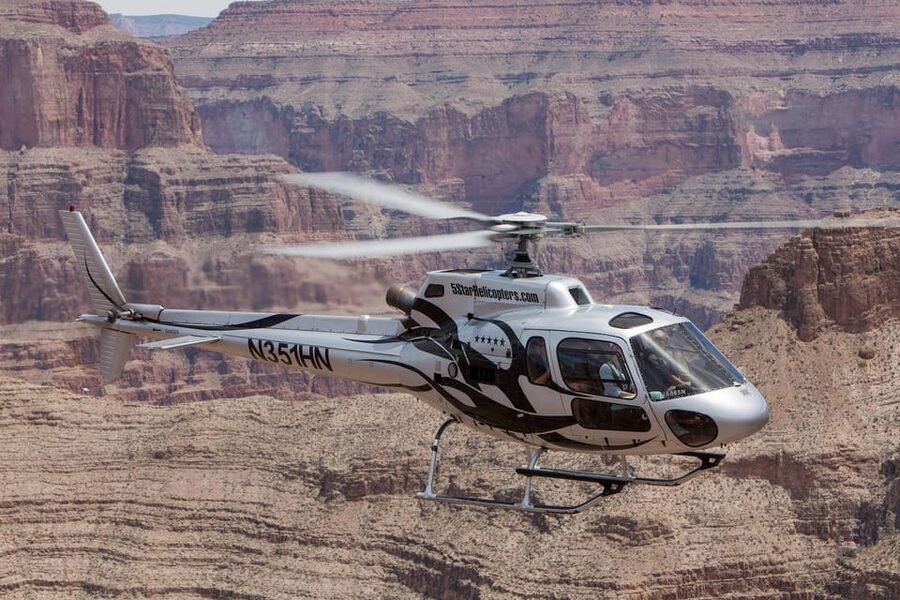
Once you’re airborne, the Grand Canyon section becomes the main event. You fly a stretch of about 30 miles above and below the canyon, which is a huge deal for photography and for how your brain processes scale. From the ground, you can only see so much at once. From the air, you see the canyon as a system—layers, bends, and depth.
This is also where the timing pays off. The tour is built around the warm light of the fading sun, which turns rock formations into gold and copper tones. Even if you are not a serious photographer, that “golden glow” changes the canyon from dramatic to almost cinematic.
I like that you’re not just hovering over one iconic overlook. You’re flying views that give you multiple angles in one continuous experience—enough variety to keep your camera busy without feeling frantic.
If you care about taking photos without stress, the key is simple: keep your gear secured and ready, and accept that cabin space is limited. A selfie stick is not allowed, so plan to use your phone or camera in your normal grip and focus on clean framing.
Hoover Dam, Lake Mead, and Fortification Hill: context you can actually see
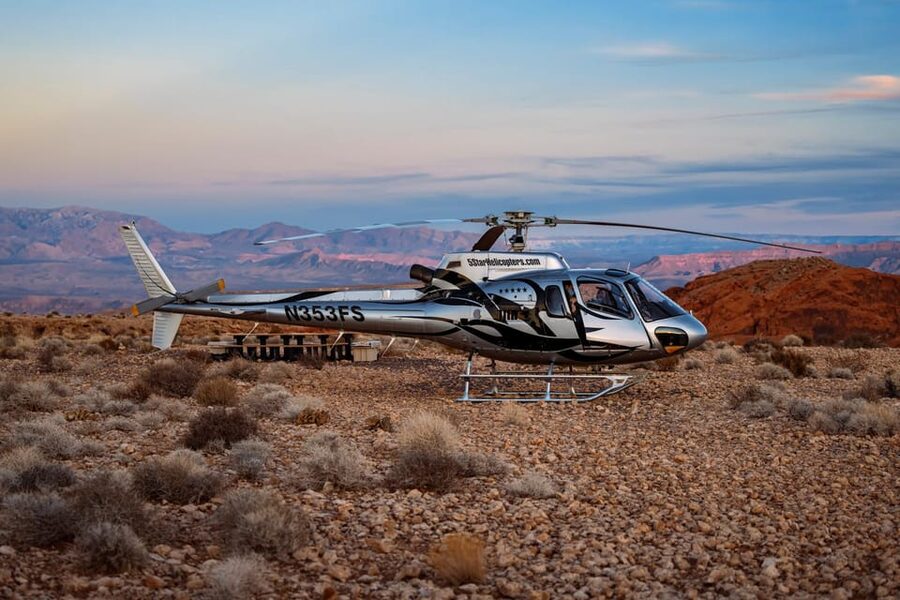
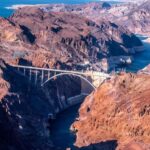
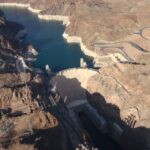
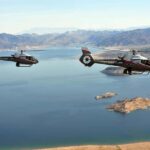
Before the canyon fully takes over, the route gives you a “Southwest by the numbers” aerial tour. You’ll soar over Hoover Dam and the region around it, including bypass bridge, then head toward Lake Mead National Recreation Area.
Why this matters: it helps you connect the canyon story to the water story. Lake Mead looks different from the air—less like a distant dot and more like a broad engineered presence. You also get a better sense of how the area’s geography channels what you see from the road.
Then you’ll fly over Fortification Hill, described as a volcano. Even if you know the name already, seeing it from above adds shape and scale in a way that maps can’t do. The best part is that the narration from your pilot turns those named points into a coherent route, so it doesn’t feel like random sightseeing.
Valley of Fire landing: the most satisfying 30 minutes you’ll spend all day
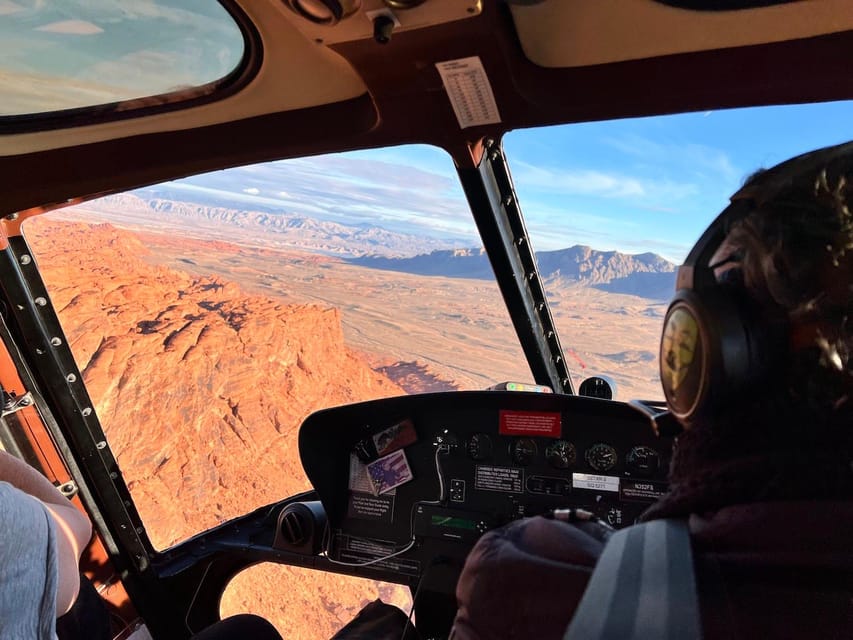
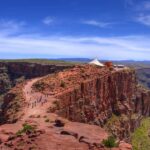
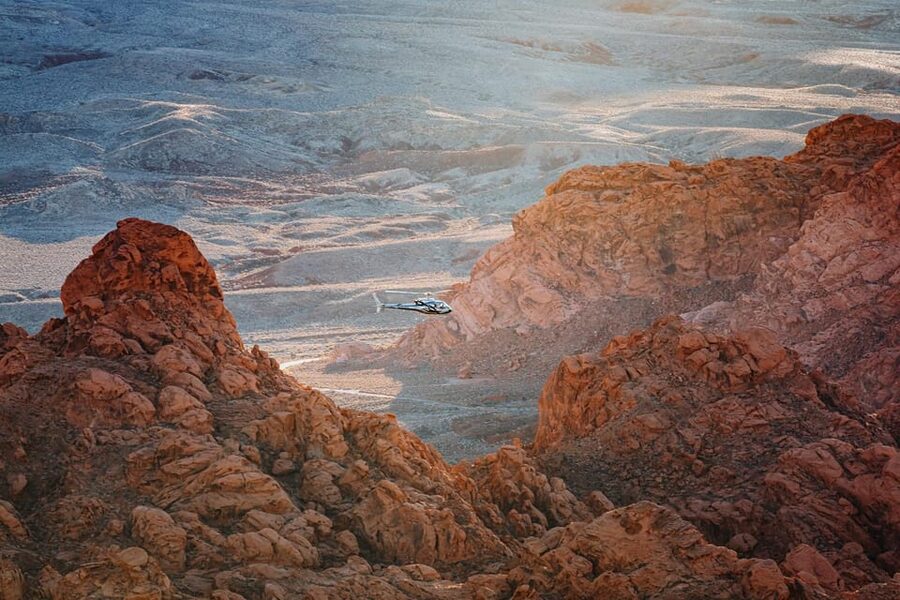
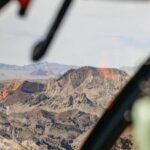
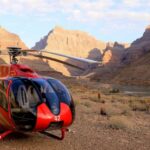
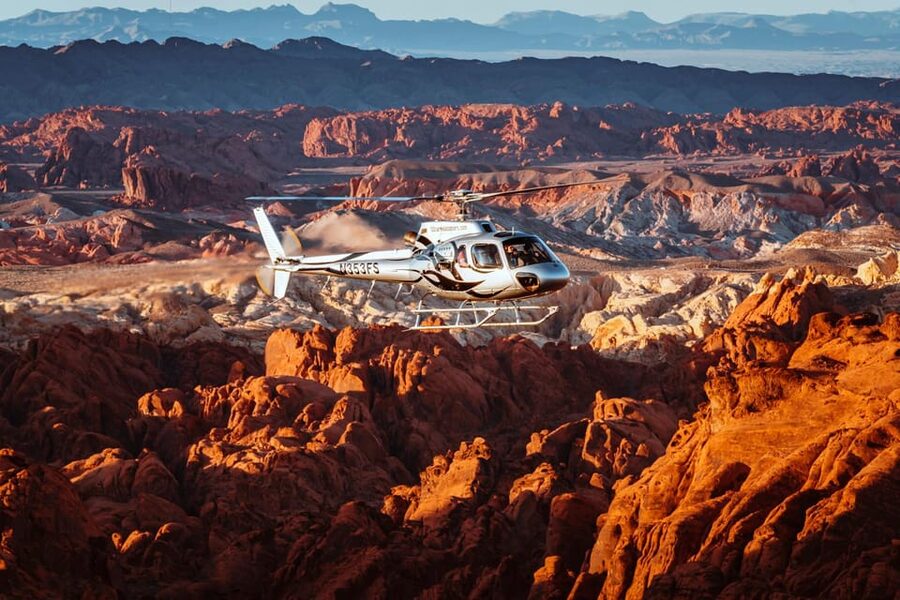
The Valley of Fire portion is the part I’d call the “bonus meal.” A lot of helicopter tours just pass over places. Here, you get a 30-minute descent onto a secluded overlook and a real stop where you can look closely, take photos, and take in the color.
Valley of Fire is known for intense reds, oranges, and pinkish tones, and the tour is timed to help you catch those hues as the light shifts. In this state of the day—when the sun is lower—rock surfaces go from flat to dimensional. You can see texture and layers more clearly, and your photos look richer without editing.
You’ll often see imagery of these rocks in film, and that reputation shows up fast once you’re standing at the overlook. The view is dramatic, but it’s also usable for photography: you have time to reposition and try angles without feeling like you’re rushing for takeoff.
And yes, there’s a champagne toast here. It’s included, and it turns a quick stop into a small celebration. Even if you don’t care about champagne, it’s a nice way to mark the moment—like pausing midair to say, this is why we came.
Return flight over Las Vegas at twilight: the payoff for the long day
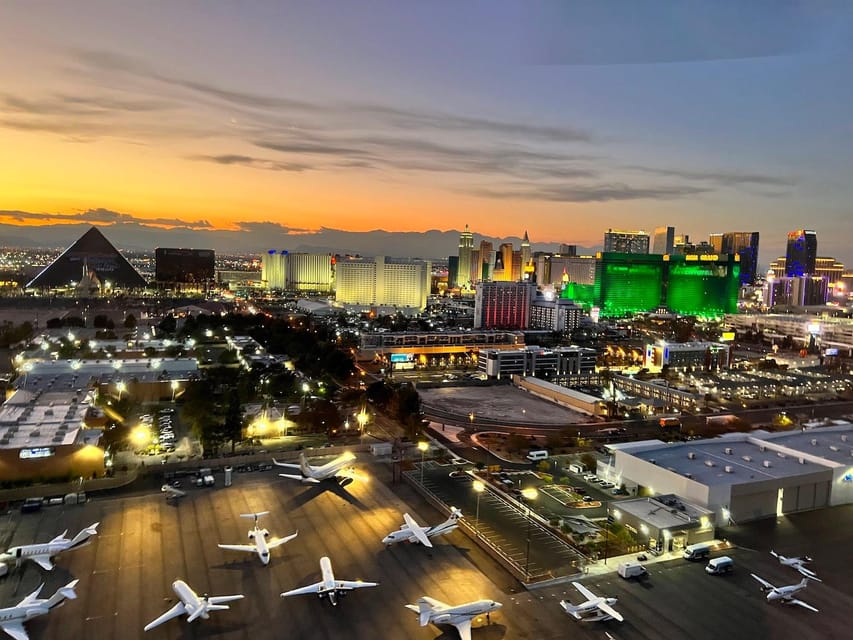
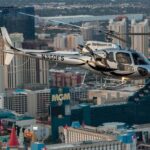
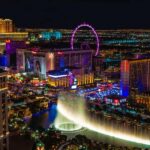
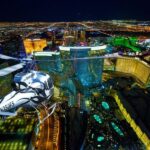
Flying back over Las Vegas is not just a sightseeing wrap-up. It’s the tour’s emotional punctuation. The route takes you past big recognizable landmarks—Stratosphere Tower, Caesars Palace, Bellagio, and Raiders Stadium—as they glow in the fading light.
Twilight views from above work because the city becomes a grid of highlights instead of a blur of neon. You get a sense of scale: the Strip looks both denser and more orderly from the air than it does on the sidewalk.
I also like that the return is timed so you’re not just seeing a daytime version of the city. The illuminated skyline is a different mood, and it makes the entire tour feel like a complete story arc: desert wonder out front, city magic at the end.
Price and value: what your $599 actually buys
At $599 per person, this is not a budget activity. But it also is not only a helicopter ride on autopilot. What drives the value is what comes included.
You get:
- A 100-minute helicopter flight
- Pilot commentary
- Water and soda
- Champagne toast
- Pickup from many Strip-area hotels
- All taxes and fees, plus fuel surcharge
That added value matters in Las Vegas because costs outside the headline price can sneak up quickly—especially when you’re trying to minimize transfers and maximize time in the air.
The bigger question is whether the format fits your priorities. If you want long time on the ground, you only get a 30-minute stop at Valley of Fire, and the rest of the “experience time” is in the air. If you want the canyon experience to be about scale and views, this timing is a strong match.
Also consider the cabin reality. If you’re tall, claustrophobic, or sensitive to tight seating, the packed feel can turn a dream flight into a grumpy one. This is a luxury tour in terms of access and inclusions, but it is still a small aircraft.
Who this helicopter tour is best for
This is the right choice if you:
- Love big aerial views and want canyon-scale perspective that driving cannot replicate
- Like sunset timing and photo opportunities with real light changes
- Want a small-group experience with pilot narration
- Are fine with limited ground time and a compact cabin
It’s less ideal if you:
- Need wheelchair access (it is not suitable)
- Are over 250 lbs / 113 kg and do not want to deal with the extra-seat requirement
- Strongly prefer lots of personal space during transport and flight
Practical tips to make your flight smoother (and your photos better)
A few small choices make a big difference:
- Bring your ID or passport. You’ll need it for the experience, and staff handle check-in at the heliport.
- Wear comfortable shoes. Even if you’re not doing a hike, you’ll be moving around the check-in and boarding areas.
- Skip the selfie stick. It is not allowed.
- Plan for hands-inside cabin moments. Helicopters create airflow and vibration, so treat your camera like something you hold steady, not something you constantly re-position.
- Use the light. If you like golden hues, you’re in the right time window. The tour’s desert color and canyon glow are part of the design, not an accident.
On the pilot side, good energy makes a difference. In the feedback I saw, pilots such as Sam and Christie were praised for being friendly and for answering questions with calm confidence. Mike was also noted for being a capable, easy guide. You cannot pick your pilot from the info here, but you can be reassured that pilot narration is part of the experience and that the vibe is usually upbeat.
Should you book the Las Vegas Grand Canyon heli tour with Valley of Fire landing?
Book it if you want a premium, high-impact day: a Grand Canyon flight with golden light, plus a real Valley of Fire landing where you can actually look around and celebrate with champagne, capped by Las Vegas at twilight.
Skip it if you hate tight seating in small aircraft, need wheelchair access, or you want more ground time than a short 30-minute overlook stop.
If you’re on the fence because of the price, think in terms of what you’re getting: a full 100-minute flight, hotel pickup, and included extras that make the canyon-to-desert-to-city arc feel complete. For many people, that combination is the difference between a cool snapshot and a real memory you’ll talk about for years.