REVIEW · MILFORD SOUND
Milford Sound: Helicopter Flight with Glacier Landing
Book on GetYourGuide →Operated by Milford Helicopters · Bookable on GetYourGuide
Milford Sound looks unreal from the sky. In just 30 minutes, this helicopter flight pairs the big-name views—Bowen Falls, Mitre Peak, and Piopiotahi—with a rare experience: a glacier landing on Tutoko Glacier.
What I like most is the mix of postcard views and hands-on moments. You’ll get stunning photo opportunities from start to finish, and you’ll also hear the scenery explained through headsets using two-way communication with the pilot.
One thing to consider: weather can affect what you’re able to do, including whether landing is possible. That’s not a surprise in Fiordland, but it’s worth planning around.
In This Review
- Key Highlights You’ll Actually Care About
- Where This Flight Starts: Milford Sound Airport Timing
- The Takeoff Route: Bowen Falls, Mitre Peak, and Piopiotahi Milford Sound
- Why Sutherland Falls Matter From Above
- Two-Way Pilot Commentary: Ask Questions, Get Context
- Flying Toward Tutoko Glacier: Forests, Lakes, and the Tasman Sea
- Touching Snow at the Remote Glacier Landing
- Return to Milford Sound: What the Flight Feels Like End-to-End
- Price and Value: What $355 Buys in a Place This Remote
- What to Bring (and What to Leave Behind) for Glacier Weather
- Weather Rules in Fiordland: How to Improve Your Odds
- Who This Helicopter Flight Fits Best
- A Quick Note on Service: Helpful Desk, Mixed Door Moment
- Should You Book Milford Sound Helicopter Flight with Glacier Landing?
- FAQ
- How long is the Milford Sound helicopter flight with glacier landing?
- Where do I meet for the flight?
- What sights will I see during the flight?
- Is there actually a glacier landing?
- Can I talk to the pilot during the flight?
- What should I wear and bring?
- What restrictions are there on what I can bring?
Key Highlights You’ll Actually Care About
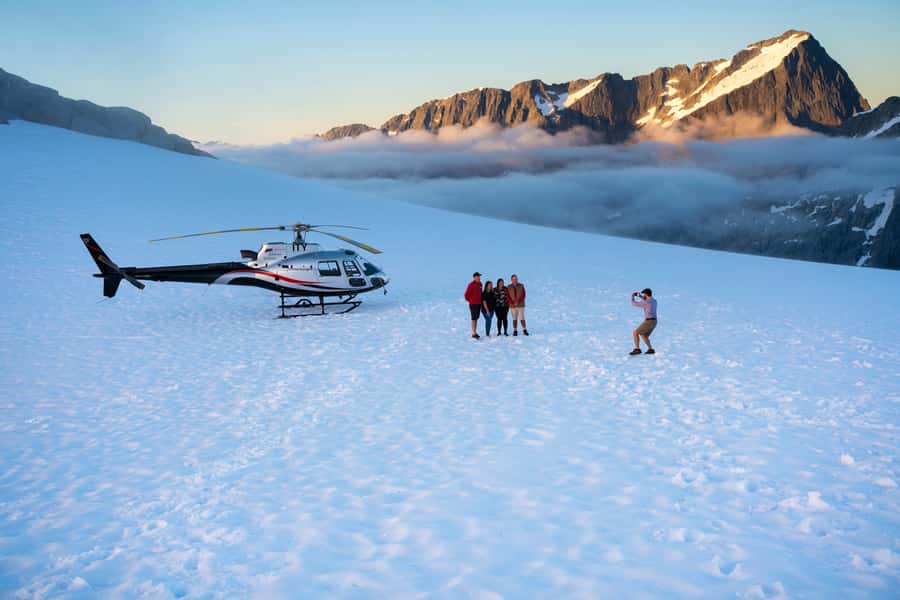
- Glacier landing on Tutoko Glacier: stand on the ice, touch snow, take photos, then lift off again.
- Pilot chat via two-way headsets: you can ask questions, not just listen.
- Milford Sound icons from above: Bowen Falls, Mitre Peak, and Piopiotahi Milford Sound.
- Sutherland Falls view: see New Zealand’s highest waterfall from the air.
- Tutoko Glacier to Mount Tutoko views: spot the highest peak in Fiordland National Park from overhead before returning.
- Short flight, big views: 30 minutes is tight, so you’ll get a concentrated hit of the region’s best sights.
Where This Flight Starts: Milford Sound Airport Timing

This experience runs from the Milford Sound Airport base, so you’re not dealing with a long transfer, wait, or complicated “tour day” logistics. You’ll want to arrive at the Milford Sound Airport office about 15 minutes before your booked time, so you have time to check in and get ready before takeoff.
You also need to exchange your voucher at the ticket center to join the flight. It’s a small step, but if you show up late, you can lose the clean, low-stress start that these short flights rely on.
The duration is 30 minutes, so the schedule is compressed. That’s good news for decision-making: you’re buying a focused experience, not half a day of waiting around.
The Takeoff Route: Bowen Falls, Mitre Peak, and Piopiotahi Milford Sound
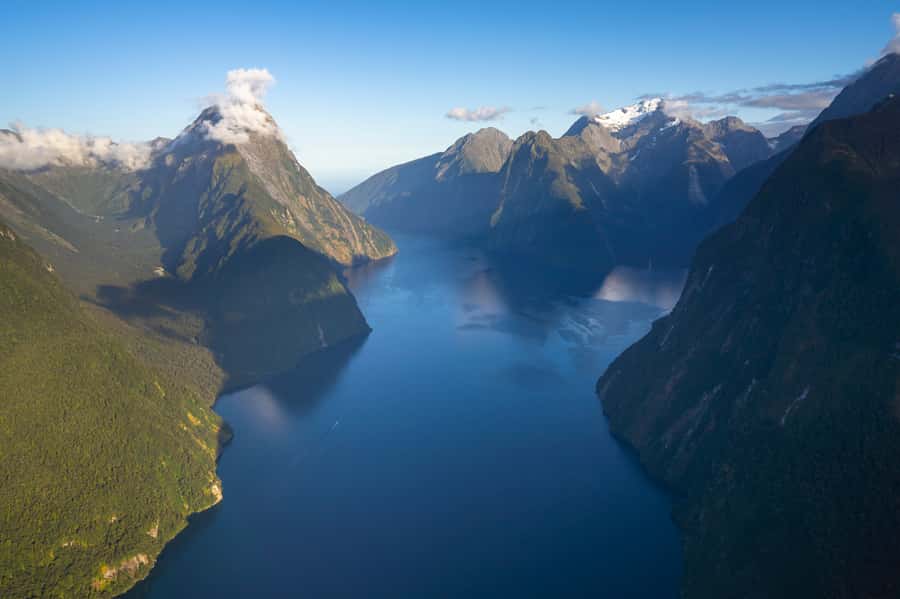
Once you lift off from Milford Sound Airport, you immediately start flying over the most recognizable parts of the fiord. Expect views of Bowen Falls, then Mitre Peak, and then the Milford Sound area around Piopiotahi.
From the air, waterfalls and steep rock faces look different than they do from roads or boat decks. You can see how water sheets and plumes drop into the valley, and how the coastline folds in ways that are hard to track on foot.
This is also where your photo opportunities start. The helicopter height and angle (chosen for visibility) tend to make the “wow” moments happen early rather than only near the glacier. If you want fewer minutes, better shots, and a simple flow, this timing helps.
Why Sutherland Falls Matter From Above
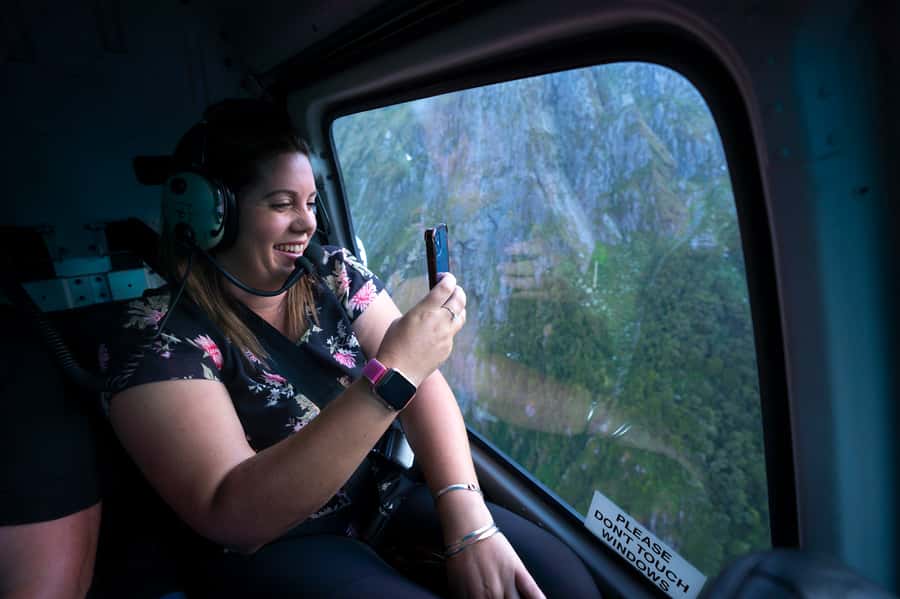
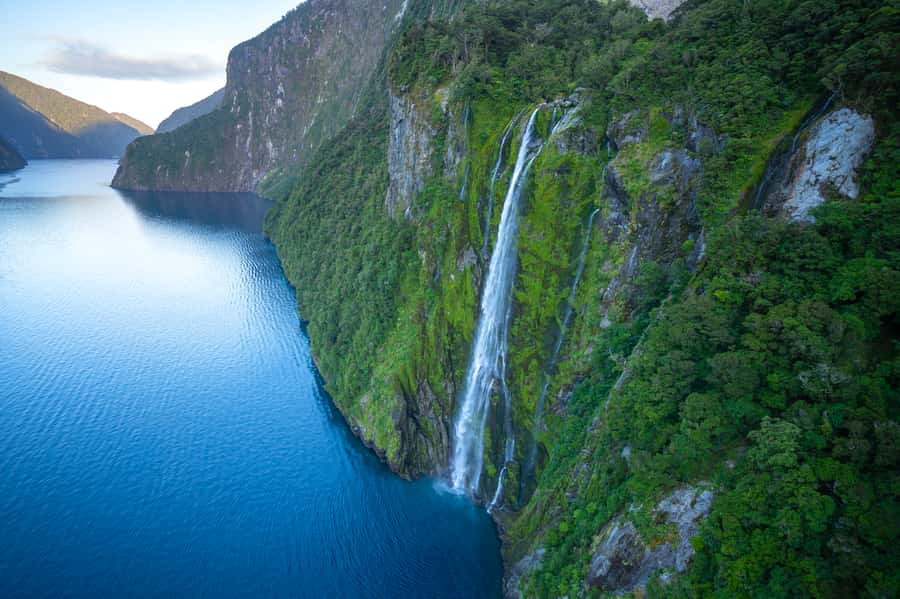
You’ll also see Sutherland Falls, which is the highest waterfall in New Zealand. From street level, Sutherland Falls is often a “wish I could see the whole thing at once” kind of sight. From the air, you get a more complete view of the waterfall’s vertical drop and the surrounding terrain.
Even if you’re not a waterfall expert, this one earns its reputation because height changes the whole visual effect. In foggy conditions, it can become a thin vertical ribbon; in clearer weather, it looks broader and more forceful.
This is one of those sights where you’ll understand why people go out of their way to build time around Milford Sound. It’s not just scenery; it’s scale.
Two-Way Pilot Commentary: Ask Questions, Get Context
A major quality boost here is the pilot’s two-way communication. You’ll wear headsets so you can hear the pilot clearly and ask questions during the flight.
In a place like Fiordland, that matters more than people expect. The views are dramatic, but names and geography give them meaning. When the pilot ties what you’re seeing to the terrain—forests, alpine features, and the path toward the glacier—you’ll look at the valley differently afterward.
One helpful detail from real-world experience: a pilot named Josh has been described as fantastic, which usually means smoother flying, good timing, and comfortable explanations while you’re busy trying to take photos.
Flying Toward Tutoko Glacier: Forests, Lakes, and the Tasman Sea
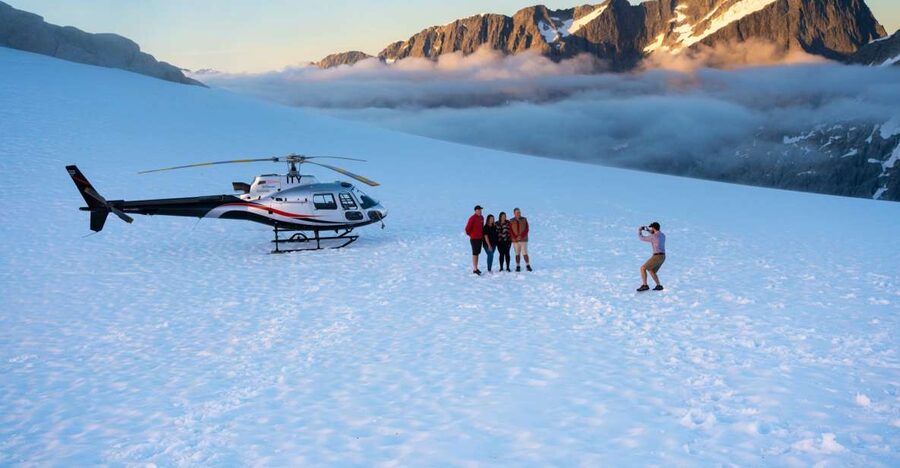
As you head toward Tutoko Glacier, you’ll look down over forests, hidden alpine lakes, and a wider sense of how the fiord country connects to the sea. The flight route is built so the scenery changes rather quickly—water, rock, forest, then the big, cold end of the spectrum as the glacier area comes into view.
This portion feels like the “bridge” between Milford Sound’s fiord drama and the glacier landing. You’re not just staring at one feature; you’re watching the landscape transition.
If you’re the type who likes your photos to have depth (foreground, midground, background), this is where you’ll get it. Glaciers give strong texture cues, while the lakes and forests add softer shapes around them.
Touching Snow at the Remote Glacier Landing
The signature moment is the glacier landing at Tutoko Glacier. You’ll touch down in a spectacular location, stand on the glacier, and have time to snap photos and enjoy the experience.
This is the part that turns a “pretty flight” into something more memorable. Many Milford Sound experiences are about viewing nature. This one includes a brief chance to be on the ice. Even if you’ve seen glaciers before, the idea of stepping onto snow in a place like Fiordland is a special kind of surreal.
Mount Tutoko is also part of what you’ll see from above on the route in. It’s described as the highest peak in Fiordland National Park, and it adds a geographic anchor to what would otherwise be just one stunning white-and-grey zone.
If weather is unstable, note that glacier landing can be affected. One booking described a flight where they were only informed about the landing situation while already near the glacier area. So if you’re counting on stepping onto ice, plan with weather flexibility in mind.
Return to Milford Sound: What the Flight Feels Like End-to-End
Because the whole experience is 30 minutes, the return to Milford Sound moves fast. The upside is that you’re not sitting around waiting for the “good part”—the flight is structured so you see the icons early and save the glacier landing as the headline.
The downside is that you can’t slow down. If you’re taking photos, you’ll need to multitask: glance up, frame quickly, and use the time efficiently. It helps to keep your camera or phone ready before the glacier landing window starts, since the best shots usually come when you’re on the ice.
After landing and photos, you’ll head back to the Milford Sound Airport base. From there, you’re done. This is a short, high-impact experience designed for people who want a big payoff without a long day.
Price and Value: What $355 Buys in a Place This Remote
At $355 per person for a 30-minute flight, the cost isn’t subtle. But the value comes from two things you rarely get in the same package: (1) Milford Sound’s most famous vertical scenery from above, and (2) a real landing on Tutoko Glacier, where you can touch snow.
A glacier landing isn’t just a different viewpoint; it’s a different experience. You’re paying for access and for the logistics of getting a helicopter to an ice site safely. You’re also paying for time efficiency. If you’re self-driving and already in Milford Sound, this is one of the easiest ways to add a once-in-a-lifetime moment without adding hours of travel.
Where the value calculation shifts is weather. If conditions prevent the landing, you may still get the flight views, but the headline moment may change. That’s why you should treat this as an experience to plan around weather, not just an experience you buy like a movie ticket.
What to Bring (and What to Leave Behind) for Glacier Weather
You’ll want warm clothing. The activity guidance is simple: bring a jacket, wear warm clothing, and choose comfortable clothes for helicopter seating and quick movement on arrival.
On the “leave behind” side, there are two clear rules:
- Loose clothing isn’t allowed.
- Selfie sticks aren’t allowed.
That second one matters if you rely on a stick to frame shots. The glacier landing is brief, and rules exist for safety and practicality. If you want stable photos, plan on using your hands and your camera’s basic settings rather than any extended gear.
Weather Rules in Fiordland: How to Improve Your Odds
Flights are subject to weather conditions, which is the big operational reality here. The provider asks you to make contact the day before to check in regarding flight weather.
If you have more than one day available, the best move is to book for the first day. That keeps your second day as a backup if conditions aren’t favorable on day one. It’s not about control; it’s about giving yourself options so you’re not stuck with a weather disappointment.
Also remember: minimum numbers are required for a flight to go ahead. That’s not unusual for small aviation operations, but it’s another reason to keep some flexibility in your schedule.
Who This Helicopter Flight Fits Best
This flight is ideal if you’re already in Milford Sound and want a high-impact add-on without spending your whole day on transport. It’s also a good choice if you want:
- the biggest Milford Sound icons (Bowen Falls, Mitre Peak, Piopiotahi) from above
- a helicopter perspective that boat or road viewpoints can’t fully match
- a chance at the standout moment: standing on Tutoko Glacier
It’s less ideal if you hate weather uncertainty or you need guaranteed glacier landing no matter what. In that case, consider building time buffers into your trip so you can reattempt if conditions shift.
A Quick Note on Service: Helpful Desk, Mixed Door Moment
One experience credited Victoria at the desk for being incredibly helpful, including moving a guest to an earlier flight so weather wouldn’t scupper plans. That’s the kind of small operational flexibility that makes a difference in a region where the sky decides the schedule.
On the flip side, one guest described an awkward interaction when returning to the office area, including a staff member shutting a door quickly after a moment of waiting. That’s not part of the flight itself, but it’s the kind of moment that can leave a bad taste when you’re paying for an experience.
If you’re sensitive to customer service moments, focus on the big picture: the actual flight, the pilot interaction through headsets, and the glacier landing (when conditions allow).
Should You Book Milford Sound Helicopter Flight with Glacier Landing?
Yes, if your goal is one short activity that delivers both famous Milford Sound views and a rare glacier moment, this is a strong choice. The 30-minute format works well for self-drive travelers who are already in the area and want maximum payoff per hour.
Book with weather reality in mind. Do the helpful prep: contact the provider the day before and, if you can, schedule your first day as your main plan so you have backup days if conditions require changes.
If glacier landing is the only thing you care about, be aware that weather can affect what’s possible. Still, even when conditions shift, you’re usually getting the aerial Milford Sound experience you came for, plus the chance to hear the pilot’s commentary through two-way headsets.
FAQ
How long is the Milford Sound helicopter flight with glacier landing?
The duration is 30 minutes.
Where do I meet for the flight?
Meet at the office at the Milford Sound Airport 15 minutes before your booked flight time.
What sights will I see during the flight?
You’ll fly over Bowen Falls, Mitre Peak, and Piopiotahi Milford Sound, and you’ll also see Sutherland Falls. You’ll head toward Tutoko Glacier and see views including Mount Tutoko.
Is there actually a glacier landing?
Yes. The experience includes a remote landing on the glacier where you can stand on the ice, touch the snow, and take photos.
Can I talk to the pilot during the flight?
Yes. You’ll have headsets to hear the pilot clearly and use two-way communication to ask questions.
What should I wear and bring?
Bring a jacket and warm clothing, and wear comfortable clothes suitable for cooler conditions.
What restrictions are there on what I can bring?
Loose clothing isn’t allowed, and selfie sticks aren’t allowed.