REVIEW · MOUNT COOK
Mount Cook: 50-Minute Aoraki Scenic Helicopter Flight
Book on GetYourGuide →Operated by Southern Lakes Helicopters · Bookable on GetYourGuide
Glacier silence is hard to beat. In a 50-minute helicopter flight over Aoraki/Mount Cook National Park, you get Tasman Glacier landing drama plus views that stretch coast to coast.
I love that the flight mixes big-picture geography with close-up ice detail: hanging glaciers, ice rivers, and that unreal blue you see in deep crevasses. The other thing I like is the way the pilot’s in-flight commentary turns what could be random scenery into a real sense of where you are.
There is one trade-off: if you end up in the middle of the back, your view through the windows can be limited.
In This Review
- Key things you should know before you go
- Why this 50-minute Aoraki flight feels like two coastlines at once
- Boarding at Southern Lakes Helicopters: what happens before lift-off
- Aerial views over Aoraki/Mount Cook, three glaciers, and Lake Pukaki
- The Tasman Glacier snow landing: the quiet moment you came for
- Hanging glaciers, crevasses, and ice detail you can actually recognize
- What the pilot’s commentary adds (and what to watch for on cloudier days)
- Price and logistics: does $499 per person make sense?
- Tips to get the best views and photos from your seat
- Who should choose this helicopter flight, and who might skip it
- Should you book this Mount Cook 50-minute Aoraki Scenic Helicopter Flight?
- FAQ
- How long is the helicopter flight?
- Is there a landing on the Tasman Glacier?
- What is included with the flight?
- Where do I meet the operator?
- Is the flight affected by weather?
- Are there items I’m not allowed to bring?
Key things you should know before you go
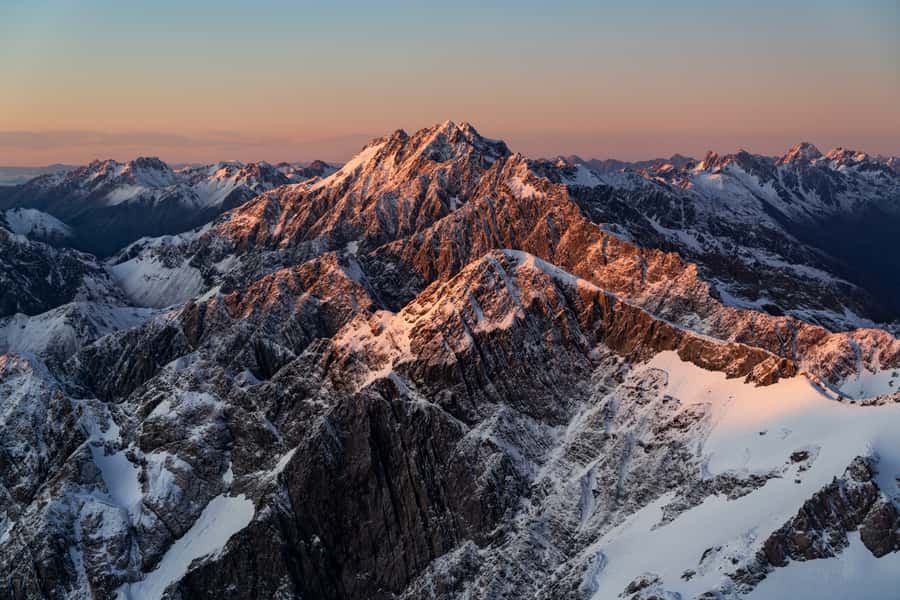
- Tasman Glacier snow landing: a rare chance to step onto snow on a real glacier, not just look at one from above
- Coast-to-coast viewpoints: the route is designed so you can see both sides of the South Island from the air
- Glacier and Lake Pukaki highlights: you’ll get views of three glaciers and Lake Pukaki
- Clear-day bonus views: if conditions cooperate, you can also see the West Coast and the wild Tasman Sea
- Weather-dependent flying: cloud cover can affect what’s visible, and the pilot will adapt the experience
- Weight and balance matters: you’ll need to provide passenger weights so the aircraft can fly safely
Why this 50-minute Aoraki flight feels like two coastlines at once
This is the kind of tour that makes the Mount Cook area feel huge. From the air, Aoraki sits inside a bigger system of valleys, ridgelines, and braided ice, and you start to understand why people call this a world-class place for glaciers. It’s not a long trek. It’s a short, high-impact aerial experience.
In just 50 minutes, you’re basically doing three things: scanning the region from above, spotting the standout ice features, and then shifting into a grounded moment on snow. That rhythm is what makes it work. You get wide views for context, and then the landing adds meaning.
Even better, the helicopter flight is set up to give you “birds eye” perspective on both sides of the South Island. You’re not just looking at one angle of Mount Cook. You’re watching the shape of the land—then the land turns into glaciers and deep ice.
You can also read our reviews of more tours and experiences in Mount Cook.
Boarding at Southern Lakes Helicopters: what happens before lift-off
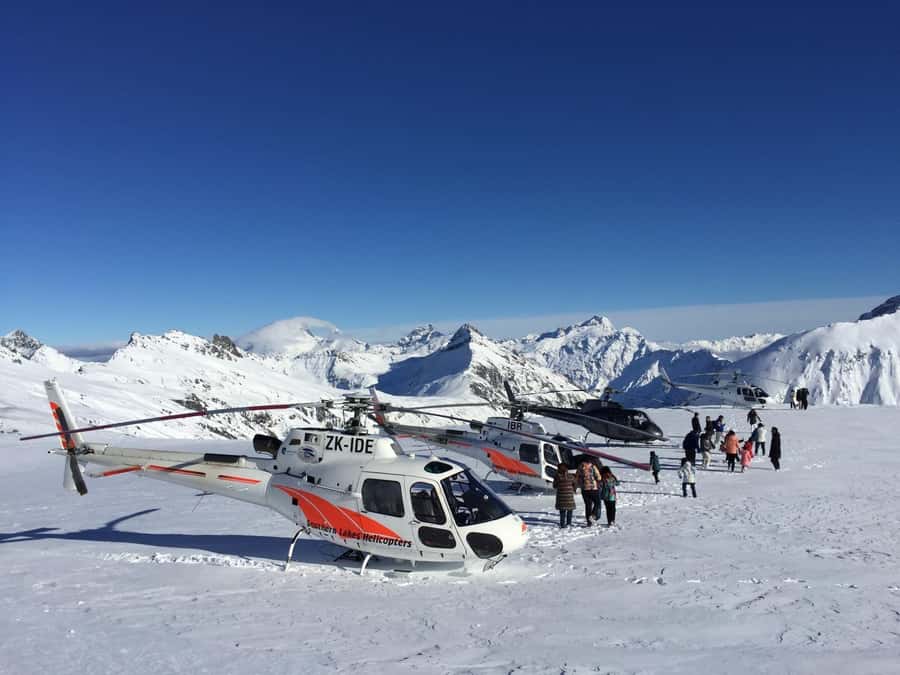
Your meeting point is straightforward. When you enter the building through the sliding doors, turn left, and you’ll find Southern Lakes Helicopters there. This matters because helicopter tours run on tight timing, and you don’t want to be hunting around when your flight window is approaching.
Plan to arrive with a calm, practical mindset. Bring comfortable shoes, dress for weather, and have a camera ready because the quality of photos from a helicopter can depend on how quickly you’re ready once you’re seated. A charged smartphone is also useful for quick backups and quick geotagging.
A few items are not allowed: drones, selfie sticks, and bags. If you’re the type who likes to bring everything, I’d do the opposite here—pack light and keep your hands free. Helicopters are small inside, and you’ll be happier if you’re not wrestling with gear during boarding.
The tour is wheelchair accessible, so if you have mobility needs, this provider is set up to accommodate. Just be sure you follow the seating and check-in process the team outlines when you arrive.
Aerial views over Aoraki/Mount Cook, three glaciers, and Lake Pukaki
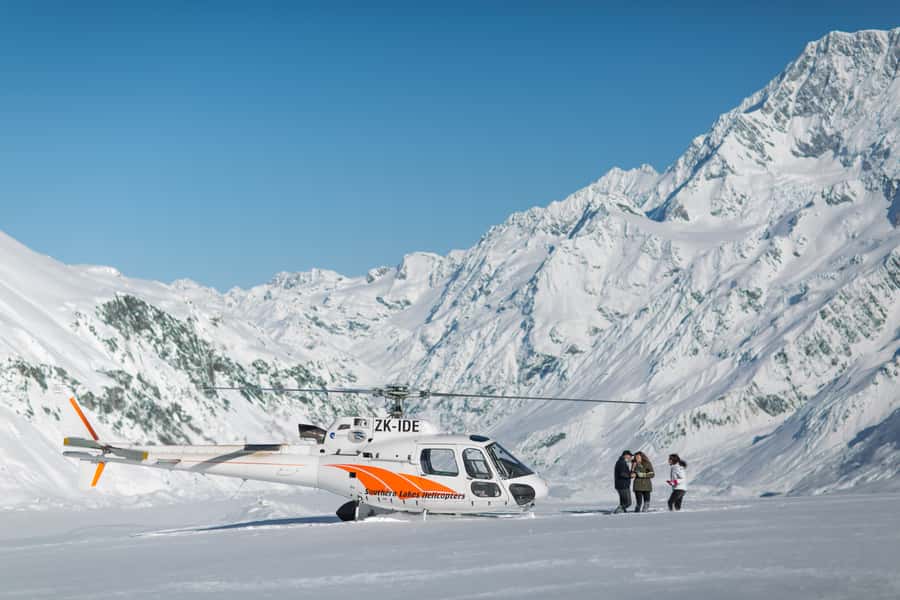
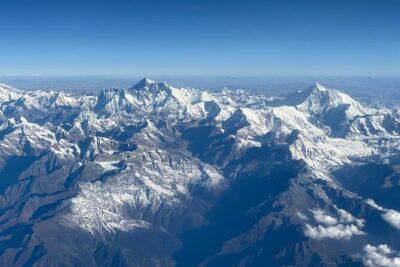
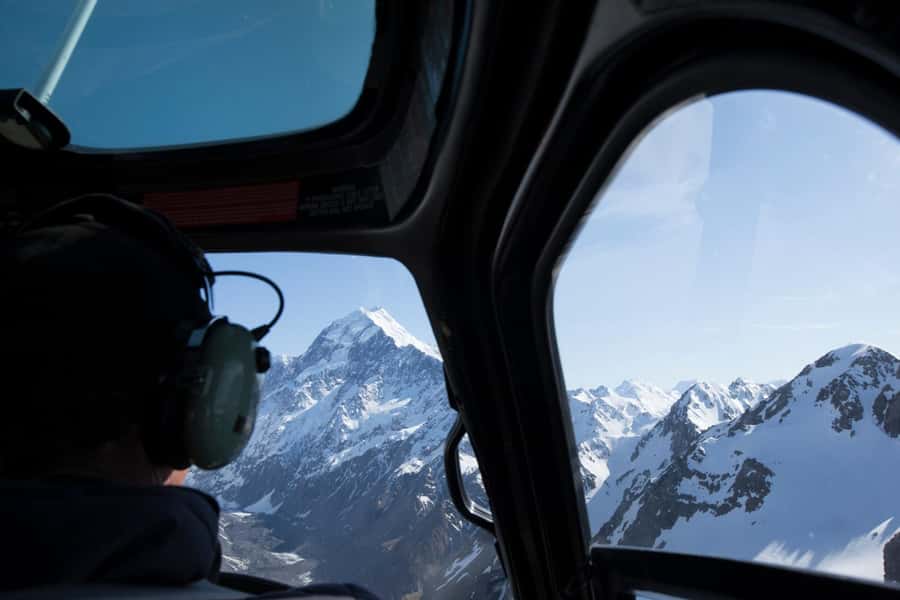
The flight is built around landmarks you can actually picture. You’ll see the summit area of New Zealand’s highest peak, Aoraki/Mt Cook, and then the scenery expands into the surrounding national park.
One of the best parts is the way you get multiple glacier views rather than a single “point of interest.” The route includes views of three glaciers plus Lake Pukaki. Seeing the lake from above also helps your brain. Water gives you scale, and it’s often easier to pick out how glaciers and valleys connect when you can see where the ice drains into the wider landscape.
As the helicopter moves, you’ll likely notice the differences between glacier surfaces: some areas look smoother and others look fractured. That’s where the “rivers of ice” idea becomes real. Ice doesn’t look like one flat sheet from the air. It looks like moving material—broken, folded, and shaped by gravity.
On a clear day, there’s another layer: you may also be able to spot the West Coast and the wild Tasman Sea from your seat. That’s a big deal because it’s hard to appreciate how far the coastline sits from the inland ice unless you can see both at once.
The Tasman Glacier snow landing: the quiet moment you came for
This is the headline. You don’t just circle the glacier—you land on the Tasman Glacier and get a snow stop. The tour description frames it as natural silence, and that’s exactly what makes a glacier landing different from, say, a scenic lookout.
From above, glaciers can look dramatic but distant. On the snow, you’re suddenly close enough to notice texture and the way light changes across the ice. You also get the chance to stand and absorb the scale without the window frame in your way.
One practical note: even if you’re excited, keep your expectations focused. This is a short landing experience, not a long hike. You’ll get time to be there, take photos, and enjoy the moment, then you’re back in the air.
If you’re someone who likes “the story” of a place, this part delivers. The glacier landing is where the region stops being a view and becomes an experience.
Hanging glaciers, crevasses, and ice detail you can actually recognize
Helicopter tours often sound like blur-and-go. This one has a clear emphasis on ice formations, so you’ll know what you’re looking at.
You’ll see hanging glaciers—ice that clings to cliff faces and overhangs. You’ll also see that braided, winding feel of glacial movement, often described as rivers of ice. And then there are the deep ice crevasses: the color can look startling from the air, especially when light hits deeper fractures.
You don’t need to be a glacier expert to appreciate it. What you need is a sense of what makes glacier scenery unique: the contrast between hard, dark rock lines and the soft, fractured blue/white ice tones. Once you notice that pattern, the views become easier to interpret through the whole flight.
What the pilot’s commentary adds (and what to watch for on cloudier days)
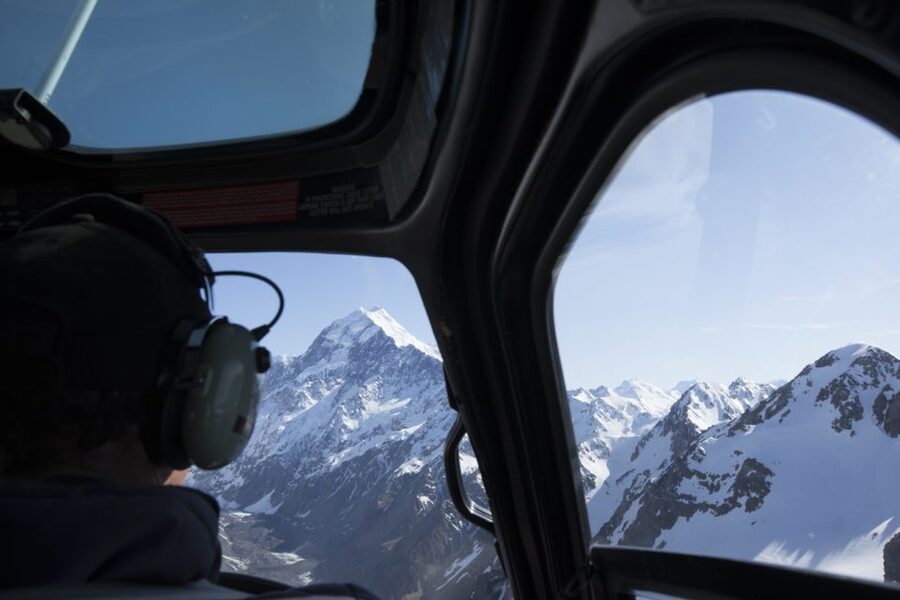
A huge part of the value here is the human layer. This flight includes in-flight commentary from a professional pilot, and that turns a scenery pass into a guided experience. In one case, the pilot Tony was described as very informative and good at pointing out glaciers and mountains. That’s the kind of thing that makes you look at the next ridge differently.
So what should you watch for during the flight?
- Listen for place names and what feature you’re seeing at that moment.
- Use that info to connect what you see with what you know from the ground.
- Don’t get stuck scanning nonstop. Glaciers and peaks can blend together if you’re rushing your own attention.
Also, manage expectations around weather. All flights are weather dependent, and cloud cover can affect what you see. On cloudier days, you may lose some of the most dramatic summit or coastline visibility. Still, the pilot can often make the flight engaging by shifting focus to whatever is visible and safe—so you don’t automatically get a “bad flight,” you get a different one.
Price and logistics: does $499 per person make sense?
At $499 per person for 50 minutes, this isn’t a bargain. But it also isn’t random spending. You’re paying for three specific things: premium access (helicopter flight), the special landing on the Tasman Glacier, and guided interpretation from the pilot.
If you’ve ever tried to squeeze the Mount Cook area into a day by car and short walks, you’ll know the bottleneck: time. You can only see so much from roads and viewpoints, and the ice detail is limited by distance. A helicopter compresses that into a single outing.
Is it still a splurge? Yes. But glacier landings are not everyday experiences, and that’s why this cost can feel reasonable when you compare it to the alternatives that don’t offer a snow stop. The landing is the moment that changes the trip from scenic to memorable.
If you’re traveling with limited time, this tour becomes even better value. You’re buying efficiency: fewer hours commuting, more hours seeing the right stuff in one shot.
Tips to get the best views and photos from your seat
Helicopters are all about position. Your experience is influenced by where you sit, and there’s a real lesson here: seating can make or break visibility. One traveler noted they were seated in the middle of the back and couldn’t see much. That doesn’t mean your entire flight will be bad, but it’s a clear warning to take seat placement seriously.
Here’s what I’d do:
- If you get a chance to choose or request seating, take it seriously.
- Keep your camera and phone accessible before you lift off, not after.
- Wear weather-appropriate clothing you can move in, because you’ll want quick action if the light changes.
For photos, think about angles. From a window, you’re capturing big features—peaks, glaciers, and water—so you’ll want steady framing. Also, don’t assume the best photo happens only at the landing. The route is designed for viewing, including the ice detail and, on clear days, possible West Coast and Tasman Sea glimpses.
If you’re traveling with a group, keep chatter low during the best viewing windows. You’ll thank yourself when you’re trying to line up the shot and you’re not constantly adjusting.
Who should choose this helicopter flight, and who might skip it
Choose it if you want maximum scenery and a genuine “I was on the glacier” moment without a long day on your feet. It’s ideal for first-timers to Mount Cook who want the big picture fast and the ice experience close-up.
It also fits couples and solo travelers who like structured, guided sightseeing. The flight is short, so it works well even if your itinerary is packed.
I’d consider skipping it if you need lots of time on the ground or you’re hoping for an all-day outing. This is focused and time-boxed. You’ll enjoy it most if you’re okay with short moments that hit hard instead of long, slow exploration.
It can also be a mixed fit if you’re very sensitive to seat position. If window views are your top priority, treat seat placement like part of the plan, not an afterthought.
Should you book this Mount Cook 50-minute Aoraki Scenic Helicopter Flight?
If your priority is a glacier landing and you want the strongest Aoraki/Mt Cook views in the shortest time, I think this one is a smart booking. You’re paying for the helicopter access, the Tasman Glacier snow landing, and expert interpretation in the air. Those are the exact components that turn a scenic flight into a story you’ll still be telling later.
Book it if you can handle weather dependence and you dress for cold and changing conditions. Also, take seat visibility seriously—your best photos and best memories often hinge on it.
If the landing is what you’re chasing, then yes: this is the kind of experience you plan around, not one you accidentally stumble upon.
FAQ
How long is the helicopter flight?
The flight duration is 50 minutes.
Is there a landing on the Tasman Glacier?
Yes. The tour includes a Tasman Glacier snow landing.
What is included with the flight?
It includes a 50-minute scenic helicopter flight, a Tasman Glacier snow landing, a professional and experienced pilot, and in-flight commentary.
Where do I meet the operator?
Meet Southern Lakes Helicopters. Enter the building through the sliding doors, then turn left.
Is the flight affected by weather?
Yes. All flights are weather dependent.
Are there items I’m not allowed to bring?
Drones, selfie sticks, and bags are not allowed.