REVIEW · RIO DE JANEIRO
Rio de Janeiro: Helicopter Flight Christ the Redeemer 30 min
Book on GetYourGuide →Operated by HelicopteRio · Bookable on GetYourGuide
Rio from above makes Rio click fast. This short helicopter flight is all about high-impact sightseeing, with a live guide calling out key landmarks through your headset. In about half an hour, you go from beach icons to mountains and forest without long drives.
I love the way the route strings together some of Rio’s most recognizable shapes: Copacabana and Ipanema, Rodrigo de Freitas Lagoon, and the classic outline of Sugarloaf. I also like that the experience includes real-time commentary in Portuguese, English, and Spanish, so you’re not just staring out at blurting city views.
The main downside is practical: it’s not cheap, and it depends on the weather. If conditions aren’t great, your schedule can shift, so I’d build in flexibility.
In This Review
- Key highlights at a glance
- A 30-minute circuit that hits Rio’s biggest hits
- Getting to Heliporto do Recreio (SDRE) without stress
- How the route reads from the sky: beaches to Christ to Sugarloaf
- Barra Beach and the western shoreline mood
- Praia da Joatinga and the rocky shoreline
- Pedra da Gávea and the scale of the hills
- Sao Conrado Beach, Leblon, Ipanema, and Arpoador
- Copacabana’s fort edge and the postcard stretch
- Sugarloaf Mountain appears as Guanabara Bay’s anchor
- The Jockey Club area and the city’s rhythm
- Rodrigo de Freitas Lagoon: the green-and-water centerpiece
- Tijuca National Park and Tijuca Forest: Rio’s green lung from above
- Christ the Redeemer from Corcovado: why the aerial angle matters
- Price and value: what $231 buys you (and what it doesn’t)
- First-time helicopter comfort and safety notes that matter
- Photo strategy: getting the shot without stressing every second
- Who this helicopter flight is best for
- Should you book this Rio helicopter flight?
- FAQ
- How long is the Rio de Janeiro helicopter flight?
- Where do I meet for the helicopter flight?
- Is hotel pickup and drop-off included?
- Will there be a guide during the flight, and what languages are offered?
- How are seats chosen on a shared flight?
- Is the helicopter flight wheelchair accessible, and who should avoid it?
- What is the cancellation policy?
Key highlights at a glance
- A tight 25 to 35-minute loop: enough time to see a lot, without turning it into a whole day.
- Icon views in sequence: beaches, lagoons, hills, and both Christ the Redeemer and Sugarloaf.
- Live guide through the headset: landmark notes in Portuguese, English, or Spanish.
- Tijuca Forest from the air: a quick look at the biggest urban forest in the world.
- Seat assignment by draw: shared-flight planning is part of the deal.
A 30-minute circuit that hits Rio’s biggest hits
This is one of those tours where time matters. You’re in the air for roughly half an hour (the flight window is listed as 25 to 35 minutes), and that’s long enough to recognize what you’re seeing. You don’t need perfect memory of street names. Rio’s geography does the work for you.
You’ll get aerial views of the beaches people come to Rio for, plus the green interior that makes Rio feel different from other coastal cities. And at some point in the loop, the city will look like a postcard that someone stretched into a real place.
The flight also isn’t just about one icon. You’re seeing Christ the Redeemer on Corcovado Mountain and the surrounding landmarks that frame it, like Tijuca National Park and Guanabara Bay. That context is what makes aerial sightseeing feel more meaningful than a single viewpoint.
You can also read our reviews of more tours and experiences in Rio De Janeiro.

Getting to Heliporto do Recreio (SDRE) without stress
Your meeting point is Heliporto do Recreio (SDRE), Helicopterio, at Av. das Américas, 13750. Plan to arrive early, because you’re instructed to be there at least 1 hour before the scheduled flight time. With helicopters, everything is timing-sensitive: check-in, security, and getting everyone seated.
You’ll also want a simple packing mindset. The tour lists no smoking, and it limits what you can bring: no luggage or large bags, and no food or drinks in the vehicle. Stick to comfortable clothes and bring a valid ID or passport for check-in.
One more small planning detail that matters: this is a shared flight. Seat selection is done by a draw among the three passengers, so don’t count on always getting the best-side view. If you’re traveling with a group, you’ll feel that “we’ll make it work” energy.
How the route reads from the sky: beaches to Christ to Sugarloaf

The flight route is built like a guided scan of Rio’s major features. From the air, Rio becomes easier to understand because coast, hills, and forest all show their relationships at once.
Here’s what you can expect to see along the way:
Barra Beach and the western shoreline mood
Early on, you’re looking at Rio’s western beach areas, including Barra Beach and nearby stretches such as Reserva Beach. From above, these zones read less like “a specific beach” and more like long bands of coastline with development pressing right up to the water.
This part of the flight tends to be about orientation. Even if you’ve never been to Rio, you start to recognize the idea of Rio being squeezed between ocean and steep terrain.
Praia da Joatinga and the rocky shoreline
As the route continues, you’ll pass Praia da Joatinga and eventually see the dramatic coastline features around that area. You get a clearer sense of where steep rock meets the sea, and why some spots feel remote even when they’re still in the city.
If you like geography, this is the section where Rio starts to make sense as a real physical system, not just a set of famous names.





Pedra da Gávea and the scale of the hills
Next comes Pedra da Gávea, a massive peak that’s hard to grasp from ground level. From above, it’s obvious how the hills dominate everything. You stop thinking of Rio as “beaches plus traffic” and start thinking of it as “a city built under mountains.”
This is also where a live guide helps, because you’ll get context for what you’re seeing as you fly over it.
Sao Conrado Beach, Leblon, Ipanema, and Arpoador
As you move toward the classic South Zone, you’ll see Sao Conrado Beach, then Leblon Beach, Ipanema Beach, and Arpoador. From the helicopter, the beaches look like clean strips carved by waves, with the city grid rising behind them.
What’s satisfying here is seeing how beaches change character across short distances. The coastline doesn’t feel uniform from the air, even when the shoreline looks continuous.
Copacabana’s fort edge and the postcard stretch
You’ll also fly over Copacabana Fort and then Copacabana itself. The fort gives you a structure you can spot fast, and Copacabana becomes the recognizable arc most people picture when they think of Rio.
From above, it’s easier to understand why people talk about Copacabana as a landmark rather than just a beach. It’s an entire urban theater built along the water.
Sugarloaf Mountain appears as Guanabara Bay’s anchor
Then comes Sugarloaf Mountain. From the sky, Sugarloaf doesn’t just look iconic. It looks functional, like the natural gatekeeper for the way the bay opens up.
If you love the classic Rio skyline look, this is where you get the full effect. You see the shape of Guanabara Bay around it, not just Sugarloaf against the horizon.
The Jockey Club area and the city’s rhythm
You’ll pass Jockey Club Brasileiro on the way toward the central landmarks. Aerial views make this kind of “city texture” visible. It’s not as dramatic as mountains, but it helps you understand how planned spaces sit among steep terrain.
This is one of those “small” parts of the loop that makes the big landmarks feel more grounded.
Rodrigo de Freitas Lagoon: the green-and-water centerpiece
The route includes Rodrigo de Freitas Lagoon. From above, the lagoon reads like a calm pause in a city of motion, surrounded by mountains and green areas with modern development around it.
It’s one of the most rewarding views because it gives you contrast: blue water and curved shoreline next to dense city blocks and steep climbs.
Tijuca National Park and Tijuca Forest: Rio’s green lung from above
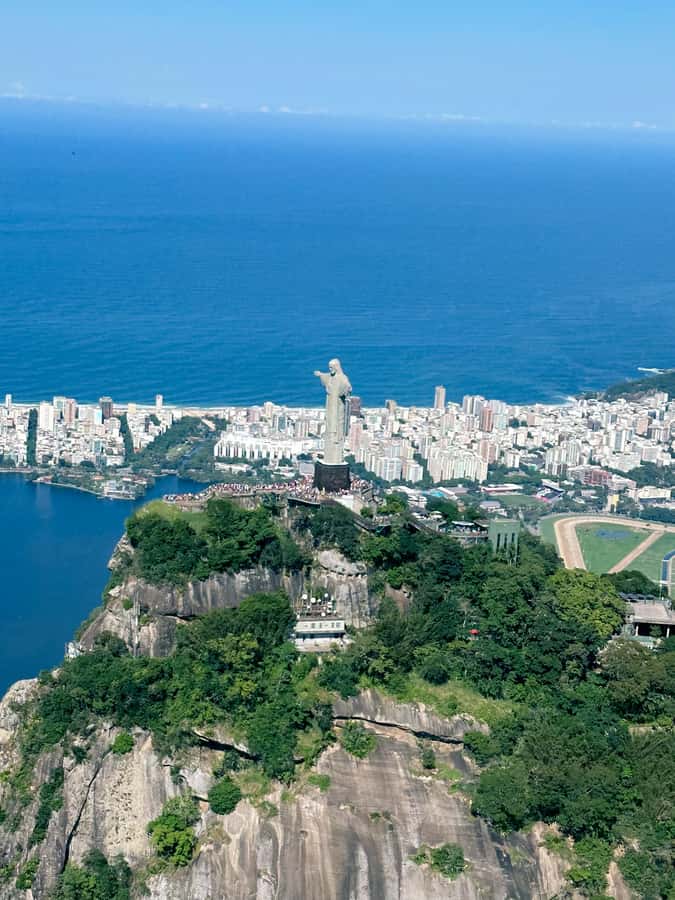
After the lagoon, you head over Tijuca National Park, which is part of Tijuca Forest, the largest urban forest in the world. Seeing forest from the air changes your mental map of Rio. It stops being “a city by the sea” and becomes “a city that sits inside a natural system.”
You’ll see lush vegetation patterns that are hard to reproduce at street level, plus the way forest edges meet development. It’s a reminder that Rio’s beauty isn’t only on the beach.
This portion also tends to feel like a breather. The flight is fast, but the green scale gives your eyes a break from buildings and coastline lines.
Christ the Redeemer from Corcovado: why the aerial angle matters

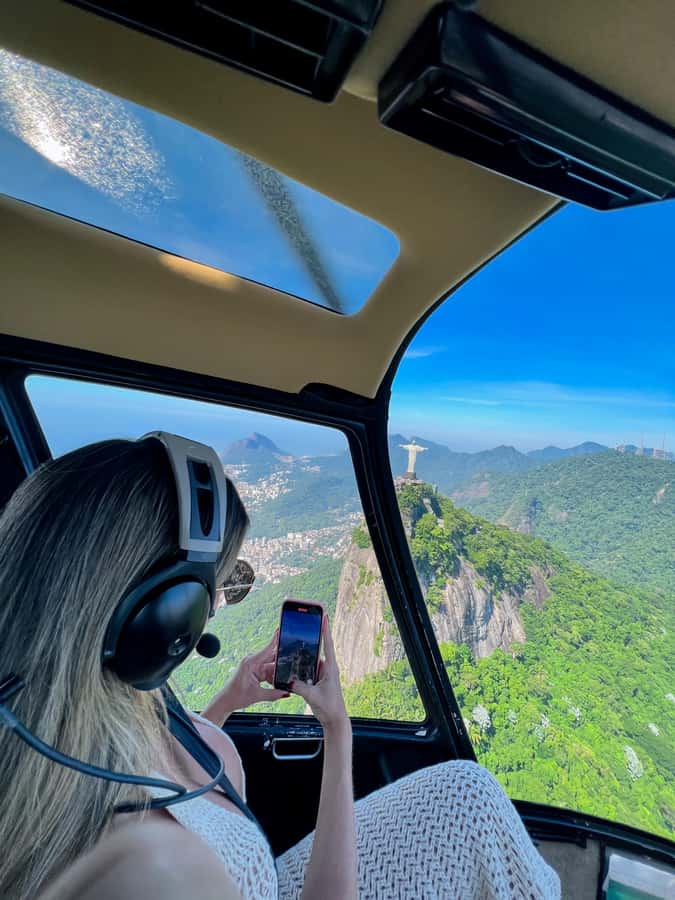
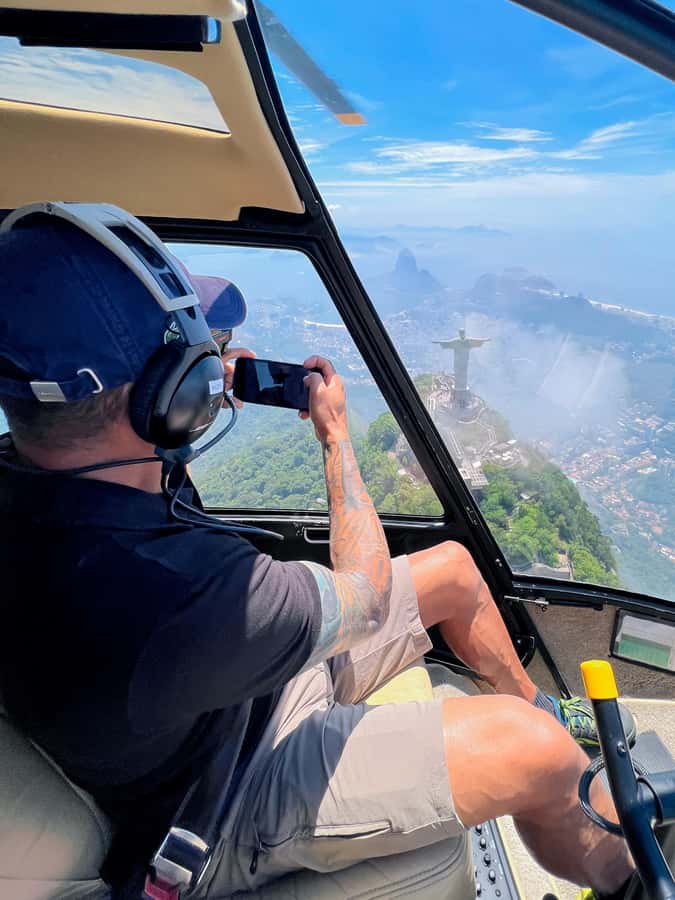
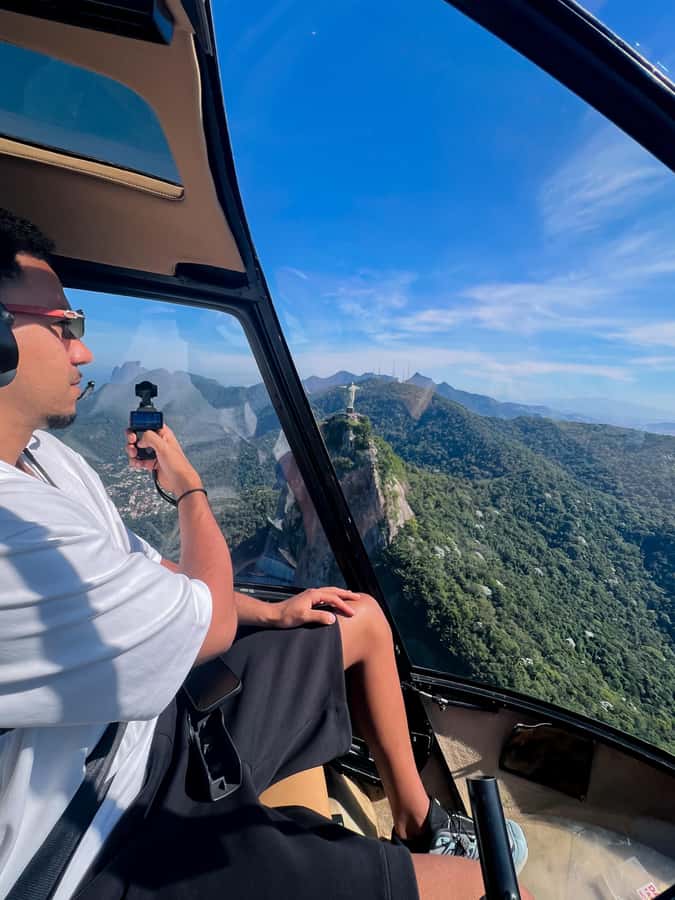
The highlight many people are chasing is Christ the Redeemer, on Corcovado Mountain. Seeing it from above is different from a standard viewpoint because you’re getting the statue plus its surrounding “stage.” You can frame the city behind it, rather than just viewing the statue as a single object.
From this height, you can often interpret how Corcovado sits relative to the coast, bay areas, and forest. That makes the monument feel less like an isolated attraction and more like a landmark embedded in Rio’s terrain.
This is also where the live guide payoff is obvious. With the headset, you’re not guessing what you’re looking at. The narration helps you connect the dots between the statue and the neighborhoods and natural areas around it.
Price and value: what $231 buys you (and what it doesn’t)
At $231 per person, this isn’t a “budget” activity. But it’s also not trying to be one. You’re paying for three things that matter:
- Time compression: you see multiple headline spots in one flight rather than stacking visits across the city.
- Aerial access: many of these views are simply hard to replicate elsewhere, especially the combination of beaches plus forest plus Sugarloaf context.
- Guided interpretation: you’re not alone in the helicopter. You get live commentary in Portuguese, English, or Spanish.
What you don’t get is also part of the value equation. This isn’t a ground tour where you go to the base of a monument, walk neighborhoods, or have time for slow photo stops. If you want that kind of pacing, you’ll need other activities alongside this.
Still, for people who want one standout Rio experience that feels like a once-in-a-lifetime viewpoint, this pricing can feel more rational than other city helicopter products because the route covers a lot of real geography in one shot.
First-time helicopter comfort and safety notes that matter

Helicopter rides can be intimidating before you try them. The good news is that this flight is relatively short, and the shared format keeps it simple: you arrive, check in, fly, and return to the base.
That said, the tour lists real limitations. It’s not suitable for people with heart problems, and it’s not recommended for people prone to seasickness. There’s also a weight limit listed: over 264 lbs (120 kg) is not suitable, and people over 120 kg are asked to contact the company in advance to review flight conditions and aircraft possibility.
You’ll also want to plan for the sensory side of helicopters. Expect noise, rotor wash, and a firm focus on listening. Bring comfortable clothes and wear something you can move in if you need to adjust seating.
Also note: wheelchair accessibility is stated, which is a helpful detail if mobility is a factor for your planning.
Photo strategy: getting the shot without stressing every second
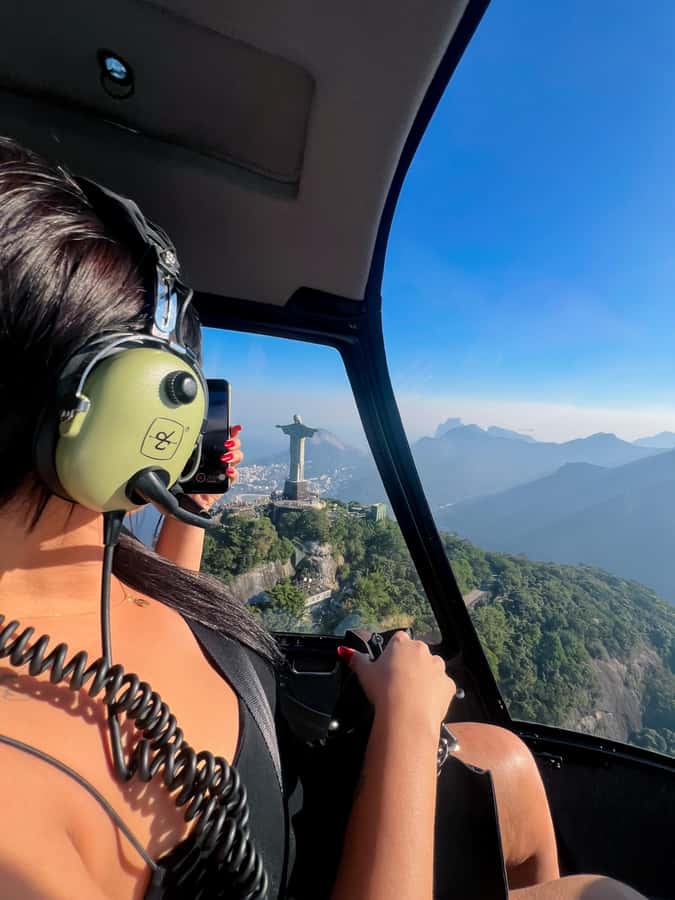
You’re going to want photos, but don’t treat the helicopter window like a studio. The best approach is to prioritize a few “must-have” frames and then let the rest be for memory.
Here’s a practical way to think about it:
- Plan for the “big three” in your head: Copacabana, Christ the Redeemer, and Sugarloaf.
- If you’re sitting on the side that doesn’t perfectly match your mental photo plan, rely on the fact that aerial viewpoints still show landmarks clearly from more than one angle.
- Use the guide’s mentions to know what’s coming next, so you’re not scrambling when an icon is overhead.
Because seating is assigned by a draw among three passengers, you can’t guarantee a particular side. Go in with flexible expectations.
Who this helicopter flight is best for

I’d point this tour toward a specific kind of traveler: you have limited time in Rio, you want a single signature experience, and you’re curious about how the city fits together geographically.
It can also work well if:
- you want to see more than just beaches
- you’re short on energy for long drives
- you like guided interpretation, not just scenic wandering
It’s not a match if you need lots of walking time or hands-on visiting at each stop. This is an aerial overview tour, designed for one thing: giving you the view fast.
Should you book this Rio helicopter flight?
If your goal is to get a true “Rio from above” experience without spending half a day in transit, this flight is an easy yes. The route connects major landmarks in one compact loop, and the live guided commentary helps you understand what you’re seeing instead of just passing time looking out a window.
I’d only hesitate if:
- you’re traveling with someone who’s not suited for helicopter rides (heart conditions, seasickness risk, or weight limits)
- your schedule is tight and you can’t handle weather-related timing changes
- you’d rather spend your money on ground experiences you can linger in
If you can match those conditions, this is the kind of Rio activity that gives you a fresh mental map of the city in one short flight.
FAQ
How long is the Rio de Janeiro helicopter flight?
The flight is scheduled for about 30 minutes, with the tour describing a 25 to 35-minute aerial experience.
Where do I meet for the helicopter flight?
You meet at Heliporto do Recreio (SDRE), Helicopterio, located at Av. das Américas, 13750.
Is hotel pickup and drop-off included?
No. Hotel pickup and drop-off are not included.
Will there be a guide during the flight, and what languages are offered?
Yes. There is a live tour guide available in Portuguese, English, and Spanish.
How are seats chosen on a shared flight?
Seat selection is done by a draw among the three passengers.
Is the helicopter flight wheelchair accessible, and who should avoid it?
Wheelchair accessibility is listed. It’s also stated as not suitable for people with heart problems, people over 264 lbs (120 kg), and people prone to seasickness.
What is the cancellation policy?
You can cancel up to 24 hours in advance for a full refund. Free cancellation is available.