REVIEW · DUBAI
Dubai: 22-Minute Helicopter Flight
Book on GetYourGuide →Operated by HeliDubai Helicopter Tours · Bookable on GetYourGuide
Dubai’s skyline looks different from the air.
I love how this 22-minute flight gives you tight, high-impact views of Palm Jumeirah and the Atlantis the Palm, and I also like the chance to spot Dubai’s older sights from above, including areas by Dubai Creek. One thing to consider: the flight can run late while they manage helicopter weight and balance.
You’ll start at the HeliDubai helipad near Dubai Police Academy, then get a serious safety check before takeoff. Once you’re up, you’ll have a live English guide and English audio commentary to connect the landmarks to what you’re seeing below.
If this is your first helicopter ride, it’s also a good length. Long enough to feel worth the money, short enough that it doesn’t drag.
In This Review
- Key things to know before you fly
- A 22-Minute Flight That Covers Dubai’s Biggest Hits
- HeliDubai Check-In: Safety First, Then Up You Go
- Umm Suqeim to Burj Al Arab: Dubai’s Most Photo-First Building Hits Harder
- Palm Jumeirah, Atlantis, and the World Islands: Man-Made Wonder in Real Proportions
- Burj Khalifa and Dubai Frame: Height Turns Into a Map
- Bonus Sights You’ll Notice Along the Way
- What to Bring (and What’s Banned) for a Smoother Flight
- Price and Value: Is $353 Worth 22 Minutes?
- Timing, Delays, and Comfort Notes That Matter
- Who This Ride Fits Best
- Should You Book This 22-Minute Helicopter Tour?
- FAQ
- How long is the helicopter flight?
- Where do I meet the tour for this flight?
- Is hotel pickup or drop-off included?
- Do I get an English guide and commentary?
- What are the age and child requirements?
- What items are not allowed and are there safety checks?
Key things to know before you fly
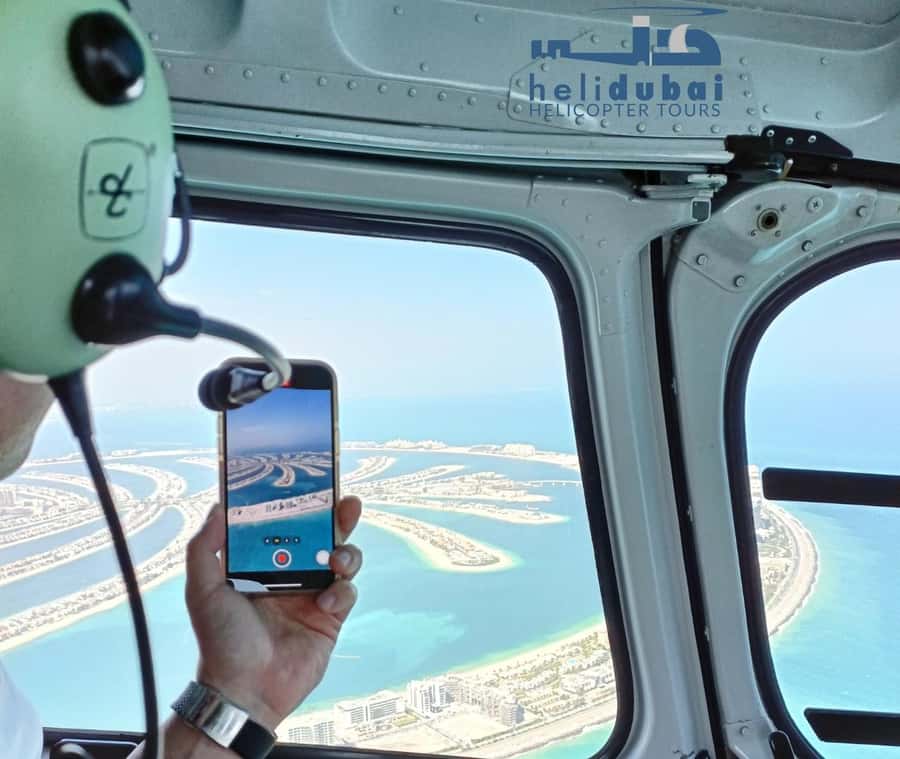
- Palm Jumeirah and Atlantis the Palm from above: clear, iconic angles with the artificial islands laid out like a map
- Burj Al Arab and Dubai’s coastline: you get a different sense of distance along the shoreline and beaches
- The World Islands archipelago: see how the shapes are arranged rather than just spotting them from afar
- Burj Khalifa and the surrounding skyline: height becomes real when you’re looking down at streets and towers
- Dubai Creek and Old Dubai heritage cues: wind-tower and souk area details are easier to recognize from the air
- A very structured pre-flight process: plan around a long safety check before your 22-minute hop
A 22-Minute Flight That Covers Dubai’s Biggest Hits
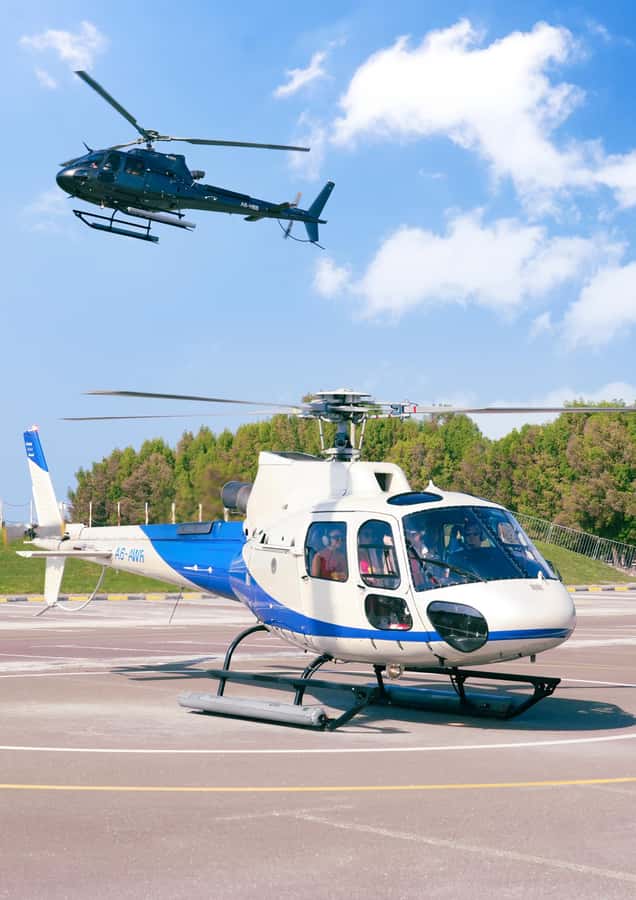
Dubai is a city of angles—glass towers, engineered coastlines, and palm-shaped land. This helicopter ride turns those angles into something you can actually read. In 22 minutes, you don’t just glance at famous buildings. You see how they relate to each other: distance, spacing, and the way the shoreline wraps around the city.
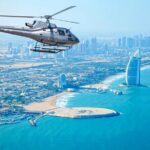
The core value here is the concentrated hit of icons. You’ll fly over Burj Al Arab, then the Palm Jumeirah area with the Atlantis the Palm Hotel. After that, you’ll get a look at The World Islands archipelago—those man-made islands that are hard to understand from street level. Later, the flight brings you past the Burj Khalifa area, and it even reaches the Dubai Frame view corridor.
You also get commentary while you fly. That matters because Dubai landmarks can look similar from above unless someone tells you what you’re looking at. With live English guidance plus English audio, you’re not stuck guessing.
The only real trade-off is time. Twenty-two minutes is enough to wow you, but it’s not enough for long loops or repeat angles. If you’re obsessed with photography, you’ll want to plan your gear and accept that you’ll get one shot per key sight.
You can also read our reviews of more tours and experiences in Dubai.

HeliDubai Check-In: Safety First, Then Up You Go
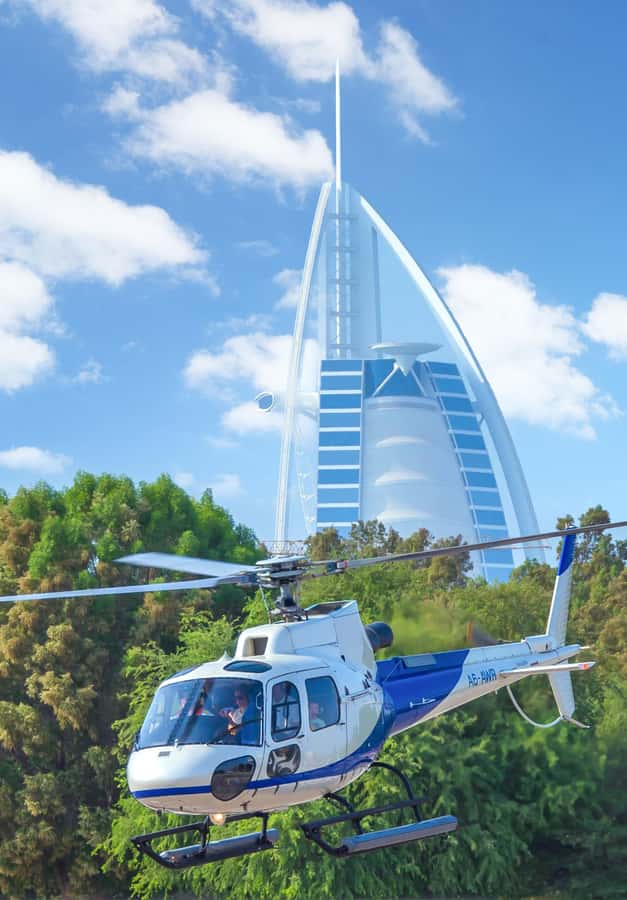
Your meeting point is the HeliDubai helipad at the Dubai Police Academy. That’s the place to arrive for the pre-flight phase, which is the part you should treat as non-negotiable.
They provide a 45-minute safety check before the flight. In other words, don’t plan to roll in at the last second and expect everything to fall into place. This is also where they confirm your ID—passport or ID card is required, and a copy is accepted.
Weight rules also matter. The guidance you’re given includes a safety weight restriction that says passengers over 120kg may not be accepted, and it also separately states that passengers weighing 140kg and above are prohibited. If you’re near the limit, I’d call it in advance and make sure you understand which rule applies to your specific booking.
From the ride quality side, the best sign is how the aircraft is operated. The most positive experiences you can expect are tied to smooth handling—small, controlled movements rather than jerky flying. That makes a big difference when you’re looking down at high-rise streets and shoreline features.
Umm Suqeim to Burj Al Arab: Dubai’s Most Photo-First Building Hits Harder
The flight starts near Umm Suqeim, after the initial guided portion and safety briefing. This is a sensible setup because it gets you into the skyline zone quickly, before the ride spends its short time on distant cruising.
Then comes Burj Al Arab. From the ground, it’s iconic but still a single object. From above, you see it in context—its relationship to the surrounding coastline and the beaches around it. You’ll also get aerial views of the route leading in, which helps you understand how Dubai’s development stretches along the water rather than forming a compact city core.
What makes this segment especially satisfying is the contrast. Burj Al Arab is a landmark that already looks dramatic from photos. But from the air, the water and shorelines give it scale. You can judge distance, not just size.
One consideration: visibility can affect how sharp the view looks. If haze or glare is an issue on the day, expect that some edges may look softer than the cleanest picture you’ve ever seen online. Still, you’ll usually come away with at least a few clear landmark frames.
Palm Jumeirah, Atlantis, and the World Islands: Man-Made Wonder in Real Proportions
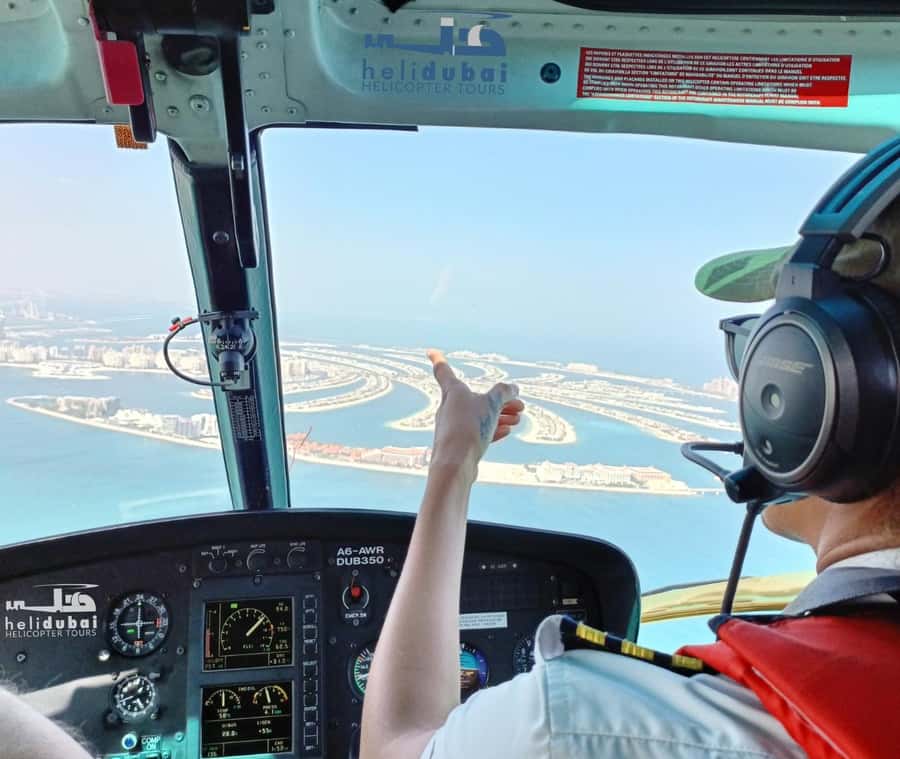
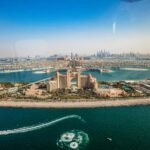
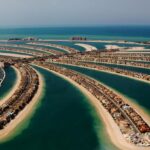
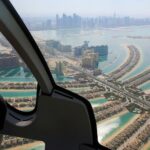
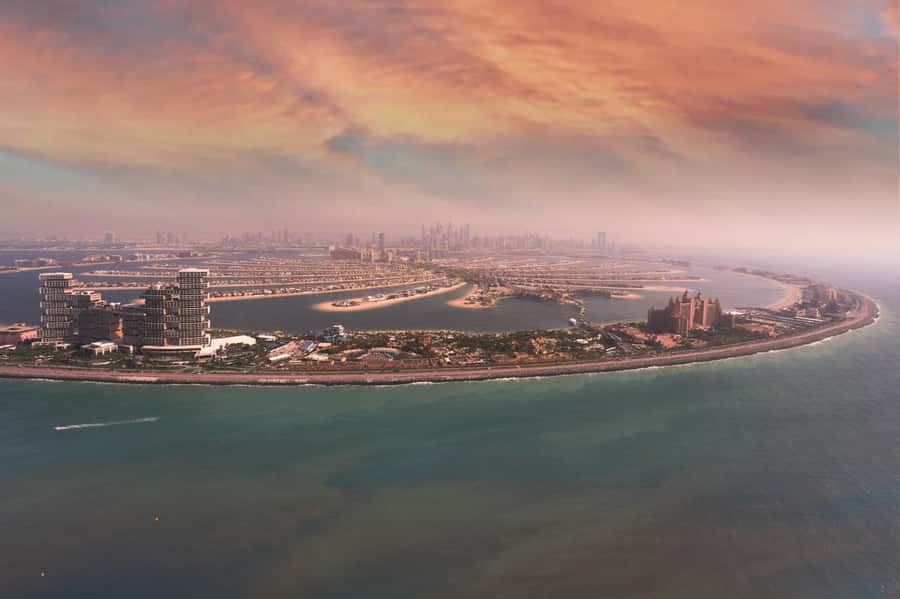
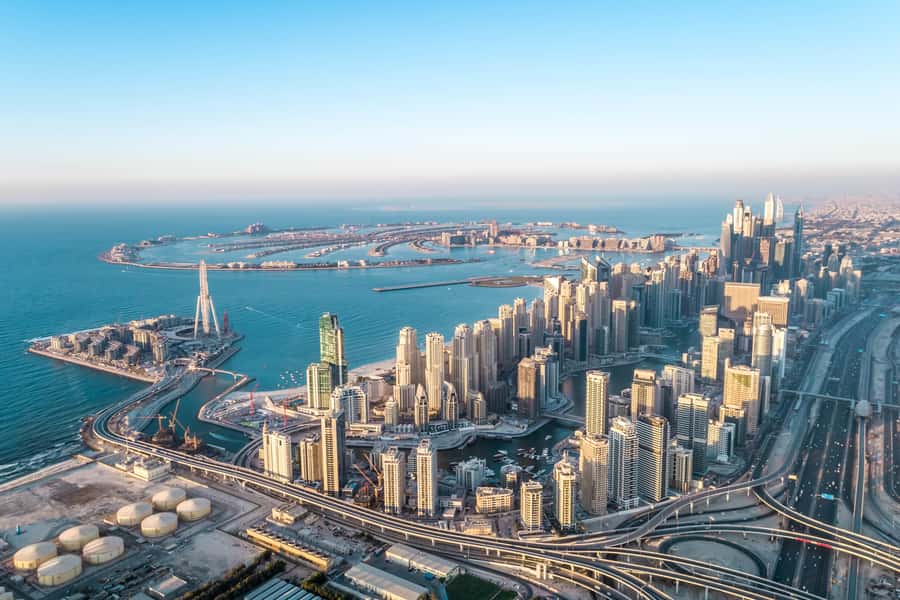
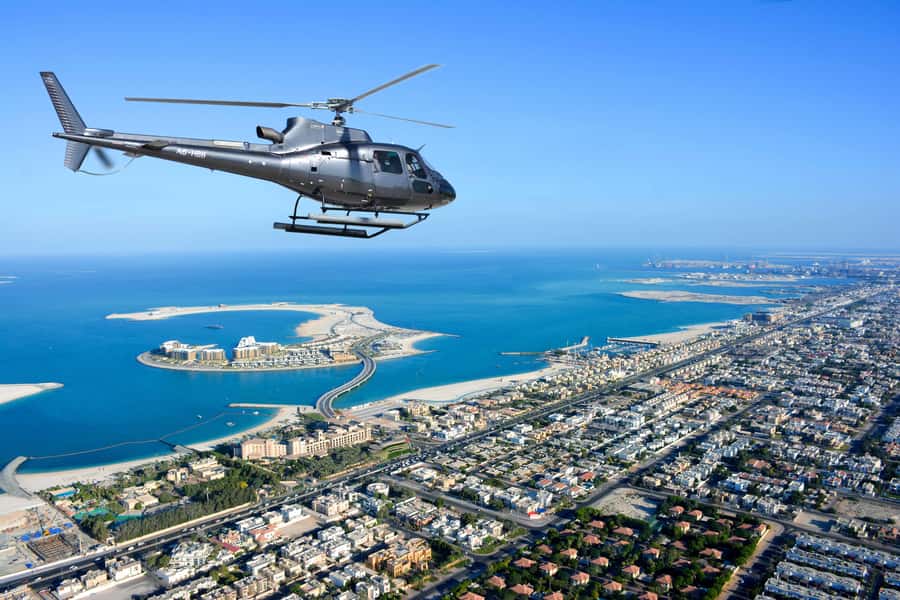
If you’re going to do just one “holy wow” stop on your Dubai trip, it’s hard to beat the Palm Jumeirah segment. From above, the palm fronds aren’t just a shape. They’re a plan: a layout you can trace while you’re flying. And the Atlantis the Palm Hotel stands out as a recognizable anchor point, not just a name.
This is also where you start to see why a helicopter beats a bus tour for Dubai. On the ground, you can feel traffic and distance. In the air, the engineered geometry becomes easy to understand. You can see how the built areas spread out, and how the bridges and edges connect to open water.
Next up is The World Islands. These are the small islands arranged like a larger concept. From streets, you might not even get a clear sense of their placement relative to the shoreline. From the air, you can see the whole idea at once—an archipelago made to be looked at from above.
I’d treat this part as your “take a breath” moment. The view is dramatic, and the urge is to shoot nonstop. But with limited time, it’s better to pick 2-3 angles and actually watch what you’re seeing. The payoff is that you’ll recognize the patterns later when you’re back on the ground.
Burj Khalifa and Dubai Frame: Height Turns Into a Map
After Palm and the islands, the flight takes you toward the towering centerpiece: the Burj Khalifa area. Looking down on it changes everything. It’s not just the tallest building in the world; it’s a vertical reference point you can use to measure the skyline around it. Streets look like lines. Intersections look like nodes. The whole area becomes a diagram.
You also get Dubai Frame in the flight view zone. Dubai Frame has a specific silhouette from ground level, but from the air it’s easier to see how it sits relative to the city’s development blocks. You’ll get a different sense of the frame as an architectural marker, not just a photo stop.
If you’re the type who likes learning what you’re seeing, this segment is the reason the commentary matters. Dubai is full of landmarks that can be hard to place geographically. The live English guide and English audio help you connect tower zones to the neighborhoods beneath your flight path.
Bonus Sights You’ll Notice Along the Way
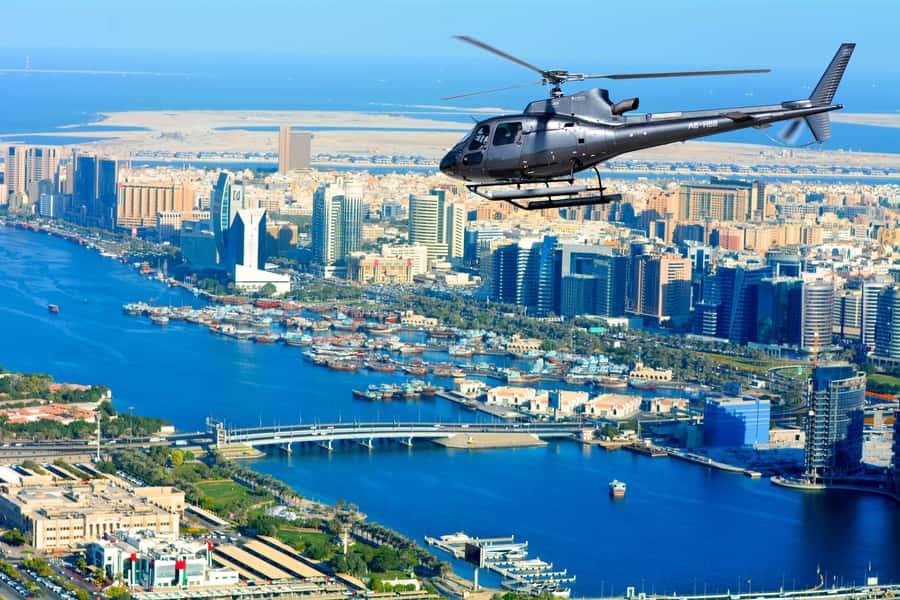
Even though the flight feels like a highlight circuit, you’ll also spot several other well-known features listed for this route.
As you go, keep your eyes open for:
- Ain Dubai (the big wheel)
- Emirates Golf and Jumeirah Lakes (green and water-adjacent zones)
- Dubai Canal and Port Rashid (waterfront stretches that show how the city manages access)
- UAE’s Largest Flag (a landmark you’ll recognize faster once you’re looking down)
- Old Dubai heritage cues, including wind towers, Old Souk, and the Dubai Creek monuments
- Meydan Racecourse and Jumeirah Beach
The reason these “in-between” sights matter is that they make the flight feel like a real city tour, not just a sequence of famous logos. You start to see how Dubai organizes leisure, waterways, heritage areas, and major venues in one plan.
What to Bring (and What’s Banned) for a Smoother Flight
This is where you can save yourself stress. The rules are clear and the helicopter is not the place to argue with a checklist.
Bring:
- Your passport or ID card (a copy is accepted)
Don’t bring:
- Selfie sticks
- Tablets/iPads
- Camera lenses that exceed 400 millimeters
If you plan to take photos, think about how you’ll handle weight and lens restrictions. A 400mm limit can still let you zoom enough to frame landmarks, but you shouldn’t assume you can bring the heaviest wildlife-style setup.
Also, one more practical point: there’s no mention that photos or videos are provided for you. So if you want a keepsake, plan on your own camera phone or camera setup within the limits.
Price and Value: Is $353 Worth 22 Minutes?
At $353 per person for about 22 minutes, this is not a budget activity. The real question is what you’re buying: time in the air, and a view that most visitors simply can’t get elsewhere.
Here’s how the value math works in your favor. This ride hits multiple top-tier Dubai attractions in a single stretch: Burj Al Arab, Palm Jumeirah, The World Islands, Burj Khalifa, and Dubai Frame. Doing even a fraction of those from ground transport would take hours, and you’d lose the overhead relationships that make the city feel like a system.
You’re also paying for the full experience package around that flight: a live English guide, English audio commentary, a structured safety process, and the helicopter infrastructure. For many people, the best value moment is the first time you look down and realize you can actually see how the buildings connect to the water.
Who should spend for this:
- First-time visitors who want a “Dubai in one go” perspective
- People celebrating a birthday or milestone who want something memorable without a full-day time sink
- Anyone who hates wasting time in traffic and wants straight-line views
Who might hesitate:
- If you’re very sensitive to short rides or you’re hoping for long aerial loops
- If your goal is purely photography with specific long-lens setups that exceed the stated limits
Timing, Delays, and Comfort Notes That Matter
Helicopter flights are different from sitting in a theater. Weight and balance can change the exact timing. Some experiences include short delays while they rebalance based on passenger weight. That’s not the kind of thing to ignore when you’re trying to keep a tight schedule.
There’s also at least one case of the flight running about 25 minutes late. That doesn’t mean it always happens. It does mean you should build buffer time around your day, especially if you’ve booked dinner or another timed activity right after.
Comfort-wise, the best sign is the way the ride is described when it’s going well: smooth, controlled handling, with the pilot using subtle movements. That’s exactly what you want when you’re looking down at bright water and tall towers—less motion means steadier views and less neck strain.
If you’re prone to motion sensitivity, I’d still go in with realistic expectations: it’s an aircraft, not a car. But the overall experience is set up to be professional and orderly.
Who This Ride Fits Best
This tour is wheelchair accessible and offers private or small groups. That’s helpful if you want a less crowded feel than the big group buses.
It’s also suitable as a first helicopter flight because it’s short and structured: enough time for the big sights, not so long that fatigue sets in.
Age and child requirements are strict:
- Only passengers at least 2 years old can fly
- Children must weigh at least 16 kilograms to be accepted
- Not suitable for children under 2
So if you’re traveling with young kids, double-check eligibility before you plan your day.
Should You Book This 22-Minute Helicopter Tour?
If your goal is a fast, high-impact Dubai view, I think this is a strong booking. The route focuses on recognizable icons—Burj Al Arab, Palm Jumeirah, The World Islands, Burj Khalifa, and Dubai Frame—and the English guide helps you make sense of what you’re seeing while you’re still in the air.
I’d say book if:
- You want the overhead perspective that makes Dubai feel like a design project
- You’re okay paying for time savings versus long ground travel
- You’re prepared for a serious safety check before takeoff
I’d pause before booking if:
- You’re on a tight schedule with no buffer time
- You’re bringing a selfie stick, an iPad/tablet, or a long lens beyond the stated limits
- You’re near the weight restrictions and haven’t confirmed acceptance
In Dubai, this kind of view is one of those rare experiences that changes your understanding of the city.
FAQ
How long is the helicopter flight?
The helicopter flight is 22 minutes.
Where do I meet the tour for this flight?
Meet the local partner at the HeliDubai Helipad, Dubai Police Academy.
Is hotel pickup or drop-off included?
No. Hotel pickup and drop-off are not included.
Do I get an English guide and commentary?
Yes. There is a live tour guide in English, plus English audio guide included.
What are the age and child requirements?
Passengers must be at least 2 years old. Children must weigh at least 16 kilograms or more to be accepted. It’s not suitable for children under 2 years.
What items are not allowed and are there safety checks?
Selfie sticks and tablets/iPads are not permitted. The flight also has a 45-minute safety check beforehand, and weight limits apply (including restrictions for passengers weighing over the stated thresholds).