REVIEW · FRANZ JOSEF TOWN
Franz Josef: 4-Glacier Helicopter Ride with 2 Landings
Book on GetYourGuide →Operated by Glacier Country Helicopters · Bookable on GetYourGuide
A helicopter ride here turns glacier trivia into real, moving ice rivers. You’ll see Franz Josef, Fox, Tasman, and Shackleton from above, then touch down for two photo-heavy snow landings. For me, the best part is the mix: big-time aerial views plus actual moments on the snow.
I also really like the guided setup. You’re in the cockpit with a headset and a pilot who talks through what you’re seeing, so the views make sense instead of just being pretty. One thing to consider: this is weather-dependent, so routes and landing chances can change, even on your booked day.
In This Review
- Key Things You’ll Notice on This 4-Glacier Helicopter Ride
- Check-In on Main Road: What the Morning Feels Like
- Into the Helicopter: How the Route Gets Explained
- The 4-Glacier Flight: Franz Josef, Fox, Tasman, Shackleton
- Franz Josef Glacier: Where the ice meets the valley
- Fox Glacier and the Tasman Glacier connection
- Tasman Glacier: The “big three” view from above
- Shackleton Glacier: A well-kept secret
- Mountains in the background: Southern Alps and Mount Cook
- The Lord of the Rings Moment: Beacons from the Air
- Two Snow Landings: Photos, Time on the Ground, and Real Scale
- Landing Site #1: Photo first, then wander
- Landing Site #2: A second chance to get it right
- What the Pilot Commentary Adds (Besides Background Noise)
- Practical Stuff That Can Make or Break Your Day
- What to bring
- What not to bring or do
- Comfort seat and body weight
- Wheelchair note
- Weather matters
- Price and Value: Is $508 Worth It?
- Who Should Book This Ride?
- Should You Book This 4-Glacier Helicopter Ride?
- FAQ
- How long is the helicopter ride?
- Do I get two snow landings?
- What is included in the price?
- What should I bring to stay comfortable?
- Are selfie sticks or drones allowed?
- Is the activity suitable for wheelchair users?
Key Things You’ll Notice on This 4-Glacier Helicopter Ride
- Two snow landings mean photos from the air and from your own footprints on snow
- The flight route is built around the Franz Josef–Fox–Tasman glacier system
- You’ll also get Shackleton Glacier coverage, including the ice lake near Shackleton
- Expect guided narration through the headset, so you learn what formation you’re looking at
- You may spot a recognizable Lord of the Rings filming location: the lighting of the beacons area
- Photo time is planned, but you’ll still want warm layers and quick camera skills
Check-In on Main Road: What the Morning Feels Like
Most people arrive in Franz Josef with one goal: look up at glaciers that are hard to picture from the ground. The experience starts right in town at 10 Main Road, Franz Josef (South end of the main street), opposite the Police Station and next to the Blue Ice Restaurant.
You check in with the local team, then you’ll get a safety briefing. It’s not long, but it sets expectations: you’ll be strapped in, listening on a headset, and following crew guidance. Then you transfer by van to the helicopter hangar area, where you meet your pilot and board.
If you’re the type who hates feeling rushed, don’t stress too much. The pace is straightforward—check in, briefing, short transfer, then you’re airborne. You’ll get one clean chance to enjoy the flight, so focus on being ready: camera within reach, warm layers on, and closed-toe shoes ready for cold air and snow landing conditions.
You can also read our reviews of more tours and experiences in Franz Josef Town.
Into the Helicopter: How the Route Gets Explained
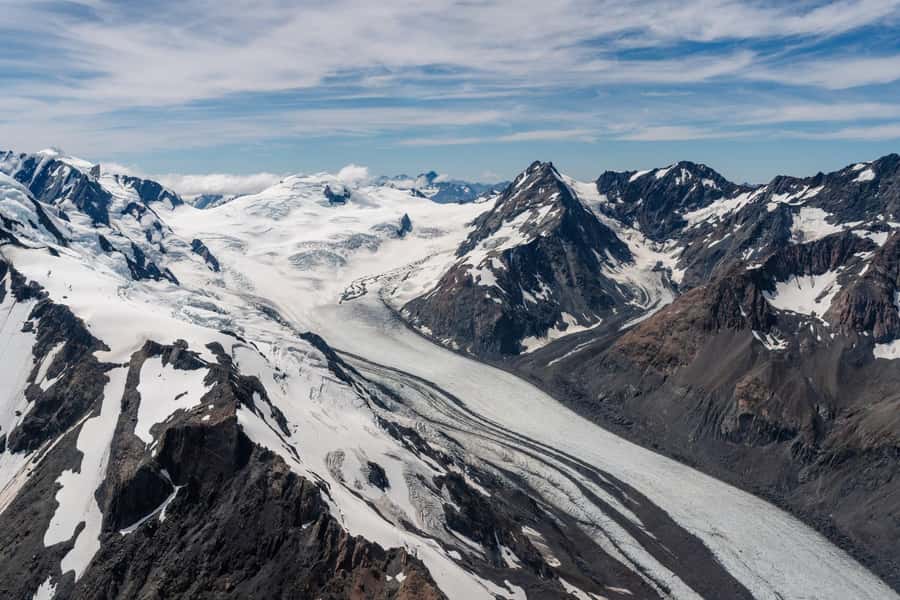
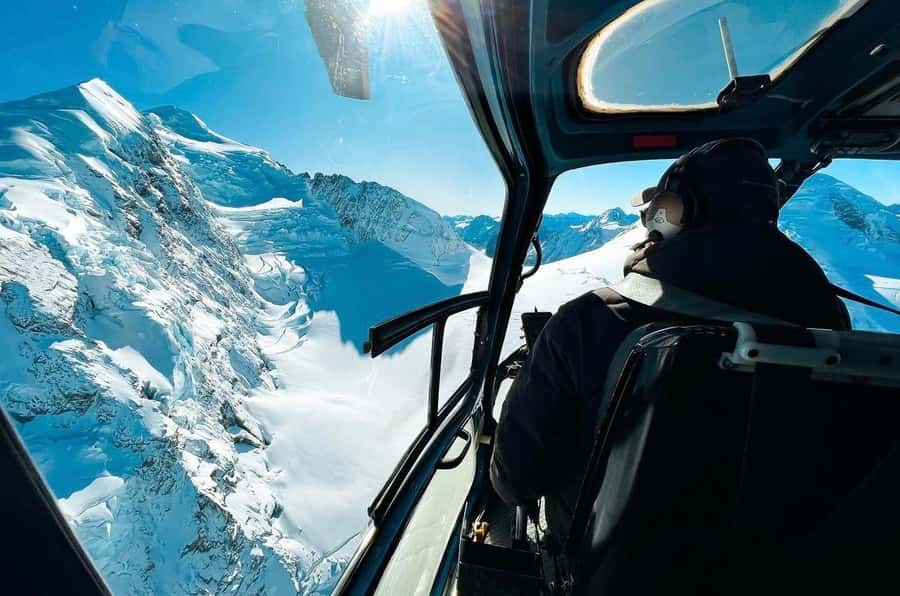
Once you’re strapped in, you’ll pull on your headset and let the pilot’s narration guide you. This matters more than it sounds. From the air, glacier features can look similar—crevasses, pinnacles, and braided ice channels. A good guide helps you tell one formation from another, and that makes your photos far more meaningful afterward.
You’ll be flying over the terminal moraine of the ancient Franz Josef Glacier before moving up the valley. That’s your clue that the pilot isn’t just checking boxes. You’re seeing how the ice meets the land—how debris piles up, how meltwater and movement shape the valley, and how the glacier behaves over time.
Also, heads up on comfort: this tour includes headset and a safety-focused seat setup, but comfort seating isn’t included. If you’re 120 kg or over when weighed at check-in, you’ll need to purchase a Comfort Seat (priced at half the RRP of the flight). If you think you might need it, ask early so your day stays smooth.
The 4-Glacier Flight: Franz Josef, Fox, Tasman, Shackleton
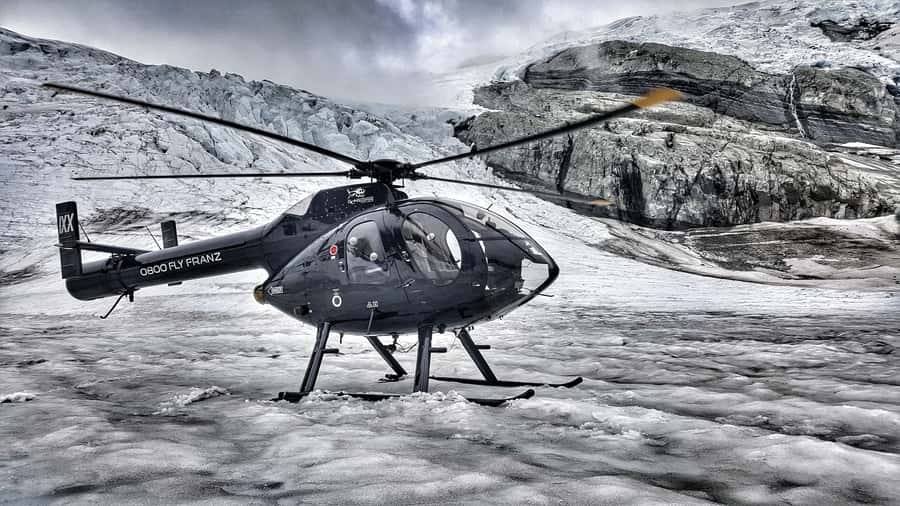
This is the big draw: four glaciers in one flight, seen from the scale that matters. On the ground, you can stand near ice and feel small. From the air, you can understand flow, connections, and how far the ice system stretches.
Franz Josef Glacier: Where the ice meets the valley
You start by flying above the Franz Josef terminal moraine, then you’ll see the glacier’s valley position from above. That brief first look helps your brain lock in the landscape’s “shape” quickly—where the ice sits, how the land opens up, and where the route will pull your attention next.
Fox Glacier and the Tasman Glacier connection
You’ll also see Fox Glacier. Here’s a key relationship that makes the flight more than a sightseeing loop: the Franz Josef and Fox glaciers are ice rivers that connect into New Zealand’s longest glacier system, Tasman Glacier.
In plain terms, this means you’re not just looking at separate ice patches. You’re seeing how rivers of ice relate and how they contribute to a larger glacial machine.
Tasman Glacier: The “big three” view from above
The flight is built to give you the “big three” perspective once you’re up the valley. Seeing Tasman Glacier from above helps you visualize width, movement, and how the ice breaks into channels and rugged textures. It’s the glacier scale moment—where you stop thinking of glaciers as one flat thing and start seeing them as moving terrain.
Shackleton Glacier: A well-kept secret
Then you get Shackleton Glacier, described as a well-kept secret, and that makes it feel extra special. You’ll admire ice pinnacles and crevasses, plus an ice lake near Shackleton Glacier.
That ice lake detail is the kind of thing you’ll miss if you only look for the most famous peaks. From the air, it reads as a quiet pocket of frozen water and ice form—an in-between moment that adds texture to the whole flight.
Mountains in the background: Southern Alps and Mount Cook
While glaciers are the headline, you’ll also get the wider context: Mount Cook appears in the Southern Alps during the flight. That’s useful because it shows you these glaciers aren’t isolated props—they’re part of the mountain backbone that controls weather, snowfall patterns, and glacier feeding.
The Lord of the Rings Moment: Beacons from the Air
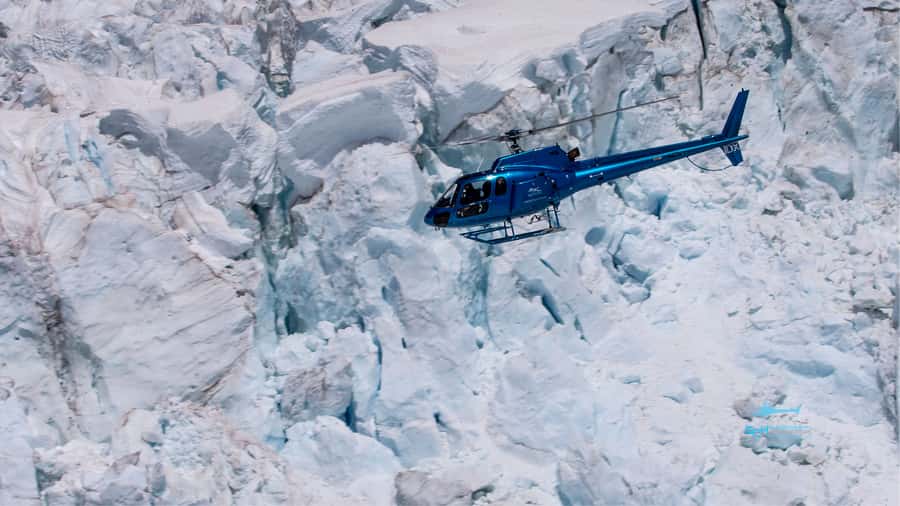
One fun detail you might catch: the flight includes views of the lighting of the beacons area from the Lord of the Rings movies. Even if you’re not a mega-fan, it helps to have a recognizable “map point” floating above the valleys.
It also gives you a different way to look at the scenery. You stop thinking only in terms of glacier names and start thinking about how the land was framed for film—ridgelines, valley angles, and the kind of dramatic contrast that camera crews love.
Two Snow Landings: Photos, Time on the Ground, and Real Scale
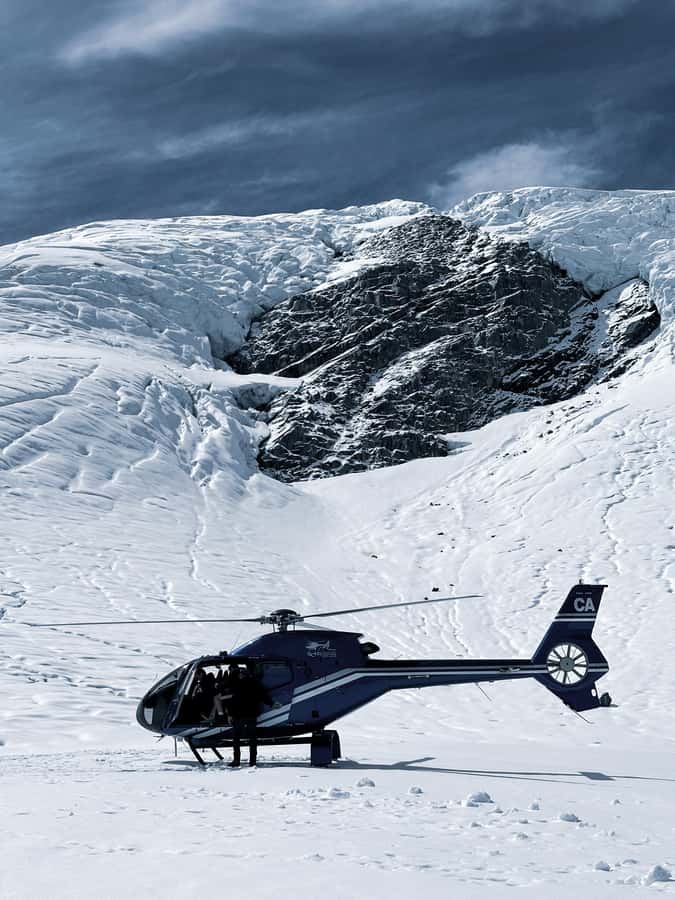
The tour’s structure is simple: you land twice for photos on snow. That’s why this feels different from a standard “look from the air and go home” flight.
Landing Site #1: Photo first, then wander
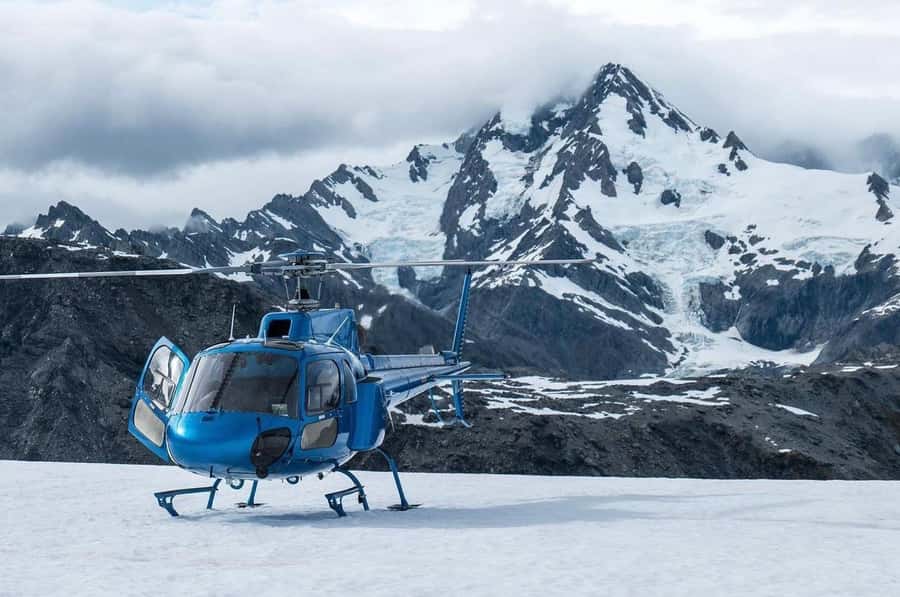
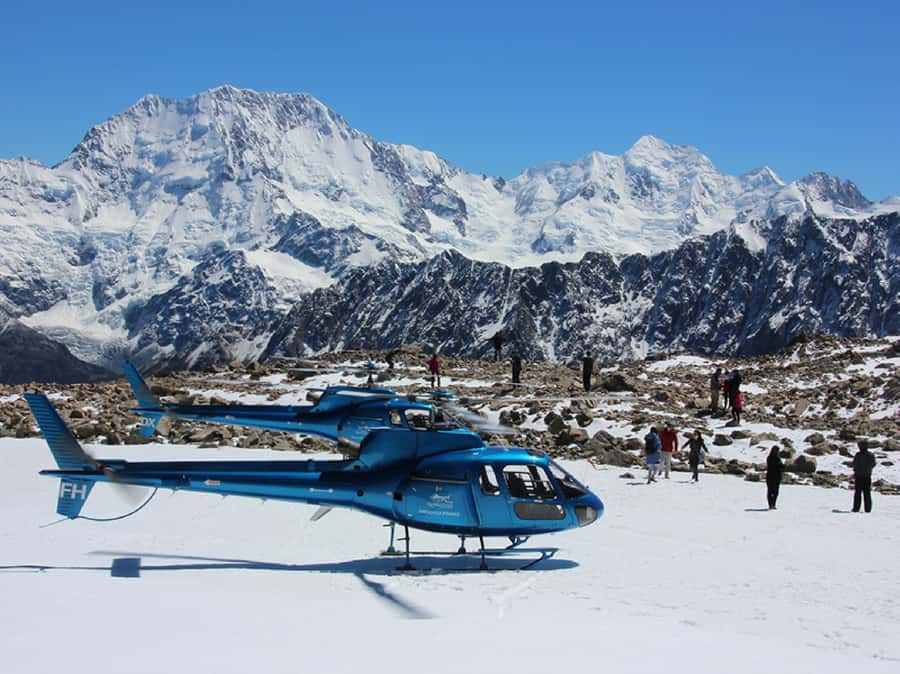
After the flight portion, you’ll touch down at one of the snow landing sites. You’ll have plenty of time to take photos and enjoy the views around Westland Tai Poutini National Park from ground level.
On snow landings, the air feels sharper. Even if you’re bundled, you’ll want to keep moving a bit so you don’t get cold standing still while you line up shots. Closed-toe shoes help here, and warm clothing matters because the landing is part of the experience, not a quick stamp and lift-off.
Landing Site #2: A second chance to get it right
Then you’ll return to the flight and land again at the second snow landing site. Two landings are great because they let you compare light and angle. If wind or cloud shifts your best shot in the first landing, the second landing is your do-over.
From what’s consistently praised, this landing time is not just short. You often get enough minutes to run around, play in the snow, and take photos from different angles. That matters because your best glacier photos usually aren’t only about the ice in the distance—they’re also about your sense of scale in relation to it.
And yes, that snow fun is real. People describe having time for little games and big smiles. Just remember: the goal is still safety and quick movement—don’t treat it like a beach break.
What the Pilot Commentary Adds (Besides Background Noise)
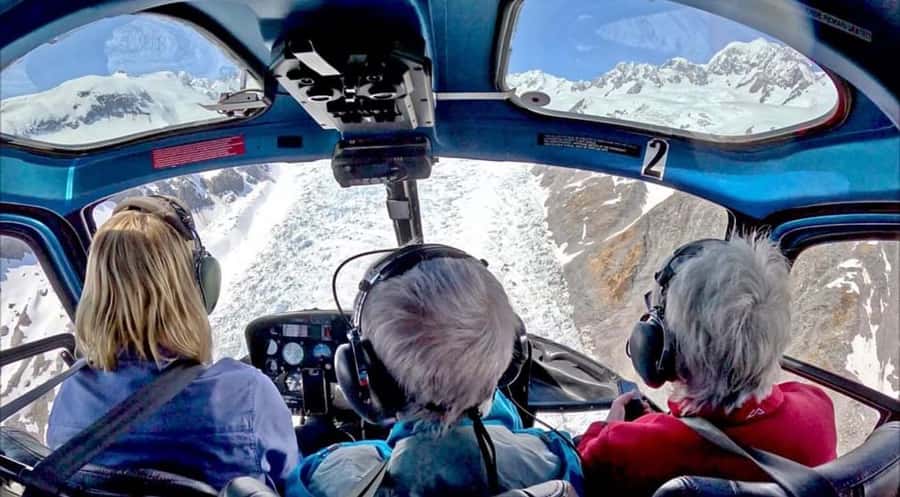
You’re in the air for a full hour, and the pilot’s narration turns that time into something you can learn from. A standout detail: one pilot named Mark is specifically praised for delivering narrative commentary and making the geography click.
Even without that exact person, you should expect the pilot to connect what you see—moraine, valley shape, glacier flow patterns—to clear explanations. With a headset, you’re not stuck guessing, and that helps your photos too. When you understand what you’re looking at, you take different pictures: less random shooting, more intentional framing.
If you love photography, take advantage of the headset time before each key view comes into sight. Listen for the part where the pilot describes the glacier feature you’re about to see. Then you can shoot with purpose instead of reaction.
Practical Stuff That Can Make or Break Your Day
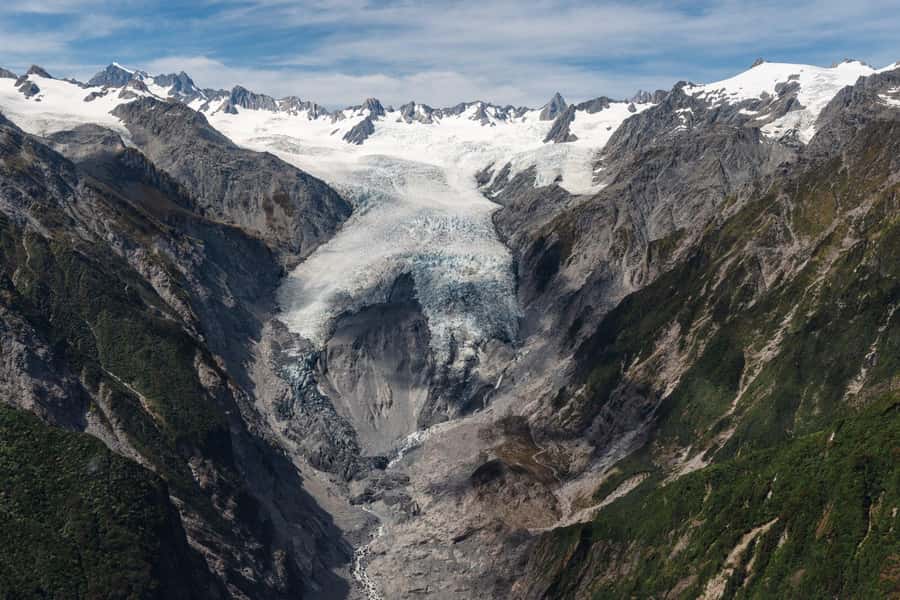
This is a small, efficient operation with cold-weather realities. Here’s how to prepare so you actually enjoy the two landings and don’t feel miserable waiting for the helicopter.
What to bring
- Warm clothing (you’ll feel the cold on snow landings and near open air windows)
- Sunglasses (snow glare is real)
- Camera (you’ll be taking plenty of photos)
- Closed-toe shoes (for snow and stable footing)
What not to bring or do
- Smoking
- Drones
- Selfie sticks
- Walking sticks, crutches, and similar aids
- Explosive substances
- Loose clothing and large bags/luggage
If you’re prone to bringing lots of gear, keep it tight. Loose items are a hassle, and big bags can be an outright problem. The best setup is a jacket with pockets for your camera and gloves, plus a simple day bag you can keep controlled.
Comfort seat and body weight
If you’re 120 kg or over, you’ll need the Comfort Seat. It’s not about judgment—it’s about fit and safe seating. If you’re near that range, it’s worth planning ahead so you don’t get stuck making decisions at check-in.
Wheelchair note
This experience is not suitable for wheelchair users. That affects access from the ground steps, boarding style, and the overall safety process. If mobility is an issue, you’ll want to look for alternatives.
Weather matters
Flights are weather-dependent. Routes can change, and there’s a possibility of cancellation at short notice if minimum numbers aren’t met or weather won’t cooperate. The upside: when conditions are right, the landings and the views can be jaw-dropping.
Price and Value: Is $508 Worth It?
At $508 per person for a 1-hour helicopter experience, this isn’t a cheap activity. So the question isn’t whether it’s expensive—it’s whether it gives you more than a standard glacier day tour.
Here’s what you’re paying for, in practical terms:
- Four glaciers in one outing: Franz Josef, Fox, Tasman, and Shackleton. On the ground, seeing that much in one shot would mean a packed schedule and lots of driving, often with fewer “wow” angles.
- Two snow landings: That’s the differentiator. You’re not only viewing ice; you’re stepping onto it and spending time there for photos.
- Guided narration with headset: It helps you understand what you’re seeing, which improves your photos and makes the experience feel smarter, not random.
- Pilot-led route choices: When weather allows, that second landing and the ice lake/crevasse views are the kind of moments that don’t happen on half-day bus trips.
If you’re time-limited in Franz Josef or you want the fastest path to glacier scale and variety, this is good value relative to the uniqueness. If you’re on a super tight budget, there are cheaper glacier walks and viewpoints—but you won’t get the combination of air + two snow landings.
Who Should Book This Ride?
You’ll get the most out of this helicopter if:
- You want serious glacier views without spending your whole day driving
- You care about photos and want both from-the-air and on-the-snow perspectives
- You enjoy commentary that explains what you’re seeing, not just being carried from stop to stop
- You’re comfortable in cold weather and can handle a short safety process and confined seating
You might skip it if:
- You hate uncertainty due to weather
- You need wheelchair access
- You’re only looking for low-effort scenic viewpoints and would rather avoid snow landings
Should You Book This 4-Glacier Helicopter Ride?
If you can swing the cost, I think this is one of the most efficient ways to experience Franz Josef’s glacial world. Two snow landings alone push it into a different category than simple aerial sightseeing. Add the guided pilot narration, the Tasman connection, and the Shackleton ice lake moment, and you get a trip that feels both dramatic and grounded in real geography.
My recommendation: book it if you’re visiting with limited time, you’re excited about glacier photography, and you’re dressed for cold weather. If weather doesn’t cooperate and you can’t handle a route change or reschedule, then you’ll want a flexible plan.
FAQ
How long is the helicopter ride?
The experience lasts about 1 hour, including flight time and two snow landing opportunities.
Do I get two snow landings?
Yes. This flight includes two separate snow landing sites for photo time and ground views.
What is included in the price?
It includes a safety briefing, the helicopter tour, an experienced pilot, guided commentary, and headset.
What should I bring to stay comfortable?
Bring warm clothing, sunglasses, a camera, and closed-toe shoes.
Are selfie sticks or drones allowed?
No. Selfie sticks and drones are not allowed.
Is the activity suitable for wheelchair users?
No. It is not suitable for wheelchair users.