REVIEW · BIG ISLAND OF HAWAII
Kona Coast Hualalai Volcano-60Min Helicopter Tour-Door Off or On
Book on Viator →Operated by Rainbow Helicopters · Bookable on Viator
Hualālai looks unreal from above. This 60-minute Kona Coast helicopter tour strings together coastlines, bays, volcanic terrain, and a few sacred/cultural highlights you’d never reach quickly any other way, with a doors-off or doors-on option depending on the flight. The route is packed with places like Kaloko Fish Ponds, Kealakekua Bay, and Hualālai Volcano, and pilots like Jojo, Jeff, Donovan, and Turner are part of what makes the flight feel personal instead of just scenic.
I love that you get serious variety in one loop: ocean views, coffee country, and then the Big Island’s volcano scale. I also like the small-group feel (max 15) and the way pilots point out what to watch for, including at least one account of spotting whales and calves from the air, with the pilot helping everyone line up their sighting. One possible drawback: it’s a big splurge at $640 per person, and if you pick doors off, you’ll need to follow the gear rules and know your seat might not be directly by the open door.
In This Review
- Key things I’d circle before you book
- Kona Coast Hualālai: why this 60-minute loop works
- The view list you’ll actually fly over (and what each area means)
- Kona Coast opener: coast color and quick orientation
- Kaloko Fish Ponds: traditional aquaculture, seen from above
- Kailua Bay and Ali‘i Drive: snorkeling waters and shoreline life
- Magic Sands Beach and Kona coffee country: leisure + working landscapes
- Kealakekua Bay Marine Preserve and Captain Cook Monument
- Place of Refuge: a cultural turn that feels heavier than the view
- Ka‘upulehu Crater and the Hualālai Volcano climb
- Pu‘u Wa‘awa‘a Forest Reserve: plants and animal habitat from the air
- Anaehoomalu Bay (A Bay), Kiholo Bay, and the Makalawena finish
- Door off or door on: what changes and how to plan for it
- What I’d do if I cared most about comfort
- Price and value: is $640 per person worth one hour?
- When this price makes sense
- When it might not
- Safety and practical rules that can affect your day
- Weather matters
- Should you book the Kona Coast Hualālai helicopter tour?
- FAQ
- How long is the Kona Coast Hualālai helicopter tour?
- Where do we meet, and where does the tour end?
- Is the tour door off or door on?
- What should I wear for a doors-off helicopter tour?
- Are there weight limits or extra fees based on passenger weight?
- Are service animals allowed?
- What if the weather is bad?
Key things I’d circle before you book
- A tight, high-impact 60 minutes over many famous Kona-area sights
- Kaloko Fish Ponds within the Kaloko-Honokohau National Historical Park aquaculture story
- Hualālai Volcano scale with the peak listed at 8,278 feet
- Kealakekua Bay Marine Preserve views of coral reefs and marine life
- Small-group cap (15 travelers max) for a calmer flight experience
- Doors-off rules that can affect what you wear and how you plan photos
Kona Coast Hualālai: why this 60-minute loop works
If your Big Island plan is mostly beaches and day drives, this tour fixes the one thing cars can’t do: show the whole island as one connected system. You’ll fly along Kailua-Kona’s coast, cut over the farmland and marine preserve areas, then swing toward Hualālai and back toward secluded beach country.
The timing is the sweet spot. About an hour doesn’t sound like much until you realize you’re seeing a long list of places in one continuous sweep, without waiting for checkpoints or fighting traffic. You’re not going to “do” each site on foot, but you will get the big-picture context fast.
And because the tour is capped at 15 travelers, you’re less likely to feel like you’re being shuffled through a cattle line. That matters on a helicopter tour, where small logistics quickly turn into big annoyances if the operation is chaotic.
You can also read our reviews of more tours and experiences in Big Island of Hawaii.
The view list you’ll actually fly over (and what each area means)
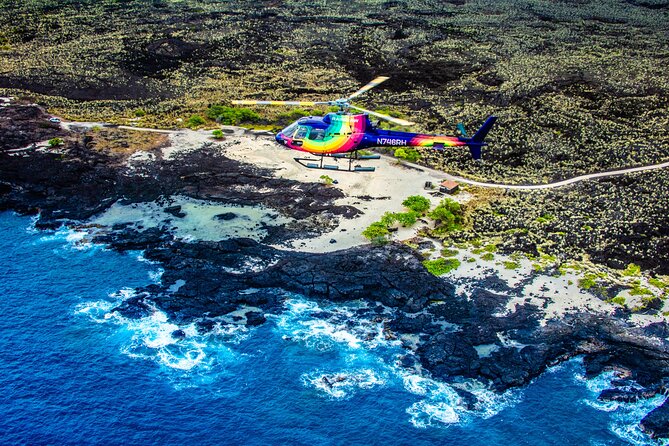
This flight is built like a best-of Kona sampler. You start with wide, coastal panoramas around Kailua-Kona, then move through culturally important sites, ocean areas known for snorkeling/wildlife, and volcanic geography. Here’s what you should expect from the air at each stage.
Kona Coast opener: coast color and quick orientation
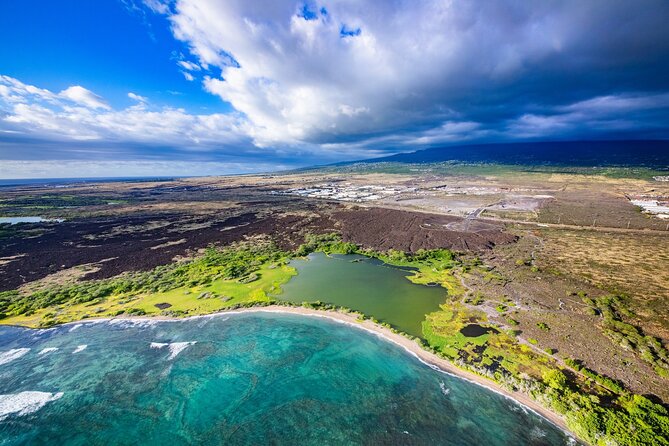
Early on, you’ll get a long stretch of Kona Coast views, plus landmarks around Kailua Bay and Ali‘i Drive. From above, the coastline reads like a map: bays, points, and beaches that look disconnected from the highway suddenly line up into a coherent story.
This is also when I’d expect you to get your bearings fast. If you’re later trying to place what you saw in your car rental days, this is the part that makes it click.
Possible catch: the best angles depend on your side of the aircraft and wind. If you’re a super photo-focused person, you might have to accept that you’ll get “spectacular enough” rather than perfect.
Kaloko Fish Ponds: traditional aquaculture, seen from above
Next comes the Kaloko Fish Ponds, located within the Kaloko-Honokohau National Historical Park. From the air, you can spot the shape and footprint of the ponds in a way you can’t really appreciate on the ground.
What makes this stop worth caring about is the function. These ponds aren’t just scenic; they’re tied to traditional Hawaiian aquaculture practices and cultural/historical significance. In other words, this isn’t a stop that feels like a random detour—it’s a snapshot of how people used the land and water together.
A practical tip: if the pilot offers context as you pass over, listen closely here. This is the moment where the “why” of the scenery pays off.
Kailua Bay and Ali‘i Drive: snorkeling waters and shoreline life
Then you’ll glide along Kailua Bay, known for calm, clear water that’s a snorkeling-friendly area. From above, you’ll also see the built-up edge: shops, restaurants, and the historic feel of the nearby coastline.
Ali‘i Drive follows, and from the helicopter it’s easier to see how the road threads through beaches and cultural landmarks. You get a sense for why this side of Kona is where so much activity concentrates.
Drawback to keep in mind: if you’re hoping to “visit” any of these places, helicopter tours are observation-first. You’re looking, not stepping out to explore.
Magic Sands Beach and Kona coffee country: leisure + working landscapes
You’ll pass over Magic Sands Beach, famous for its silky white sands and the way people use the area for sunbathing and swimming. From above, it’s a different kind of beauty: the beach becomes a clean strip of brightness against the ocean.
After that, you’ll soar over Kona Coffee farms. Seeing rows of coffee plants from the air gives you a real sense of how much the landscape is shaped by agriculture, not just natural coastline. It’s one of those visual “facts” you can’t learn from a brochure.
Kealakekua Bay Marine Preserve and Captain Cook Monument
Then the flight shifts toward Kealakekua Bay Marine Preserve, where the coral reefs and marine life are a big part of why divers and snorkelers come here. From above, the water near the preserve shows color changes that hint at what’s underwater, even if you can’t see every reef detail.
You’ll also pass over the Captain Cook Monument, a historic landmark marking the explorer’s final resting place. Flying over it gives the site a stark, respectful feeling: you’re seeing a single point on a coastline that has deep connections to multiple eras of history.
Place of Refuge: a cultural turn that feels heavier than the view
Next is a turn around the Place of Refuge, described as sacred grounds with rich cultural and historical significance to Native Hawaiians. This is the part of the tour where the scenery comes with a different emotional weight.
From the air, you’ll likely notice how the coastline frames the area. That’s exactly what makes it memorable: the meaning isn’t separate from the geography.
Tip for respect: keep your phone and camera actions quick here. Give the moment attention, not just content.
Ka‘upulehu Crater and the Hualālai Volcano climb
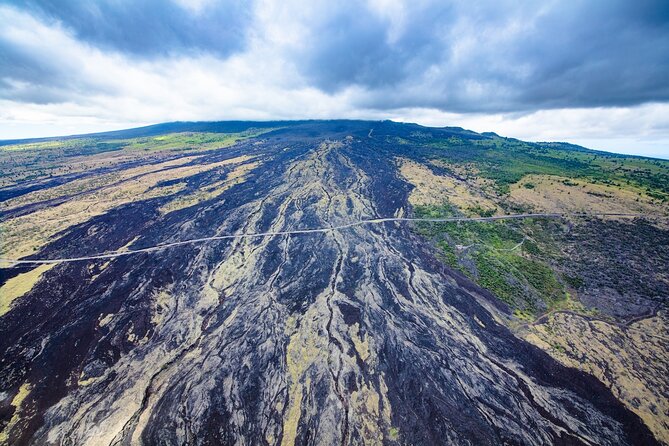
Then you fly to the Ka‘upulehu Crater for geological views of Big Island volcanic terrain. This is a different visual language than beaches and bays. The shapes are sharper, the textures more about rock and slope than sand and surf.
After that comes the main event: Hualālai Volcano. The peak is listed at 8,278 feet above sea level, and in the helicopter you can feel how the island’s elevation changes fast. Even if you know the basics from maps, the altitude jump is hard to appreciate until you’re looking down into it.
Pu‘u Wa‘awa‘a Forest Reserve: plants and animal habitat from the air
Exiting the volcanic terrain, you’ll pass over Pu‘u Wa‘awa‘a Forest Reserve. This is where the view becomes more about texture: forest cover and the patchwork of where life is able to grow.
The reserve is noted for its diverse flora and fauna. Even if you don’t spot animals clearly, you’ll at least see why the “green” areas matter—there’s real structure to the vegetation patterns from above.
Anaehoomalu Bay (A Bay), Kiholo Bay, and the Makalawena finish
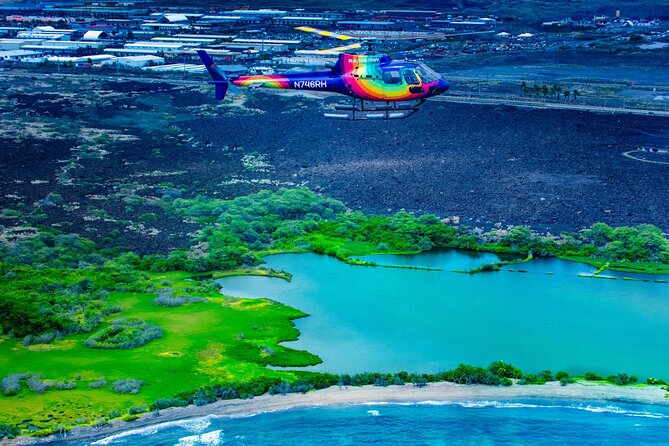
You’ll meet the coast again at Anaehoomalu Bay, also called A Bay. It’s known for golden sand and calm waters, and from the helicopter those qualities read like a calm color palette that contrasts with the more rugged coastline sections.
After that is Kiholo Bay, described as tranquil turquoise waters with wildlife viewing. When the pilot lines up the pass, this is the kind of area where water clarity helps you notice movement—though sightings depend on conditions.
Finally, you end with Makalawena Beach, noted for secluded beauty, pristine white sands, and crystal-clear waters. This ending is smart because it shifts from the “big sights” to a quieter, more remote-feeling coastline.
Why that matters: it gives your brain a cooldown. You’ve seen geology and history; the last minutes feel like a reward.
Door off or door on: what changes and how to plan for it
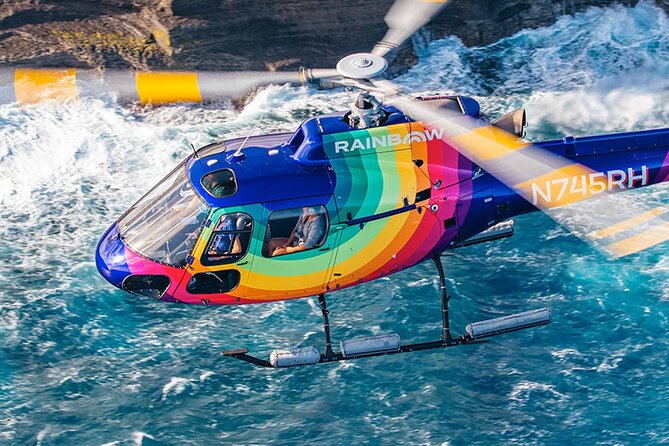
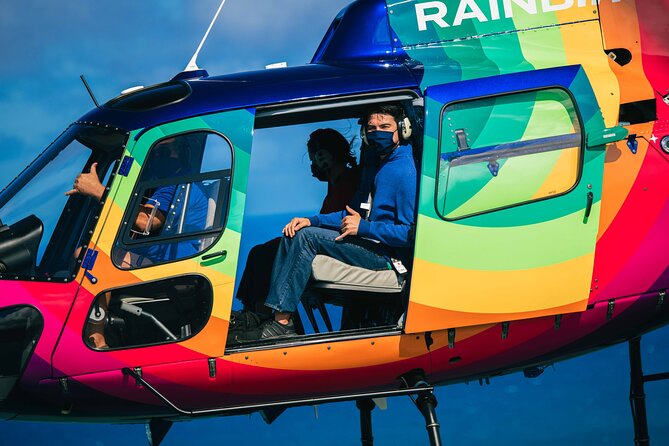
This tour is offered as door off or on, and the difference is more than a thrill level. With doors off, you’ll need to follow the specific requirements: jackets and/or sweatshirts, closed-toe shoes, and hair ties are required, and long pants are recommended.
Think of this as an equipment + comfort checklist. Wind can make a helicopter feel cooler than you expected, and the operator is strict about the footwear/hair rules. If you show up unprepared, you’ll lose time and feel stressed.
One more detail that can surprise people: when you book doors off, your seat may or may not be directly adjacent to an open door. So if your main goal is the open-air view from your exact seat, don’t assume you’re guaranteed that placement.
What I’d do if I cared most about comfort
If you’re prone to getting cold, have mobility limits, or you want easier in-and-out without fuss, doors on may be the better fit. If you want the most direct feeling of speed and wind (and you pack your gear properly), doors off is the more immersive option.
Either way, the ride is short enough that you’ll be glad you prioritized the part you care about most.
Price and value: is $640 per person worth one hour?
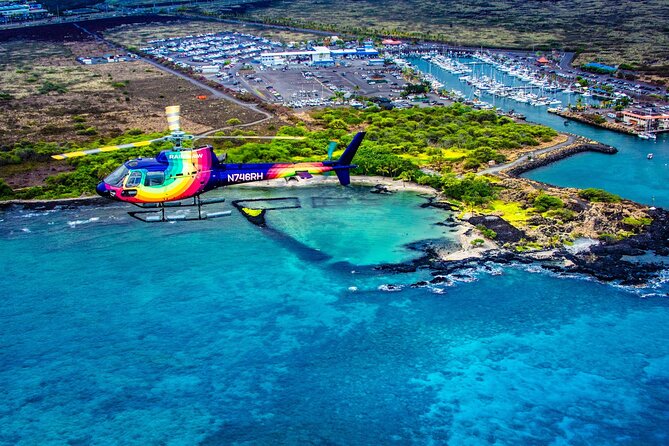
At $640 per person for about one hour, this isn’t a “sometime treat.” It’s a splurge. So the value question is really: what are you buying?
You’re buying:
- time efficiency (a lot of key places seen quickly)
- viewpoint change (top-down coastal and volcanic context)
- a guided narrative from the pilot during the pass
And the pilot factor matters. In the 5-star feedback you’ll see repeated themes: friendly staff, pilots who talk in an engaging way, and clear attention to safety. Names like Jojo, Jeff, Donovan, Turner, and Wilson show up as standouts, and that’s usually a sign the operation trains people to make the flight feel like more than scenery.
When this price makes sense
This is a good match if:
- you’re spending limited time on the Kona side
- you want volcano + coast in one hit
- you enjoy learning how geography ties to culture and local life
- you’re okay with seeing places from above rather than on the ground
When it might not
If your schedule is flexible and you’re happy doing beaches, coffee farms, and cultural sites without paying for the aerial view premium, you might decide to allocate that money elsewhere. This tour wins when the helicopter perspective is exactly what you want.
Safety and practical rules that can affect your day
Safety is the operator’s top priority, and they reserve the right to refuse service to passengers who appear intoxicated. If that happens, the passenger won’t fly and the full charge applies, so don’t gamble with judgment on a day that includes alcohol or late-night plans.
There are also weight-and-balance considerations. The total weight per passenger is listed at 500 lbs. For each guest weighing 250 lbs or more, a weight and balance fee is required to safely balance the aircraft. Guests between 250–275 lbs have a fee of 50% of the seat price, and guests 275 lbs or higher require an additional seat purchase assessed after booking.
If you’re within that range, plan ahead so you’re not surprised later.
Weather matters
This experience requires good weather. If it’s canceled due to poor weather, you’ll be offered a different date or a full refund.
So check conditions, and don’t treat the helicopter like a casual “maybe we’ll do it” when your itinerary is tight.
Should you book the Kona Coast Hualālai helicopter tour?
I’d book it if you want a fast, high-impact Big Island experience that blends ocean, cultural sites, coffee farms, and Hualālai Volcano into one clean route. The strong ratings (4.9 overall) and the repeated praise for pilots and staff add up to a simple message: this tour is best when you want your time spent in the air rather than waiting on roads.
Skip it (or at least rethink it) if $640 per person feels too steep for you, or if your ideal day includes walking around at stops. This is an aerial tour: you’ll see a lot, but you won’t linger.
If you’re the kind of traveler who loves a top-down view, appreciates the story behind places like Kaloko Fish Ponds and Place of Refuge, and wants the volcano scale in one hour, you’ll probably feel like you got your money’s worth.
FAQ
How long is the Kona Coast Hualālai helicopter tour?
The flight is about 1 hour (approx.), and the experience ends back at the meeting point.
Where do we meet, and where does the tour end?
You meet at 73-4370 Paoo St, Kailua-Kona, HI 96740, USA. The activity ends back at the same meeting point.
Is the tour door off or door on?
The experience is offered as door off or on. If you choose doors off, there are specific clothing rules you’ll need to follow.
What should I wear for a doors-off helicopter tour?
For doors-off tours, jackets and/or sweatshirts, closed-toe shoes, and hair ties are required. Long pants are recommended.
Are there weight limits or extra fees based on passenger weight?
Yes. There is a total weight per passenger limit of 500 lbs. For guests weighing 250 lbs or more, a weight and balance fee is required: 50% of the seat price for 250–275 lbs, and an additional seat purchase for 275 lbs or higher.
Are service animals allowed?
Yes, service animals are allowed.
What if the weather is bad?
This experience requires good weather. If it’s canceled due to poor weather, you’ll be offered a different date or a full refund.