REVIEW · PORTO
Porto: Douro River Helicopter Tour
Book on GetYourGuide →Operated by Porto Helicopters · Bookable on GetYourGuide
A ten-minute flight, and Porto looks new.
This Porto: Douro River Helicopter Tour gives you a bird’s-eye view of the Douro River and the city’s big landmarks, including the UNESCO Historic Center and major bridges. You’ll also get the kind of angles you simply can’t get from the riverbanks or viewpoints on foot.
I really like how the flight covers the city’s skyline highlights in a tight route. Porto’s old center and red rooftops look crisp from above, and it’s a great way to connect monuments to the river they sit beside.
My only real heads-up: the ride is 10 minutes, so it can feel quick. Go in knowing it’s more of a fast aerial snapshot than a long narration experience.
In This Review
- Key things I’d focus on before you book
- Checking in at the Heliport of Massarelos: what it feels like
- The 10-minute route: how you get value out of a short flight
- From above the UNESCO Historic Center: the red-roof perspective
- Bridge spotting over the Douro: Arrábida to D. Maria Pia
- Serra do Pilar Monastery dome: a quick landmark that helps you track the route
- Port wine cellars from the sky: what you’re really seeing
- Takeoff and landing next to the river: the feeling side of it
- Who this fits best (and who should reconsider)
- Price and value: what you’re paying for in 10 minutes
- Language and guide style: Portuguese and English in a short window
- Should you book the Porto Douro River Helicopter Tour?
- FAQ
- How long is the Porto Douro River Helicopter Tour?
- Where does the tour start?
- What language is the live tour guide?
- What should I bring?
- Is there a weight limit?
- Is the tour suitable for young children?
- Is it accessible for wheelchairs?
Key things I’d focus on before you book
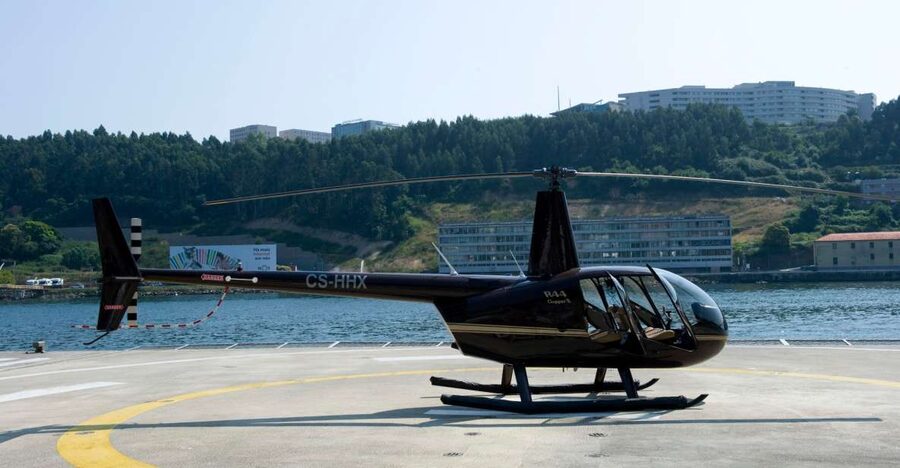
- Heliport of Massarelos (right by the river): check-in is at the take-off site in Avenida Basílio Teles, so you’re not wasting time crossing town.
- A UNESCO historic-center overview from the air: you’ll see the old-town layout from the hill facing the Douro.
- Bridge spotting is the main game: Arrábida, Luís I, Infante Dom Henrique, D. Maria Pia, plus the Freixo S. João Bridge.
- Port wine cellars get an aerial angle: you’re not just hearing about port—you get a top-down look at where it’s stored.
- Serra do Pilar Monastery’s dome: it’s an easy landmark to track from above during the flight.
Checking in at the Heliport of Massarelos: what it feels like
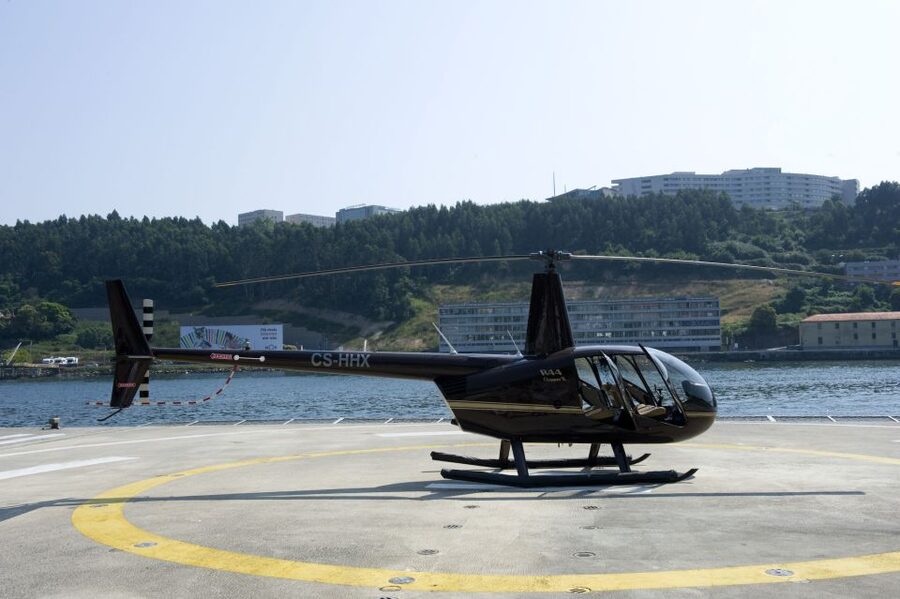
Your tour begins at the Heliport of Massarelos, on Avenida Basílio Teles by the Douro River. The instructions point you to grey stairs, so don’t overthink it—look for that signposted access and plan to arrive a little early.
This is the kind of experience where being on time matters because you’re working with a short flight window. Once you’re with the staff at the take-off site, you’ll feel the pace shift into pre-flight mode quickly.
You’ll want to have your ID or passport ready. And yes, this is real flying—not a staged experience—so bring patience if there’s a bit of waiting around the heliport before your slot.
Also note the tour is a private group with a live guide in Portuguese and English. That matters because you’re not stuck listening to a recorded script; you get real-world explanations while you’re up there (even if it can’t last long with only 10 minutes in the air).
You can also read our reviews of more tours and experiences in Porto.

The 10-minute route: how you get value out of a short flight
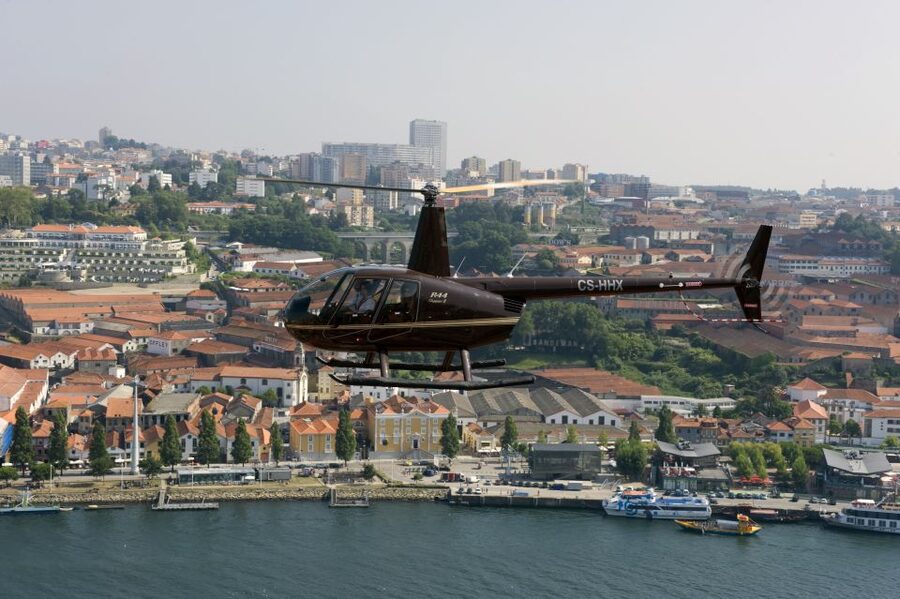
A lot of people book helicopter tours because they want the “wow” factor fast. This one delivers that, but you have to play it smart with expectations.
You’re only in the air for about 10 minutes, which means the route is designed for maximum sights in minimum time. Instead of lingering, the flight is about quick visual recognition: you lift off, you track landmarks, you snap photos, and you’re back.
If you’re the type who enjoys history through “place + view” rather than long museum stops, this is a good fit. Looking down at Porto’s historic area while the river curves around it helps you understand how the city grew where it did.
The upside of a short flight is focus. You’re not spending half your day transporting to viewpoints or waiting for slow-moving river traffic. You’re getting a direct line-of-sight view of the Douro, then a quick return to ground reality.
From above the UNESCO Historic Center: the red-roof perspective
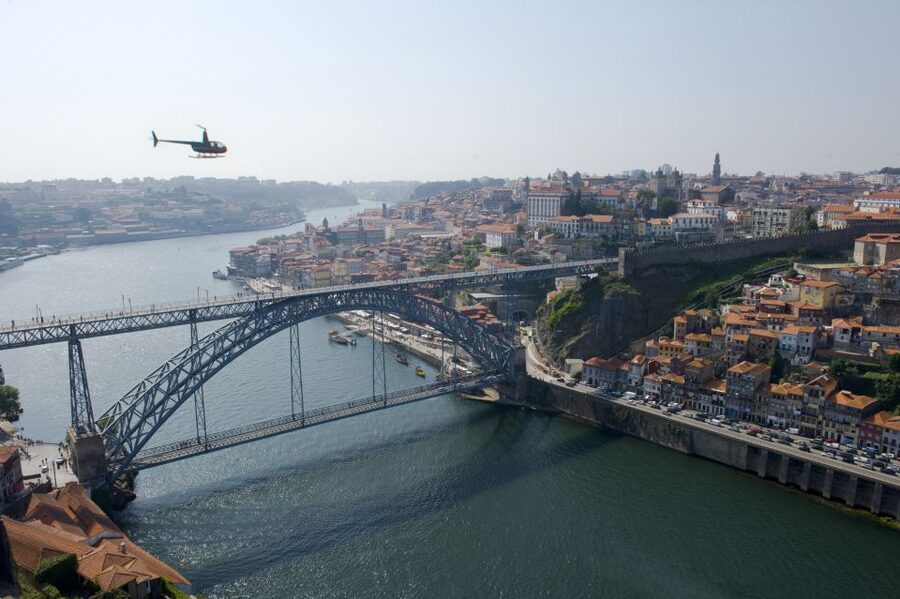
One of the most satisfying parts of this tour is how it frames Porto’s old center from the hill overlooking the river. You’ll see the UNESCO-listed historic area laid out below, with the red roofs acting like a visual map.
From street level, old towns can feel crowded and layered. From above, you get clarity: you can spot the density, the geometry, and the way the buildings hug the contours around the river corridor.
This is also a great moment for orientation. If you plan to walk Porto afterward, those aerial angles help you decide where you want to spend time on foot—especially around viewpoints and the river-adjacent areas.
A practical tip: choose one or two photo targets before you’re airborne. With 10 minutes, you won’t capture everything equally. I’d treat the flight like a rapid photo hunt: pick your must-sees (historic center, bridges, and the monastery dome) and then enjoy the bonus sights as they come.
Bridge spotting over the Douro: Arrábida to D. Maria Pia
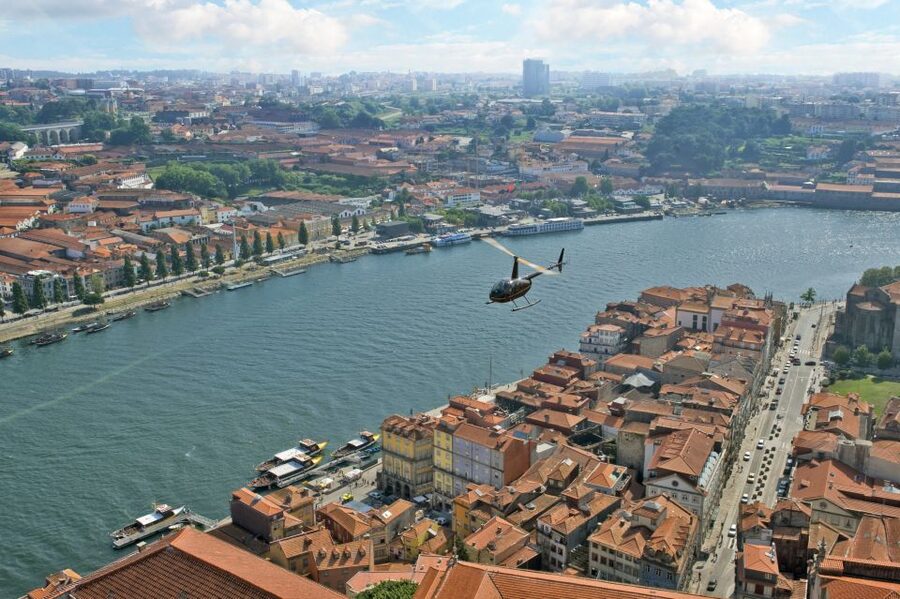
The “headline act” is the bridge sequence. The flight is designed to let you identify several major spans over the Douro River, and seeing them from above makes their design feel instantly legible.
You’ll be able to admire the arches of the Arrábida Bridge and the Luís I bridge, plus other key crossings including Infante Dom Henrique and D. Maria Pia. From the air, these bridges don’t just look dramatic—they also show how they connect neighborhoods on opposite banks.
You also get a specific bonus mention: spotting the Freixo S. João Bridge from above. Even if you don’t know it by name at first, from the helicopter it becomes a clear “marker” in the river system—something you can later connect to where you are on the ground.
Why this is valuable: Porto’s bridges aren’t just transportation. They’re also landmark architecture. In a car, you might pass them without processing their shape. From above, you immediately understand scale, spacing, and how the river dictates the city’s movement.
If you’re going with a friend or partner, this is also a fun split. One person can focus on photo framing while the other calls out bridge names as you pass them. It turns a short ride into a shared game.
Serra do Pilar Monastery dome: a quick landmark that helps you track the route
One landmark you’ll be on the lookout for is the Serra do Pilar Monastery—specifically the dome. Having a dome as a visual “anchor” helps a lot during an aerial tour, because it’s a structure your eyes can lock onto even when the river curves.
From the helicopter, domes tend to pop. That means you can keep your bearings more easily and avoid the common problem of taking photos that are beautiful but hard to recognize later.
For practical sightseeing, this matters too. If you plan to visit Serra do Pilar afterward, catching the dome from above helps you understand how it sits in relation to the river and surrounding rooftops.
Think of it like a live GPS with a dome. It makes the route feel organized instead of random.
Port wine cellars from the sky: what you’re really seeing
The tour includes a look over port wine cellars—the places where the region’s famous fortified wine is stored. The flight doesn’t turn into a cellar tour (you’re not walking inside), but it adds a top-down layer to the usual tastings and museum visits.
Why that aerial view matters: port wine culture in Porto is tightly connected to the river. Storage and shipping were built around access to water transport. When you see the cellar areas from above, you get a stronger sense of how the production story and the river story line up.
It’s also a good way to appreciate scale. Cellars can feel like a single attraction when you visit. From the air, you realize they’re part of a bigger riverside industrial-and-trade zone that stretches along the Douro.
I also find this section helps with pacing. After the bridge views, the cellar sight gives you a different kind of mental image: not just architecture, but economy—how people made and moved goods from this same river corridor.
Keep in mind that at this duration, you’re viewing from the helicopter window rather than getting time for close inspection. So it’s best enjoyed as a “now I get it” moment, not a detailed survey.
Takeoff and landing next to the river: the feeling side of it
The emotional highlight isn’t only the views. It’s the physical moment of leaving and returning to the river-adjacent heliport.
You’ll check in at the take-off site, then feel the thrill of lifting off the ground and coming back to land near the river. If you’ve never been in a helicopter before, this part can be the most memorable—even if the sightseeing itself is why you booked.
There’s a special kind of calm that happens when you realize you’re not driving anywhere. The craft simply follows the route over Porto and the Douro, and you shift from “travel” to “watching.”
This is also where the private-group format helps. You don’t have to merge into a bigger mixed group with different energy levels. The experience can feel more focused on your small group’s pace—especially with a live guide on hand.
Who this fits best (and who should reconsider)
This isn’t for everyone, mostly because of weight and age limits.
The tour notes a maximum weight allowed per flight of 235 kg and also mentions limits tied to individual capacity: it’s not suitable for people over 275 lbs (125 kg). There are also age constraints: it’s not suitable for children under 2 years.
If you’re pregnant or you have any chronic health conditions, you should consult your doctor before booking. That’s sensible. Even if you feel fine, you’re still dealing with an airborne experience that’s not designed for medical flexibility.
On a practical side, it’s listed as wheelchair accessible and you’ll be with a private group. If mobility is a concern, confirm how the team handles boarding at the heliport stairs area, but at least the activity is marked as wheelchair accessible.
Also consider your personality. If you want a lot of hands-on interaction and long storytelling, a 10-minute flight may feel thin. If you want top views of Porto’s key structures fast, it’s a strong match.
Price and value: what you’re paying for in 10 minutes
You aren’t paying for a long itinerary here. You’re paying for something specific: aerial access to Porto’s biggest visual landmarks—UNESCO historic center, multiple iconic bridges, and port wine cellars—within a tight time window.
So the value comes down to your priorities. If your trip is short and you want one big “wow” moment that also helps you orient yourself for walking later, this can feel like smart spending.
If you’re the type who prefers slow, deep experiences—multiple stops, long explanations, time to linger—then the duration might feel limiting. The tour is intentionally brief, and you should treat it like that: a highlight, not the main course.
I’d also weigh the novelty factor. Once you’ve seen Porto from a viewpoint, you’ve seen it from a viewpoint. Seeing it from a helicopter is a different category of view. Even if it’s quick, the perspective itself can justify the cost for many people.
Language and guide style: Portuguese and English in a short window
The live guide is available in Portuguese and English, which helps a lot for making sense of what you’re seeing overhead. When you can connect a name—like a specific bridge or the monastery dome—to the visual in front of you, the photos become more meaningful later.
Because the flight is short, don’t expect a long back-and-forth conversation. This is more of a “point, identify, enjoy the view” format than a classroom discussion.
Still, having a guide at all makes a difference compared with purely self-guided sightseeing. Even a few clear landmark explanations can turn random rooftops and arches into a recognizable story.
Should you book the Porto Douro River Helicopter Tour?
I’d book this if you want a high-impact Porto experience with maximum landmark recognition in minimal time. It’s especially good for first-timers who want an aerial overview: historic center layout, bridge designs, the Douro ribbon, and the monastery dome all in one quick hit.
I’d think twice if you strongly prefer longer guided experiences or if you’re sensitive to the idea that 10 minutes will pass faster than you’d like. Also, if you’re aiming for a very social, chatty tour vibe, remember the format is fast and focused on flight.
One more practical call: if helicopter flying is on your “must-do” list, this is a clean way to do it. You start right at the Heliport of Massarelos by the river, and the route is built around Porto’s most recognizable aerial subjects.
FAQ
How long is the Porto Douro River Helicopter Tour?
The duration is 10 minutes.
Where does the tour start?
The meeting point is the Heliport of Massarelos on Avenida Basílio Teles by the river. The instructions mention grey stairs. Coordinates: 41.14657211303711, -8.632599830627441.
What language is the live tour guide?
The live guide offers Portuguese and English.
What should I bring?
Bring your passport or ID card.
Is there a weight limit?
Yes. The maximum weight allowed per flight is 235 kg, and the activity is not suitable for people over 275 lbs (125 kg).
Is the tour suitable for young children?
No. It is not suitable for children under 2 years.
Is it accessible for wheelchairs?
Yes, it’s listed as wheelchair accessible.
If you want, tell me when you’re going and what you care about most (bridges, wine, or viewpoints), and I’ll help you time it against your walking plans in Porto.