REVIEW · REYKJAVIK
Reykjavik: 45-Minute Volcano Sightseeing Helicopter Tour
Book on GetYourGuide →Operated by Atlantsflug / Flightseeing · Bookable on GetYourGuide
Volcanoes look wild from the ground, but from the air they look busy. This Reykjanes Peninsula helicopter outing gives you a high, clear view of recent eruption terrain, including Sundhnúkahraun from March 2024, plus older crater fields from 2021–2022. What I love most is that the flight is built for everyone to see the action (small group, tight route), and the pilots talk you through what you’re actually looking at. One thing to consider: weather controls everything, and you might not see flowing lava even if you fly to the right spots.
You’ll meet at Reykjavik Domestic Airport area, then lift off for a short but focused route over the capital region before you spend the bulk of your time out on the lava coast. The total experience is only 45 minutes, so it’s not a half-day adventure—but it is a very efficient way to understand this volcanic zone from above.
In This Review
- Key highlights at a glance
- Reykjanes from Above: Why Helicopter Time Beats Road Time
- Where You Meet at Reykjavik FBO (and How to Avoid Start-of-Day Stress)
- The First Minutes: Takeoff and a Quick Tour of the Capital Area
- The Core Flight on Reykjanes Peninsula: Lava Fields, Craters, and the March 2024 Focus
- From Fagradalsfjall to Geldingadalir: Seeing How 2021–2022 Shaped the Land
- The Bessastaðir Stop: A Five-Minute Look at Iceland’s President’s Home
- Back Over Reykjavik: Getting Your Final Photos Before Landing
- Price and Value: Why $624 Can Make Sense (and When It Might Not)
- What the Pilot Guidance Adds (Beyond Pretty Views)
- Who Should Book This Helicopter Tour—and Who Should Skip It
- Practical Tips for Comfort, Sightlines, and Photos
- Should You Book Reykjanes by Helicopter?
- FAQ
- How long is the Reykjavik 45-minute volcano sightseeing helicopter tour?
- Where do I meet for the tour?
- Is the flight weather dependent?
- Will I definitely see flowing lava?
- How many people are in a group?
- Is there a guide, and what language is offered?
- Is the tour suitable for young children?
- What is included in the price?
Key highlights at a glance
- Bird’s-eye views of lava fields and craters you can’t properly judge from the road
- A dedicated look at Sundhnúkahraun (March 2024), plus older eruption terrain nearby
- Small group size (limited to 5) for easier viewing and calmer cabin flow
- Friendly pilots who guide you through the route and what to watch for
- Short sightseeing stops that include a look toward Bessastaðir (weather permitting)
Reykjanes from Above: Why Helicopter Time Beats Road Time
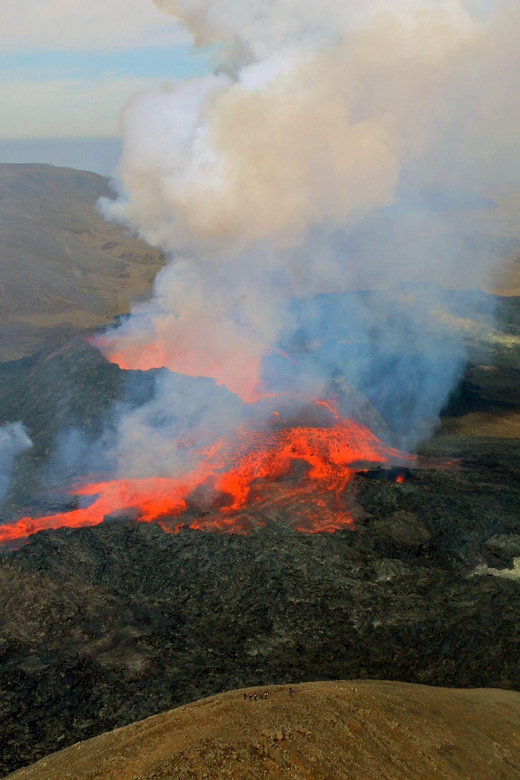
If you’ve driven in Iceland, you already know the country loves repetition: lava here, wind there, and then suddenly another field of black rock. The helicopter version of Reykjanes changes your understanding fast, because you’re not just seeing lava—you’re seeing shapes, flow paths, and the geometry of eruption craters.
On this tour, the flight path is designed to cover the key volcanic zone on the Reykjanes Peninsula without wasting time. The result is that you get a clearer sense of how the eruptions have built and reworked the land over time. I also like that the experience is guided in English, so you’re not just looking out a window wondering what that ridge is supposed to be.
Helicopter tours here do come with a reality check, though. This region is active, and lava can be present or quiet on any given day. Also, you’re buying a weather-dependent flight, not a guarantee of glowing ground.
You can also read our reviews of more tours and experiences in Reykjavik.
Where You Meet at Reykjavik FBO (and How to Avoid Start-of-Day Stress)
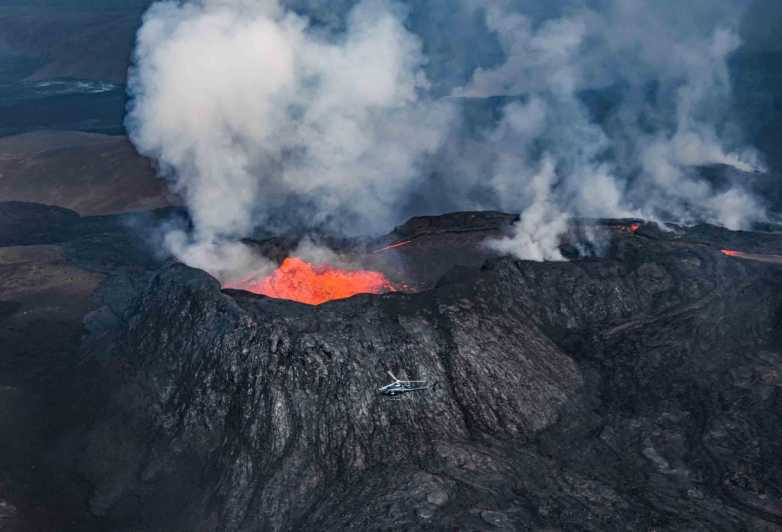
The tour starts at Reykjavik FBO, in a building marked with the operator’s sign. It’s right next to Berjaya hotel, and your session begins with meeting the staff and pilot there.
Here’s the practical tip I’d give based on real-world experience: arrive a little early and don’t assume someone will be standing at the door at the exact minute you show up. One traveler reported the building entrance was locked and there was a long wait before reception returned, so giving yourself buffer time helps your whole morning or afternoon feel smoother.
Once you’re checked in, you’ll get a short pilot briefing about the route. That briefing matters, because it helps you know what you’ll be looking for when you’re over the lava fields—especially if you’re trying to spot flowing activity.
The First Minutes: Takeoff and a Quick Tour of the Capital Area
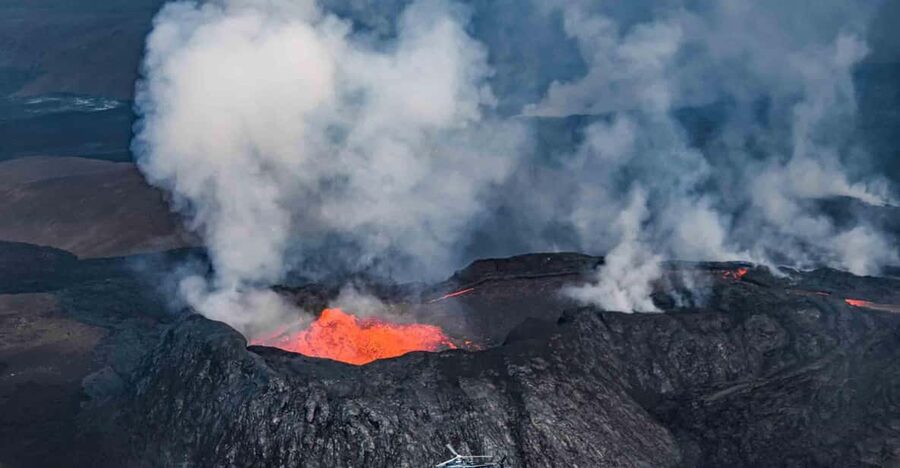
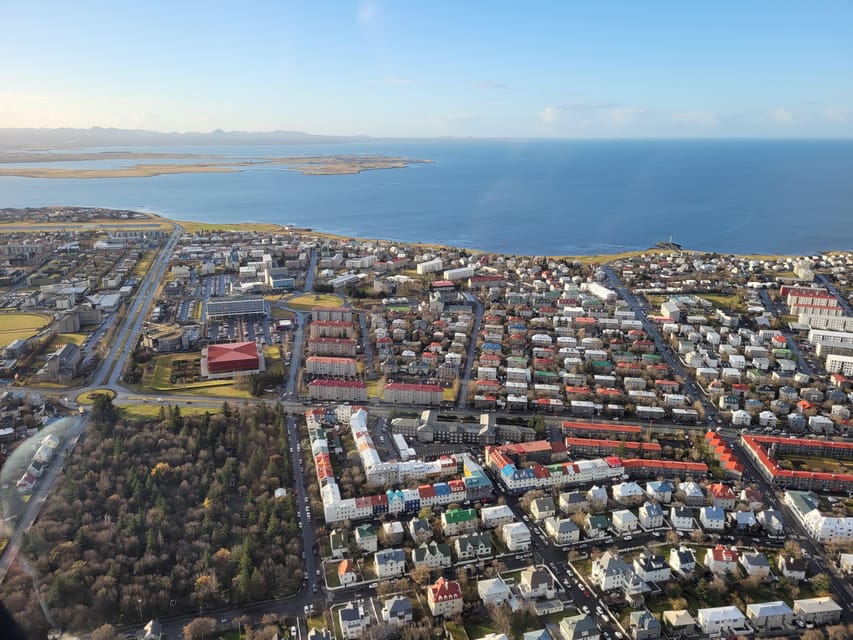
Before you fly to the Reykjanes Peninsula, you’ll take off from Reykjavik Airport and glide over the capital area. The time on this part of the route is brief, but it’s useful: it sets the scale, and it gives you a visual contrast between the city edge and the volcanic coastline.
You’ll get a short briefing on the route, then you’re onto the tarmac. From there, the helicopter experience kicks in right away—fast lift, quick orientation, and then the view starts doing the talking.
Even though this segment is only a few minutes in the overall plan, it’s where you’ll settle into the cabin. The pilots guiding you through what’s next helps you relax and focus, rather than spending your first moments figuring out where to look.
The Core Flight on Reykjanes Peninsula: Lava Fields, Craters, and the March 2024 Focus
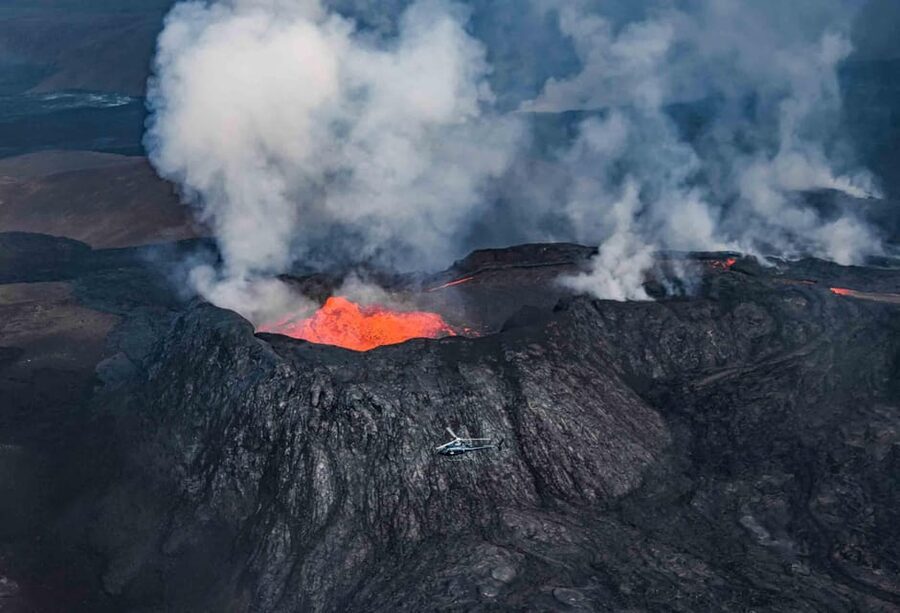
Most of your sightseeing time is spent on the Reykjanes Peninsula. This is where the tour earns its keep, because this stretch of coast is one of Iceland’s most volcanic “front yards.”
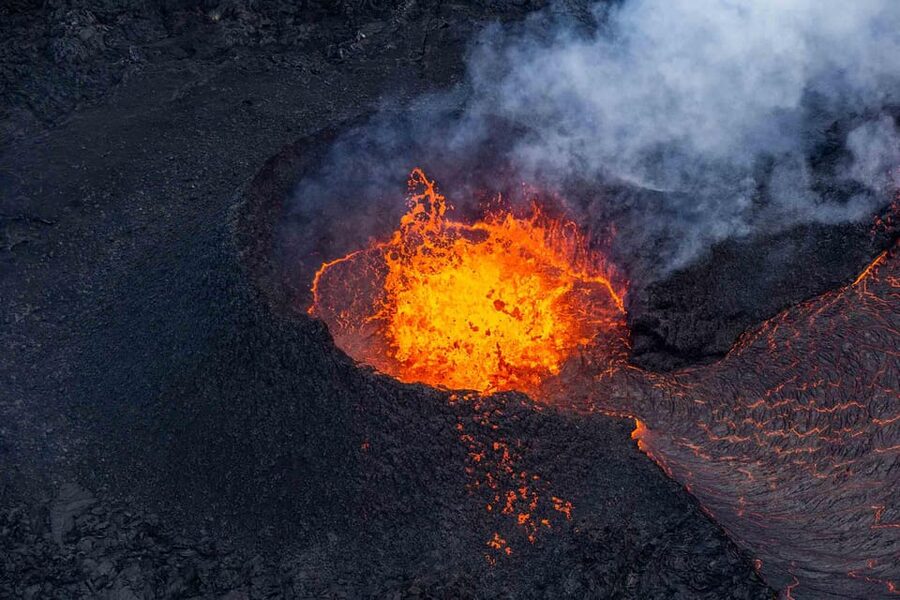
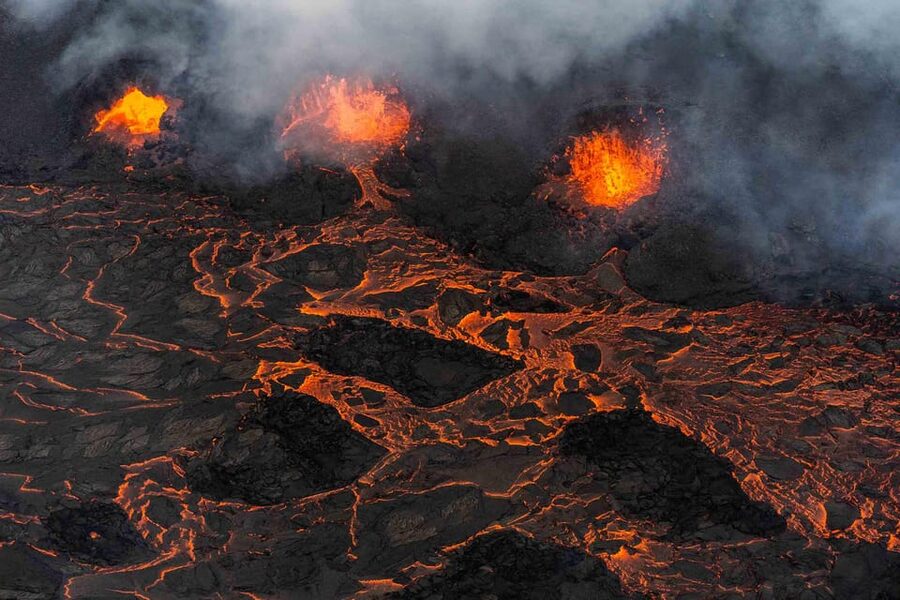
You’ll spend about 30 minutes in this main area, and the goal is to give you a birds-eye view of the most recent eruption sites. The star in the itinerary is Sundhnúkahraun, dated to March 2024. If the eruption is active or the lava is visible from above, this is the part of the flight where you’ll want to keep your eyes open for movement and fresh flow.
You’ll also circle around lava fields and crater zones so you can see them from different angles. That circling is a big deal in a helicopter—because from a single straight pass, lava can look like one flat mess of black rock. From multiple angles, it starts to show the story: where it spread, where it broke into channels, and how the landscape “layers” over time.
One more good sign: the tour is designed so the views are good for all passengers. With a small group, you’re not stuck behind a wall of elbows, and pilots can manage sightlines as they maneuver.
From Fagradalsfjall to Geldingadalir: Seeing How 2021–2022 Shaped the Land
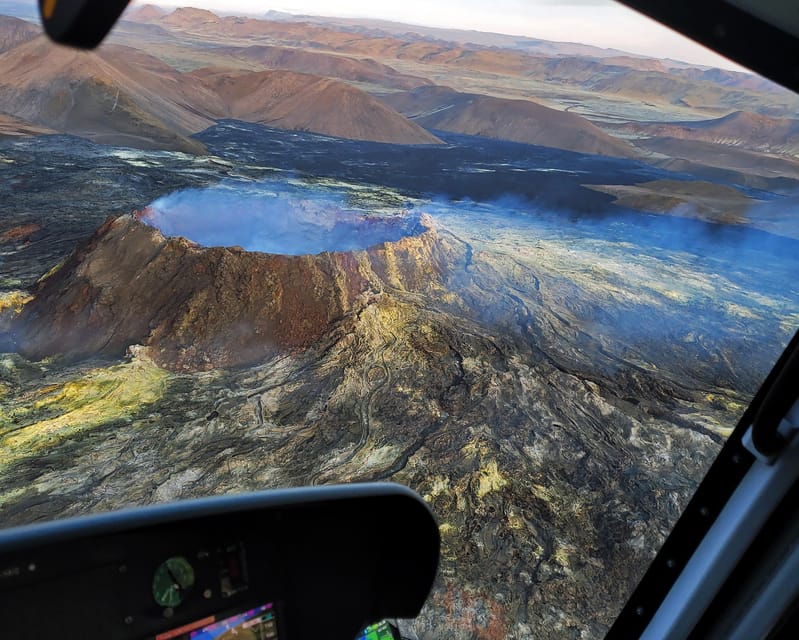
This flight isn’t only about the newest lava. You also get views linked to the Fagradalsfjall / Geldingadalir eruption period from 2021 and 2022.
From above, it’s easier to connect the dots between “big crater systems” and what the terrain looks like after repeated eruptive phases. The itinerary specifically notes moving from those massive crater areas toward the more recent eruption site, so you’re not just collecting random lava patches—you’re comparing eruption generations.
This matters if you’re the type who wants more than photos. Seeing older craters and fields alongside newer activity helps you understand that volcanoes aren’t one-time events. They’re ongoing processes that keep rewriting the ground.
The Bessastaðir Stop: A Five-Minute Look at Iceland’s President’s Home
After the main lava focus, the flight includes a short sightseeing segment toward Bessastaðir, the president’s home. The itinerary lists it as a brief stop—around 5 minutes—and it’s framed as something you might be able to spot if you know where to look and if conditions allow.
This part won’t replace the volcanic content in terms of meaning, but it can be a fun anchor. Helicopter tours can feel like constant looking out the window, and a recognizable landmark gives you a quick mental break from the geology.
If you’re bringing a camera, this is also a good time to grab a steady shot, since it’s a calmer segment with clearer visual targets than lava fields.
Back Over Reykjavik: Getting Your Final Photos Before Landing
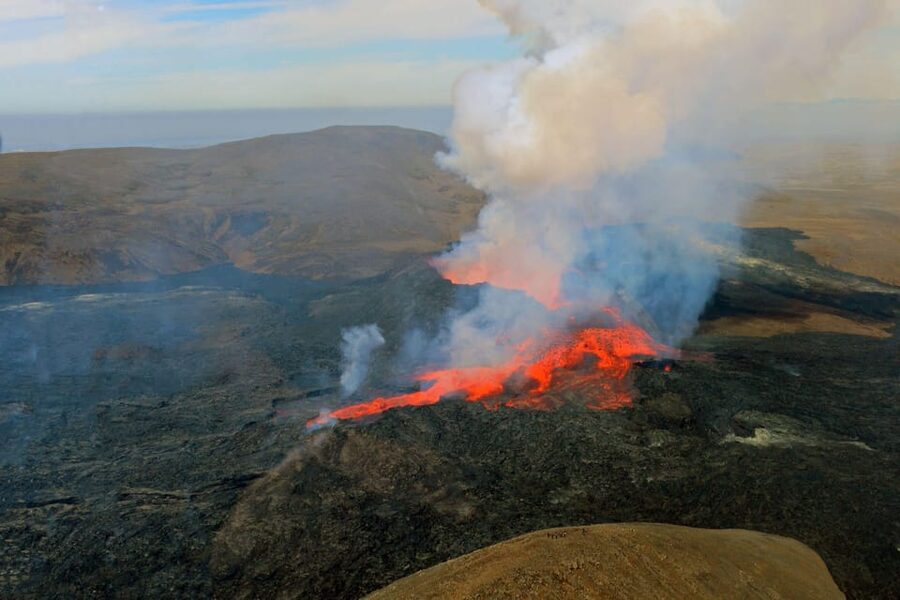
Your return includes another short pass over Reykjavik—again, about 5 minutes—before landing back at the same base where you started. The end of the flight often feels quick, because the most interesting terrain tends to be right up until the last minutes.
For photo planning, consider this: with a short total flight time, you don’t have the luxury of waiting for the perfect view later. You’ll want to spend the main peninsula segment looking closely and then use the final minutes for skyline or landmark shots, if visibility allows.
Landing brings you back to the same meeting point at Reykjavik FBO. Expect the overall flow to feel smooth once you’re airborne, but plan extra patience for the start-of-day window, since timing at the building entrance can vary.
Price and Value: Why $624 Can Make Sense (and When It Might Not)
At $624 per person for a 45-minute helicopter flight, this isn’t a “grab it on a whim” activity. You’re paying for something that’s hard to replicate: quick access over a remote volcanic zone, plus guided interpretation from the pilot seat.
So what makes it feel like value instead of a splurge? First, this is a small group with a limited headcount (up to 5). Second, the route is purpose-built around eruption sites, including Sundhnúkahraun from March 2024. Third, you’re not flying aimlessly. You’re circling and comparing different volcanic phases—older crater fields from 2021–2022 and the more recent eruption terrain.
That said, you should be clear about the main risk. The tour is weather dependent and follows rules from Iceland’s civil protection and emergency management authorities. Even if you fly, there’s no guarantee you’ll see flowing lava, because eruptions can be active or quiet from day to day.
To decide if it’s worth it for you, I’d ask one question: do you want the helicopter experience for the learning and perspective, or are you mostly chasing glowing lava as a must-see? If you’d rather have a guaranteed view, you may want to consider a different style of tour. If you’ll be happy seeing lava landscapes and crater geometry from above, this flight is one of the most direct ways to get it.
What the Pilot Guidance Adds (Beyond Pretty Views)
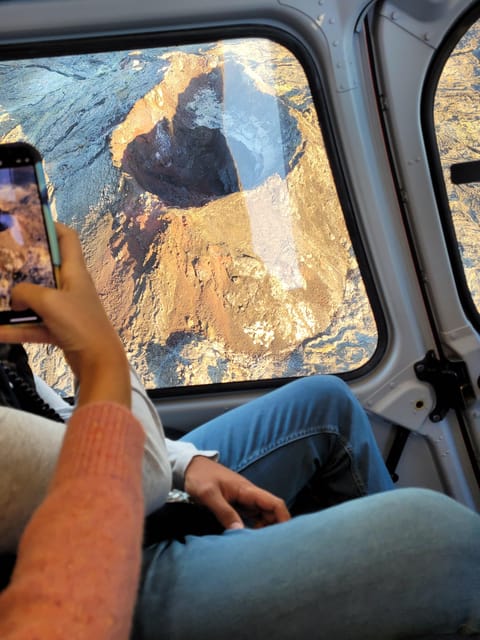
One of the strongest parts of this experience is how the pilots guide you. The itinerary is built around explanations of volcanic history, and the pilots help you interpret what you’re seeing rather than treating the flight as just sightseeing.
This is where the small-group format helps. With fewer people, it’s easier for the pilot to guide attention and adjust course while keeping everyone oriented.
In practice, this means you’re likely to get multiple passes or approaches over the active volcanic area during the peninsula segment. That repetition can make a huge difference for photos too, since you have more than one angle to capture vents, textures, and flow patterns.
Who Should Book This Helicopter Tour—and Who Should Skip It
This tour is a strong fit if you:
- Want a high-impact, short-time Iceland activity
- Like geology and want help reading lava fields and crater systems
- Prefer small groups and clear sightlines
- Are comfortable paying for a premium aerial perspective
It might not be the right match if you:
- Need a guaranteed view of flowing lava (there’s no guarantee)
- Get frustrated by weather-dependent plans
- Are traveling with kids under 2 years (not suitable)
Also, if you’re the kind of person who wants a lot of ground exploration, remember this is a 45-minute flight. The value is aerial interpretation, not walking around lava.
Practical Tips for Comfort, Sightlines, and Photos
I’d plan for this to feel intense but fast. A helicopter cabin can be loud enough that you’ll rely on the pilot’s guidance rather than expecting a relaxed conversation.
For sightlines, the biggest tip is simple: listen to the pilot briefing and keep your attention on the side they’re highlighting as you fly. The tour is designed for good views for all passengers, but your best photos usually come when you’re ready before the helicopter turns.
Bring a camera you can stabilize quickly. With limited time, you’ll want to shoot early and often in the peninsula segment rather than trying to wait for a single perfect moment.
Finally, be flexible mentally about activity levels. Iceland volcanoes don’t follow tourist schedules, and even on the right day, lava might be visible or might not.
Should You Book Reykjanes by Helicopter?
If you want a fast, guided aerial look at one of Iceland’s most actively shaped volcanic zones, I think this is a book-it option. The big reasons are the route focus (including Sundhnúkahraun from March 2024), the small group size, and the fact that the pilots guide you through the volcanic story in real time.
But book with eyes open: weather can cancel or reschedule, and you might not see flowing lava during your flight. If you’re okay with that uncertainty—and you value perspective, learning, and high-value views—this helicopter tour is one of the most efficient ways to experience the Reykjanes eruption landscape.
If your goal is glowing lava at any cost, consider pairing this with a backup plan on the ground so your day still feels complete.
FAQ
How long is the Reykjavik 45-minute volcano sightseeing helicopter tour?
The tour duration is 45 minutes total, and you can check availability for specific starting times.
Where do I meet for the tour?
You meet at Reykjavik FBO (the building marked with the operator sign), located right next to Berjaya hotel. The tour ends back at this same meeting point.
Is the flight weather dependent?
Yes. Flights are weather dependent and must follow rules set by the Department of Civil Protection and Emergency Management.
Will I definitely see flowing lava?
No. Eruptions are natural occurrences and may or may not be active during your visit, so there’s no guarantee of visible lava.
How many people are in a group?
The group is small and limited to 5 participants.
Is there a guide, and what language is offered?
There is a live tour guide, and the language is English.
Is the tour suitable for young children?
It is not suitable for children under 2 years.
What is included in the price?
The price includes all taxes and airport fees.