REVIEW · AORAKI MOUNT COOK NATIONAL PARK TE WAHIPOUNAMU
25-Minute Helicopter flight including an alpine landing
Book on Viator →Operated by Inflite Ski Planes Limited · Bookable on Viator
Aoraki Mt Cook looks different from the sky. This short hop from Mount Cook Airport flies over the Tasman Valley and Tasman Terminal Lake, then includes an alpine landing with big, direct views of Aoraki Mt Cook and the surrounding peaks.
I also really like the format: live commentary plus headsets, so you’re not just staring out the window in silence. The one drawback to plan around is that snow landings aren’t guaranteed in summer, so the ground at the landing can be alpine rock instead of snow.
In This Review
- Key things to know before you book
- How a 25-minute helicopter ride fits into a Mt Cook day
- From takeoff to Tasman Terminal Lake: the views move quickly
- Brass Peak or Liebig Dome: what the 10–15 minute landing is really like
- Weather and snow expectations: alpine landing does not always mean snow
- AS350 Squirrel helicopters, headsets, and pilot narration
- Value and booking timing for $244.36 per person
- Who this Mt Cook helicopter landing is best for
- Should you book this 25-minute alpine helicopter flight?
- FAQ
- How long is the flight?
- Where does the helicopter depart from?
- What is the alpine landing like?
- Is snow guaranteed year-round on this flight?
- What’s included in the price?
- Are souvenir photos included?
- What type of helicopter is used?
- Do weather conditions affect the booking?
- What group size is required for the flight to operate?
- What are the age and weight limits?
Key things to know before you book
- 25 minutes in the air, plus 10–15 minutes landed at the mountain top
- Direct sightlines for Aoraki Mt Cook from takeoff and on the flight path
- Tasman Terminal Lake and Tasman Valley views from above, including icy-looking sections when conditions allow
- Alpine landing options include Brass Peak or Liebig Dome
- AS350 Squirrel helicopters with headsets and live onboard commentary
- Weather can cancel flights, and the flight may also require a minimum group size to operate
How a 25-minute helicopter ride fits into a Mt Cook day
This is designed as a fast, high-impact experience. You’re looking at about 25 minutes total flight time, with extra time spent out on the mountain during the landing window. That matters if your South Island schedule is tight and you still want one truly different thing you can’t do from the ground.
The tour ends back at the same starting point, Mount Cook Airport, so you don’t need to plan a complicated transport puzzle or a long transfer day. If you’re pairing this with other Mt Cook National Park activities, the timing is one of the big selling points: it’s a short “peak moment” you can build your day around.
Also, the group size stays small, with a maximum of 12 travelers per flight. That tends to feel more personal than big bus-style tours, especially when you’re bouncing between flight and a landing where you’ll be taking photos and looking around.
You can also read our reviews of more tours and experiences in Aoraki Mount Cook National Park Te Wahipounamu.
From takeoff to Tasman Terminal Lake: the views move quickly
Right after departure, the flight pattern is built around getting you oriented fast and then giving you continuous scenery. You take off from Aoraki Mt Cook Airport, then fly over the Tasman braided rivers before heading toward the Tasman Valley. The goal is simple: you should get a clear view of the big landmarks early, not halfway through.
The flight also targets the Tasman Terminal Lake, which is often the “wow” visual for Mt Cook heli riders because it’s part lake, part glacial scene. When conditions are right, you get that iceberg-dotted look that makes the area feel unusually alive from above. Even if you don’t get maximum ice detail, you still get a strong sense of scale: valley walls, river patterns, and peak lines all stack up in one view.
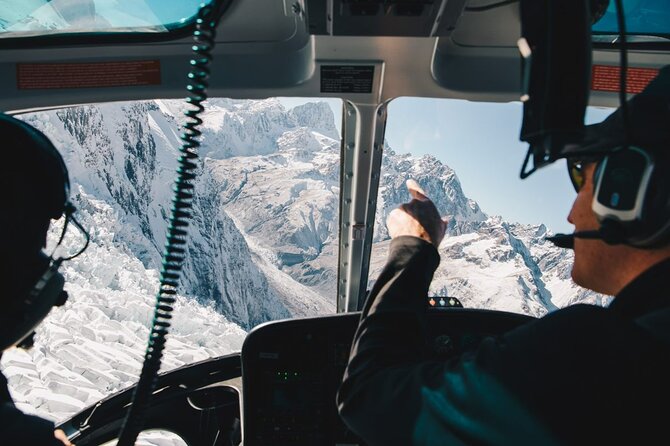
And yes, Aoraki Mt Cook is a focal point. The description emphasizes that you’ll look directly at Aoraki Mt Cook and then down into the valley. This is one of those experiences where the flight route matters as much as the landing, because the pilot’s approach can give you that “I can finally see how all these valleys connect” feeling.
Brass Peak or Liebig Dome: what the 10–15 minute landing is really like
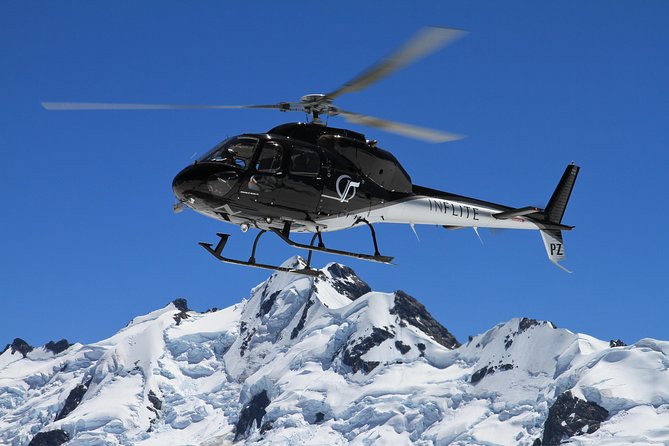
The star event is the alpine landing—and the time matters. You land for roughly 10–15 minutes, which is long enough to step out, find your bearings, and take photos from multiple angles without feeling rushed.
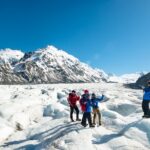
Your landing site will be either Brass Peak or Liebig Dome, both within Aoraki Mt Cook National Park. The common thread is the view: the landing is on a mountain top with strong sightlines back toward Aoraki Mt Cook, plus sweeping angles across the valley below. This is the moment that turns a “pretty flight” into something more personal: you’re not only watching the mountains, you’re standing on them.
There’s also a practical reason to care about which site you get. In clear conditions, both locations can deliver that “up close” alpine feeling where the terrain looks dramatic and the scale goes from abstract on the ground to very real in front of you. In rougher conditions, the exact surface you step onto becomes more important than the name on the ticket, which leads to the next big planning point.
Weather and snow expectations: alpine landing does not always mean snow
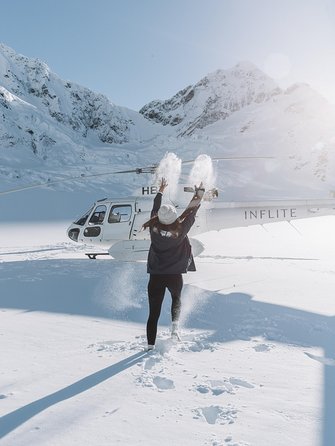
Here’s the key reality check: this tour is marketed for an alpine landing all year round, but it also explicitly notes that snow cannot be guaranteed during summer months. That means you should treat this as an alpine-mountain landing experience first, and a snow-and-glacier experience second.
If you’re traveling in warmer months, your landing could be on alpine rock at places like Liebig Dome rather than fresh snow. Some disappointment comes from the mismatch between what people imagine when they hear alpine and what alpine can actually look like depending on the season and conditions.
If your priority is guaranteed snow landings, the company points you toward the 45 Minute Ultimate Alpine Combo, the option designed specifically for snow landings year round (with an ice/glacier focus). For summer planning, that’s the decision fork: do you want a shorter, often scenic alpine landing, or do you want to pay for the higher likelihood of snow on the ground.
Either way, remember this is a weather-dependent flight. Flights may be cancelled due to weather conditions, and you’ll need to be comfortable with the idea that Mt Cook can be dramatic in more than one way.
AS350 Squirrel helicopters, headsets, and pilot narration
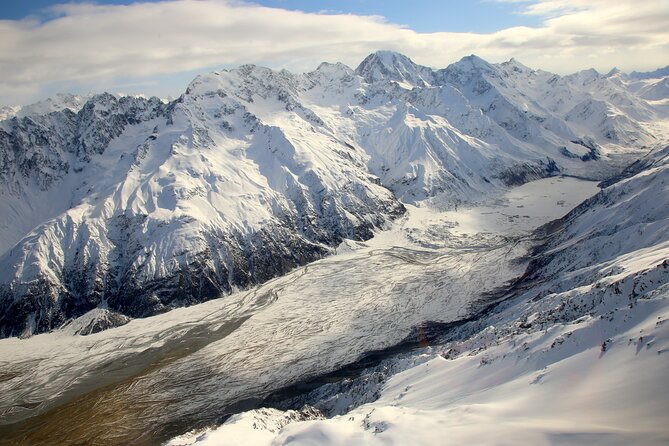
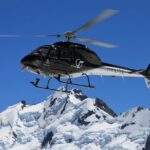
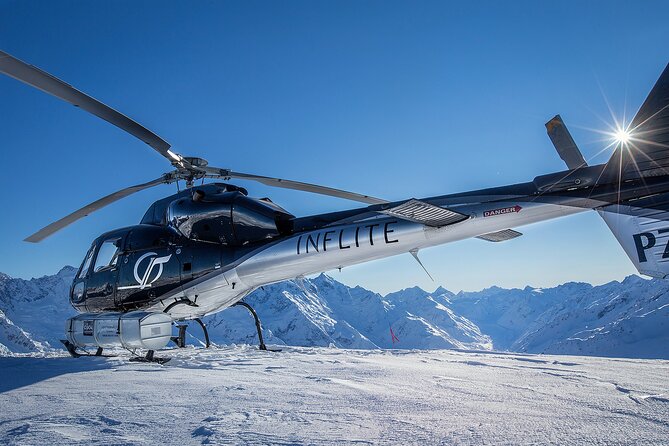
You’ll be flying in an AS350 Squirrel helicopter, described as a modern, performance-focused machine. The big practical advantage of a helicopter in this area is that it can go where the ground route can’t: you get direct sightlines toward peaks and valleys without driving for hours between viewpoints.
On the comfort side, you get headsets to hear the guide clearly, plus live commentary on board. That sounds like a small detail until you’re actually up there: without headsets, a lot of the “what you’re seeing” gets lost. Here, the tour is structured so you can follow what the pilot is pointing out as you fly.
Also, this is one of those experiences where pilot style affects your memory. In the best moments, you get calm, confident flying paired with informative talk that helps you connect landmarks to the view outside. In quieter or more safety-focused moments, the narration can feel more minimal—so if you care a lot about photo help or extra interaction, it’s smart to communicate what matters to you (photos, timing, and preferred viewing spots) at check-in.
Value and booking timing for $244.36 per person
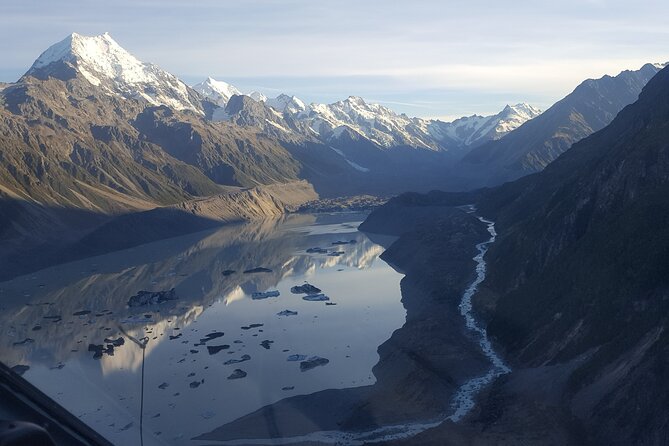
At $244.36 per person for a 25-minute flight, this isn’t a budget activity. But value here isn’t about minutes versus dollars. It’s about where you’re spending that time.
You’re paying for three things:
- direct aerial access to Aoraki Mt Cook National Park
- an actual alpine landing with time on the mountain top
- a small-group ride in a helicopter designed for this type of sightseeing
From a value standpoint, the short duration can be a plus. You’re not committing to a half-day or full-day flight plan to get one unforgettable view. If your priority is a high-impact “Mt Cook moment” and you can’t spare much time, this is one of the more time-efficient ways to do it.
Booking timing also matters. The experience notes that it’s commonly booked about 42 days in advance on average. That suggests demand is steady, and you’ll want to lock in early, especially if you’re traveling during peak season or if you have limited date flexibility due to weather.
Who this Mt Cook helicopter landing is best for
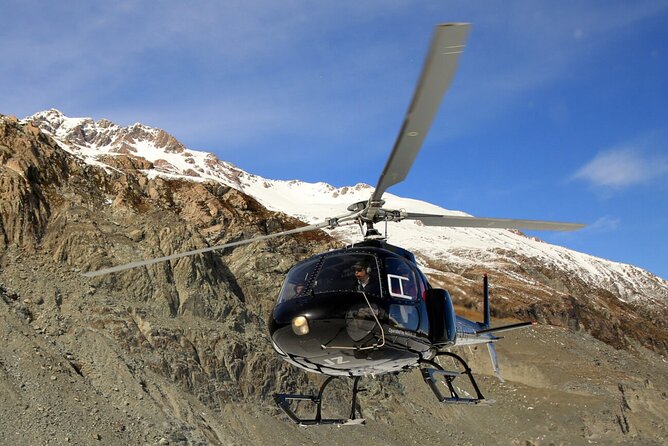
This works best if you want the classic Mt Cook combo of big views plus a landing but you don’t want a longer flight.
It’s also a good fit for first-time helicopter riders. The format is short and focused, and the inclusion of headsets and live onboard commentary makes the experience feel guided rather than chaotic.
A few practical notes from the provided details:
- The experience is capped at a maximum of 12 travelers, so you won’t be stuck in a crowd.
- Minimum number of 4 people is required before the flight operates, so day-of surprises can happen if groups don’t meet that threshold.
- There’s a maximum passenger weight listed at 243 lbs.
- Children must be accompanied by an adult.
- The tour notes that most travelers can participate.
If you’re especially photo-focused, think ahead. The helicopter seating experience can affect how much time you can grab the best shots, and the landing time is your prime photography window. Since the tour encourages taking lots of photos, I’d treat that 10–15 minute landed period as your main photo mission.
Should you book this 25-minute alpine helicopter flight?
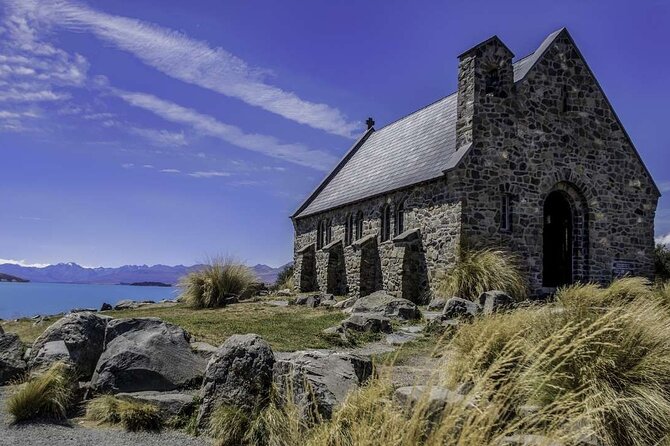
If you want a short, high-impact Mt Cook experience with real time on a mountain top, I think this is a solid choice. The combination of Aoraki Mt Cook sightlines, a route over the Tasman Terminal Lake / Tasman Valley, and a 10–15 minute alpine landing makes it more than a quick sightseeing flight.
But book with clear expectations. In summer, snow isn’t guaranteed, and the landing could be on alpine rock rather than snow. If snow on the ground is your must-have, you’ll likely be happier choosing the Ultimate Alpine Combo designed for snow landings.
My recommendation, in plain terms:
- Book this if you want the views and the landing, and you can handle snow uncertainty.
- Choose the snow-guaranteed combo if your vacation hinges on stepping on snow.
FAQ
How long is the flight?
The total flight time is about 25 minutes, with an alpine landing lasting roughly 10–15 minutes.
Where does the helicopter depart from?
It departs and returns to Mount Cook Airport on Mount Cook Road, Canterbury Region 7999, New Zealand.
What is the alpine landing like?
You land on a mountain with views toward Aoraki Mt Cook and the national park. Landing sites can include Brass Peak or Liebig Dome.
Is snow guaranteed year-round on this flight?
No. The experience notes that snow landings cannot be guaranteed during summer months for this product.
What’s included in the price?
You get headsets to hear the guide clearly and live commentary on board.
Are souvenir photos included?
No. Souvenir photos are available to purchase, but they are not included.
What type of helicopter is used?
The tour uses an AS350 Squirrel helicopter.
Do weather conditions affect the booking?
Yes. Flights may be cancelled due to weather conditions, and the policy states you’ll be offered a different date or a full refund.
What group size is required for the flight to operate?
There is a minimum number of 4 people per flight before the flight will operate.
What are the age and weight limits?
Children must be accompanied by an adult, and the listed total weight per passenger limit is 243 lbs. Confirmation is received at booking time.