REVIEW · CAPE TOWN
Cape Town Two Oceans Scenic Helicopter Flight – 27min
Book on GetYourGuide →Operated by Sport Helicopters · Bookable on GetYourGuide
Two oceans in 27 minutes sounds unreal. This Cape Town helicopter loop is built for big views fast, with Atlantic and Indian Oceans panoramas and Table Mountain scenery in one short ride. What I like most is the pilot-led commentary that helps you recognize what you’re seeing, plus the comfort of flying straight over the highlights instead of driving for hours. One drawback to factor in: the published 27 minutes includes boarding, safety steps, and positioning, so the true time you’re airborne can feel a bit closer to about 20 minutes.
If you want your Cape Town hits without a full-day tour, this is a solid choice because you start and finish around the V&A Waterfront area and end with a small champagne moment. Service quality seems to be a big part of the experience too, with people praising smooth operations and a calm, confident pilot even when conditions get a little gusty.
In This Review
- Key Things I’d Focus On Before You Go
- Cape Town’s Two Oceans route: why this flight feels special
- Timing and price: what $317 buys you (and what it doesn’t)
- Getting started at Sport Helicopters and the V&A Waterfront helipad
- The Atlantic Seaboard to Hout Bay: your first big “wow” segment
- Chapmans Peak and False Bay: how to read the coastline from above
- Noordhoek, Sun Valley, Groot Constantia, and the city bowl sweep
- Table Mountain from the air: the landmark that ties everything together
- Muizenberg: the finishing-feel moment before you land
- Champagne at the V&A: a small pause that makes it feel complete
- What you’ll need to know: rules that affect your comfort
- Best seats, wind, and making the most of a short flight
- Is this worth it for your Cape Town trip style?
- Should you book the Cape Town Two Oceans helicopter flight?
- FAQ
- How long is the flight?
- Where does the tour start?
- What happens at the V&A Waterfront before takeoff?
- What drink is included?
- Do you get commentary during the flight?
- Is there live guidance in a specific language?
- What items or behaviors are not allowed?
Key Things I’d Focus On Before You Go
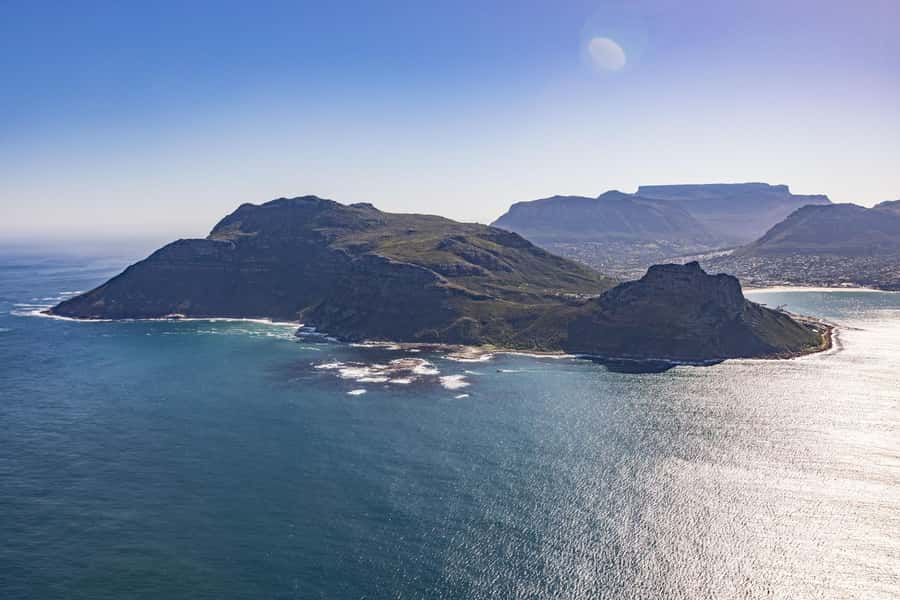
- Two Oceans route: You fly along the Atlantic Seaboard and into views toward the Indian Ocean side, so the coast looks totally different from one direction to the other.
- Pilot commentary: You’re not just sightseeing from the air; you get guided points of interest while you’re up there.
- Table Mountain and city views: The flight is designed to put Cape Town’s landmarks in your line of sight quickly.
- Best-seat tip: If you can influence it, ask about a left-side seat, since that side has been reported as especially good for views (final seating can depend on weight).
- Champagne after landing: A short celebratory pause at the V&A helps the whole thing feel more like an experience than just a quick hop.
Cape Town’s Two Oceans route: why this flight feels special
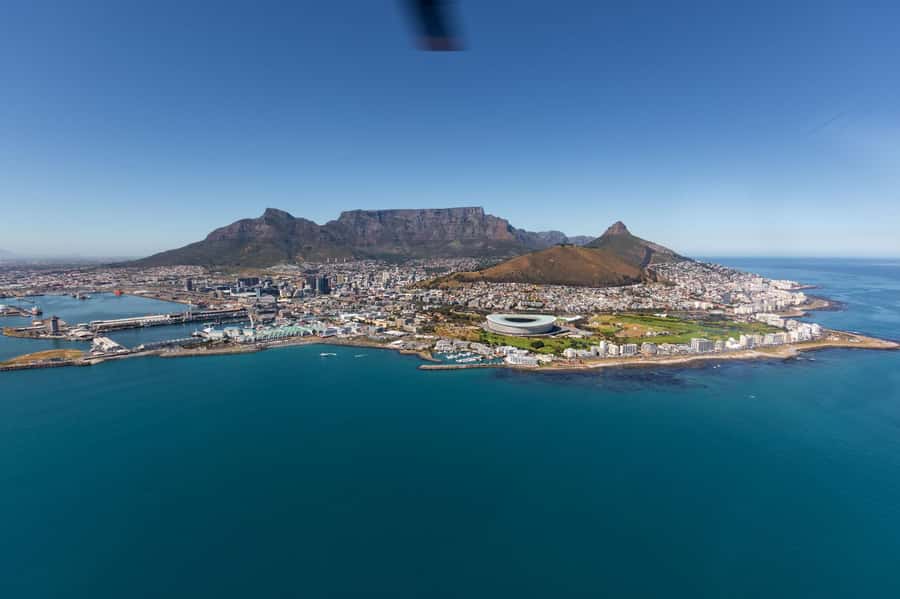
Cape Town can be a little chaotic on the ground. You’ll want to see Table Mountain, the coast, the bays, and the neighborhoods, but traffic and distances make it hard to do everything well in one day. This helicopter ride solves that by acting like a high-speed visual shortcut.
The route is built around the idea of Two Oceans: you get sweeping coastal perspectives across the Atlantic side, then the flight swings through views that look across and toward the Indian Ocean side. From the air, Cape Town’s geography makes instant sense. You’re not just seeing beaches and roads, you’re seeing how the ocean, mountain, and bays fit together like a map you can finally read.
And then there’s Table Mountain. From ground level, it can look scenic but distant. From the helicopter, it becomes the anchor point for everything else—Hout Bay, Chapmans Peak, the sweep of coastline, and the way the city spills into the bays.
You can also read our reviews of more tours and experiences in Cape Town.


Timing and price: what $317 buys you (and what it doesn’t)
At $317 per person for about 27 minutes total, this isn’t a budget activity. But it can be good value if you’re thinking in terms of speed-to-views.
Here’s why: you’re paying for (1) a short, tightly planned flight over Cape Town’s top geography, (2) live pilot guidance so you don’t have to guess what each bay or beach is, (3) included sparkling wine, and (4) operational extras like lockers for your belongings and transport from the V&A area to the helipad. If you’d otherwise spend hours driving and still miss the clearest bird’s-eye angles, the helicopter can feel like the efficient choice.
What it does not buy you is lots of time in the air. Even though the total duration is 27 minutes, you may notice that the real airborne portion feels shorter once you add up boarding and start/stop positioning. If you’re the type who wants a long, slow sightseeing flight, you might want a longer ride on your list. For many people though, this short format is exactly the point: you get the major “wow” shots quickly.
Getting started at Sport Helicopters and the V&A Waterfront helipad
Your experience begins at Sport Helicopter Rides Cape Town. Then you’re taken to the V&A Waterfront helipad area. Before the flight, there’s a short safety briefing—about five minutes.
That briefing matters more than you might think. Helicopters fly differently than airplanes. Small changes in wind and rotor wash can affect how the cabin feels, and it’s helpful to know what to expect right from the start. People have also reported that the pilot keeps things calm and controlled, which is exactly what you want when you’re close to the action above the coast.
Once you’re briefed, the team gets you settled, you store your personal items, and you’re ready to go. The included lockers are a nice touch because you don’t have to carry a bag while you’re waiting.
The Atlantic Seaboard to Hout Bay: your first big “wow” segment
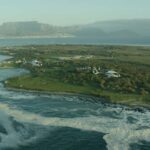
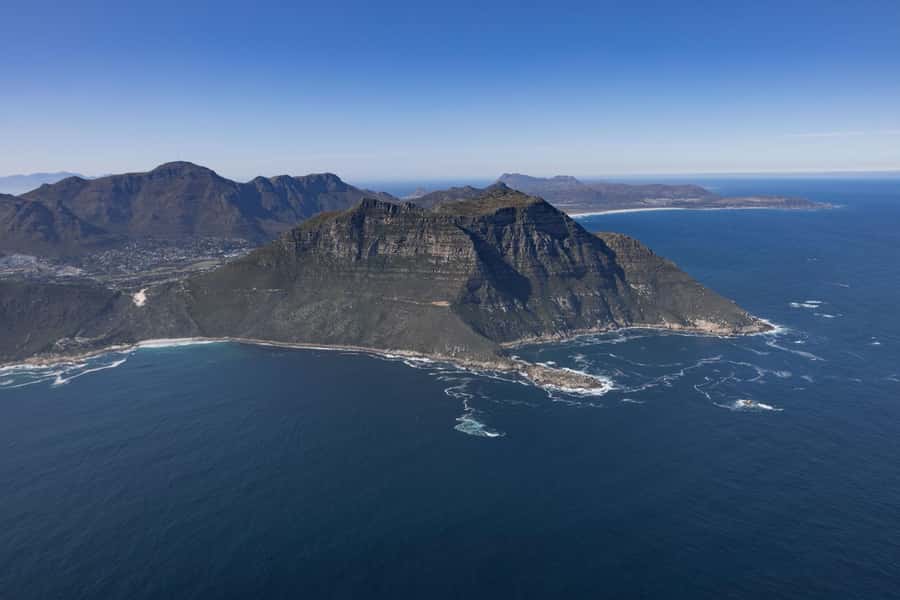
From the start, the helicopter route takes you along the Atlantic Seaboard and down toward Hout Bay. This is one of the best early sections for first-time flyers because Cape Town’s shape begins to show fast.
On the ground, Hout Bay and surrounding coastlines can be hard to place. From above, you instantly see how the coastline curves and how the bay sits relative to the neighborhoods and mountain backdrop. It’s also a calmer moment to orient yourself before the more landmark-heavy bits of the route.
This is also where pilot guidance pays off. The pilot points out what you’re looking at as you go, so you don’t just see coastline—you start mentally tagging places like a map.
Chapmans Peak and False Bay: how to read the coastline from above
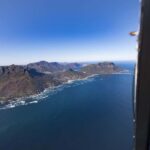
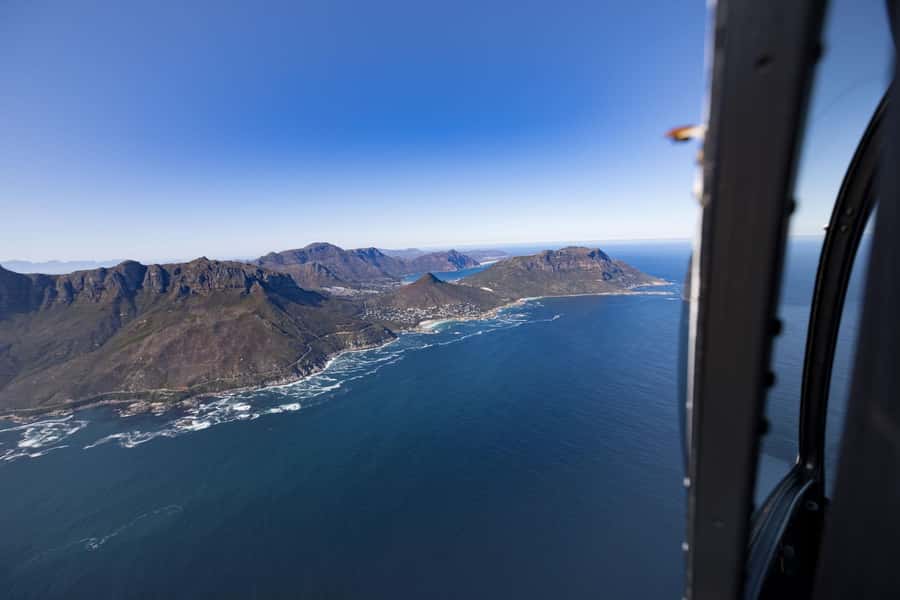
After the Hout Bay area, the route includes Chapmans Peak and then crosses over into False Bay. If you’ve heard of Chapmans Peak before, you’ll understand why it’s famous once you see it from the air. The road twists along dramatic coastal contours, and from above it looks like a line drawn carefully around the edge of land.
False Bay gives a different visual mood. Instead of one long uninterrupted coastline, you get a bay-shaped view where the shoreline changes direction and you can spot the beaches and bends that don’t stand out from street level.
As you fly, the pilot commentary is the difference between random views and meaningful ones. You’ll be able to say, in plain terms, this is the coast that faces this direction, and this is the part of Cape Town that curves into the bay.




Noordhoek, Sun Valley, Groot Constantia, and the city bowl sweep
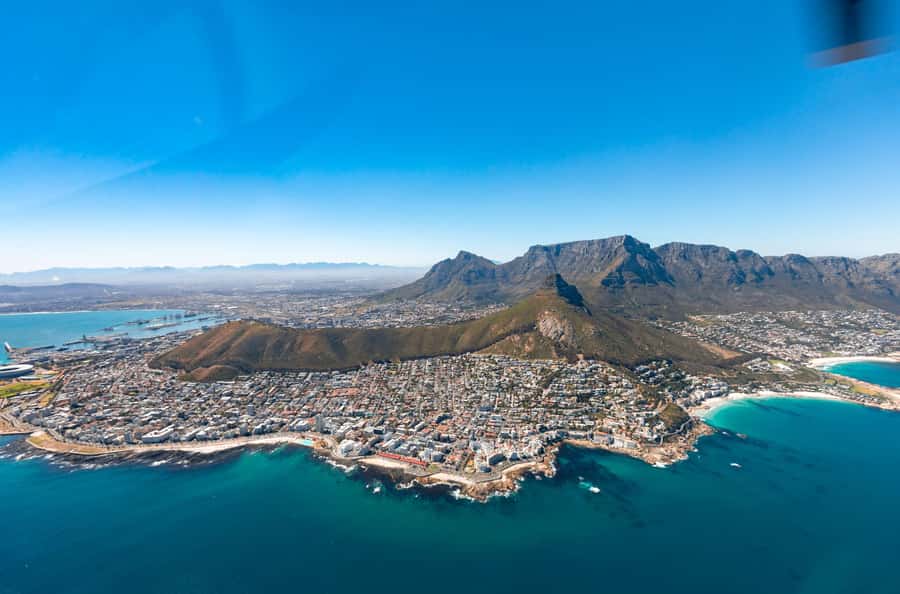
One reason people love this flight is that it covers more than just one scenic patch. You’ll pass over Noordhoek Beach and Sun Valley, then continue toward Groot Constantia and the City Bowl.
Here’s what that means for you on the ground later: when you return to Cape Town, you’ll have a stronger sense of where things are. Groot Constantia is especially interesting from the air because it helps you connect the mountain area to the quieter valleys and estates. The City Bowl segment gives you the sense that Cape Town isn’t just a mountain view—it’s a whole layered city, with neighborhoods spread across terrain rather than sitting flat.
This is also where you’ll likely understand why the route is named after the Two Oceans idea. When you see all these pieces from above—coast, mountain, bays, and city—you stop treating Cape Town like one “main view” and start seeing it as a system.
Table Mountain from the air: the landmark that ties everything together
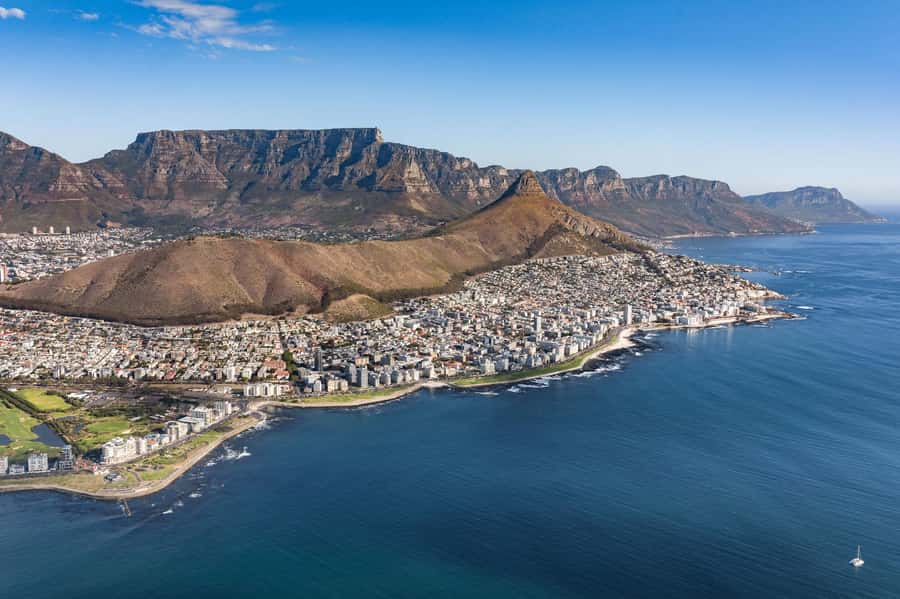
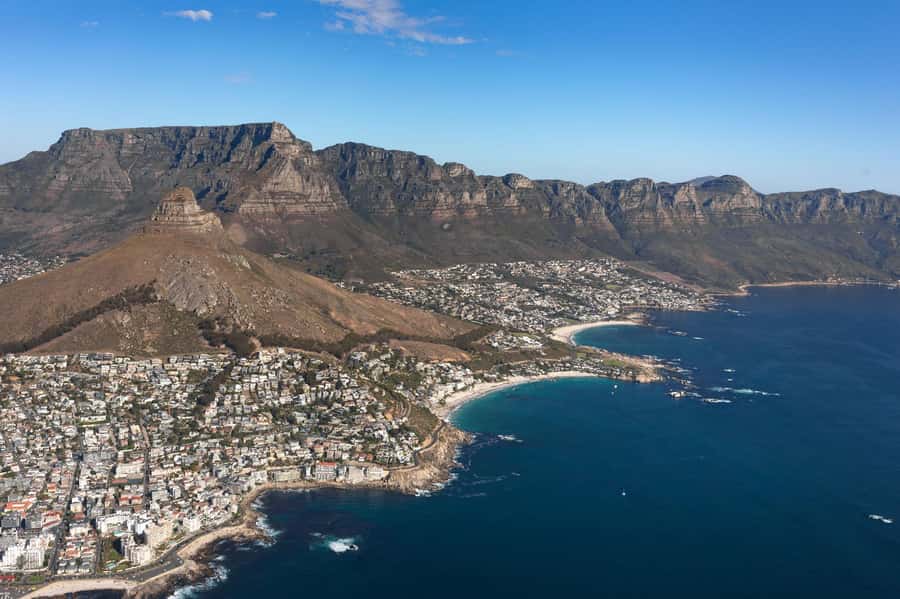
No matter what you normally think of scenic attractions, Table Mountain is the centerpiece here. The helicopter flight is arranged so you get stunning aerial views of it, not a quick glance where it could be anywhere in the frame.
From above, Table Mountain looks massive, but it also looks cleanly connected to the coast. You can see the way routes and neighborhoods relate to the mountain’s shape, and you can appreciate how the shoreline curves around it.
If you’re a photo person, this is where you’ll be happiest you didn’t spend the whole day driving. The helicopter gives you angles that cars simply can’t match.
Muizenberg: the finishing-feel moment before you land
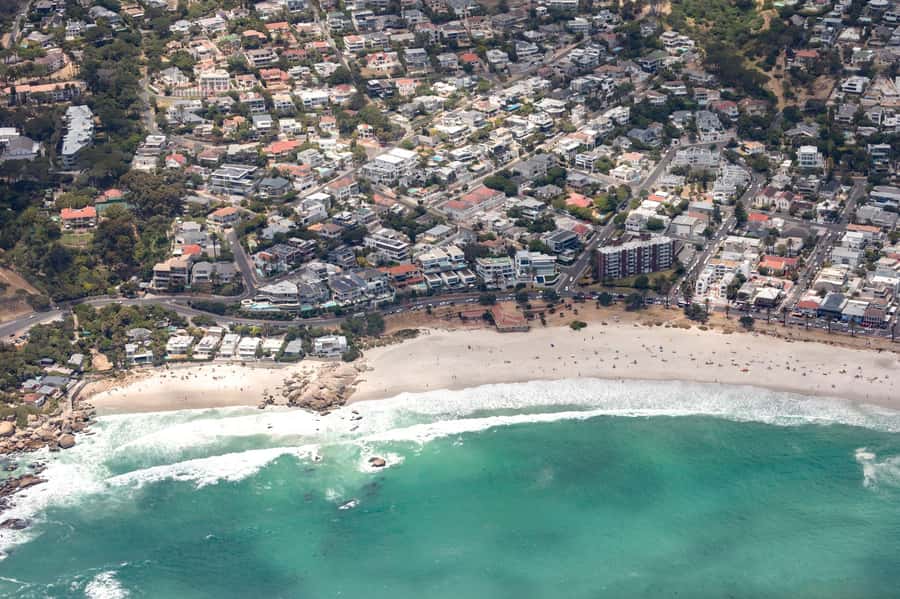
The ride includes Muizenberg, and it’s a nice part of the route because it brings the coast back into focus. Muizenberg is known for being a recognizable coastal area, and from the air it reads like a stretch of Cape Town where the water and shoreline character are very clear.
This segment also works psychologically. By the time you’re here, you’re usually warmed up to what the pilot is doing and how the views unfold. That’s when the flight can feel less like a thrill ride and more like guided sightseeing in the sky.
Then you circle back to the V&A Waterfront area for landing.
Champagne at the V&A: a small pause that makes it feel complete
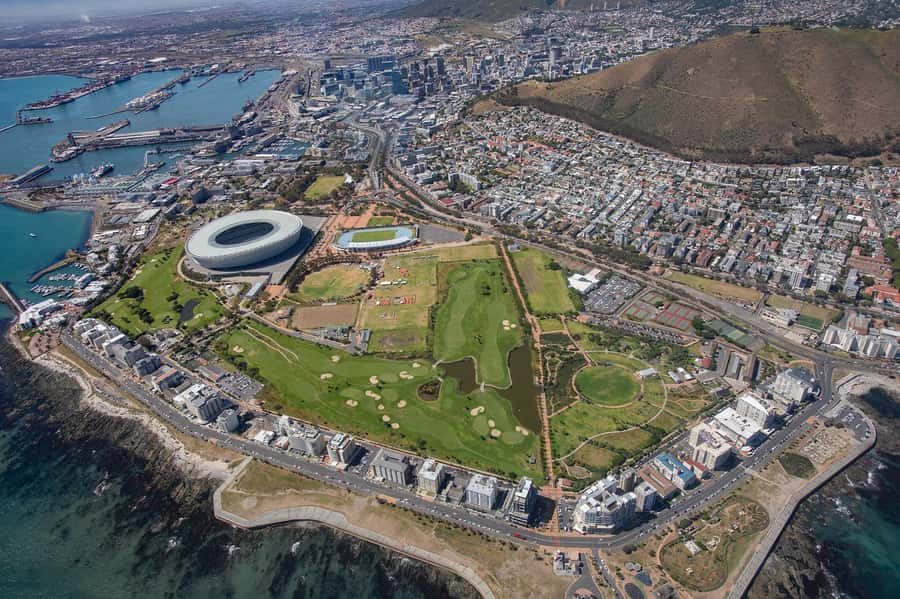
After the flight, you return to the V&A Waterfront and there’s a champagne tasting included, roughly 10 minutes.
This is short, but it adds a real “end cap” to the experience. You’re not just dropping from the air and immediately rushing to the next plan. It’s a moment to settle your nerves, look over any photos while the memory is fresh, and enjoy that you finished the loop.
Sparkling wine is included as part of the post-flight treat, so you’ll have something celebratory even if you don’t make it a full night out.
What you’ll need to know: rules that affect your comfort
This experience has clear rules, and they’re worth reading because they affect what you can bring and how you’ll move around the aircraft.
You should plan for:
- No selfie sticks
- No smoking or vaping
- No loose clothing
- No umbrellas
- No food or drinks in the vehicle
- No alcohol and drugs
- No intoxication
If you’re the kind of traveler who shows up with a bag full of “just in case” items, keep it simple. Wear something comfortable and secure, and leave bulky extras at the hotel. Also, since lockers are provided, you can store personal belongings rather than juggling them while you board.
Best seats, wind, and making the most of a short flight
You don’t control everything on a helicopter, but you can improve your odds for great views.
A practical tip from prior passenger feedback: if you have any influence over seating, ask about sitting on the left side. The reason is simple: the left-side view has been reported as especially good for scenery. Final seat assignments can depend on weight and cabin balancing, so don’t be shocked if it’s not exactly what you asked for.
Wind is another real factor. Feedback emphasizes that pilots can handle gusty conditions smoothly and safely, keeping the flight steady even when the weather isn’t perfect. That’s good to know, because Cape Town’s coastal conditions can shift quickly.
So my advice is to focus on what you can control:
- Choose the time slot you can actually make
- Don’t over-plan complicated connections
- Bring only what you need so you’re not stressed during boarding
Is this worth it for your Cape Town trip style?
This flight is best for you if:
- You want major landmarks without spending hours in a car
- You like the idea of recognizing the geography later when you explore on foot or by taxi
- Your schedule is tight but you still want a memorable experience
It may not be the best match if:
- You’re expecting a long, scenic aerial tour with lots of time aloft
- You’re uncomfortable with restrictions like no selfie sticks and no loose clothing
- You want maximum flexibility for wandering around during the experience (this is structured and time-focused)
Price-wise, I’d treat the helicopter as a splurge that’s easier to justify when you compare it to the time cost of trying to replicate these angles from the ground.
Should you book the Cape Town Two Oceans helicopter flight?
If you’re aiming for one high-impact activity in Cape Town, I think this is a strong option. You get a carefully routed flight over the coast, Table Mountain, and major bays, plus pilot-led commentary and an included champagne moment at the V&A. The cost is real, but the time-to-views is the point.
Book it if you want a short flight that gives you a clean understanding of Cape Town’s geography in one go. Skip it if you’re expecting the entire 27 minutes to be pure airborne time or if you’d rather spend that money on a longer, ground-based day.
If you do book, plan for the short duration, dress simply, and ask about the left-side view if you can.
FAQ
How long is the flight?
The total experience is about 27 minutes, with the helicopter flight itself taking about 24 minutes, plus time for safety briefing and the post-flight tasting.
Where does the tour start?
The experience starts at Sport Helicopter Rides Cape Town, and you’re transported to the V&A Waterfront helipad area.
What happens at the V&A Waterfront before takeoff?
You’ll get a safety briefing there (about 5 minutes) before the helicopter flight.
What drink is included?
Sparkling wine is included after the helicopter flight, and there is a champagne tasting period (about 10 minutes).
Do you get commentary during the flight?
Yes. The pilot provides expert commentary in English, highlighting points of interest and notable landmarks.
Is there live guidance in a specific language?
The live tour guide is English.
What items or behaviors are not allowed?
Smoking, vaping, intoxication, alcohol and drugs are not allowed. You also can’t bring selfie sticks, umbrellas, or food into the vehicle, and loose clothing isn’t allowed.