REVIEW · CAPE TOWN
From Cape Town: Cape Peninsula Scenic Helicopter Flight
Book on GetYourGuide →Operated by Cape Town Helicopters · Bookable on GetYourGuide
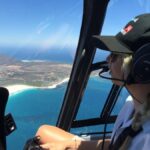
Cape Town looks good from the street. From the air, it’s a whole different planet. This short helicopter flight gives you Cape Town and Table Mountain from above and then pushes on toward the Cape of Good Hope, with dramatic cliffs and bays showing up faster than any drive. The best part I like is how the pilot commentary ties the coastline into a clear story while you’re flying.
The main drawback to think about: you’re in a helicopter, and space is limited. If you’re claustrophobic, have altitude-sickness concerns, or need a very open view, this may not be the right fit—plus your exact sightlines can depend on seating and other passengers’ space needs.
If your priority is getting iconic views in one shot—coastline turns, mountain silhouettes, and the rocky edge where currents and weather meet—this is one of the most time-efficient ways to do it in the Western Cape.
In This Review
- Key things I’d clock before you go
- Why the Cape Peninsula by helicopter feels like a cheat code
- V&A Waterfront helipad: the view before you even notice the rotor noise
- Over the city and down toward the 2010 World Cup venue
- Lion’s Head, Camps Bay, and Clifton beaches from above
- Karbonkelberg Mountain and Hout Bay: where the terrain starts talking
- Cape of Good Hope and the 12 Apostles range: the big photo payoff
- False Bay, changing terrain, and a realistic wildlife moment
- The return route: Constantia Valley vineyards from the sky
- Small group, shared flight, and why seating affects your view
- Weather, timing, and how to keep your plans flexible
- Price and value: is $619 worth 50 minutes in a helicopter?
- What to bring (and what not to bring) for a smoother flight
- Comfort and safety: who this is (and isn’t) for
- Should you book this Cape Peninsula helicopter flight?
- FAQ
- Where does the flight depart and land?
- How long is the helicopter flight?
- What’s included in the price?
- Is pick-up or drop-off included?
- Are there any extra costs for video?
- Do I need to bring my passport?
- What should I bring with me?
- Who should not book this flight?
Key things I’d clock before you go
- V&A Waterfront takeoff views: you lift off with the Mother City and Table Mountain immediately in frame.
- A true “down-coast” route: you’re not just hovering over the city—you track the peninsula’s highlights.
- Photo-ready moments: the flight is paced so you can stop for photos at key viewpoints like Cape of Good Hope.
- Small-group setup (up to 6): calmer in-cabin vibe and less scrambling for window angles than bigger groups.
- Weather can shift everything: strong wind days can change timing, sometimes with rescheduling.
- Weight checks matter: there’s a discreet weigh-in, and weight restrictions can affect flight plans.
Why the Cape Peninsula by helicopter feels like a cheat code

You can tour the Cape Peninsula by car and still have a great day. But a helicopter compresses distances so you’re seeing the Cape’s shapes—headlands, bays, and mountain ridgelines—in a way that feels immediate. In 50 minutes, you get a “whole map in motion” view of the peninsula’s geography.
I also like that you’re not left guessing. There’s in-flight commentary from your pilot, plus an English audio guide, so the scenery has context instead of just being pretty shapes in a blur.
You can also read our reviews of more tours and experiences in Cape Town.


V&A Waterfront helipad: the view before you even notice the rotor noise
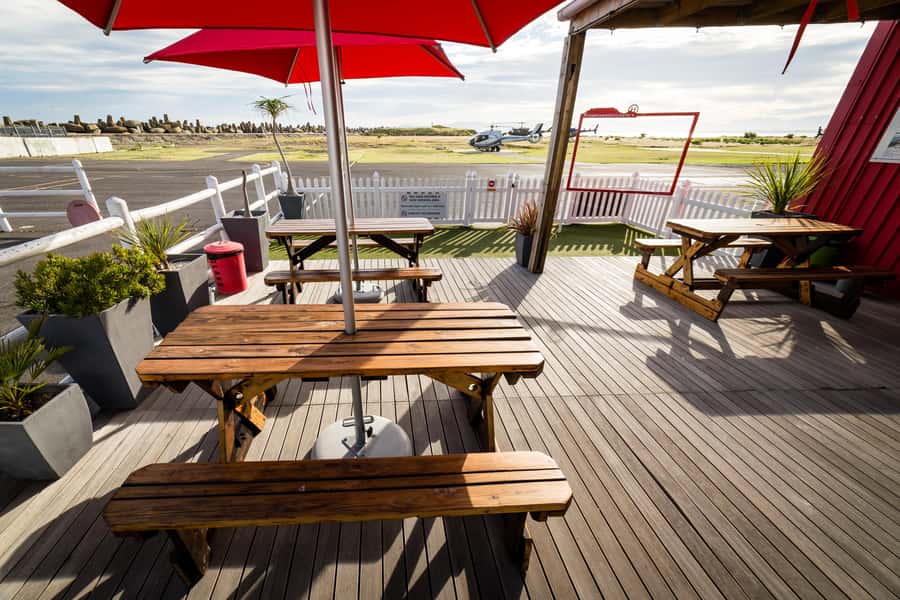
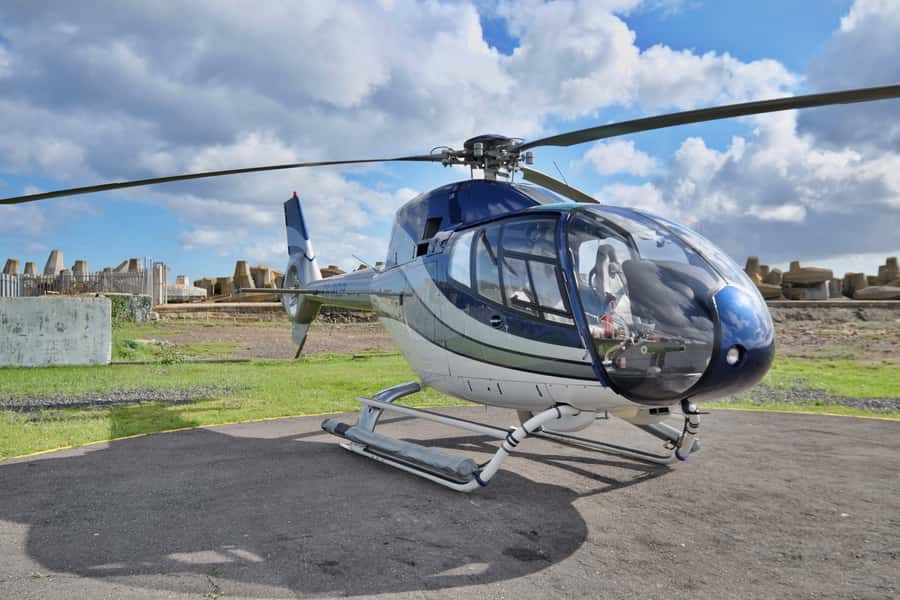
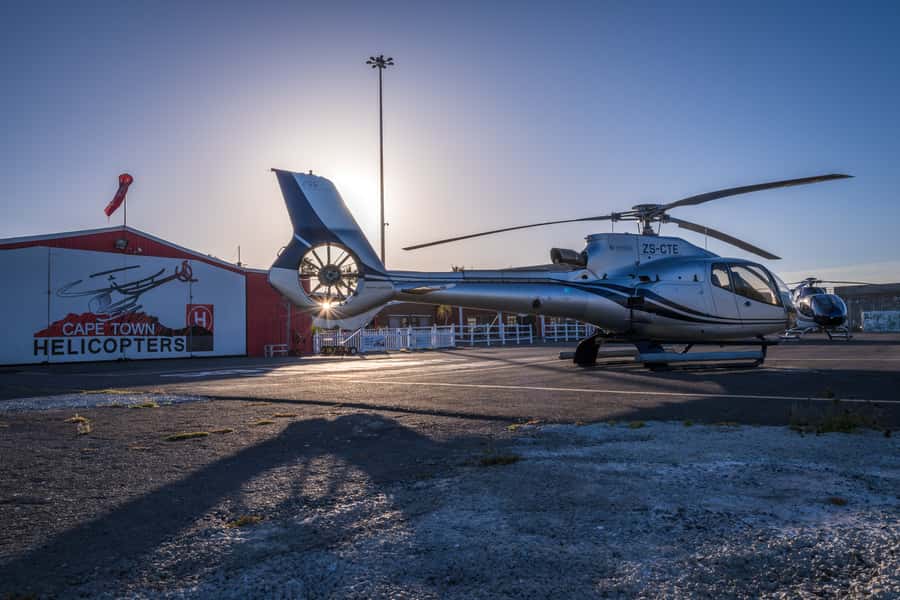
Your flight starts at the V&A Waterfront Helipad, so you get city energy right away. Expect the first moments of flight to focus on Cape Town’s big landmarks from above—especially Table Mountain and the surrounding neighborhoods. Even before you move down the coast, you’ll quickly get the lay of the land: where the mountains sit against the city, and how the coast wraps around the peninsula.
You’ll also want to be ready for the pre-flight flow. On the day of your flight, you’ll present your ticket at the check-in counter. After that, you’ll get a safety briefing and receive a boarding pass. There’s also a discreet weigh-in for each guest, and flight times are approximate and can shift with weather and weight rules.
Over the city and down toward the 2010 World Cup venue
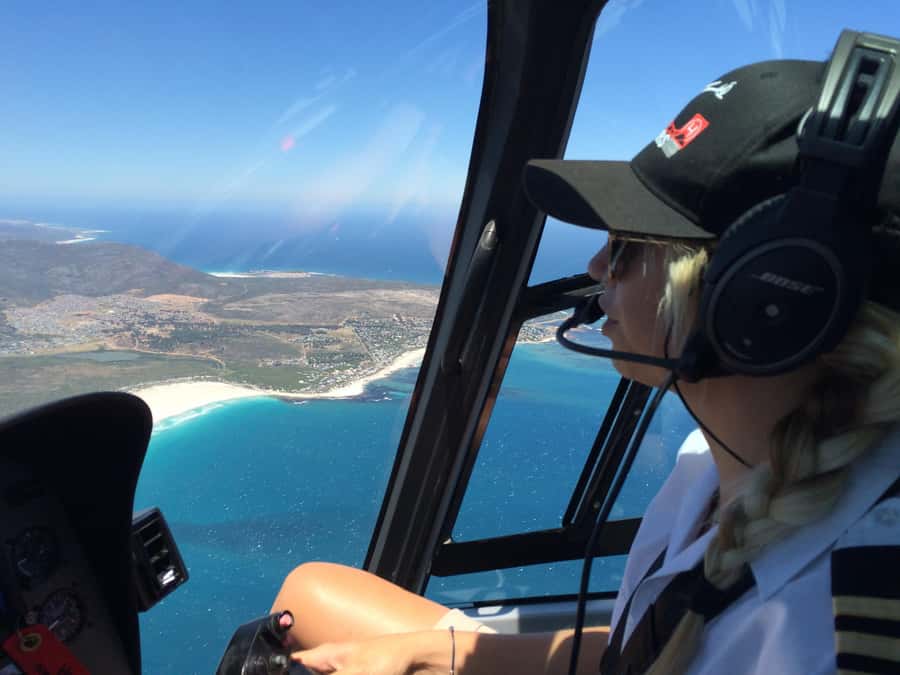
Once you’re airborne, you’ll glide over the waterfront area and head toward the sights that anchor Cape Town’s modern identity—up to and including the 2010 World Cup venue area. From the air, you can actually understand why people talk about Cape Town’s setting so much: the city isn’t sitting on flat ground. It’s wrapped around steep terrain and meeting the ocean fast.
Then the route begins to commit to the “peninsula story.” As you move away from the central city, the coastline stops looking like a shoreline and starts looking like a system—curves, cliffs, and pockets of beach.
Lion’s Head, Camps Bay, and Clifton beaches from above
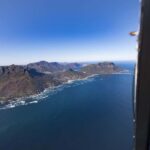
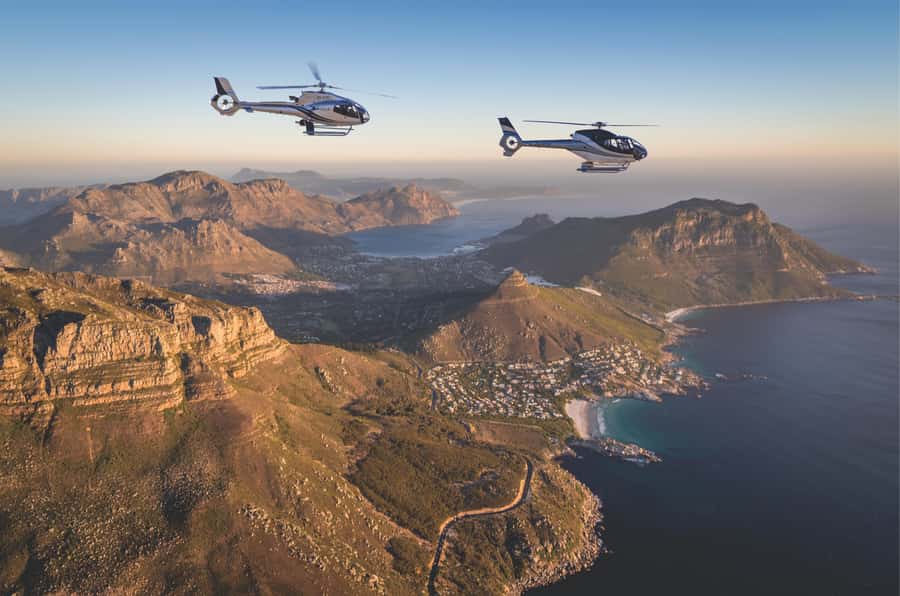
This is where the flight earns its keep. Watching the Cape Peninsula from the air turns well-known viewpoints—like Lion’s Head, Camps Bay, and the Clifton beaches—into clear visual patterns.
From above, you can spot how the mountains funnel the coastline into different moods:
- some stretches feel open and exposed,
- others tuck into bays,
- and the beach sections look like bright breaks in darker rock.
If you’re the kind of person who likes to line up what you see on the ground with what you see on a map, this part helps you get your bearings fast—and that makes any later time on the peninsula easier to enjoy.
Karbonkelberg Mountain and Hout Bay: where the terrain starts talking
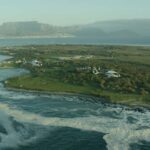
After the Clifton-Camps Bay area, the flight shifts toward more rugged edges—around Karbonkelberg Mountain and into the Hout Bay side of the peninsula, with the Cape Nature Reserve area appearing along the way.
This portion matters because Cape Town’s beauty isn’t only beaches. The peninsula’s dramatic relief is what gives you those famous silhouettes. From the air, you’ll see how quickly the terrain changes, and you’ll start to notice why storms and winds feel so real here: the geography funnels weather and affects what you see over the water.




Cape of Good Hope and the 12 Apostles range: the big photo payoff
As you approach the Cape of Good Hope, the flight becomes more than scenic—it becomes iconic. You’ll be in position to take photos, and you’ll see the terrain transition into the more stark, rocky character the Cape is known for.
One of the stated highlights is the 12 Apostles mountain range area. From the helicopter, these peaks stand out as a sequence rather than a single “view spot.” It’s the difference between visiting a postcard and seeing how the postcard was made.
This section is also visually useful even if you don’t have deep knowledge of the region’s ecology. You’ll be able to tell where the coastline becomes more broken and where the ocean-facing side starts dominating the scene.
False Bay, changing terrain, and a realistic wildlife moment
After Cape of Good Hope, the flight looks toward False Bay. This is where the scenery can feel noticeably different—more open water emphasis, and a clearer sense of how the peninsula separates two coastal worlds.
The experience also includes a chance to look for great white sharks in the ocean. Here’s the honest take: you’re not guaranteed wildlife. What you are getting is a guided scan of where the conditions might support what you’re hoping to see, from a high vantage point where you can cover ground quickly.
If you’re serious about sharks as a goal, the helicopter view can still be worth it even without a sighting—because the coastline and water conditions are part of the story.
The return route: Constantia Valley vineyards from the sky
On the way back, you’ll travel to the other side of Table Mountain and pass over Constantia Valley vineyards before landing back at the V&A Waterfront helipad.
This part works as a satisfying contrast. You’ve spent the flight seeing coastlines, rocky edges, and exposed water. Then you get agricultural patterns—cleaner shapes, a different texture to the land, and a calmer visual rhythm. It’s the kind of view that helps you remember Cape Town isn’t only cliffs and beaches. It’s also a working landscape that wraps around the mountain spine.
Small group, shared flight, and why seating affects your view
This is listed as a shared helicopter flight with a small group limited to 6 participants. In practice, that usually means:
- less cabin crowding,
- fewer delays during boarding,
- and easier conversation with the pilot for questions you might have.
There’s also a real-world consideration: if the group is bigger, you can be split into two or more helicopters. That’s normal for operations, but it means your exact flight experience could vary slightly from someone on a different helicopter.
And then there’s the view issue. One documented concern involved limited visibility due to other passengers’ space needs, so I’d plan for the fact that your seat position can change how much you see through the window. If “every second must be perfect for photos” is your main goal, aim to check in early and follow staff instructions closely so you get the best possible placement.
Weather, timing, and how to keep your plans flexible
The Cape’s weather can change quickly, and this activity is specifically subject to conditions and weight restrictions. Flight times are approximate, so you should treat the day like a “window,” not a fixed minute on your itinerary.
A helpful real example: on a strong-wind day, one flight was rescheduled smoothly to a later date. That’s encouraging, but it also tells you the safest move is to avoid stacking your day with tight, non-negotiable reservations right around your planned departure.
Price and value: is $619 worth 50 minutes in a helicopter?
At $619 per person for a 50-minute flight, you’re not paying for time on a schedule—you’re paying for access to a very specific viewpoint: the Cape Peninsula’s shape at speed. You’re also paying for cost-heavy logistics you don’t see as a passenger: fuel, aircraft operation, and the routing that gets you from Cape Town’s coastline to Cape of Good Hope and back.
So the “is it worth it?” question becomes:
- If you want the peninsula in one coherent aerial loop, it can be worth it.
- If you’re happy with viewpoints by car and short walks, you might get a similar feeling over a longer day at a lower outlay.
I’d personally frame it like this: helicopter time here is about compression. It turns multiple drives and viewpoint stops into one flight where everything connects.
What to bring (and what not to bring) for a smoother flight
For a calm and camera-ready experience, bring:
- Sunglasses
- A camera
- A charged smartphone
You’ll also want to dress for wind on an open-air feel around the helipad even if you’re inside the helicopter. The goal is simple: be ready to shoot quickly when the best angles line up.
Not allowed:
- Smoking
- Selfie sticks
- Alcohol and drugs
That rules out common “vacation chaos,” which is good. It makes it easier for everyone to focus on the view and the safety rules.
Comfort and safety: who this is (and isn’t) for
This isn’t just a sightseeing ride. It’s an aircraft experience with constraints.
Not suitable for:
- People with claustrophobia
- People with altitude sickness
- People over 350 lbs (159 kg)
If any of those apply, I’d skip this and choose a ground-based Cape Peninsula tour instead, where you can control space and movement more easily.
Wheelchair accessibility is listed, so if you use a wheelchair, it’s worth planning around staff guidance on-site and being ready for the check-in and boarding flow.
Should you book this Cape Peninsula helicopter flight?
I think you should book if you want:
- a fast, high-impact way to see Cape Town + the Cape of Good Hope area without spending an entire day in transit,
- aerial context that helps you understand the peninsula’s geography,
- and an experience paced for photos, with English pilot commentary and audio support.
I’d hold off if you’re:
- claustrophobic or prone to discomfort in confined spaces,
- sensitive to altitude-related feelings,
- or trying to keep every moment perfectly scheduled despite weather uncertainty.
If you do book, treat it as a “best views first” plan. Then, build the rest of your day around flexibility. That’s how you turn a short flight into a highlight instead of a stress test.
FAQ
Where does the flight depart and land?
It takes off and lands at the V&A Waterfront Helipad.
How long is the helicopter flight?
The duration is 50 minutes.
What’s included in the price?
A shared helicopter flight, aerial views from the planned points, and in-flight commentary from your pilot. You also get a live tour guide in English and an English audio guide.
Is pick-up or drop-off included?
No. You need to go to the designated meeting point yourself.
Are there any extra costs for video?
An in-flight HD video package is not included, but it may be available to purchase at the base.
Do I need to bring my passport?
Yes. A valid original passport is required upon check-in for all travelers.
What should I bring with me?
Bring sunglasses, a camera, and a charged smartphone.
Who should not book this flight?
It’s not suitable for people with claustrophobia, people with altitude sickness, and people over 350 lbs (159 kg).