REVIEW · CAPE TOWN
Cape Town Helicopter Tour: Atlantic Coast
Book on Viator →Operated by Cape Town Helicopters · Bookable on Viator
Table Mountain looks different from the air. This Atlantic Coast helicopter tour gives you a fast, high-level view of Cape Town’s famous mountains from multiple angles, plus the shoreline spread out below. It’s a quick bucket-list hit that helps you see the city layout in a way photos just don’t.
I especially like the V&A Waterfront departure and the live narration from your pilot. You’ll fly over the working harbor, then circle landmarks like Lion’s Head and Table Mountain while someone explains what you’re looking at. One important consideration: if clouds roll in, visibility can be limited, and that can turn the trip from wow-factories into just decent sightseeing.
In This Review
- Why This Helicopter Ride Works So Well Over Cape Town
- How the Atlantic Coast Route Feels in Just 20 Minutes
- Getting to the Helipad: Pickup, Bags, and the Easy Start
- City Bowl to Table Mountain: The View That Makes the Cost Make Sense
- Lion’s Head, Signal Hill, and Cape Town Stadium From Above
- Atlantic Seaboard Beaches: Camps Bay, Clifton, Llandudno, and More
- Robben Island and Whale Spotting: When the Air Adds Extra Magic
- Hout Bay Harbour Return: The Practical Ending That Feels Like the Whole Point
- Price and Value: Is $211.65 for 20 Minutes Fair?
- Seating, Safety, and the One Frustration to Watch For
- Who This Tour Suits Best (and Who Should Rethink It)
- Should You Book the Cape Town Helicopters Atlantic Coast Tour?
- FAQ
- How long is the Atlantic Coast helicopter flight?
- Where does the tour start and end?
- Is hotel pickup included?
- What’s included in the price?
- What sights will I see during the flight?
- Can I bring bags or a handbag?
- Is the helicopter ride shared with other passengers?
- Is there a weight limit?
- What happens if weather is bad?
Why This Helicopter Ride Works So Well Over Cape Town
- V&A Waterfront takeoff: You lift off right from the city center’s iconic harbor area.
- Table Mountain from all sides: Instead of looking at it from one street view, you get a full circuit perspective.
- A clean “map view” of the City Bowl: Mountains frame the city like a natural amphitheater.
- Atlantic coast highlights on one loop: Camps Bay, Clifton Beach, Llandudno Beach, and the Twelve Apostles show up from above.
- Shared flight, shared tradeoffs: It can be max 6 per helicopter and seating is based on weight and balance.
How the Atlantic Coast Route Feels in Just 20 Minutes
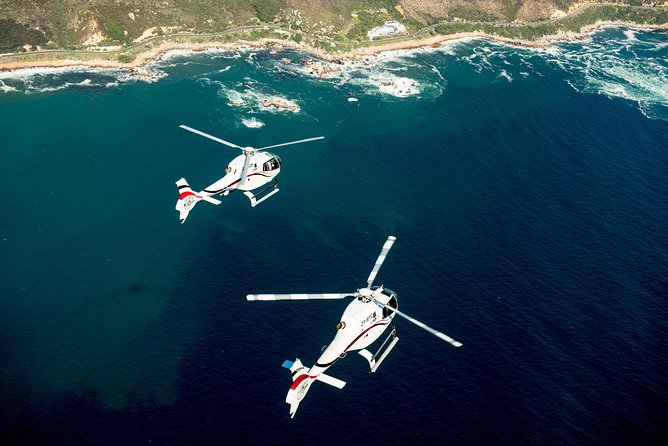
This tour is short by design, and that’s part of the value. You get around 20 minutes of flight time with a route that hits Cape Town’s most recognizable geography—mountains, city bowl, and the Atlantic shoreline—without the hours of driving between viewpoints.
The best way to think about it: this is your aerial “orientation lesson.” In a single ride, you learn where the beaches sit relative to Table Mountain and how the peninsula stretches toward Hout Bay. Then, when you go back on the ground, your day makes more sense.
Also, the live commentary matters. A good pilot doesn’t just point at famous spots; they help you connect the dots—what neighborhood sits where, why the mountains look the way they do, and what to look for as you pass over.
You can also read our reviews of more tours and experiences in Cape Town.



Getting to the Helipad: Pickup, Bags, and the Easy Start
Your flight starts either from your hotel pickup or at the V&A Waterfront’s helipad in the city center. That convenience is real. Cape Town can be spread out, and losing time to logistics before you even fly is the kind of annoyance you don’t need when you only have 20 minutes in the air.
One small rule can surprise people: no handbags or carry-on bags on the flight. Lockers are available for free, so it’s not a big problem—just plan to travel light for the actual boarding moment. Personal cameras, video cameras, and binoculars are allowed.
You should also know the flight is typically shared with other passengers (the helicopter seats up to 6). That affects your experience in two ways: you’re not getting a private guide in the cabin, and seating can shape your view more than you’d expect.
City Bowl to Table Mountain: The View That Makes the Cost Make Sense
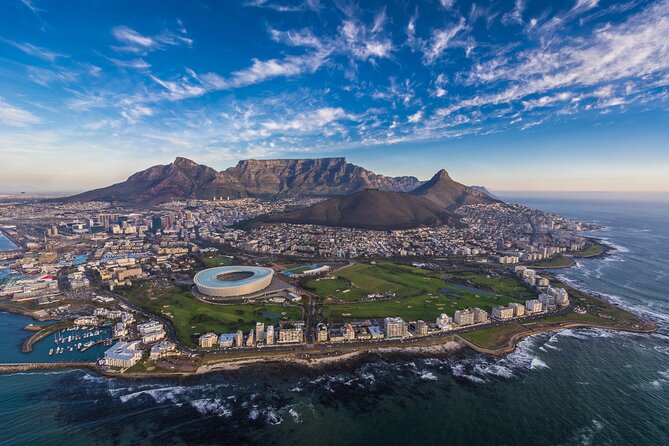
Once you’re up, the first big payoff is the City Bowl. From the air, the city’s “amphitheater” shape becomes obvious—the mountains act like walls and Table Mountain looks less like a single landmark and more like an entire system.
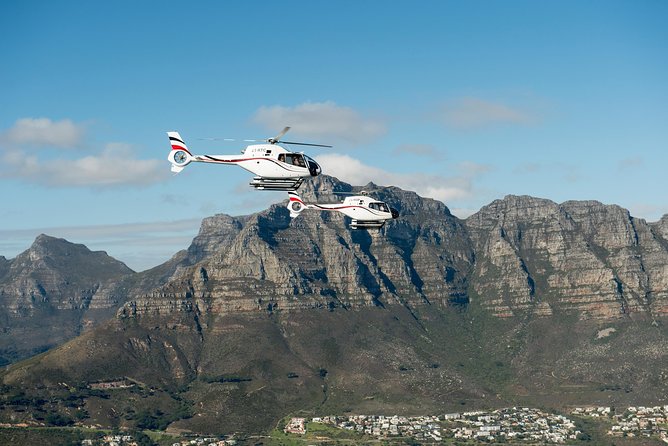
Then you circle Table Mountain. That’s the moment the tour is built around. From above, you see patchwork colors and terrain texture—greens and browns on the mountain side set against the deep blue of the Atlantic.
There’s also a smart science angle here. Table Mountain is known as a place with the world’s richest floral kingdom that’s also remarkably small in scale. You’ll hear it as a factoid and then, if you glance down as you fly, it helps you understand why botanists get excited. It’s not just scenery; it’s a very specific ecosystem.
If you’re wondering whether you should just watch Table Mountain from land viewpoints instead: this is the difference. On the ground you get one or two angles. In the air you get multiple sides in one continuous loop.
Lion’s Head, Signal Hill, and Cape Town Stadium From Above
After the City Bowl and Table Mountain moment, your route keeps stacking famous landmarks without wasting motion.
You’ll fly past Lion’s Head and Signal Hill, which sit beside Table Mountain. Seeing them from the air helps you understand how these hills shape sightlines and neighborhood layouts. It’s also one of the easiest ways to pick out where you’ll want photos later, because you start recognizing the mountain “siblings” rather than treating them as a single mountain.
You’ll also spot Cape Town Stadium, built as one of the host venues for the 2010 FIFA World Cup. It’s not just a landmark to glance at. From the air, stadium placement makes more sense—you can see how it sits within the broader city geography and how close it is to the mountain frames.
This section is where the live commentary earns its keep. When your pilot points out what’s behind the mountain ridge or how the slopes drop toward the coast, you learn faster than you would by reading signs later.
Atlantic Seaboard Beaches: Camps Bay, Clifton, Llandudno, and More
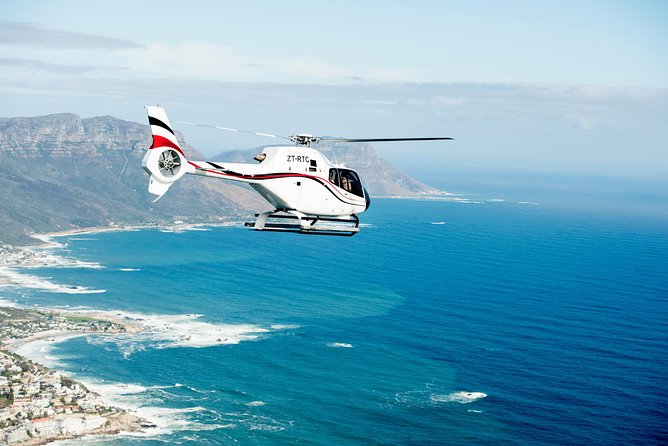
Now you shift from mountains and city shape to the coast—the part that sells the “Atlantic Coast” name.
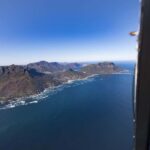
As you follow the coastline, you’ll look down toward Camps Bay, where the view often feels like a magazine spread: white sand, shoreline curves, and the mountains sitting right behind the beach. You’ll also pass near Clifton Beach and Llandudno Beach, which are known for their different shoreline character. From above, you can see how the beach coves relate to the peninsula’s shape instead of just standing on one strip of sand.
You’ll also notice the Twelve Apostles mountain range along the Cape Peninsula. It’s one of those features that seems simple from land—just mountains in the background. From the air, the range reads like a lineup along the coast, which makes it much easier to understand why that stretch is so famous.
There’s a good chance your pilot mentions Karbonkelberg Mountain before you head toward Hout Bay Harbour. Even if you can’t place it yet, seeing it helps you build a mental map of the whole peninsula arc.




Robben Island and Whale Spotting: When the Air Adds Extra Magic
The route includes a potential glimpse of Robben Island if conditions are clear. It’s not guaranteed in the info you have here, but it’s one of those “worth watching for” moments. If you’re the type who loves history, it can make the flight feel like more than just views.
And then there are the moments people remember for years: in some flights, the pilot has reportedly spotted humpback whales, including sightings described as a whale with a baby. You can’t count on that kind of encounter, but the important takeaway is this: your pilot is actively scanning the water while you’re flying along the Atlantic edge. That’s part of why the commentary is more than trivia.
Hout Bay Harbour Return: The Practical Ending That Feels Like the Whole Point
As you near the end, you’ll head toward Hout Bay Harbour. From above, a busy fishing harbor has a totally different look. You can see the working shape of the harbor area and how it connects to the coastline.
Hout Bay is known for an active fishing scene—tuna, snoek, and crayfish are all part of the established industry people associate with the bay. You don’t need to be a seafood nerd to enjoy this part. The aerial view helps you understand why this harbor matters: it sits where the geography allows boats and weather patterns to connect to life on shore.
After roughly 18 minutes of flying time, you return toward the V&A Waterfront helipad. That’s a quick ending, but it matches the tour style: you finish the loop while the best views are still fresh, not after dragging it out.
Price and Value: Is $211.65 for 20 Minutes Fair?
At $211.65 per person, this is not a budget activity. But it can feel like good value if you treat it correctly.
Here’s the value math that actually matters:
- You’re buying time-efficient access to multiple top sights that are hard to connect in one day by car.
- You get live pilot commentary, which turns the flight into education instead of just “seat time.”
- You get pickup, so you aren’t juggling taxis right before takeoff.
- The route focuses on Cape Town’s most recognizable landmarks: Table Mountain, City Bowl, Lion’s Head, Camps Bay/Clifton/Llandudno, Twelve Apostles, and Hout Bay.
The main reason it’s worth it for many people is that this flight helps you decide what to do next. After you understand the layout from above, you can plan ground time with more confidence—especially if it’s your first visit.
If you’re hoping for a long, slow “air tour” with lots of circling and lingering, you may feel the time is tight. Even positive feedback often comes with the same theme: it’s amazing, but it’s still just 20 minutes. If you want more time in the air, it’s worth asking about longer options when you book.
Seating, Safety, and the One Frustration to Watch For
This part is worth taking seriously, because it can shape your experience more than you expect.
The helicopter is designed for up to 6 passengers, and seating is allocated based on weight and balance. That’s for safety, and it also means your party might not all sit in the exact way you’d choose.
There’s also a reported tradeoff: cinema-style seating is intended to help views no matter where you sit, but if you end up in a less favorable seat, your sightlines can be partially blocked. One review described being placed in a middle seat in the second row in a mixed party situation, which reduced the view quality for at least one person. That’s a real consideration.
If view quality is your top priority—more than just taking the flight—you might want to ask whether private flights are available so you can choose seating within the helicopter’s constraints (this kind of option is mentioned in company replies you can find when booking).
On the safety side, lots of praise mentions professionalism and feeling safe, which is exactly what you want to hear for something like a helicopter ride.
Also: there’s a total weight per passenger limit of 276 lbs. If you’re near that range, double-check before booking.
Who This Tour Suits Best (and Who Should Rethink It)
This is ideal if you:
- Want a first-day orientation of Cape Town’s geography
- Love skyline views but don’t want to bounce between multiple viewpoints all day
- Are traveling with family and want one high-impact activity that’s easier than driving a full circuit
- Prefer guided interpretation, not just looking out a window
It’s less ideal if you:
- Hate the idea of weather affecting visibility (clouds can reduce what you can actually see)
- Want a long flight rather than a tight loop
- Are extremely sensitive to seating position and what your exact view looks like
One detail that can pleasantly surprise you: some flights run with fewer passengers than the max, which can feel more open and personal inside the cabin.
Should You Book the Cape Town Helicopters Atlantic Coast Tour?
If your goal is to see Table Mountain, the City Bowl, and the Atlantic coastline in one short window, this is a strong yes. The route is efficient, the live pilot narration is part of the value, and the visuals are the kind you’ll keep talking about long after you’re back on land.
Book it if:
- You have at least a little flexibility with weather and timing
- You want the best “map view” of Cape Town quickly
- You like being shown where things are rather than guessing from the ground
Think twice if:
- You’re traveling specifically for perfect visibility and can’t tolerate clouds
- You’re hoping for a longer-than-20-minute aerial experience
If you do book, go in with the right mindset: this is a sharp aerial highlight reel. The payoff is seeing how Cape Town’s mountains and coastline connect—and then using that knowledge to enjoy the rest of your trip.
FAQ
How long is the Atlantic Coast helicopter flight?
The flight is about 20 minutes (approx.).
Where does the tour start and end?
The experience starts at Cape Town Helicopters, 36 E Pier Rd, Victoria & Alfred Waterfront, and ends back at the meeting point.
Is hotel pickup included?
Yes. Hotel pick-up is included.
What’s included in the price?
The price includes the flight, live commentary on board, and hotel pick-up.
What sights will I see during the flight?
You’ll fly over Cape Town’s V&A Waterfront harbor, City Bowl, and Table Mountain (circling it). You’ll also see Lion’s Head, Signal Hill, Cape Town Stadium, the Atlantic Seaboard including Camps Bay, Clifton Beach, and Llandudno Beach, plus Twelve Apostles and Hout Bay Harbour.
Can I bring bags or a handbag?
No handbags or carry-on bags are allowed on the flight. Free lockers are available.
Is the helicopter ride shared with other passengers?
Yes. Helicopter tours may be shared with other parties, and helicopters seat up to 6 people.
Is there a weight limit?
Yes. The total weight per passenger is 276 lbs.
What happens if weather is bad?
This experience requires good weather. If it’s canceled due to poor weather, you’ll be offered a different date or a full refund. You can cancel for a full refund if you do so at least 24 hours before the experience start time.