REVIEW · KATHMANDU
Everest Base Camp helicopter tour with landing
Book on Viator →Operated by Adventure Master Trek · Bookable on Viator
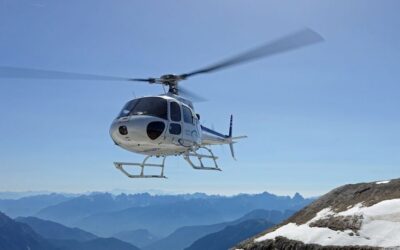
Everest Base Camp by helicopter feels unreal. I love the Everest Base Camp landing and the altitude-focused safety checks, including an oximeter to monitor pulse and oxygen saturation. You’re in a private helicopter with expert guidance, flying past Everest’s big-name neighbors like Lhotse and Nuptse.
The main thing to think about is cost and conditions: the total out-of-pocket can rise with permits, airport tax, and breakfast, and the day runs only with good weather. If visibility is bad, your flight may get moved or refunded, so you’ll want some schedule flexibility when you book.
In This Review
- Key Highlights Worth Booking For
- Everest Base Camp by Helicopter: What This Day Really Delivers
- Price and Logistics: Budgeting Beyond the $1,600
- The 5:30 AM Start: Getting From Kathmandu to Your Helicopter
- Lukla and the Everest Gateway: A Quick Hit of Reality
- Kala Patthar Flyover: Reading the Peaks From Above
- Syangboche and the Everest View Hotel Area: A Scenic Break With Meaning
- The Everest Base Camp Landing: Why This Is the Whole Point
- Safety and Comfort: The Included Gear That Matters
- The Pilot and the On-the-Ground Team: Where Smoothness Comes From
- Who This Tour Fits Best (and Who Might Reconsider)
- Weather Reality: Why Your Morning Matters
- Should You Book This Everest Base Camp Helicopter Landing Tour?
- FAQ
- What time does the Everest Base Camp helicopter tour start?
- Where do we meet for the tour?
- How long is the tour, and how much flight time is included?
- Does this tour include a landing at Everest Base Camp?
- What is included in the price, and what extra costs should I budget for?
- How does the tour handle altitude safety during the flight?
- Is the helicopter private, and how many people can go?
- What happens if the weather is poor?
Key Highlights Worth Booking For
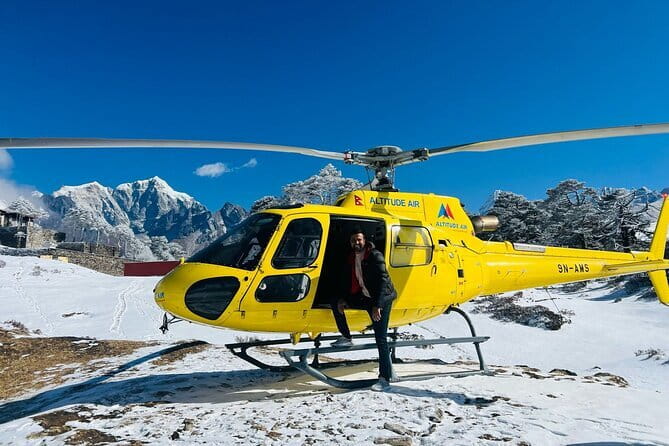
- Everest Base Camp landing: you’re not just looking at the region from above
- Oximeter and oxygen support: pulse and oxygen saturation checks, plus oxygen tank service fees and first-aid coverage
- Private helicopter size (up to 5 people): a calmer, more controlled day than you’d get on larger aircraft
- Major-view route: flights that include views of Everest, Lhotse, Nuptse, and a Kala Patthar flyover
- Small “wow” stops: refueling and viewing moments that keep the day varied instead of one long blur
- Syangboche dining stop: access to the Everest View Hotel area for a special meal/picnic moment
Everest Base Camp by Helicopter: What This Day Really Delivers
This is for people who want the Everest region payoff without spending weeks trekking uphill. In one morning, you trade slow altitude gains for a fast, high-altitude aerial route, with a genuine landing at Everest Base Camp. The difference matters: when you step out at Base Camp, the place stops being a postcard and starts being a real site at a real altitude.
I also like that the operator builds in altitude awareness tools rather than treating it like a thrill ride. An oximeter is included to check your pulse, oxygen saturation, and heart rate, and you also get oxygen-tank and first-aid kit service fees covered. That combo gives you a calmer feeling, especially if you’re heading up quickly and don’t have time to acclimatize the traditional way.
You’ll be traveling with a maximum of five people per helicopter ride. That small size doesn’t just mean comfort. It usually means fewer logistics headaches, easier communication, and more room for the pilot and guide to manage the day around weather.
You can also read our reviews of more tours and experiences in Kathmandu.
Price and Logistics: Budgeting Beyond the $1,600
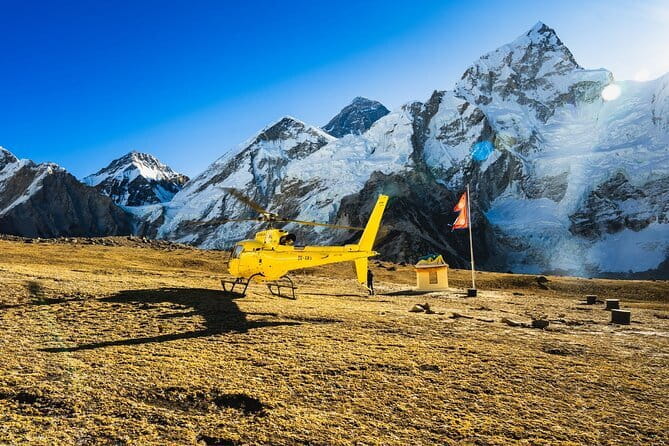
Yes, the advertised price is $1,600 per person. But for a trip like this, what you really care about is your all-in total. This tour has some key inclusions, and a few notable add-ons you should plan for.
Included items include private transportation, helicopter insurance (covering passengers too), service fees for the oxygen tank and first-aid kit, and the oximeter. You also get the private helicopter ride to Everest Base Camp and the flight back to Kathmandu. The small-group format (up to five passengers) is another part of the value: you aren’t sharing your day with a large crowd.
Here’s what’s not included:
- Breakfast costs $35
- Travel insurance
- Sagarmatha National Park permits: two permits at $45 per person
- Airport tax at Tribhuvan International Airport: $7 per person
If you do the math, the permits and airport tax are small compared to the $1,600 base fare, but they’re still real money. Breakfast is another add-on you’ll feel if you’re fasting early in the morning.
The 5:30 AM Start: Getting From Kathmandu to Your Helicopter
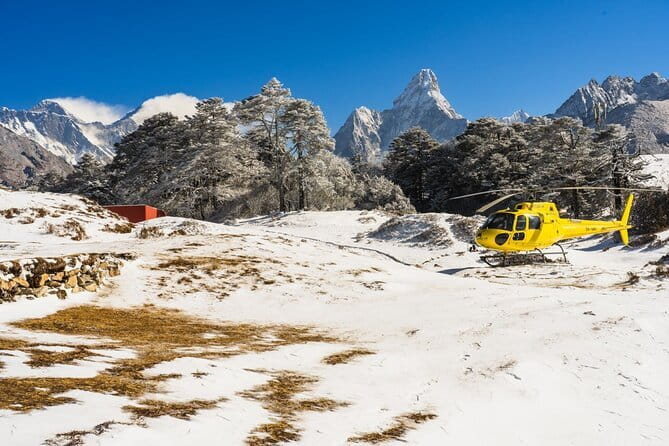
Your day starts early. The start time is listed as 5:30 am, with pickup from your Kathmandu hotel. The goal is simple: get you into the domestic airport circuit quickly and keep the flight window working for the best weather.
A common mistake with Everest plans is thinking the adventure begins when you see mountains. In reality, the day begins with how smoothly you handle the early logistics. Here, you get private transportation to move you fast, and you’re guided through the airport process before heading to the helicopter pad.
One practical tip: treat this like a “get your head right” morning. You’re leaving before most people have their first coffee. Bring something warm, even if Kathmandu feels mild the night before. Early starts plus high-altitude exposure can make the body feel off, even when the flight is short.
Lukla and the Everest Gateway: A Quick Hit of Reality
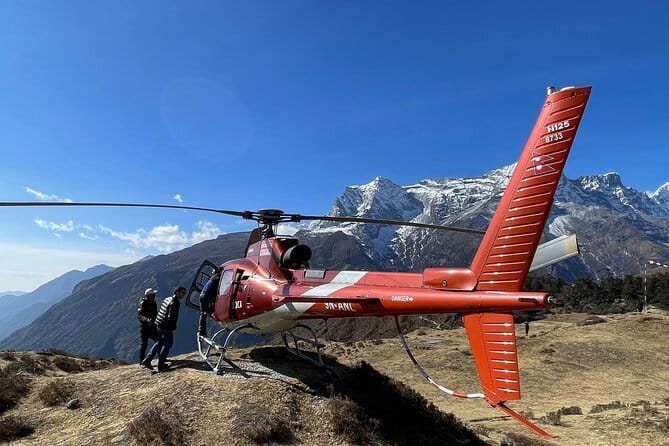
In the aerial sequence, Lukla shows up as a key point. The Lukla portion references Lukla Airport, also known as Tenzing-Hillary Airport, which is famous as the gateway to the Everest region. This matters because it ties your helicopter day to the same geography that trekkers and climbers depend on.
You’ll also get what I think is one of the best parts of this kind of route: you can see how the region is arranged. Everest is not one flat view. It’s ridges, valleys, settlements, and ridgelines stacked on top of each other. Even from the air, you start to understand why traditional routes are so slow.
The tour also includes time in the Lukla airport area, including a landing element there. That gives you a second chance to feel the rhythm of the Everest region: not just mountains above you, but an actual operating airstrip environment connected to the rest of Nepal’s aviation life.
Kala Patthar Flyover: Reading the Peaks From Above
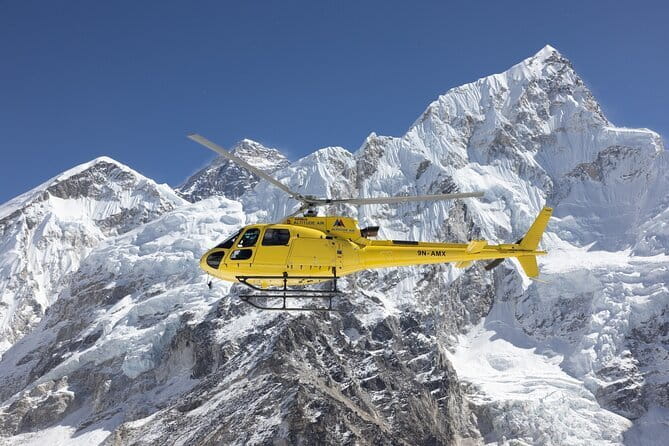
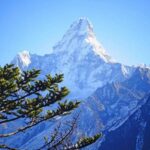
Kala Patthar is famous for views, especially for people who hike for them. Here, you experience it from the air with a flyover of Kala Patthar and Everest Base Camp. The value is big: you get a birds-eye view of the Everest zone without spending days moving across steep terrain.
From a practical standpoint, this kind of flyover helps you “map” the area. Even if you’ve studied Everest photos, it’s hard to understand where base camp sits in relation to the surrounding ridges. From above, you can see the shape of the route and where the dramatic faces and snowfields begin.
One thing to keep in mind is that your best views depend on visibility. If the morning is clear, the flyover is likely the moment you’ll feel most wowed by the scale. If it’s hazy, you’ll still get the route, but the details can soften.
Syangboche and the Everest View Hotel Area: A Scenic Break With Meaning
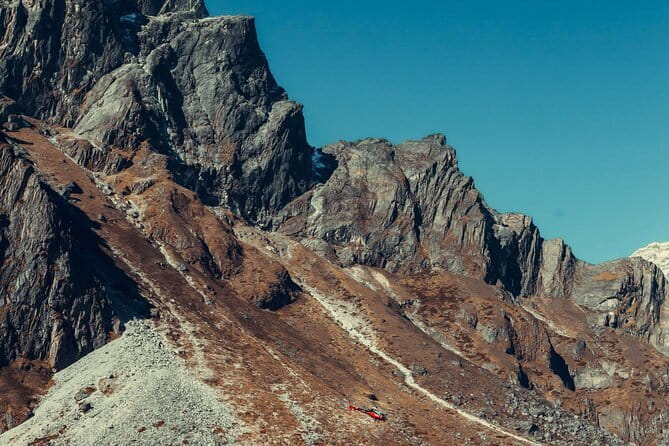
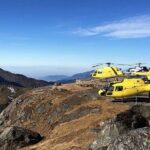
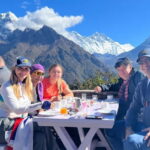
One of the more “human” parts of the day is the stop around Syangboche, described as the gateway to a dining experience at the Everest View Hotel area. The tour overview mentions a gourmet mountain picnic, and this portion lines up with that idea.
Why is this valuable? Because it gives you a change of pace after flights. You’re not just moving through the sky; you’re getting a pause with scenery. Also, it’s a way to feel what the Everest region looks like from a more settled viewpoint, compared to the raw high-altitude intensity of base camp.
If you’re the type who likes to understand place, this helps. You get to see how the Everest region is supported by infrastructure and how people live at these higher elevations—at least in the limited way accessible for visitors.
The Everest Base Camp Landing: Why This Is the Whole Point
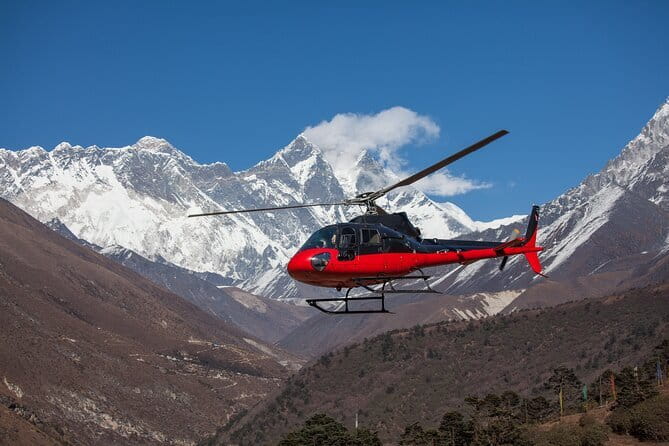
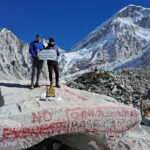
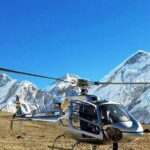
The headline is the Everest Base Camp landing. That is what turns a helicopter tour into something beyond sightseeing.
Landing changes the experience because you shift from visual appreciation to physical presence. Even though helicopter travel limits the time you’d normally spend acclimatizing, a landing gives you the emotional hit: you arrive at a place that trekkers treat as a goal, and you do it in hours, not weeks.
I also like how the tour takes altitude seriously. The inclusion of oxygen-tank service fees and first-aid kit support isn’t marketing fluff; it’s practical planning. Add the oximeter checks (pulse, oxygen saturation, heart rate) and you get a more careful approach than the usual “sit back and hope” style of thrill travel.
What to expect at Base Camp itself will depend on conditions, but the core promise stays the same: you’re there, you’re grounded, and your photos actually mean something. This is the moment you’ll remember when you stop thinking about schedules and start thinking about scale.
Safety and Comfort: The Included Gear That Matters
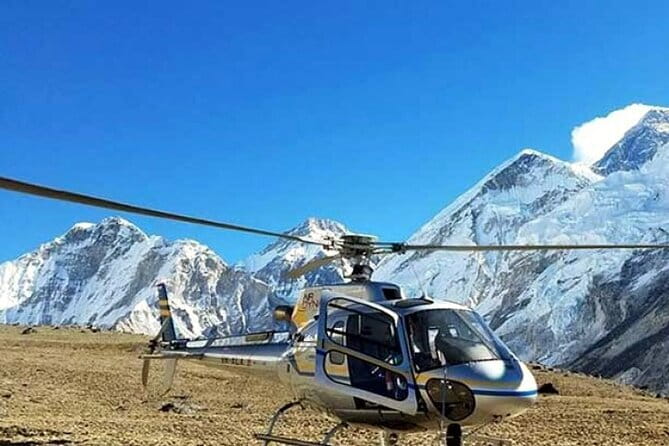
This tour includes several altitude and medical support items that make a difference for comfort-minded travelers.
You get:
- An oximeter to check pulse, oxygen saturation, and heart rate
- Service fees for an oxygen tank
- A first-aid kit (service fees)
Helicopter insurance is included as well, covering passengers. You’re also flying in a private helicopter with a maximum of five people, so you’re not jammed into a big mixed group.
From the practical side, safety tools help you watch how your body is responding, especially if you don’t have trekking acclimatization behind you. They can’t make altitude disappear, but they can help the team respond if someone is feeling off.
One more note: the tour lists total weight per passenger at 207 lbs. If you’re more than 100 kg, there may be an extra cost. That’s worth confirming early so you don’t end up with surprises the morning of your flight.
The Pilot and the On-the-Ground Team: Where Smoothness Comes From
A helicopter day can go sideways fast if the crew is disorganized, weather monitoring is sloppy, or communication is vague. Here, the operation is built around smooth handling of the flow: pickup, airport ticketing and transfers, then getting you airborne with a clear schedule.
In real experiences shared with this operator, people highlighted safe flying and professional coordination. One specific detail that stands out is that an experienced pilot from Fishtail Air was part of the flight for some riders. That kind of established aviation background matters on routes like this where weather and visibility can change quickly.
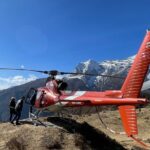
You’ll also see the tour team manage the rhythm of the day, including refueling and short transitions. Those are moments where you want things to feel calm and organized instead of frantic.
Who This Tour Fits Best (and Who Might Reconsider)
This helicopter Everest day tour is a strong fit if:
- You want the Everest region highlights with minimal time on your feet
- You’re traveling with limited vacation days
- You prefer comfort and structure over trekking logistics
- You want a real landing at Everest Base Camp, not just a flyover
It’s less ideal if:
- You need a flexible schedule you can’t easily adjust for weather
- You’re on a tight budget where add-ons like permits and breakfast are a deal-breaker
- You’re sensitive to early starts (5:30 am kickoff) and long days even without walking
The tour lists a moderate physical fitness level. That’s a clue: you’re not doing a hike, but you are still dealing with early morning travel, altitude exposure, and a long day clock (about 5 to 6 hours total, including flight time).
Weather Reality: Why Your Morning Matters
This is an experience that requires good weather. That’s not small print; it’s the core constraint. When skies cooperate, your views and landing experience are the payoff.
When weather doesn’t cooperate, the tour can be canceled due to poor weather, and you’ll be offered a different date or a full refund. Practically, that means you should plan with buffer time if you can. If Everest weather is the only day you have in Nepal, you’re taking a bigger risk.
Also note that the experience runs early and depends on morning conditions. If you can, keep your Kathmandu schedule light the day before and the day after your chosen date.
Should You Book This Everest Base Camp Helicopter Landing Tour?
If your goal is Everest Base Camp with a real landing, and you’re willing to pay for the shortcut, I think you should strongly consider booking. The combination of Base Camp landing, altitude safety tools (oximeter and oxygen support), and a small private helicopter group is exactly what you’d want for a one-day “I need to see this” trip.
Book it if:
- You can handle a 5:30 am start
- You have budget room for the all-in total (permits, airport tax, and breakfast)
- You can be flexible if weather forces changes
Consider skipping or delaying if:
- Your schedule in Nepal is locked with no buffer
- You’re very cost-sensitive when add-ons appear
- You’re worried about altitude exposure without traditional acclimatization (even with safety gear included)
If you want Everest without trekking, this is one of the most direct ways to get there, and it’s built around safety and smooth operations rather than pure luck.
FAQ
What time does the Everest Base Camp helicopter tour start?
The start time is 5:30 am. You’re picked up from your hotel in Kathmandu.
Where do we meet for the tour?
The ticket redemption point is Hotel Everest View, Lukla – Shyangboche Marg, Khumjung 56000, Nepal.
How long is the tour, and how much flight time is included?
The tour runs about 5 to 6 hours total. Flight time is listed as 5 hours.
Does this tour include a landing at Everest Base Camp?
Yes. The experience includes a private helicopter ride to Everest Base Camp, including a landing.
What is included in the price, and what extra costs should I budget for?
Included: private transportation, helicopter insurance that covers passengers, oxygen tank and first-aid kit service fees, an oximeter, and the private helicopter ride to Everest Base Camp plus the flight back to Kathmandu. Not included: breakfast ($35), travel insurance, Sagarmatha National Park permits (two permits at $45 per person), and Tribhuvan International Airport airport tax ($7 per person).
How does the tour handle altitude safety during the flight?
An oximeter is included to check your pulse, oxygen saturation, and heart rate. Oxygen tank service fees and first-aid kit service fees are also included.
Is the helicopter private, and how many people can go?
It’s private, and the helicopter ride is up to 5 people per ride. The maximum number of travelers for the tour is listed as 5.
What happens if the weather is poor?
The experience requires good weather. If it’s canceled due to poor weather, you’ll be offered a different date or a full refund.