REVIEW · FRANZ JOSEF AND FOX GLACIER
Franz Josef: Twin Glacier Helicopter Flight with Snow Landing
Book on Viator →Operated by Totally Tourism - The Helicopter Line · Bookable on Viator
A glacier you can walk on. This twin-glacier helicopter ride pairs panoramic air views with a snow landing on Franz Josef or Fox Glacier. You also get live commentary from your pilot, plus a short stretch of time standing up close on the ice.
I especially love the 2-for-1 format. You’re seeing Franz Josef and Fox Glaciers from the air in one outing, not as separate add-ons. And I like that the flight time in the air is short enough to feel snappy—about 20 to 25 minutes—while the full experience runs around 35 minutes total.
The main drawback is weather. The West Coast can sock in fast, and even though a snow landing is part of the plan, low cloud and fog can change what’s possible—so build in flexibility.
In This Review
- Key points before you go
- Why this Twin Glacier helicopter flight feels so special
- Meeting in Franz Josef: where to start and what to expect
- Up in the air: 20–25 minutes of glacier views from a perfect angle
- Snow landing on Franz Josef or Fox: stepping onto the ice plateau
- Time on the glacier: photos, posture, and not rushing it
- Cost and value: is $308.70 worth it?
- Weather reality check on the West Coast (and how to plan around it)
- What to wear and bring for a glacier landing
- Should you book this Franz Josef snow-landing flight?
- FAQ
- How long is the total trip?
- How long will I be in the air?
- Is the snow landing included?
- What’s included in the price?
- Are food and drinks included?
- Where do I meet the helicopter for this trip?
- What happens if weather cancels the flight?
- What are the weight and child rules?
Key points before you go
- Twin Glacier views: fly over both Franz Josef and Fox for a big-picture look at the ice system
- Live pilot commentary: learn what you’re seeing as the glaciers roll beneath you
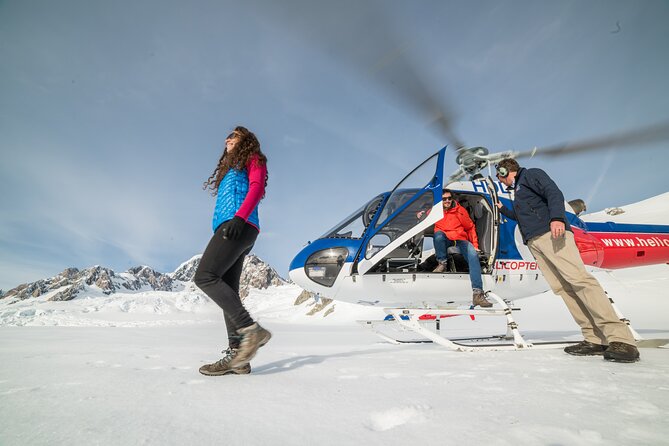
- Snow landing on the glacier: step onto the ice plateau for closer photos and crisp air
- Small group size: max 6 travelers means less crowding in a tight aircraft
- Real cold + real footing: warm layers help, and footwear matters because snow can be firm or slippery
Why this Twin Glacier helicopter flight feels so special
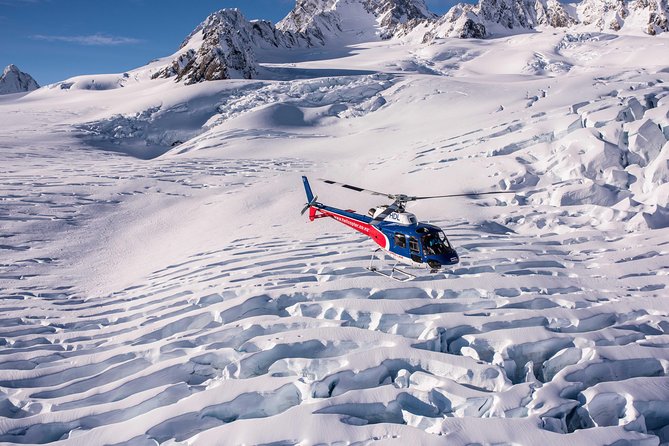
If you only ever view glaciers from the road, they can feel distant. From the air, they suddenly make sense—size, shape, and movement all click into place.
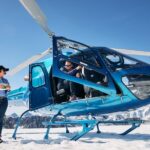
This flight is built around that shift. You’re in a helicopter with panoramic windows, then you hover above the ice and land on a glacier plateau. That combination—high-altitude views plus one actual step onto the glacier—is why this outing hits that rare “wow” level without needing a strenuous hike.
The other thing I like is the pace. The whole trip clocks in around 35 minutes, with 20 to 25 minutes in the air. That keeps it from dragging, especially if you’re trying to fit it between scenic drives and short walks in Franz Josef / Westland Tai Poutini National Park area.
You can also read our reviews of more tours and experiences in Franz Josef and Fox Glacier.
Meeting in Franz Josef: where to start and what to expect
You meet at The Helicopter Line Franz Josef Heli Hike on Main South Road in Franz Josef / Waiau (7856). The activity ends back at the same spot, so you’re not dealing with a complicated pickup and drop-off.
You’ll get a mobile ticket, and the check-in process is designed for quick turnaround. That matters on helicopter tours because weather windows can tighten. The operator also notes a maximum of 6 travelers per flight, which helps keep the boarding process calmer and keeps you from feeling packed in.
Two practical notes to plan around:
- You’ll be outside in cold air before and after the flight, so dressing like it’s chilly (because it is) makes the experience better.
- You’ll also want to be ready to follow crew instructions about weight and safety checks. Total passenger weight matters here (more on that in the FAQ).
Up in the air: 20–25 minutes of glacier views from a perfect angle
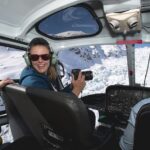
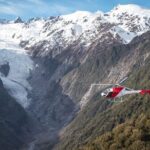
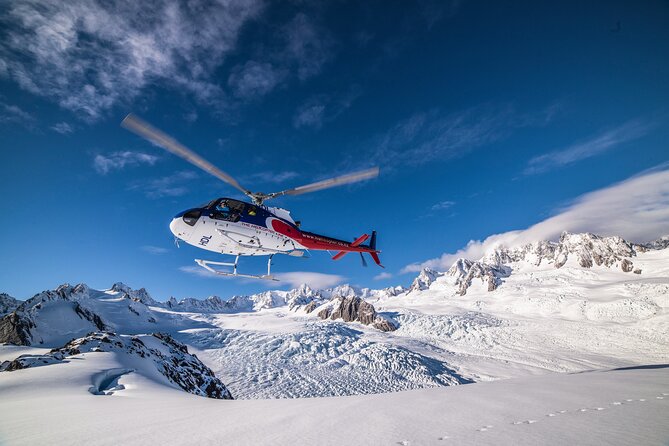
Once you lift off, you get that “moving postcard” effect—only it’s real, and it’s happening right beneath you. The pilot guides the flight and provides informative commentary during the trip, so you’re not just staring out the window guessing what you’re looking at.
From the air, Franz Josef and Fox are more than ice sheets. You can see how the glaciers carve valleys, how the ice breaks and changes form, and how the terrain frames the whole system. On a clear day, the contrast is dramatic—dark rock ridges against pale snow and bright blue ice areas.
One nice detail from customer experiences is that weather sometimes improves just in time. People talk about waking up to cloud cover and then lifting off once conditions cleared. That’s a reminder: in this region, the sky can swing quickly, so don’t assume the first look at the morning sky is the final word.
Snow landing on Franz Josef or Fox: stepping onto the ice plateau
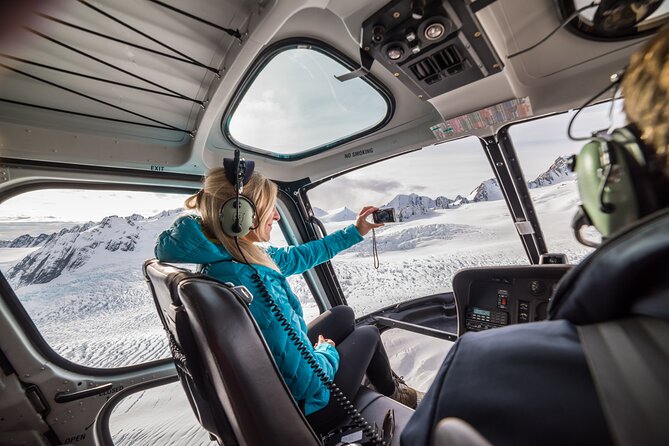
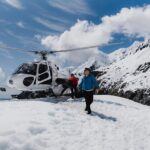
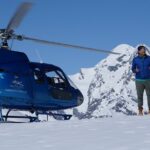
Here’s the core moment: the helicopter hovers above the glacier and then makes a snow landing on the top of either Franz Josef Glacier or Fox Glacier. Your exact glacier can depend on conditions, but the idea is the same—get out, look around, and take photos where most people can only imagine glaciers from a distance.
When you step down, you’ll feel the temperature shift and hear your own movements differently. The air is crisp, and the ice details look sharper than they do from the ground. The plan also includes a closer look at features like icefalls, crevasses, and other jagged formations (exact views vary by conditions and which glacier you land on).
Expect the landing surface to be real snow and ice, not a paved walkway. Some past participants mentioned that the snow felt packed harder than expected, and that it could be slippery if you’re in walking shoes instead of traction-friendly footwear. You don’t need mountaineering gear, but you do want shoes that can handle uneven, cold surfaces.
Also note the human side of the helicopter experience: because pilots communicate with other aircraft in the area, you may get narration rather than long back-and-forth conversations mid-flight. Even with live commentary, radio traffic can limit how much the pilot can chat in real time.
Time on the glacier: photos, posture, and not rushing it
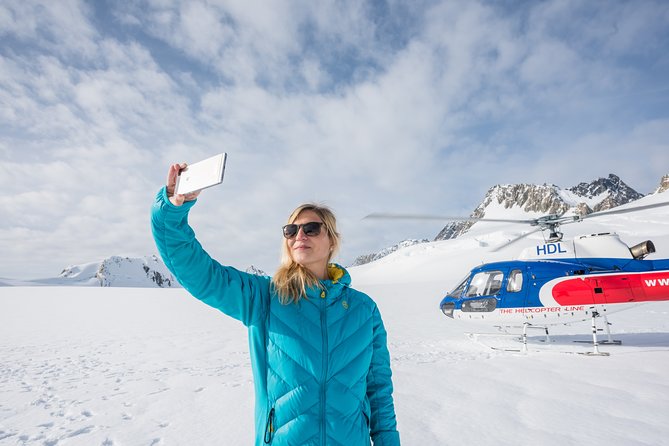
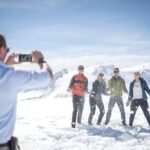
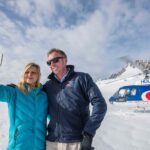
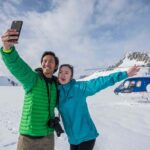
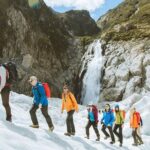
After landing, you get time on foot to take in the scale and capture photos. This is where the tour shifts from “viewing” to “standing there.” You’re looking out over the valley from a prime vantage point, and you’re close enough to see texture—blue tones, fractures, and the jagged rhythm of the ice.
This is also where timing matters. The flight itself is quick, but they build in a short stop that usually feels like enough time to:
- get a few steady photos (especially once you’ve found a good angle),
- look around and orient yourself,
- and take in the glacier details you can’t see at road level.
If the day is colder than you expected, you may want to keep gloves on while you shoot photos and avoid fiddling with camera settings on bare hands. If it’s icy underfoot, shorten your stride and take your time around crevasse-looking areas that are visually impressive from a safe distance.
Cost and value: is $308.70 worth it?
At $308.70 per person, this isn’t a budget add-on. It’s priced like a premium West Coast experience—because it is. The value comes from three things you’re paying for at once:
- Helicopter flight time over both Franz Josef and Fox Glaciers (not just one),
- snow landing that lets you step onto the glacier plateau,
- and live pilot guidance so you’re seeing more than “random ice.”
If you compare it to a day of car-based viewpoints only, the gap is obvious. You can absolutely enjoy glaciers by road, but you don’t get the full sense of scale in the same way. This trip gives you that scale fast, without an all-day hike plan.
It also helps that the tour is small (max 6 travelers), and it’s designed to be a single outing rather than juggling multiple stops. If you’re short on time in Franz Josef, that matters.
The one cost-side tradeoff: weather risk is real. On low-visibility days, plans can shift. Sometimes that still leaves you with an experience that’s worth it. Other times, you may end up with less than the full twin-glacier moment. If you can schedule this during a time buffer—rather than your last morning—your odds of a complete “both glaciers + landing + photo time” experience rise.
Weather reality check on the West Coast (and how to plan around it)
This is the big operational truth for helicopter glacier rides: weather here changes fast. Fog and cloud cover can ground flights or force adjustments.
The data you’re given includes a promise of a snow landing, but real-world conditions can still interrupt how much of the full route is possible. Some past participants reported ending up with only one glacier view or landing due to conditions. Others described staff rebooking them for the next day when the original plan was canceled.
So here’s how you should think about it:
- Treat this like an experience that depends on conditions, not like a guaranteed exact itinerary.
- If you can, book it earlier in your stay and keep your schedule flexible.
- Dress for cold and be ready to head out even if the morning looks a bit uncertain.
The cancellation rules (free up to 24 hours before start time) also support flexibility, as long as you keep an eye on the timing.
What to wear and bring for a glacier landing
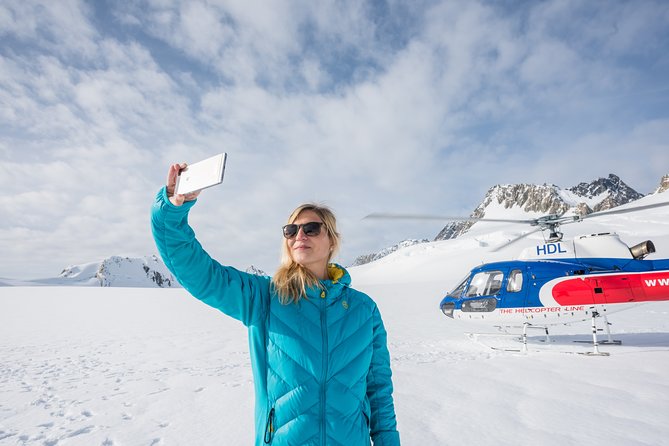
Warm clothing is recommended, and that’s spot on. You’ll be cold standing around the heli area and colder once you step out onto snow and ice. You’ll also want suitable footwear because surfaces can be firm and slippery.
My simple checklist:
- Layers: warm top + insulating layer, since you’ll be outside for check-in and boarding.
- Gloves and a hat: small things that make a big difference in wind and chill.
- Footwear with grip: avoid super-slick soles; think stable traction.
- Camera ready: you’ll want both wide shots and close-ups once you’re on the ice.
- No food required: food and drinks aren’t included, so plan a meal before or after.
Also remember the weight and child rules. Total passenger weight per person must be declared (276 lbs limit is listed), and children under 15 kg must sit on a parent’s lap.
Should you book this Franz Josef snow-landing flight?
Book it if you want the glacier experience in the most direct, high-impact way. If you’re short on time, tired of looking at glaciers from far away, or just chasing that “standing on the ice” moment, this tour makes a strong case.
Skip or think twice if:
- your schedule is extremely tight and you can’t shift plans if weather changes,
- you’re not comfortable with cold and traction on snowy/icy surfaces,
- or you need lots of hands-on guiding time on the ground. The stop is short by design, and helicopter operations can limit extended conversation during flight.
Bottom line: for most people visiting Franz Josef, this is one of the few activities that turns glaciers from scenery into something you actually stand next to. With decent planning and the right gear, it’s a very memorable use of your time on the West Coast.
FAQ
How long is the total trip?
The total trip duration is about 35 minutes, including the snow landing.
How long will I be in the air?
Flight time is listed as about 20 to 25 minutes, with the total experience running longer to include the glacier stop.
Is the snow landing included?
Yes. The experience includes a snow landing and it’s listed as guaranteed.
What’s included in the price?
Included are the scenic helicopter flight, a pilot guide, informative commentary during the flight, and the total trip duration that includes the snow landing.
Are food and drinks included?
No. Food and drinks aren’t included.
Where do I meet the helicopter for this trip?
You start at The Helicopter Line Franz Josef Heli Hike on Main South Road, Franz Josef / Waiau 7856, New Zealand.
What happens if weather cancels the flight?
If poor weather cancels the experience, you’ll be offered a different date or a full refund.
What are the weight and child rules?
There’s a total weight limit listed as 276 lbs per passenger. Children must be accompanied by an adult, and children weighing less than 15 kg are required to sit on a parent’s lap.