REVIEW · FRANZ JOSEF AND FOX GLACIER
Mount Cook Spectacular Helicopter Flight from Franz Josef
Book on Viator →Operated by Glacier Helicopters · Bookable on Viator
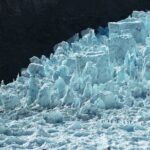
One look at New Zealand’s glaciers, and you’ll want the sky. This helicopter flight pairs a snow landing with close-up views of crevasses, icefalls, and the jagged Southern Alps spine. I especially like the way you get both glaciers from above in one go, and how the route circles Aoraki/Mount Cook itself. The main drawback to plan around: weather can force changes, including shorter flight time over Mount Cook.
I like that this isn’t a long, complicated day. You meet at the helicopter base in Franz Josef, check in, then you’re airborne with multiple departure times available so you can match it to your itinerary. The group is kept small (up to 12), which usually means less waiting and more time focused on the view.
Because you’re flying in a helicopter and landing on snow, this trip rewards people who dress for cold and listen to the pilot’s safety guidance. If that’s you, you’ll get a one-of-a-kind way to see Westland Tai Poutini National Park that you simply can’t replicate from the ground.
In This Review
- Key things that make this flight worth it
- A sky-high shortcut: why Mount Cook from Franz Josef feels different
- The 40-minute route: glaciers, the Southern Alps spine, Mount Cook, then home
- Franz Josef Glacier landing on neve: what it’s really like
- Mount Cook circling + the UNESCO factor you can see
- Fox Glacier and the West Coast perspective from above
- What to wear and bring for a cold, sporty snow landing
- Where to go in Franz Josef and how the day actually runs
- Weather is the real co-pilot: wind can change the plan
- Price and value: what $416.90 buys you in real-world terms
- Who should book this flight (and who might rethink it)
- The human touch: pilots who talk and help you see
- Should you book Mount Cook Spectacular from Franz Josef?
- FAQ
- How long is the helicopter flight?
- Where does the flight depart and return?
- What is included in the tour price?
- What is not included?
- Can I choose my departure time?
- What should I wear or bring?
- What items are not allowed on the flight?
- Is the flight year-round?
- Is there a weight limit?
- What happens if weather prevents the flight?
Key things that make this flight worth it
- 40 minutes of real glacier-to-mountain flying (not just a quick pass-over)
- Snow landing experience up on high-altitude terrain
- Views across Westland Tai Poutini National Park from above the ice
- Both glaciers in one route: Franz Josef and Fox
- Mount Cook circled close up, with three summits visible on the mountain’s flanks
- Up to 12 people per flight, plus a professional pilot with live commentary
A sky-high shortcut: why Mount Cook from Franz Josef feels different
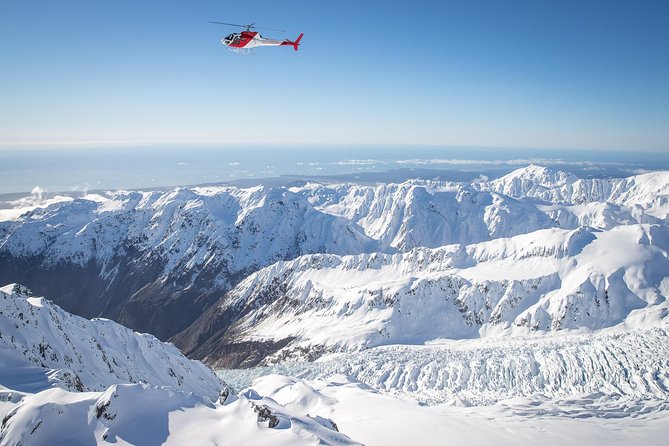
Flying to Mount Cook from the West Coast is a different game than doing it from up toward Queenstown or Christchurch. Here, you start where glaciers are crawling toward sea level. Then you work your way across the mountains in a single flight: icefirst, then alpine peaks. That order matters, because you see the change in scale right away—massive, slow-moving ice below and sharp snow-and-rock contours above.
I also like the clean focus of this experience. You’re not juggling dozens of stops or trying to pack in a whole day of driving. In about 40 minutes, you get a flight that’s built around the most dramatic visuals: glacial icefalls, crevasses, and neves, plus the unmistakable form of Mount Cook.
There’s also a small emotional perk: you’re standing (briefly) on snow at altitude. That turns the trip from “great photos” into “I can’t believe this happened” memory fuel.
You can also read our reviews of more tours and experiences in Franz Josef and Fox Glacier.
The 40-minute route: glaciers, the Southern Alps spine, Mount Cook, then home
Expect the flight to feel like a guided tour of New Zealand’s vertical world. You lift off above Franz Josef township, then head across the two West Coast glaciers that feed the drama of Westland Tai Poutini National Park.
A key part of the route is crossing the spine of the Southern Alps. From the air, you can actually make sense of how these mountain ranges line up—what’s behind the peaks, where valleys cut through, and why these glaciers look like rivers frozen in place.
As you approach Mount Cook (Aoraki), the flight tightens its focus. You circle the summit area, and you get a close view of how Mount Cook towers over the ice field. The trip is set up so you don’t just glance at it; you’re given enough time and angle to understand the mountain’s shape and how it sits relative to the glacier terrain.
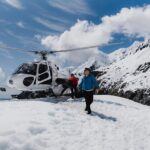
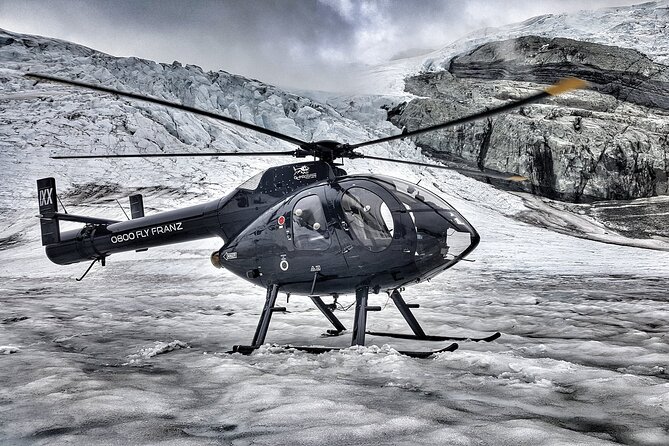
Then comes the standout moment: a touchdown on snow near the mountain. After that, you start the return flight toward the coast and back to Franz Josef, ending where you started.
Franz Josef Glacier landing on neve: what it’s really like
The best part of many helicopter trips is the flying. The best part of this one is also the flying—plus the fact that you land.
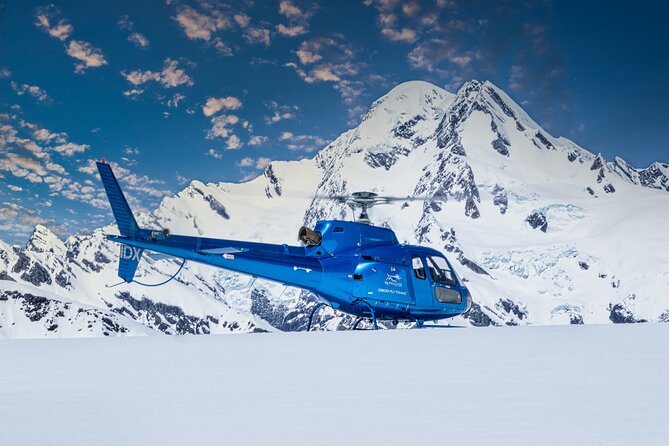
You’ll fly up to the Franz Josef Glacier and touch down on the neve, which is essentially the snow surface that feeds the glacier system. This is where you get a rare chance to stand on snow and look across a huge expanse of ice. From the air you get scale. On the ground you get presence.
Practical tip: take your photos quickly but calmly. You’re on snow, not a theme park platform. You’ll want to keep your balance and follow the pilot’s cues so you’re not rushing and slipping.
Also, keep in mind that you’re at real altitude. Even on a sunny day, it can feel sharper than you expect, so bring warm layers.
Mount Cook circling + the UNESCO factor you can see
Mount Cook (Aoraki) is New Zealand’s highest peak, and from the helicopter you get the kind of perspective that makes the name feel literal. You’ll see how three summits rise over the glacier area on Mount Cook’s flanks, and you’ll get the “big mountain” feeling in a way that ground viewing often can’t match.
There’s also a built-in conservation context. This area is part of a UNESCO World Heritage Site, and the flight’s route is designed so you’re seeing the visual features people come to protect and study: glacial formations, steep terrain, and snowfields that help shape the region’s water and climate.
If you’re the type who likes to connect visuals to meaning, this is a great flight. You’re not just collecting a postcard angle—you’re getting a sense of why this terrain matters.
Fox Glacier and the West Coast perspective from above
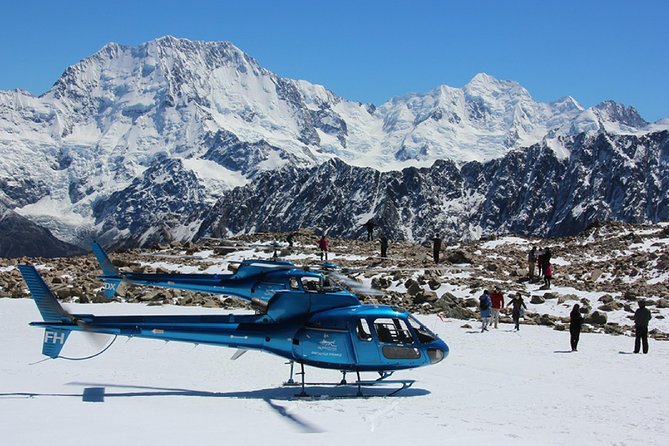
The West Coast is famous for glaciers, but from the ground, weather and viewpoints can limit what you can actually take in. Flying changes that. You can spot both Franz Josef Glacier and Fox Glacier as you cross the mountains, and you can see the distinctive shapes that identify each glacier system.
The Fox Glacier segment tends to feel especially striking because it helps you compare. You’re seeing the glaciers as parts of one larger story—ice flowing through a mountain corridor—rather than separate attractions.
And because the flight passes over the national park area from above, you get a cleaner read on how the terrain is arranged: where the ice sits in relation to peaks and how the valleys guide movement.
What to wear and bring for a cold, sporty snow landing
This is the part that makes your flight more comfortable and less annoying.
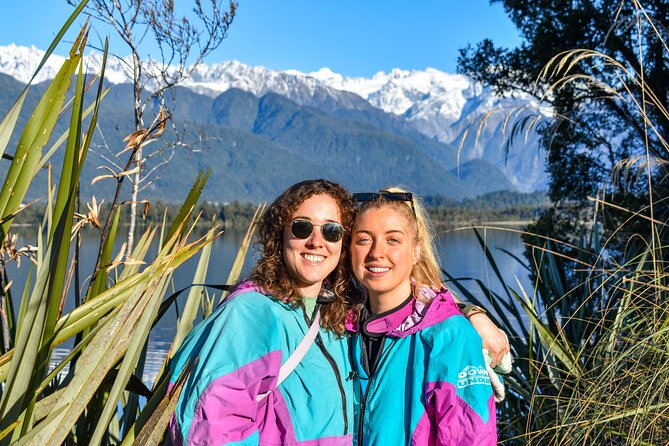
I’d plan for cold air and sudden temperature swings. Bring warm clothes, sunglasses, and sturdy footwear. A camera helps, obviously, and you’ll want it ready because the photo angles happen quickly.
A big safety note: the operator does not allow certain items on any flight. Don’t bring selfie sticks, drones, lighters (or other flammables), iPads/tablets, or any bag that you planned to carry on. If you’re traveling with lots of gear, pack it light and keep only what you truly need.
Also: the experience uses a mobile ticket, so make sure your phone is charged and you can show the ticket at check-in.
Where to go in Franz Josef and how the day actually runs
You’ll meet at the helicopter base at Glacier Helicopters, 30 Main Road (SH6), right in Franz Josef township. The trip ends back at the same meeting point.
This is convenient if you’re staying in town or already planning to explore around Franz Josef. The base is near public transportation, and there are multiple departure times throughout the day. When you book, you can request your preferred time.
Group size stays tight—a maximum of 12 travelers—which helps keep the check-in experience from turning into a slow-motion line at the airport.
What’s not included: there’s no food or drinks, and there’s no hotel pickup or drop-off. So eat beforehand and plan to get yourself to the base.
Weather is the real co-pilot: wind can change the plan
Helicopters depend on conditions. The operator flies year-round, weather permitting, and they’ll cancel or reschedule if conditions aren’t safe or workable.
One important consideration: if strong winds affect flying over Mount Cook, your planned route and total flight time can change. In at least one case, the flight was adjusted to a shorter duration focusing on Fox and Franz Josef, still including a snow landing.
My advice is simple:
- Choose a time with some flexibility in your schedule.
- Don’t book this as your only plan if you also have tight connections later that day.
- Assume Mother Nature has final say.
The good news is that if the experience is canceled due to poor weather, you’ll be offered another date or a full refund.
Price and value: what $416.90 buys you in real-world terms
At $416.90 per person for about 40 minutes of flight, this isn’t a budget activity. But it’s also not just paying for time in a seat. You’re paying for:
- a helicopter operating in mountainous terrain,
- a route that crosses the Alps spine and circles Mount Cook,
- aerial viewing of both glaciers,
- and—most importantly—a snow landing at altitude.
The value is highest if you want “one shot” at seeing Mount Cook and the West Coast glaciers together. If you’re willing to make this the centerpiece and keep the rest of your day flexible, it can feel like a smart splurge rather than an extravagant gamble.
Booking helps too. On average, people book about 76 days in advance, which suggests you’ll want to reserve early—especially if you’re traveling in peak season or around holidays.
Who should book this flight (and who might rethink it)
This tour fits well if you:
- want a fast, high-impact way to see Mount Cook and both West Coast glaciers,
- like photography but don’t want to spend all day driving between viewpoints,
- enjoy guided aerial commentary from a professional pilot.
It may be less ideal if you:
- get nervous in helicopters or have tight schedule constraints,
- dislike the idea of itinerary changes due to winds (weather adjustments can happen),
- need full support on the ground, since there’s no hotel pickup.
One more practical point: there’s a total weight per passenger limit of 331 lbs. If you’re near that threshold, confirm before booking so you don’t end up with an unpleasant surprise.
The human touch: pilots who talk and help you see
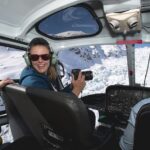
A great flight depends on the pilot. This operator uses professional pilots, and the flights come with in-flight commentary to help you track what you’re looking at.
I especially liked hearing that pilots can be friendly and update you during the ride. In one highlighted experience, the pilot named Andy was noted for being upbeat and for helping passengers get good photos during key moments.
That matters because the best views don’t always last long. If you’re given a little guidance—what to look for, when to look left versus right—you’ll leave with a clearer memory, not just a bunch of “I think that was ice” images.
Should you book Mount Cook Spectacular from Franz Josef?
If you’re choosing between several West Coast activities, I’d book this when you want one premium highlight that ties everything together: Franz Josef Glacier, Fox Glacier, and Mount Cook in a single flight.
I’d hesitate only if your schedule is rigid, because winds over Mount Cook can lead to a shorter or adjusted plan. If you can handle that reality—and you dress warmly for snow landing conditions—this is one of the strongest ways to see the Southern Alps up close without spending all day in transit.
In plain terms: this is for people who want the sky view, the snow landing, and the kind of photos that look impossible even after you take them.
FAQ
How long is the helicopter flight?
The flight is approximately 40 minutes, though it may change if wind conditions affect the planned route.
Where does the flight depart and return?
It departs from and returns to the Glacier Helicopters base in Franz Josef, at 30 Main Road (SH6). The activity ends back at the meeting point.
What is included in the tour price?
The tour includes a professional pilot.
What is not included?
Food and drinks are not included, and there is no hotel pickup or drop-off.
Can I choose my departure time?
Yes. You can request your preferred time when booking, and there are several departures throughout the day.
What should I wear or bring?
Bring warm clothes, sunglasses, sturdy footwear, and your camera. Dress for cold conditions, especially for the snow landing.
What items are not allowed on the flight?
Selfie sticks, drones, flammable liquids, lighters, iPads/tablets, and bags of any description are not allowed.
Is the flight year-round?
Yes, it operates all year round, weather permitting.
Is there a weight limit?
Yes. The total weight per passenger is limited to 331 lbs.
What happens if weather prevents the flight?
If canceled due to poor weather, you’ll be offered a different date or a full refund. The flight also requires good weather, and strong winds can affect what’s possible.