REVIEW · AORAKI MOUNT COOK VILLAGE
Mount Cook: Tasman Glacier and West Coast Helicopter Flight
Book on GetYourGuide →Operated by Glacier Helicopters · Bookable on GetYourGuide
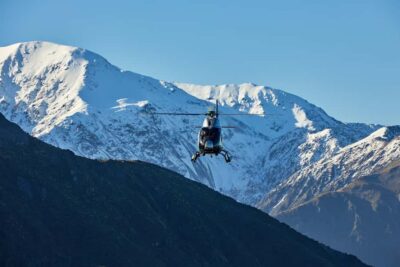
Aoraki looks huge from the ground. This one makes it feel closer, because you fly the line of the Tasman Glacier and then cross the Southern Alps by helicopter. I love how the route strings together the biggest West Coast wow-factor in one go, and I also love the glacier landing itself—real boots-on-snow time, not just a quick hover.
Two things I especially liked: the chance to get clear aerial views of Aoraki/Mount Cook and the West Coast glacier giants, and the way the team stays calm and helpful when weather shifts. A possible drawback is that the flight is subject to favourable weather, so you may wait if clouds and wind roll in.
In short: if you want a high-impact, time-efficient way to see more of New Zealand’s South Island glacial scenery than most road days allow, this is a strong pick.
In This Review
- Key Points You’ll Care About
- Helicopter Time That Actually Changes the View
- Following the Tasman Glacier: What the Aerial Route Feels Like
- Aoraki/Mount Cook From the Air: The Moment It Gets Real
- Crossing the Southern Alps: Seeing Two Worlds in One Flight
- Franz Josef and Fox Glaciers: Why the Air View Sticks
- The Glacier Landing: Boots-On Snow Time (and Yes, Photos)
- Pilot Dan, Smooth Flying, and a Team That Handles Weather
- Price and Value: Is $499 Worth 50 Minutes?
- What to Bring (So You Enjoy It Instead of Bracing)
- Meeting Point at 81 Bowen Drive: Keep Check-In Simple
- Who This Helicopter Flight Suits Best
- Should You Book This? My Decision Shortcut
- FAQ
- How long is the helicopter flight?
- Where is the meeting point?
- What’s included in the price?
- Is food or drinks included?
- What should I bring?
- What happens with bad weather?
Key Points You’ll Care About
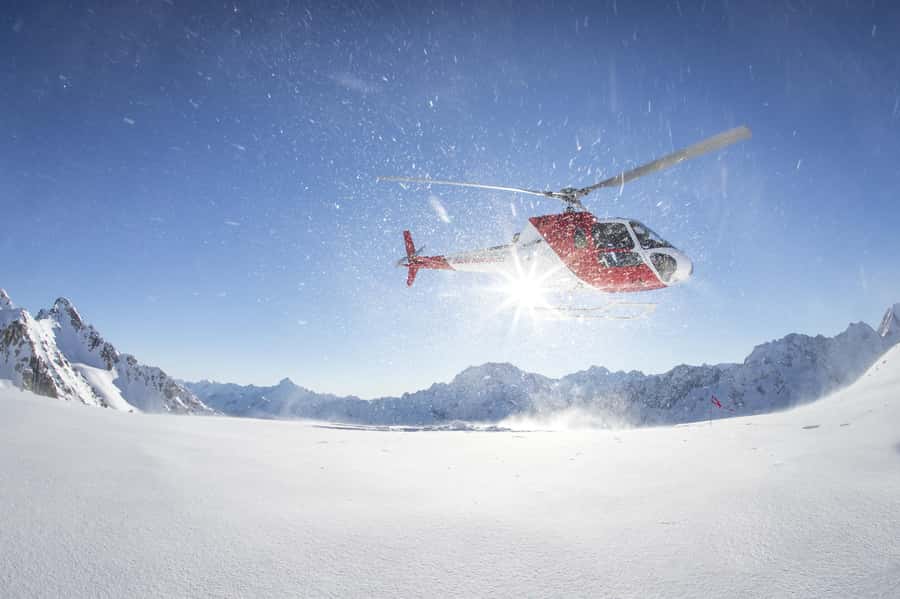
- Aoraki to the Tasman Glacier: you follow the glacier’s path from above, which makes its scale click fast.
- Southern Alps crossing: the flight connects two different dramatic regions in under an hour.
- Franz Josef and Fox Glaciers: you see them from the air in a way that’s hard to match from the road.
- Landing on a glacier: the tour includes actual time on the ice, with photo stops.
- Weather-flexible team: when conditions change, staff explain what’s happening and adjust plans.
Helicopter Time That Actually Changes the View
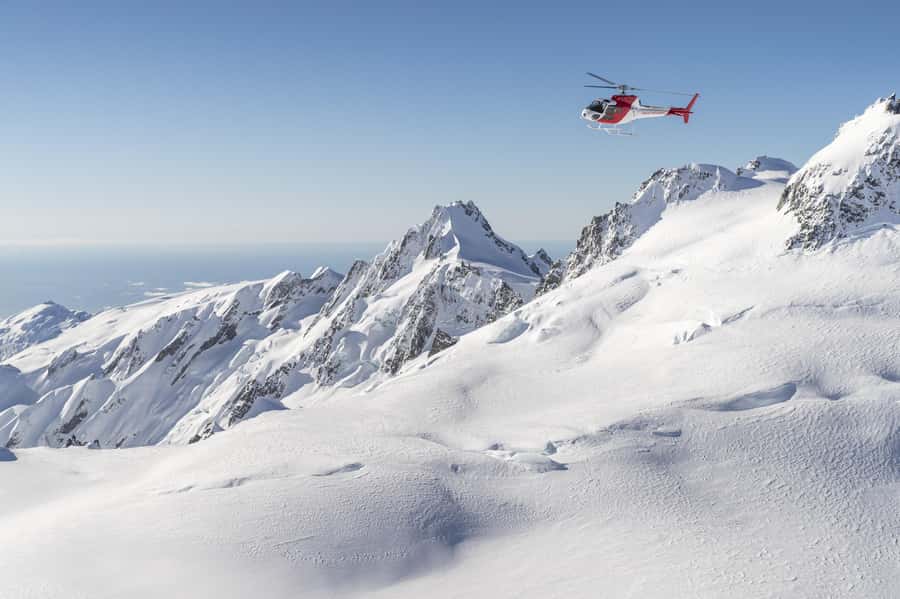
There’s “nice scenery,” and then there’s the moment your brain recalibrates. From a helicopter, glaciers stop looking like background and start looking like moving forces carved into the planet. In this flight, you’re not just passing over famous peaks—you’re tracing the Tasman Glacier area and then cutting across to the West Coast side of the Southern Alps.
The big advantage here is the compression of distance. Aoraki/Mount Cook sits in one part of the island, while Franz Josef and Fox sit far away on the other side of the mountains. Doing it by air means you get that full geographic story—without burning a whole day driving.
I also like that the experience isn’t only about views. The tour includes a glacier landing, so you get a rare blend: flying drama overhead plus grounded, close-up time when you’re standing on the ice.
You can also read our reviews of more tours and experiences in Aoraki Mount Cook Village.
Following the Tasman Glacier: What the Aerial Route Feels Like
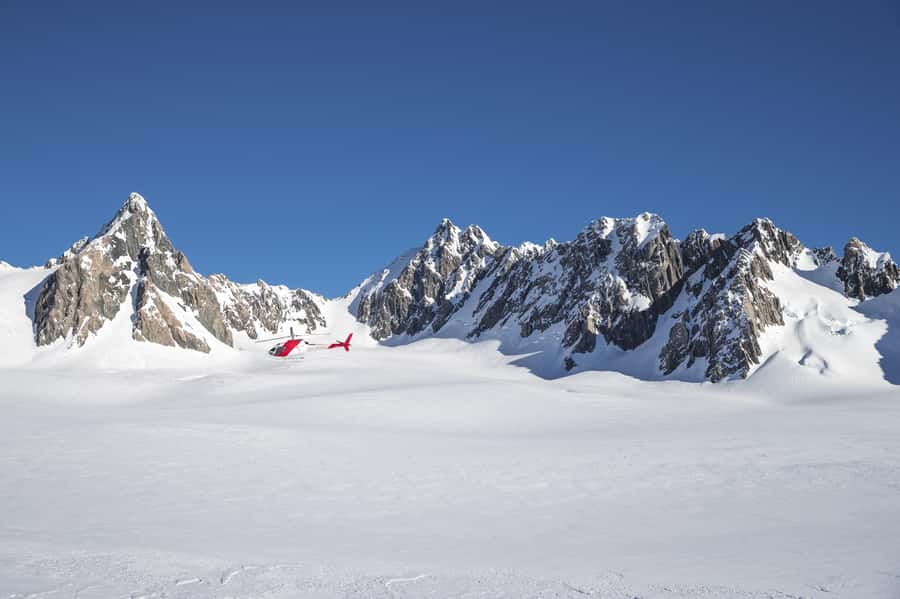
Your flight starts from the Aoraki/Mount Cook area, and the whole experience is built around one key idea: fly the glacier line. That means you’re not looking at the Tasman Glacier like a distant postcard. You’re seeing the glacier system and the surrounding patterns from above, with a pilot route that keeps you oriented.
You’ll get aerial views of:
- the Tasman Glacier Lake area
- the wider Tasman Glacier region as you pass along it
- the dramatic terrain as you transition toward the Southern Alps
Why that matters: when glaciers are seen from roads, they can look small or flat. From the air, the scale and shape make sense. It becomes obvious why the West Coast is famous for glaciers, and why the mountains shape weather so strongly.
Even if you’re not a “mountain person,” you’ll likely feel it. The flight is short—about 50 minutes—but the views are stacked in a way that makes the time feel worth it rather than rushed.
Aoraki/Mount Cook From the Air: The Moment It Gets Real
Aoraki/Mount Cook is New Zealand’s tallest peak, and this tour gives you a perspective that’s hard to replicate on foot. From above, you can see how the mountain sits in the broader alpine maze—how ridges funnel the land, and how the snowfields sit against darker rock.
The appeal here is simple: height becomes visual, not just a fact. You’re getting those “that’s really enormous” moments that photos can’t fully transmit.
And because this is a helicopter flight (not a long bus day), you’re not stuck watching through a windshield and hoping for the right angle. You’re traveling through the scene, which makes Aoraki feel like part of the journey rather than a quick stop.
Crossing the Southern Alps: Seeing Two Worlds in One Flight
One reason this tour hits so well is that it doesn’t treat the Southern Alps like a barrier. It treats them like a highlight. You traverse the mountain spine and cross over to the West Coast side, which changes the feel of what’s below your feet.
From the air, you’ll notice how the terrain shifts: alpine zones give way to a different West Coast look and weather influence. You also get those long, sweeping views that only helicopters can provide.
This is where the West Coast helicopter flight concept earns its keep. You’re not just viewing two separate places. You’re seeing how they connect across the Southern Alps—quickly, clearly, and without the usual travel time penalty.
Franz Josef and Fox Glaciers: Why the Air View Sticks
The star pull for many people is Franz Josef and Fox Glaciers, and the flight is set up so you can actually take them in. From the air, you can see the glaciers’ positions relative to valleys and ridgelines, which helps you understand their size and shape beyond a single viewpoint.
These are the kinds of sights that feel different once you’ve seen the whole glacier system from multiple angles. On a helicopter flight, you naturally get those angle changes as you move along the route.
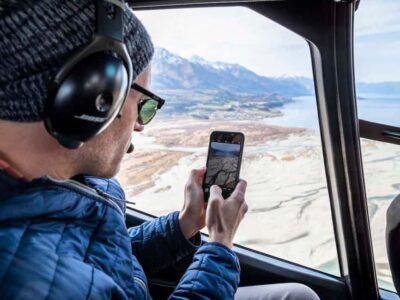
Also: if you like photography, this part matters. Aerial stops and passing angles give you a wider set of compositions than a single roadside pull-off usually allows.
The Glacier Landing: Boots-On Snow Time (and Yes, Photos)
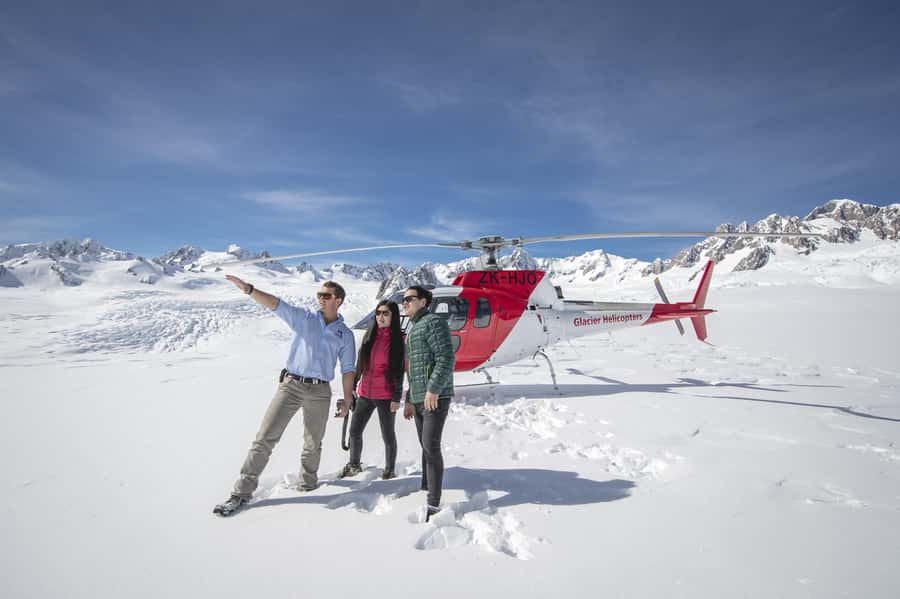
The most memorable part for many people is also the simplest: you land on a glacier. That’s included, and it’s the moment the tour turns from impressive views to a genuine experience you can feel in your body.
Here’s what you can expect from the landing portion:
- you step onto the glacier surface
- you take in the scenery in a close-up way
- you get time for photos while you’re on the ice
In one recent experience, the weather was cloudy and windy at first, and the team waited about an hour until conditions improved. Then they flew, landed, and people had their best moments once they were actually on the glacier. One family noted the kids even got to play in the snow—because the landing turns the scene into something interactive.
Photo-wise, the team can be helpful. In the experiences you shared, staff took great photos for people, which is a small thing that makes a big difference. When you’re on the glacier, your hands are busy keeping warm and balanced. Having someone else capture the shot is genuinely worth it.
Pilot Dan, Smooth Flying, and a Team That Handles Weather
This is the kind of trip where the weather can affect what happens. Helicopters can fly when conditions are favorable, but if clouds and wind make visibility or safety questionable, the team adjusts.
What I really appreciated from the stories you provided is the human side: staff explained the situation clearly, stayed flexible, and didn’t rush the decision. One flight waited about an hour while clouds cleared, and once they could go, the experience ran smoothly.
You also have an example of pilot skill in the feedback: one reviewer called out pilot Dan for flying so smoothly that the whole trip felt easy, and for being friendly and good at explaining the area. That matters because helicopter rides can feel intense if you’re nervous about heights. Smooth flying and a calm, communicative pilot can turn hesitation into a lasting highlight.
And yes, there’s even a practical miracle mentioned: Dan helped find a lost phone in the snow. That’s not something you plan on, but it says something about attention to detail once you’re on the ground.
Price and Value: Is $499 Worth 50 Minutes?
At $499 per person for a roughly 50-minute helicopter experience with a glacier landing, the price is not “cheap.” But it doesn’t feel random either, because you’re buying three things that are hard to replicate:
- Helicopter flight time over multiple signature regions
- A glacier landing, which turns the tour into something experiential, not observational
- A guide presence in English, plus navigation and safety decisions handled by the pilot and crew
If you’ve ever paid for a bus tour and realized the views were limited by traffic, angles, and time, this is a different model. Here, the time cost is concentrated where it matters: seeing the terrain and then stepping onto the glacier.
Also consider the “opportunity cost.” If your South Island schedule is tight, this can save you hours that you’d otherwise spend driving and trying to stitch together multiple viewing points. You’re paying for speed plus access.
The one caution is weather. Since it’s subject to favourable weather conditions, your plans should stay flexible enough to handle delays or schedule changes. If you’re locked into a strict itinerary with no cushion, that’s when helicopter pricing can start to feel more stressful than worth it.
What to Bring (So You Enjoy It Instead of Bracing)
You don’t need fancy gear, but you do need to dress for cold and wind. The tour asks for:
- Warm clothing
- Comfortable shoes
- Sunglasses
- Sunscreen
- Camera
- Comfortable clothes for movement during the landing
That list is practical because glacier conditions can change fast. Layers help you stay comfortable whether you’re in the air, stepping onto ice, or waiting briefly.
One more note: the tour does not allow smoking, so if that matters to you, plan around it.
Meeting Point at 81 Bowen Drive: Keep Check-In Simple
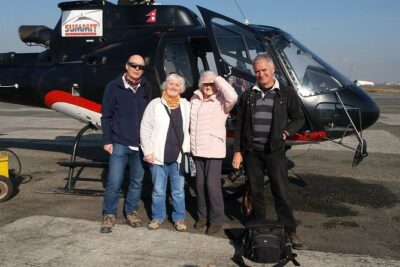
You meet at Glacier Helicopters Ltd, 81 Bowen Drive, Aoraki/Mount Cook Village. Plan to arrive with enough time to check in without stress.
Check-in closes 30 minutes before departure, so treat that as a real cutoff. If you’re driving in or picking up rental car time, give yourself a buffer. Once you’re past that window, you don’t want your day derailed by a late arrival.
The practical tip: keep your phone camera ready, but also be ready to bundle up fast. You’ll likely want to use your camera as soon as you’re in position for views, especially during the aerial route and around the landing.
Who This Helicopter Flight Suits Best
This is a great fit if you:
- want a high-impact South Island experience in under a couple of hours of total commitment
- care about seeing glaciers up close, including landing on the ice
- like aerial perspectives and want to understand how Aoraki, the Tasman region, and the West Coast connect
- want a small-group feel rather than a big-vehicle routine
It may be less ideal if you:
- can’t tolerate uncertainty around weather (because the flight depends on favourable conditions)
- dislike cold or wind and don’t plan to dress warmly
- are highly budget constrained, since glacier landing experiences cost money
On the group size note: the tour is described as very small, limited to 1 participant. That kind of cap often means less chaos and more attention, which can make the whole experience feel more personal.
Should You Book This? My Decision Shortcut
Book it if you want the most efficient way to see Aoraki/Mount Cook, the Tasman Glacier area, and the West Coast glaciers in one cohesive experience—especially if the glacier landing is a must for you. It’s the kind of tour where the cost is tied to access, not just scenery.
Skip or reconsider if you’re traveling with little flexibility and weather sensitivity would ruin the day. Also weigh whether you really want to pay for helicopter time versus building a slower, road-based glacier plan.
If you can handle cold, show up on time, and stay flexible about weather, this flight has a good chance of becoming one of your most memorable South Island moments—because you’re not only watching the glaciers, you’re standing on them.
FAQ
How long is the helicopter flight?
The duration is 50 minutes.
Where is the meeting point?
You meet at Glacier Helicopters Ltd, 81 Bowen Drive, Aoraki/Mount Cook Village, New Zealand.
What’s included in the price?
Included are the scenic helicopter flight, landing on a glacier, and views of Aoraki/Mount Cook and the Southern Alps. English live tour guide is also included.
Is food or drinks included?
No. Food and drinks are not included.
What should I bring?
Bring comfortable shoes, warm clothing, sunglasses, a camera, and sunscreen.
What happens with bad weather?
The flight is subject to favourable weather conditions. Check-in closes 30 minutes before departure, and the experience may be adjusted or delayed if conditions aren’t suitable.