Climbing to Everest Base Camp takes days. This tour compresses the dream into 5–6 hours, with helicopter views over the Khumbu and a quick step-out at Kala Patthar for photos. I especially like the small-group feel (max 5 travelers) and the time you actually get on the ground—enough to feel where the real Everest story starts, not just watch it from the air. One thing to weigh: the photo and landing windows are brief, and the schedule is weather-dependent.
You’ll fly from Kathmandu early, touch down around Lukla and the Everest viewpoint area, and then circle the big sights like the Everest Base Camp zone and the Khumbu Ice-fall from above. The company handling it is Ace the Himalaya, and guide names like Madan, Raj, Narayan, and Nimesh show up in the operator’s past experiences for good organization and safety focus. My only caution: your comfort and timing depend on altitude, cold, and what the helicopter can legally do that day—especially for groups.
In This Review
- Key things to know before you go
- Everest Base Camp in 5 to 6 Hours: the big idea
- Price, what’s included, and the real cost of $1,800
- The early start: how the 5:45 am schedule actually feels
- Lukla at 2,804 m: the quick hit at Tenzing-Hillary
- Everest View Hotel: your longer ground stop and the breakfast moment
- Kala Patthar photo ops: 10–15 minutes at about 5,500 m
- Everest Base Camp, Ice-fall, and the view you can’t replicate on foot
- Pheriche shuttle logic: why groups split above 4,500 m
- Guides and organization: what to expect from Ace the Himalaya
- Gear and body basics: altitude cold, and a 176 lb limit
- Who should book this heli tour (and who may want another plan)
- Should you book Ace the Himalaya’s Everest Base Camp Heli Tour?
- FAQ
- Where is the meeting point for the Everest Base Camp heli tour?
- What time does the tour start?
- How long is the tour?
- What additional fees might I need to pay?
- Is breakfast included?
- Is there a weight limit?
- Does weather affect the flight?
Key things to know before you go
- Real time on the peaks: You get about 10–15 minutes at Kala Patthar for photos at roughly 5,500 m.
- Short stops, big payoff: Lukla and other ground points are brief, but they’re built for maximum views per hour.
- Small groups (max 5): Helicopter seating is capped at five people, which helps keep the whole day more controlled.
- Altitude rules affect routing: Above 4,500 m, helicopter landing/takeoff limits can force a Pheriche shuttle split (3 and 2 for groups of 5).
- Breakfast is a must-confirm detail: The itinerary mentions a breakfast stop at Hotel Everest View, but the pricing notes breakfast as not included—double-check.
- Bring proper cold-weather layers: Your down jacket is not listed as included, and temperatures at high altitude can bite.
Everest Base Camp in 5 to 6 Hours: the big idea
This is not a trek. It’s a helicopter day that targets the Everest highlights many people chase on multi-day hikes.
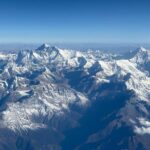
The key value is time. If you’re short on vacation days—or you just want the viewpoint moments without committing to days of walking—this plan gives you a concentrated experience: air views of the Khumbu region, the Everest Base Camp area, and a quick high-altitude photo stop at Kala Patthar.
The tradeoff is simple: it’s fast. You won’t have the slow immersion of a classic route. If you want long pauses, frequent breaks at eye-level viewpoints, and lots of time to wander around settlements, you’ll feel rushed here.
You can also read our reviews of more tours and experiences in Kathmandu.
Price, what’s included, and the real cost of $1,800
At $1,800 per person, you’re paying for helicopter time, not for meals, extra permits, or gear. That matters because the headline price can look “all-in” at first glance, but the day also has likely add-ons.
Here’s what the tour includes:
- Airport pickup and drop by tourist vehicle from your Kathmandu hotel
- Round-trip helicopter flight fare between Kathmandu and Everest Base Camp
- Fuel surcharge and government taxes
- Landing at Everest View Hotel for the breakfast stop (listed as included in one section)
- Helicopter seating for up to 5 people
- Administrative expenses
What is listed as not included:
- Breakfast (listed separately as not included)
- Alcoholic beverages
- Personal gear and a down jacket
- Sagarmatha National Park and Pasang Lhamu RM fees: NPRS 6,000
- Airport tax: NPRS 500
- Costs if the flight is delayed
So the practical move is this: when you book, ask one clear question—Is the breakfast at Hotel Everest View included in the price you’ll pay, or is it available for purchase? You don’t want to arrive at the hotel stop expecting something that turns out to be extra.
Also keep in mind the weight limit: total passenger weight is capped at 176 lbs. If you’re close to that number, confirm early.
The early start: how the 5:45 am schedule actually feels
The tour begins at 5:45 am, with a very early airport flow. The schedule is built like this:
- Around 5:30 am to 6:30 am: pickup from your hotel, drop at Tribhuvan International Airport domestic terminal, complete airport formalities
- 6:30 am to 7:30 am: fly to Lukla (2,804 m)
- 7:30 am to 8:30 am: fly toward the Everest Base Camp and Kala Patthar area (with a shuttle at Pheriche if needed)
- 8:40 am to 11:00 am: fly to Hotel Everest View (about 3,880 m) and have breakfast / early lunch at that stop
- 11:00 am to 12:30 pm: fly back toward Lukla for refuel, then return to Kathmandu
- 12:00 pm to 12:30 pm: pickup from the airport and drop you in Kathmandu
Why this matters: the morning air often gives you better visibility, and aviation operations in mountain regions can be timing-sensitive. You’ll likely feel the day run on “checkpoints,” not a relaxed sightseeing pace.
The good news: the operator keeps the day structured, and the helicopter plan is designed around hitting the Everest moments before things get unpredictable.
Lukla at 2,804 m: the quick hit at Tenzing-Hillary
One of the short stops is Lukla, at 2,804 m / 9,199 ft, known as Tenzing-Hillary Airport. It’s listed as one of the deadliest airports in the world, which is exactly why it’s such a striking start to the day.
You get about 15 minutes there. That’s not for a wandering visit—it’s for a quick air-hangar reality check and a chance to take in the scale of the region from the ground.
Practical expectation: because it’s brief, wear your best “ready” clothes. You don’t want to waste that 15-minute window fiddling with layers or finding a place to stand.
Everest View Hotel: your longer ground stop and the breakfast moment
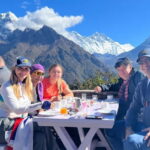
You’ll spend 1–2 hours at the Everest View Hotel area for breakfast and views of the Himalayas. This is one of the most comfortable parts of the day because you’re not bouncing around in the cockpit while you try to eat and think at altitude.
At around 3,880 m, it’s still cold, but it’s far more manageable than the highest photo stop. The hotel stop is where you can:
- regroup after the flights
- eat at altitude (slow down—don’t try to power through)
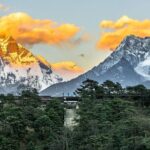
- look closely at glaciers and peak silhouettes
Value here: this is the stretch where you shift from “flying past Everest” to “standing near the Everest story.”
One more detail to remember: the tour includes landing for the breakfast stop, yet breakfast is also listed as not included. This can mean different meal setups depending on what you choose. Confirm directly when you book.
Kala Patthar photo ops: 10–15 minutes at about 5,500 m
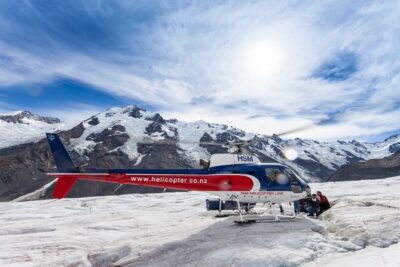
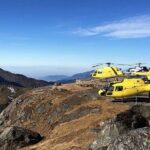
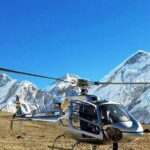
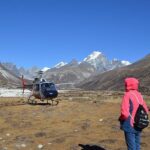
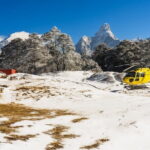
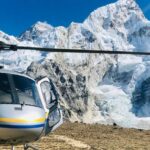
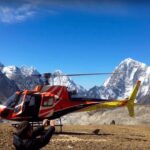
This is the headline moment people remember. You land and step out at Kala Patthar for about 10–15 minutes of photo time.
At roughly 5,500 m / 18,044 ft, the big challenge is not walking—it’s the cold, the thin air, and keeping your focus for photos in harsh conditions. Even if you’re not exerting yourself, you can feel the altitude quickly.
How to use the time well:
- Dress for cold now, not later (down jacket may be required on your own).
- Have your camera ready before you step out.
- Pick your angles fast. After a few minutes, your fingers may get less cooperative.
This stop is short by design, and that’s exactly why it can work for many people who can’t trek but still want the “I was there” photo.
Everest Base Camp, Ice-fall, and the view you can’t replicate on foot
Your helicopter route is set to show key Everest landmarks from the air, including:
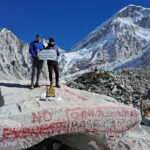
- Everest Base Camp
- the Khumbu Ice-fall
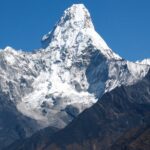
- enormous mountain peaks across the Everest region
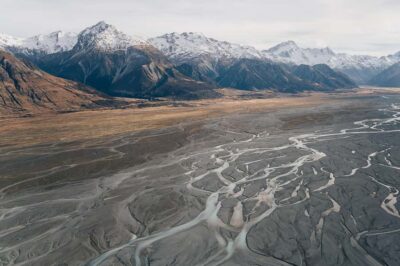
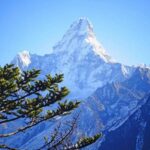
From a traveler perspective, this is the unique twist: you get scale. Seeing glaciers and the massive geometry of the Khumbu region from above is hard to recreate on a ground-only trek, especially if your plan doesn’t include long days of approach and acclimatization.
The drawback of flying past: you won’t have the same sensory depth you get on foot. Still, for many people, this is the only realistic way to cover these points in a single day.
Pheriche shuttle logic: why groups split above 4,500 m
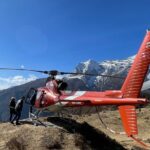
Here’s a detail that explains a lot of how the day stays operational. The information you’re given is that helicopters cannot land and take off with more than three passengers at altitudes above 4,500 m.
So for groups of 5, the tour can split the flight into two parts:
- one shuttle flight into groups of 3 and 2 via Pheriche
You also have a Pheriche stop listed at about 15 minutes.
What that means for you: your day may feel like it has a brief “reset” moment. You might wait while the helicopter does its operational split, and then you rejoin the main flow. It’s not a sightseeing pause; it’s aviation math.
The upside is that it keeps the plan realistic. Without this logic, landing plans could be cancelled or heavily delayed.
Guides and organization: what to expect from Ace the Himalaya
This is a logistics-heavy day: early airport formalities, tight timing, brief ground stops, and aircraft constraints in mountainous terrain.
Ace the Himalaya is the operator, and guide names that stand out in past experiences include Madan, Raj, Narayan, Nimesh, plus mention of porter team leadership (including Kaji). The common thread across those experiences is care for safety and good communication so people know what’s coming next.
Even if your itinerary is only a few hours, this kind of organization matters. It reduces the stress of not understanding aviation timing or how altitude stops will be handled.
Gear and body basics: altitude cold, and a 176 lb limit
Some parts of this day are purely visual, but your body still has to cope with cold and altitude.
From what’s listed, you should plan on bringing:
- Personal gear and a down jacket (not included)
- layers you can manage quickly in changing temperatures
Also remember the 176 lbs weight cap. This is stated as total weight per passenger. If you’re near the limit, confirm whether they consider you within it based on booked weight.
A small practical tip: pack for “short outside time” too. Kala Patthar is brief, but it’s long enough for wind exposure and cold to feel serious.
Who should book this heli tour (and who may want another plan)
This tour fits best if you:
- want the Everest highlights without a multi-day trek
- have limited vacation time
- can tolerate cold and high altitude for short periods
- prefer a small group setup (max 5 travelers)
You might rethink it if you:
- need lots of time on the ground and slow pacing
- get stressed by very early starts and tight schedules
- don’t want weather dependence (high-altitude flights can be delayed or changed)
- are not comfortable with altitude even without heavy hiking
Also consider that some classic Everest trekkers chase Kala Patthar for hours and acclimatize along the way. This heli plan gives you the peak moment fast, but not the acclimatization journey.
Should you book Ace the Himalaya’s Everest Base Camp Heli Tour?
If your priority is a fast, high-impact Everest experience, I think this tour can be a smart use of money. The combination of helicopter visibility, a base-area route, and a real Kala Patthar step-out is hard to replicate any other way in such a short window.
I’d book if you:
- want “Everest, but faster”
- like the idea of a structured day with clear stop times
- are prepared for cold and a quick photo schedule
I’d slow down and confirm first if:
- breakfast inclusion matters to you (the info is mixed, so ask)
- you’re near the 176 lbs weight limit
- you’re counting on specific dates and can’t shift if weather changes the flight plan
Bottom line: this is a value-for-time Everest hit. Not a trek. But if that matches what you want, it’s one of the most direct ways to see the Khumbu from the sky and still stand on the mountain for a short, memorable moment.
FAQ
Where is the meeting point for the Everest Base Camp heli tour?
The tour starts at Tribhuvan International Airport (Ring Rd, Kathmandu). The experience ends back at the meeting point.
What time does the tour start?
The start time is 5:45 am, with airport formalities beginning after pickup and transfer to the domestic terminal.
How long is the tour?
The duration is listed as approximately 5 to 6 hours.
What additional fees might I need to pay?
Sagarmatha National Park and Pasang Lhamu RM fees are listed as NPRS 6,000, and an airport tax of NPRS 500 is also listed as not included.
Is breakfast included?
The details are mixed: the included section says there’s landing at Hotel Everest View for breakfast, but the not-included section also lists breakfast as not included. Confirm with the operator before you go.
Is there a weight limit?
Yes. Total weight per passenger is listed as 176 lbs.
Does weather affect the flight?
Yes. This experience requires good weather. If it’s canceled due to poor weather, you’ll be offered a different date or a full refund.