REVIEW · KATHMANDU
Everest Base Camp Trek with Helicopter Flight Back
Book on Viator →Operated by Bold Himalaya Treks and Travels Pvt Ltd · Bookable on Viator
A trek to Everest Base Camp with an easier finish is a big deal. This 10-day Everest Base Camp itinerary balances classic Khumbu trekking with a helicopter return idea so you don’t have to slog back down the same route. You’ll also fly into Lukla, stage by stage, while your team handles the real-world moving parts in Kathmandu.
What I like most is the way it’s built around sensible pacing and altitude awareness, with an acclimatization day in the middle. I also appreciate the experienced guide and crew setup, including named staff like Surendra (guide) and Uncle Doma Ghale (porter), and the attentive support you’ll feel from the start.
One thing to think through: the itinerary includes a helicopter flight back, but the trip details also list helicopter transport as not included. That means you should confirm exactly what’s priced and what you’ll pay on top, especially if weather changes your schedule.
In This Review
- Quick hits: what makes this Everest Base Camp trek different
- Everest Base Camp with a helicopter return: the value play
- Price and logistics: what $446.50 covers, and what to verify
- Day 1 in Kathmandu: pickup, hotel, and a real briefing
- Day 2: fly to Lukla, then trek downhill to Phakding
- Day 3: Phakding to Namche Bazaar via Dudhkoshi suspension bridges
- Day 4: Namche pause plus Everest View Hotel hike and Sherpa Museum time
- Day 5: to Tyangboche for bigger Everest and Lhotse angles
- Day 6: to Dingboche and the Imja Khola suspension bridge crossing
- Day 7: acclimatization day with Nagarjun Peak climb
- Day 8: Lobuche at 4,940m, with Thukla Pass memorials
- Day 9: Everest Base Camp at 5,364m and an overnight in Gorak Shep
- Day 10: Kala Patthar sunrise, then back to Kathmandu by helicopter
- Guides, comfort on the trail, and food support that reduces stress
- What you should pack, and what the trip already provides
- Who this Everest Base Camp trek with helicopter return suits best
- Should you book Bold Himalaya’s Everest Base Camp trek with helicopter return?
- FAQ
- How long is the Everest Base Camp trek with helicopter flight back?
- What is the meeting point in Kathmandu?
- Does the tour include domestic flights to reach Lukla?
- Is the helicopter flight back to Kathmandu included in the package?
- What permits and entrance fees are included?
- What gear does the tour provide for the trek?
- What meals are included during the trek?
- Are meals and cultural experiences included in Kathmandu?
- Can I cancel for a full refund?
Quick hits: what makes this Everest Base Camp trek different
- Lukla flight + structured trek days so you start in the mountains fast, not after days of transfers.
- Sherpa cultural stop at the Sherpa Museum day, plus downtime in Namche Bazaar before higher trails.
- Altitude help built in with Dingboche acclimatization and a climb to Nagarjun Peak.
- Kala Patthar sunrise option for high-view payoff before the return to Kathmandu.
- Helicopter return concept to cut the hardest backtracking—just confirm the exact inclusion.
Everest Base Camp with a helicopter return: the value play
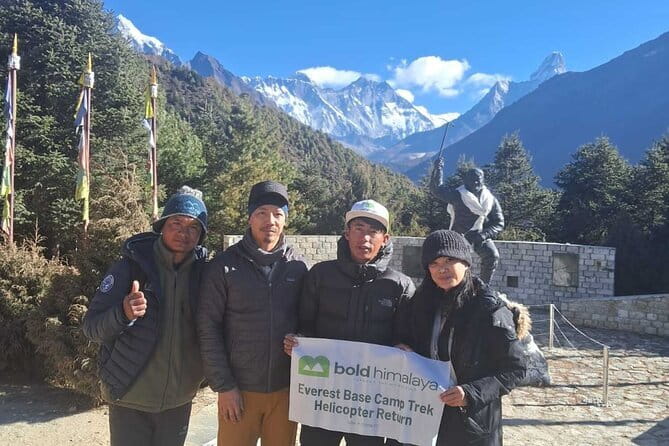
This is for people who want the full Everest Base Camp experience—Lukla flights, Sherpa villages, icefall views, high-altitude mornings—without losing days to the same trek back. The trip keeps the “go up into the Khumbu” story intact, then trades the return hike for an air shortcut.
For me, that’s the clearest value. Most EBC trips feel like two adventures in one: the outbound trek, then the return slog. Here, you get the thrill of reaching Everest’s doorstep, plus a lighter finish that can help you arrive back in Kathmandu with more energy for rest, food, and easy sightseeing.
You do need to manage one expectation: helicopter flights in Nepal depend heavily on weather and operating windows. Even with careful planning, delays or route changes can happen. If the helicopter is part of your budget, confirm the details early so you’re not stuck renegotiating at the last minute.
You can also read our reviews of more tours and experiences in Kathmandu.
Price and logistics: what $446.50 covers, and what to verify
The price is listed as $446.50 per person, with a duration around 10 days. On paper, it includes a lot of the “hard to self-organize” pieces: an experienced guide, domestic flight (Kathmandu to Lukla), transfers in Kathmandu, park/entry fees, and set meals during the trek.
Here’s what stands out as good value:
- Permits and fees are included: Sagarmatha National Park entrance fee, TIMS, and the Pasang Lhamu Rular Municipality entrance fee.
- Guide support is included, including insurance and the crew’s food/accommodation costs.
- Gear support is included: sleeping bag, down jacket, and trekking poles are listed as provided if needed, plus a duffle bag, cap, and a trek certificate.
Now the part you must double-check: the helicopter. The itinerary describes a helicopter flight back to Kathmandu, but the “not included” list specifically names the helicopter flight from Gorak Shep to Kathmandu. That doesn’t automatically mean you’ll pay more—it could mean the operator handles it differently depending on your date or aircraft availability—but you should confirm what’s included in your final quote. Ask for the exact helicopter inclusion line item before you commit.
Also note this detail: domestic flights are included, but the route may start from either Kathmandu to Lukla or Ramechap to Lukla depending on the itinerary. That’s normal in Nepal, but it can affect your pickup timing.
Day 1 in Kathmandu: pickup, hotel, and a real briefing
You start in Kathmandu, with the meeting point at Tribhuvan Airport. You’ll get pickup and a transfer to your hotel (Hotel Thrive or similar), with twin sharing and breakfast included.
The key is the evening briefing. This is when you should use your questions. Ask about:
- what “good weather” means for your date,
- how they handle flight delays,
- how gear handoffs work during the trek,
- and whether any adjustments are likely for your helicopter timing.
One thing I value in operators that run EBC treks: practical communication. In prior experiences connected to this company, the on-the-ground leadership was described as very attentive from the first email inquiry—Sobit, the manager. That kind of responsiveness matters because the Everest region can change quickly.
Day 2: fly to Lukla, then trek downhill to Phakding
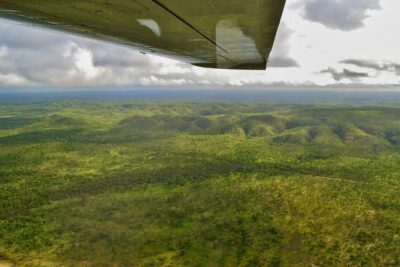
Day 2 starts with a domestic flight from Kathmandu to Lukla (or possibly from Ramechap). The flight is short, but it’s a moment you remember—views of the Himalayan area as the plane lines up for Lukla Airport.
From Lukla, you begin trekking downhill to Phakding. The itinerary frames it as about a 4-hour day through alpine forests. This matters because Day 2 is where your body learns the rhythm: steady walking, lighter exertion, and time to get your breathing under control before you climb higher.
If you’re prone to rushing, resist it. Nepal trekking works best when you keep a calm pace early. You’ll save your legs for the steeper days later.
Day 3: Phakding to Namche Bazaar via Dudhkoshi suspension bridges
Day 3 is the bridge day. You trek for roughly 6 hours to Namche Bazaar, crossing the Dudhkoshi River via suspension bridges. Those crossings are more than scenery—they’re also a mental reset. You get a breather, you slow down, and you feel the Khumbu terrain change around you.
You’ll pass through Sherpa villages and see daily life that sits between tourism and mountain survival. Namche Bazaar is also where you’ll start to notice altitude in subtle ways: stairs feel heavier, sleep can get different, and you might feel “winded” sooner than at sea level.
Practical tip: don’t over-plan your first night in Namche. Keep your energy for the next day and stay hydrated.
Day 4: Namche pause plus Everest View Hotel hike and Sherpa Museum time
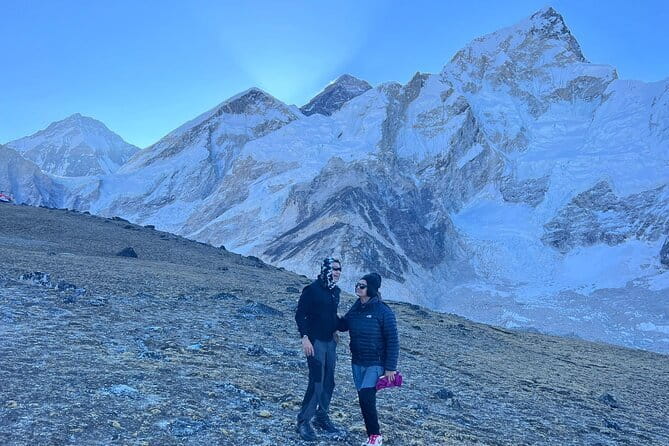
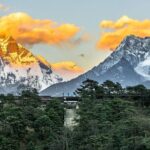
Day 4 is built for a smoother transition. You explore Namche Bazaar, then visit the Sherpa Museum. After that, you hike to the Everest View Hotel for panoramic views of Everest.
This is a smart day for two reasons:
- You get cultural context without sacrificing the mountaintop payoff.
- You keep the day active but not brutally high.
What I like here is that the itinerary doesn’t treat Namche as just a stopover. It gives you time to understand the people and history tied to the Khumbu, which makes the trek feel less like a checklist and more like a journey with meaning.
Day 5: to Tyangboche for bigger Everest and Lhotse angles
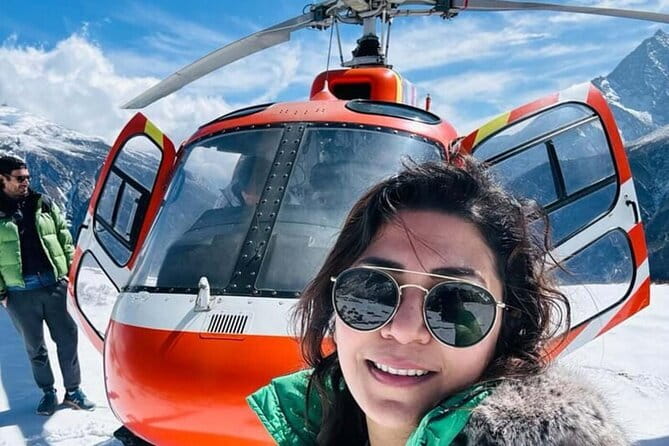
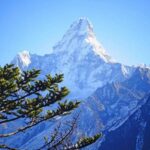
Day 5 takes you from Namche to Tyangboche in about 6 hours. The trek includes a lunch stop at Phungi Thanga and continues toward Tyangboche, where you’re positioned for magnificent views of Everest and Lhotse.
This day matters because it pushes you higher while still giving you memorable lookouts. Tyangboche is also a place where mountain faith and visitor routes meet—so it’s a good day to move slowly and actually look around, not just power-walk.
One drawback to expect on days like this: lodge space is limited in peak season, and you may share tighter quarters. The flip side is that you’ll likely get that “small-world” feeling quickly—same faces, same trail rhythm.
Day 6: to Dingboche and the Imja Khola suspension bridge crossing
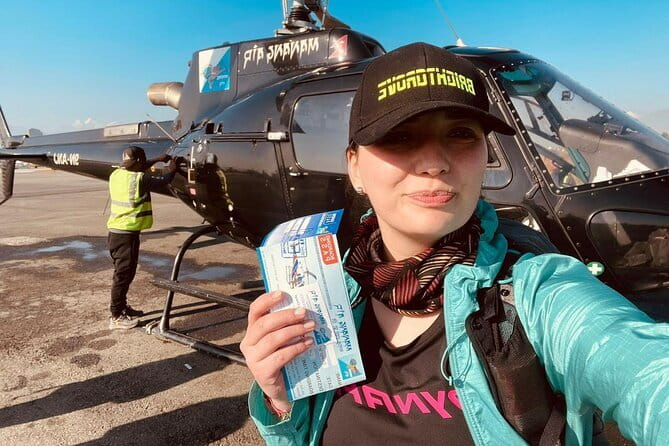
Day 6 is about forward progress and scenic transition. You trek to Dingboche, about 6 hours, crossing a suspension bridge over the Imja Khola.
Along the way you’ll pass through rhododendron forests and villages like Pangboche and Somare. This is the kind of day where the trail keeps changing—forest to village paths, views that open and close as the valley bends.
Dingboche is also where you begin to feel the altitude more clearly. If you’re the type who wants to “do more,” resist. On EBC treks, the best athletes often have one skill: restraint.
Day 7: acclimatization day with Nagarjun Peak climb
Day 7 is your preparation day for higher altitude. You explore the Dingboche Valley and hike up to Nagarjun Peak to aid acclimatization. The itinerary frames it as about a 5-hour day with 360-degree views.
This is one of the most valuable parts of the whole trip. An acclimatization hike isn’t just about checking a box—it helps your body adjust before you jump toward Lobuche and Everest Base Camp country.
Even if you feel good, keep the climb steady. The mountain doesn’t care about your schedule, but it does care about your physiology.
Day 8: Lobuche at 4,940m, with Thukla Pass memorials
Day 8 takes you to Lobuche (listed at 4,940m). The trek passes through Thukla Pass with memorials to climbers, then continues to reach Lobuche where you’ll get close-up views of glaciers.
It’s about 6 hours. This isn’t a “rest day,” but it’s also not the most punishing day on paper. Still, you’ll feel the altitude by now, and the terrain gets more exposed.
The memorial section is one of those moments that slows you down—because it reminds you this region is about real risks and real history. You may want a quiet moment with it, not a photo-and-go.
Day 9: Everest Base Camp at 5,364m and an overnight in Gorak Shep
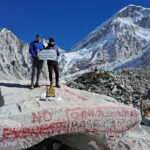
Day 9 is the headline day. You trek to Everest Base Camp (listed at 5,364m) and overnight in Gorak Shep (listed at 5,170m).
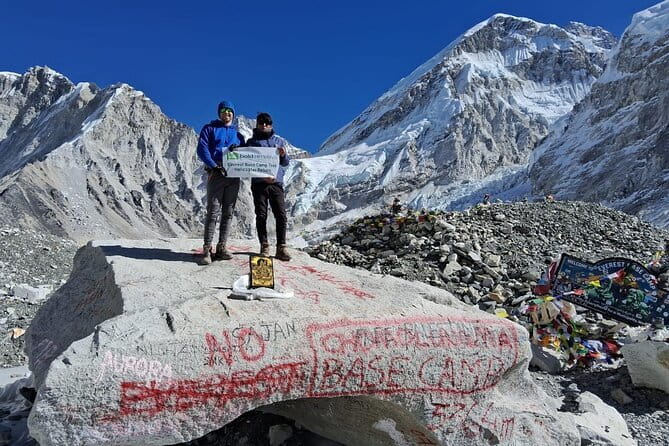
You also get a gear strategy: you trek to Gorak Shep, leave your gear, then continue to Everest Base Camp. The return to Gorak Shep is where you’ll see views of the Khumbu Icefall.
This is the day where the weather really matters. If you get a clear window, the icefall area and high views can feel close enough to reach out and touch. If clouds roll in, you still get the achievement, but the visual “wow” is reduced.
Practical advice: pack small essentials in a day bag. At these heights, you don’t want to be rummaging through your main duffel just to find a glove or snack.
Day 10: Kala Patthar sunrise, then back to Kathmandu by helicopter
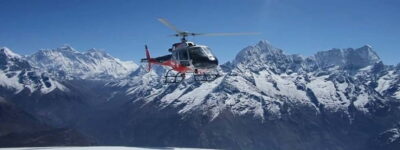
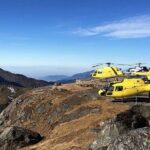
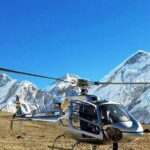
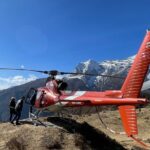
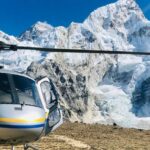
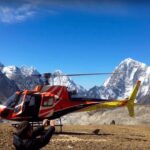
Day 10 starts early with a hike to Kala Patthar (listed at 5,550m) for sunrise and panoramic Himalayan views. After that, you return to Gorak Shep and board the helicopter to Kathmandu, with a transfer included.
This is the “big sky” finale. Kala Patthar is the spot many people hope for because sunrise light can make the mountain look sharper, colder, and more real.
But again: helicopter inclusion needs confirmation. If the helicopter is truly part of your deal, it’s a huge payoff for saving time and leg fatigue. If it isn’t included, build in extra budget and plan for schedule changes based on weather.
Also consider how tired you might be. Even if you’ve been smart with pacing, you’ll still arrive from high altitude. Plan for a calm Kathmandu evening—no heroics.
Guides, comfort on the trail, and food support that reduces stress
One reason people feel cared for on EBC treks is not “luxury.” It’s logistics that stay calm.
In past experiences connected to Bold Himalaya, the company delivered strong lodging comfort, including hot water in Kathmandu and along the trek when conditions allowed. That isn’t guaranteed in the Everest region, but having a team that tries hard to keep you comfortable changes your mood during tough days.
The crew names matter too. Your guide Surendra and porter Uncle Doma Ghale were described as keeping trekkers safe and focused on finishing strong. That kind of guidance is hard to replace with a DIY trip. A guide also helps with pace, route decisions, and communicating with lodge staff.
Meals are also covered during the trek: breakfast (9), lunch (8), and dinner (8) are listed as included, plus some seasonal fruit and dry nuts. That “snack fuel” sounds small, but it’s the difference between feeling flat at lunch and keeping steady energy until the next tea stop.
What you should pack, and what the trip already provides
Good news: the trip includes key cold-weather items—sleeping bag, down jacket, and trekking poles (if you need them), plus a duffle bag, cap, and trek certificate.
What you still need is the stuff that makes you functional:
- layers for cold mornings and warmer afternoons,
- gloves and a warm hat (even if you get a down jacket),
- a day bag for water, snacks, and layers while hiking,
- and a plan for keeping your hands usable on high, windy mornings.
Since the itinerary includes early starts (Kala Patthar) and high elevations (Lobuche, Gorak Shep, EBC), don’t rely on one warm layer and hope. Bring a system you can adjust.
Who this Everest Base Camp trek with helicopter return suits best
This tour fits well if:
- you want the classic Everest Base Camp storyline,
- you prefer not repeating the same return trek,
- you’re okay with moderate physical fitness and altitude work,
- and you like having planning handled for you.
It may not fit if:
- you’re on a tight budget and helicopter costs could add up (confirm inclusion),
- you need maximum spontaneity (weather can force changes),
- or you’re not comfortable with high-altitude trekking, even with acclimatization built in.
Because it’s private, you’ll likely feel less rushed and more tailored to your group. Still, the mountains don’t negotiate, so you’ll want patience if flights or visibility shift.
Should you book Bold Himalaya’s Everest Base Camp trek with helicopter return?
I’d book if you’re aiming for Everest Base Camp as a top priority but you don’t want to spend extra days doing the return hike. The structure—Namche, Everest View Hotel, Dingboche acclimatization, Lobuche, Base Camp, then Kala Patthar—checks the boxes that make EBC memorable.
Before you pay, do two quick checks:
- Confirm the helicopter flight inclusion for Gorak Shep to Kathmandu in your final price.
- Ask what happens if the helicopter can’t fly due to weather on your chosen dates.
If those answers are clear, this is a smart way to do Everest without turning the whole trip into a long two-way march.
FAQ
How long is the Everest Base Camp trek with helicopter flight back?
The duration is listed as 10 days (approx.).
What is the meeting point in Kathmandu?
The meeting point is Tribhuvan Airport in Kathmandu, Nepal.
Does the tour include domestic flights to reach Lukla?
Yes. Domestic flights are included according to the itinerary, either Kathmandu to Lukla or Ramechap to Lukla.
Is the helicopter flight back to Kathmandu included in the package?
The itinerary includes a helicopter flight back to Kathmandu, but the helicopter flight from Gorak Shep to Kathmandu is listed under Not Included. Confirm what is included in your final quote.
What permits and entrance fees are included?
Sagarmatha National Park entrance fee, Pasang Lhamu Rular Municipality entrance fee, and TIMS are included.
What gear does the tour provide for the trek?
Sleeping bag, down jacket, and trekking poles are listed as provided if needed, plus a duffle bag, cap, and a trip certificate.
What meals are included during the trek?
Breakfast (9), lunch (8), and dinner (8) are included.
Are meals and cultural experiences included in Kathmandu?
Yes. A one cultural show and dinner program in Kathmandu is listed as included, along with the hotel stay with breakfast.
Can I cancel for a full refund?
Yes. You can cancel up to 24 hours in advance for a full refund, and the cut-off is based on the experience’s local time.